Anglesey Coastal Path
How would you rate Anglesey Coastal Path?
Tap a star to share your experience and help other hikers.
Anglesey Coastal Path: A Complete Hiking Guide
HikeList Score
Anglesey Coastal Path scored 90/100 on HikeList's trail-quality metrics.
See score breakdownHide breakdown
- Ideal length 91
- Balanced challenge 100
- Scenery & wildness 71
- Varied terrain 100
- Accommodation 92
- Food & support 88
- Path quality 98
- Season flexibility 89
Computed from length, challenge, scenery & wildness, terrain variety, accommodation, food & support, path quality and season flexibility.
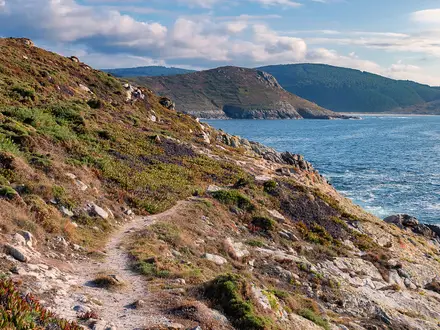
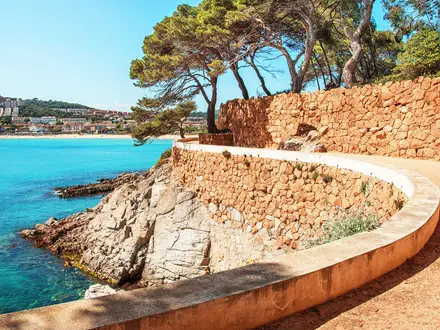
The Anglesey Coastal Path is a 200 km loop around Anglesey and Holy Island in north-west Wales, usually walked in 12 days. It is a moderate long-distance coastal trail: well waymarked, non-technical and suitable for regular walkers, but with cumulative mileage, exposed cliff tops and undulating ground. Expect a varied circuit of beaches, dunes, farmland, heath, sea cliffs and towns. For another island circuit, see the Arran Coastal Way.
Route Overview
The route officially starts and finishes at St Cybi's Church in Holyhead, making a near-complete circuit of Anglesey and Holy Island. It can be walked either way, though the official guide describes it anti-clockwise. From Holyhead it passes Holyhead Mountain, South Stack, Trearddur Bay, Rhosneigr, Aberffraw, Newborough, Llanddwyn Island, the Menai Strait, Beaumaris, Penmon Point, Moelfre, Amlwch, Cemaes and Cemlyn Bay before returning to Holyhead. The path mostly follows the coast, with inland deviations around the Plas Newydd and Bodorgan estates. Around 20 communities lie on or near the route, and most sections are reachable by public transport, making section walking straightforward.
History of the Anglesey Coastal Path
The path is modern, though it links much older places. It was developed through a partnership led by Menter Mon and Isle of Anglesey County Council, and formally opened on 9 June 2006 by Rhodri Morgan, then First Minister of Wales. In 2012 it became the Anglesey section of the Wales Coast Path, the continuous coastal route around Wales. Along the way it passes prehistoric sites such as Barclodiad y Gawres, Iron Age remains on Holyhead Mountain, medieval Beaumaris Castle and Penmon Priory, and the 19th-century Menai bridges.
Notable highlights
South Stack Lighthouse and RSPB reserve (1809 lighthouse): A lighthouse on an islet off Holy Island, reached by steps and a footbridge. The surrounding cliffs are a major seabird viewpoint in summer, with Elin's Tower giving the classic outlook.
Holyhead Mountain (highest hill on Anglesey): The path skirts the flank of Holyhead Mountain, with exposed quartzite cliffs and wide Irish Sea views near the start and finish. Its summit area is associated with the Iron Age hillfort of Caer y Twr.
Llanddwyn Island / Ynys Llanddwyn (tidal island): A slender tidal island off Newborough beach, linked with St Dwynwen, the Welsh patron saint of lovers. Its ruined chapel and old lighthouses make this one of the most distinctive sections of the trail.
Menai Suspension Bridge (historic crossing): Thomas Telford's suspension bridge spans the Menai Strait near Menai Bridge town. Together with the Britannia Bridge, it marks the sheltered southern shore of Anglesey.
Beaumaris Castle (UNESCO World Heritage Site): Edward I's unfinished concentric castle stands directly on the route in Beaumaris. It is one of the clearest historical landmarks on the Menai Strait section.
Penmon Point and Puffin Island (eastern tip): The route reaches Anglesey's eastern edge at Penmon Point, with Trwyn Du lighthouse, Penmon Priory nearby and views across to Puffin Island.
Challenges to expect
The Anglesey Coastal Path is not technical, but the 200 km distance and 4,174 m total ascent add up over successive days. Expect grassy and earthen cliff paths, field tracks, sand, foreshore and occasional rocky sections. Exposed northern and western headlands can be windy, and some short sections have seasonal closures. Navigation is helped by Sandwich tern waymarks and Wales Coast Path markers. For a shorter North Wales outing, compare the Aber Falls Walk; for a harder upland route, see the Beacons Way.
HikeList Score
Anglesey Coastal Path scored 90/100 on HikeList's trail-quality metrics.
See score breakdownHide breakdown
- Ideal length 91
- Balanced challenge 100
- Scenery & wildness 71
- Varied terrain 100
- Accommodation 92
- Food & support 88
- Path quality 98
- Season flexibility 89
Computed from length, challenge, scenery & wildness, terrain variety, accommodation, food & support, path quality and season flexibility.
 United Kingdom
 Wales
WalesShow more data Show less
- Coastal
- Cliffs
- Farmland
- Beaches
- Dunes
- Heath
- Dirt
- Grass
- Sand
- Rock
- Hotels
- Guesthouses
- B&B
- Campsites
- Family Friendly
- Dog Friendly On Leash
- Restrooms
- Established Campsites
- Picnic Areas
- Public Transport Access Points
Download Our Full Guide to Anglesey Coastal Path FREE!
Get our comprehensive guide to this hike for free. Save it for later reading or print out at home.
In these collections
Photos from hikers
Taken on the trail by people who've reviewed Anglesey Coastal Path.
Anglesey Coastal Path: The Complete Guide
 i
Image by Clément Proust
i
Image by Clément Proust The Anglesey Coastal Path is a complete circuit of Ynys Môn (Anglesey) and Holy Island, starting and finishing at St Cybi’s Church in Caergybi (Holyhead). It is a well-waymarked coastal trail with enough transport links and settlements to suit first-time multi-day walkers, but enough distance, weather and exposure to feel like a proper long-distance walk.
The route moves from South Stack’s cliffs and lighthouse to broad beaches, dunes, salt marsh, farmland tracks and the sheltered Menai Strait. Along the way it passes places such as Rhosneigr, Aberffraw, Niwbwrch (Newborough), Porthaethwy (Menai Bridge), Biwmares (Beaumaris), Moelfre, Amlwch and Cemaes.
Its character changes sharply around the island. The south and Menai side bring historic towns, bridges and easier resupply, while the north and west coasts are wilder, windier and more thinly served.
This is not a technical mountain route, but it is still around 200 km with roughly 4,174 m of ascent. Expect undulating clifftop walking, muddy sections after rain, exposed headlands, occasional tidal or seasonal constraints, and some stages where accommodation and buses need planning ahead.
This guide covers stages, days, accommodation, food, transport, terrain and common mistakes.
Stage-by-Stage Guide
The stages below follow the 13-stage anti-clockwise split from Holyhead (Caergybi). Distances on the Anglesey Coastal Path can vary with diversions, beach alternatives and optional spurs, so always check the current Wales Coast Path line, tide times where relevant and local bus times before committing to accommodation or onward travel.
Stage 1: Holyhead (Caergybi) to Trearddur Bay (Bae Trearddur) — approx. 13 km
This is an immediate high-impact start, leaving the official start at St Cybi’s Church in Holyhead and heading onto the exposed coast of Holy Island. The stage takes in the seaward flank of Holyhead Mountain (Mynydd Twr / Mynydd Caergybi), where the path reaches its highest point at about 163 m, before continuing around the dramatic South Stack (Ynys Lawd) cliffs.
The terrain is mostly clifftop path, coastal heath and rocky, undulating ground. It is non-technical, but this is one of the more exposed sections of the whole route, with wind, rain and poor visibility making navigation and footing more demanding than the distance suggests.
South Stack lighthouse, Elin’s Tower and the RSPB reserve are the major landmarks. In late spring and summer the cliffs are one of the best seabird sites on the route, with guillemots, razorbills, puffins and choughs possible from the viewpoints.
Holyhead has the best transport access on the trail, including the mainline railway station and ferry port. Trearddur Bay has accommodation options, but summer beds should be booked ahead; do not assume last-minute availability on a coastal weekend.
Food and water planning is straightforward at the Holyhead end, but the exposed headland section should be treated as a carry-what-you-need stretch. Public transport and road access are good at Holyhead and reasonable at Trearddur Bay, but onward bus times should be checked before travelling.
Navigation is generally helped by Anglesey Coastal Path and Wales Coast Path waymarks, but there are many paths and viewpoints around South Stack. Keep to the signed coastal line unless deliberately taking a summit or viewpoint detour.
Stage 2: Trearddur Bay to Rhosneigr — approx. 15 km
This stage rounds the south-west side of Holy Island and moves towards the low, sandy coast around Rhosneigr. It is a gentler day than the South Stack section, but still has a mix of bays, headlands, field edges and possible beach or foreshore walking depending on the current route.
Rhoscolyn and Four Mile Bridge (Pont Rhydbont) are the main places passed before reaching Rhosneigr. The character changes from open cliff and heath to a lower coastal landscape, with more settlement and easier access points than on the north coast.
Path conditions can include sandy tracks, grassy paths, field margins and short road or lane links. After wet weather, low-lying field sections can be muddy, and onshore winds can make beach sections slower than expected.
Trearddur Bay and Rhosneigr are the most useful service points for this stage. Carry enough water and snacks for the walking day rather than relying on intermediate stops being open.
Rhosneigr is one of the stronger overnight stops on the western side, with accommodation in and around the village. Local buses serve Rhosneigr, but frequencies and seasonal timetables should be checked before travelling.
Navigation is usually uncomplicated, but take care where the path leaves beaches, dunes or foreshore and returns to lanes or field tracks. Waymarks are useful, but a current map or GPX is sensible where the coast path has been re-routed.
Stage 3: Rhosneigr to Aberffraw — approx. 12 km
This is a shorter stage across a distinctive part of Anglesey’s west coast, linking Rhosneigr with Aberffraw via Porth Trecastell (Cable Bay). It is a good day for allowing time at the archaeological and coastal landmarks rather than treating the distance as a fast transfer.
The key highlight is Barclodiad y Gawres, the Neolithic passage-tomb above Porth Trecastell. It is one of the most important prehistoric sites on the route, particularly noted for its rock art.
Expect a varied surface: sandy sections, coastal paths, field tracks and stretches close to the shore. Some low coastal and foreshore sections may be affected by tides or wet conditions, so check the current route and tide times where the mapped line uses the shore.
Rhosneigr is the main place to stock up before setting out. Aberffraw is a smaller end point, so food, water and evening meal plans should not be left to chance, especially outside the main season.
Accommodation at Aberffraw or nearby can be more limited than in the larger coastal towns. If beds are unavailable, a short transfer or bus connection may be needed; this should be arranged before the walking day.
Navigation is usually clear but watch for the correct line around beaches and access points. Do not assume that footprints on sand are following the official coast path.
Stage 4: Aberffraw to Newborough (Niwbwrch) — approx. 13 km
This stage crosses a lower, estuary-influenced stretch of the west coast, moving from Aberffraw towards Malltraeth and Newborough. It feels less like a cliff walk and more like a mix of open coast, salt-marsh edge, field paths and inland deviations.
The walking is generally straightforward, but it can be wet underfoot after rain. Around estuaries and low ground, the route may feel more indirect than the map distance suggests, because the coast path has to work around tidal channels, estates and access constraints.
Malltraeth is the key intermediate place on this section. The wider landscape around this part of the island is quieter than the resort stages, so plan for a more self-sufficient day.
Food and water should be carried from Aberffraw unless current opening times for services en route have been checked. Newborough is a useful end point for accessing the next stage towards the dunes, forest and Ynys Llanddwyn (Llanddwyn Island), but accommodation may need advance planning.
Local buses serve Newborough, making it a practical section-walking access point. Exact bus times and stop locations should be checked before travelling, particularly if using it to connect back to a base.
Navigation requires attention around inland diversions and any low-lying or tidal sections. Follow the waymarks rather than trying to force a direct line along the water’s edge.
Stage 5: Newborough to Menai Bridge (Porthaethwy) — approx. 19 km
This is one of the most varied stages on the southern side of Ynys Môn, moving from Newborough’s dunes and forest-backed coast towards the Menai Strait. It can be a long day if the optional spur to Ynys Llanddwyn is included, so check the total distance before booking accommodation or transport.
Ynys Llanddwyn is the major highlight: a tidal island off Newborough beach with a ruined chapel, two old lighthouses and strong associations with St Dwynwen. Access depends on tide and conditions, so tide times should be checked before travelling and the island should not be treated as an all-weather add-on.
Beyond Newborough, the route works along the southern coast through places such as Brynsiencyn and Moel y Don before reaching Menai Bridge. Expect a mix of beach, dune, field tracks, lanes and inland deviations, including sections where the path cannot simply follow the shoreline.
Food and water planning should be conservative. Newborough and Menai Bridge are the main practical service points; do not rely on finding frequent supplies across the full stage.
Menai Bridge is a strong overnight halt, with accommodation and good onward connections towards Bangor and the mainland. The Menai Suspension Bridge (Pont Grog y Borth) is the defining landmark at the end of the day, with the Britannia Bridge also marking this sheltered southern shore.
Navigation can be more complex than on the open clifftops because of estate edges, tidal ground and inland links. Keep a current map to hand and check official Wales Coast Path diversions before setting out.
Stage 6: Menai Bridge (Porthaethwy) to Beaumaris (Biwmares) — approx. 9 km
This is a short, sheltered stage along the Menai Strait, useful as an easier day after the longer Newborough to Menai Bridge section. The walking is less wild than the west and north coasts, with more settlement, road access and historic interest.
The terrain is generally easier: coastal paths, lanes and low-level walking rather than exposed cliff. Conditions can still be muddy in places after rain, but this is not one of the route’s rougher or more remote days.
The Menai Strait views are the main scenic feature, with the mountains of the mainland forming the backdrop across the water. Beaumaris Castle (Castell Biwmares), Edward I’s unfinished concentric castle and a UNESCO World Heritage Site, stands right on the route at the end of the stage.
Menai Bridge and Beaumaris are both practical service and accommodation stops. This is one of the easier stages for arranging meals, supplies and public transport, though current bus times should still be checked.
Navigation is generally simple, but the coast path may use short inland or roadside sections where shoreline access is not available. Stay alert for waymarks at junctions through settled areas.
Stage 7: Beaumaris (Biwmares) to Pentraeth — approx. 11 km
This stage leaves the Menai Strait side and works towards Anglesey’s eastern and north-eastern coast. Depending on the current signed line and any variations used, this is a stage where the mapped route should be checked carefully before relying on the approximate distance.
Penmon Point and Puffin Island (Ynys Seiriol) are the major landmarks on this side of the island. The black-and-white Trwyn Du lighthouse, nearby Penmon Priory and dovecote, and views across to Puffin Island make this one of the most distinctive sections of the eastern coast.
The route then trends back towards Llanddona, Red Wharf Bay (Traeth Coch) and Pentraeth. Expect a changing mix of lanes, field paths, coastal tracks and lower shore-side walking rather than continuous cliff path.
Food and water are easiest to organise at Beaumaris before leaving. Pentraeth and the Red Wharf Bay area can be useful for ending the day, but opening times and accommodation availability should be checked in advance, especially outside summer.
Public transport is better on this side than on the wildest north coast, with Beaumaris among the easier places to reach by bus. Any connection from Pentraeth should be checked before travelling.
Navigation needs attention around road links and where the path leaves the immediate coast. If taking any detours to Penmon Priory or viewpoints, return to the official waymarked line rather than assuming all coastal tracks reconnect cleanly.
Stage 8: Pentraeth to Moelfre — approx. 13 km
This stage continues along the north-east coast towards Moelfre, with a gentler, more settled feel than the northern headlands still to come. It links the Red Wharf Bay area with one of Anglesey’s classic coastal villages.
The walking is varied rather than technically difficult: field tracks, grassy coastal paths, lanes and low coastal sections. Around bay and shore areas, mud and wet ground can slow progress after rain.
Views open across the broad sweep of Red Wharf Bay before the route continues towards Moelfre. The stage is good for steady coastal walking rather than dramatic height gain.
Pentraeth and Moelfre are the main practical service points. Carry enough water for the full stage, as intermediate availability should not be assumed.
Moelfre is one of the established overnight hubs on the Anglesey Coastal Path, with accommodation in and around the village. Local buses make this a useful section-walking point, but current timetables should be checked.
Navigation is generally straightforward on waymarked coast path, though care is needed where the line uses fields, lanes or shore-side paths. In poor weather, avoid being drawn onto informal foreshore shortcuts unless they are clearly part of the current route and safe for the tide.
Stage 9: Moelfre to Amlwch (Amlwch Port) — approx. 14 km
This stage becomes more open and rugged as the route heads north-east towards Point Lynas (Trwyn Eilian) and Amlwch Port. It is a strong coastal day with headlands, sea views and a more exposed feel than the Menai Strait stages.
The terrain is mainly clifftop and coastal path, with grassy, earthen and occasionally rocky sections. It remains non-technical, but the undulations add up and wind can be tiring on the headlands.
Point Lynas is the main landmark before the approach to Amlwch. The views along the coast are a highlight, especially in clear weather when the line of the northern cliffs becomes more apparent.
Moelfre and Amlwch are the key service points. Treat the ground between them as a carry-your-own-food-and-water section unless current intermediate options have been checked.
Amlwch is a useful overnight stop and a practical place for public transport connections. It is also the access point for a short inland loop to Mynydd Parys (Parys Mountain), the former copper-mining landscape just inland from Amlwch Port.
Navigation is usually clear, but keep to the signed line on cliff sections and field edges. In strong winds, give cliff edges a wide margin and avoid lingering on exposed points.
Stage 10: Amlwch to Cemaes (Cemaes Bay) — approx. 12 km
This is a shorter north-coast stage, linking Amlwch with Cemaes via Bull Bay (Porthllechog). It is a good day for allowing time either at Amlwch Port or on the optional inland visit to Mynydd Parys before or after the coastal walk.
The walking is on exposed northern coastline, with grassy paths, cliff sections and headland undulations. The route is not technically difficult, but it can feel hard in poor weather because there is less shelter than on the southern side of the island.
Bull Bay is the main place between the two ends. The approach to Cemaes brings the path into one of the more useful north-coast overnight stops.
Amlwch and Cemaes both have accommodation options, but beds on this part of the island should be booked early in the main season. Food and water should be carried for the walking day; do not depend on every coastal service being open year-round.
Local buses serve Amlwch and Cemaes, though north-coast frequencies are among the sparsest on the route. Check the current timetable before planning a same-day return to a base.
Navigation is generally simple in clear conditions, but mist, wind and rain can make the exposed coast more serious. Use the waymarks with a map or GPX and check for current diversions before leaving Amlwch.
Stage 11: Cemaes (Cemaes Bay) to Church Bay (Porth Swtan) — approx. 14 km
This is one of the wilder north-coast stages, with exposed headlands, open sea views and fewer easy escape points than the Menai or resort sections. It is a rewarding but committing day for weather and logistics.
Bae Cemlyn (Cemlyn Bay) is the outstanding landmark: a shingle storm beach and brackish lagoon nature reserve, important for Arctic, common and Sandwich terns. The Wylfa headland lies alongside this part of the coast.
The terrain includes clifftop paths, coastal heath, field edges and some low shore-side sections. It can be windy, muddy and exposed, and seasonal wildlife sensitivities or route management may affect access around nature reserve areas.
Cemaes is the main place to organise food and water before setting out. Church Bay is a smaller end point, so accommodation, evening meals and any onward transport should be arranged in advance.
Public transport on the north coast is comparatively sparse. If using buses to leave Church Bay or return to Cemaes, check the timetable before travelling and have a fallback plan.
Navigation is usually waymarked, but this is not a stage to approach casually in poor visibility. Stay on the signed path around Cemlyn and any managed reserve areas, and check the official Wales Coast Path information for live diversions or seasonal restrictions.
Stage 12: Church Bay (Porth Swtan) to Valley (Y Fali) — approx. 13 km
This stage begins to turn the route back towards Holy Island and the western side of Anglesey. It remains relatively quiet and exposed compared with the southern coast, with a practical finish at Valley.
Expect grassy coastal paths, field tracks, lanes and some low, potentially damp sections. The walking is not technical, but the cumulative distance of the whole trail often starts to tell by this point, especially if carrying a full pack.
The views are open and maritime rather than heavily settled. This is a stage where weather makes a major difference: a calm day can feel straightforward, while wind and rain can make progress slow.
Food and water should be organised before leaving Church Bay, with Valley as the main practical end point. Do not assume reliable intermediate supplies unless current opening times have been checked.
Valley is useful for road access and local transport connections, and it is a practical staging point before the final return to Holyhead. Accommodation availability should still be checked before travelling, particularly in summer.
Navigation is generally uncomplicated, but pay attention where the route uses lanes, fields or any inland link away from the immediate shore. Mud and livestock are possible on farmland sections, so close gates and keep dogs under close control.
Stage 13: Valley (Y Fali) to Holyhead (Caergybi) — approx. 15 km
The final stage closes the loop back to St Cybi’s Church in Holyhead. It passes through the more accessible Holy Island fringe, including Penrhos Coastal Park, before returning to the island’s main transport hub.
The terrain is mixed: coastal park paths, field or track sections, short built-up approaches and coastal walking rather than the high, exposed cliffs of the opening day. It is a practical final day, but still long enough to require normal food, water and weather planning.
Penrhos Coastal Park is the main named feature before Holyhead. The finish at St Cybi’s Church brings the route back to the official start point, with the railway station and ferry port close enough to make onward travel straightforward.
Valley and Holyhead are the most useful service points. Holyhead has the strongest accommodation and transport options on the whole circuit, but advance booking is still sensible during busy periods.
Public transport is at its best once back in Holyhead, with mainline rail connections on the North Wales Coast Line and ferry links to Ireland. If leaving from Valley instead, check local bus or rail arrangements before travelling.
Navigation on the approach to Holyhead can be less scenic and more fragmented than the open coast, so watch carefully for waymarks through parks, lanes and built-up edges. Do not switch off before the finish: urban approaches are often where missed turns happen.
Recommended Itinerary
The itinerary below follows a practical 13-day anti-clockwise circuit from St Cybi’s Church in Holyhead (Caergybi). It uses the stage distances supplied for the route and aims to finish in settlements where overnight logistics are realistic, but the Anglesey Coastal Path is regularly affected by small route changes, diversions, tidal options and optional spurs. Check official mapping before booking accommodation, especially around Ynys Llanddwyn (Llanddwyn Island), foreshore sections and any seasonal closures.
Standard 13-day itinerary
| Day | From | To | Approx. distance | Why this stage makes sense | Services/accommodation notes |
|---|---|---|---|---|---|
| 1 | Holyhead (Caergybi) | Trearddur Bay | 13 km | A manageable opening day from the official start/finish at St Cybi’s Church, with the exposed Holy Island coast and South Stack area early in the walk. The shorter distance is useful if arriving by train the same morning, though an early start is still sensible. | Holyhead has the best arrival logistics on the route, with a mainline railway station and ferry port. Trearddur Bay is a recognised coastal stop, but summer accommodation should be booked ahead. |
| 2 | Trearddur Bay | Rhosneigr | 15 km | This keeps the south-west coast in a comfortable day rather than pushing too far beyond Rhosneigr. The route passes through the Rhoscolyn and Four Mile Bridge area before reaching one of the better-known west-coast bases. | Rhosneigr is one of the main accommodation settlements on the route. Local buses serve Rhosneigr, but times should be checked before relying on them for a late finish. |
| 3 | Rhosneigr | Aberffraw | 12 km | A shorter day allows time for the coast around Porth Trecastell (Cable Bay) and Barclodiad y Gawres without making the stage rushed. It also helps balance the following stages across the south-west of the island. | Aberffraw is a smaller overnight target than Rhosneigr, so beds may be limited. Book before committing to this split, or plan a short transfer if needed. |
| 4 | Aberffraw | Newborough (Niwbwrch) | 13 km | This stage links the south-west coast to the Newborough area at a steady pace. It is a sensible place to stop before the longer walk towards the Menai Strait. | Newborough is close to the Newborough Warren and Ynys Llanddwyn area, but accommodation can be spread out. Check the exact location of your bed relative to the path. |
| 5 | Newborough | Menai Bridge (Porthaethwy) | 19 km | One of the longer days, but it brings the route from the Newborough side towards the sheltered Menai Strait. If adding Ynys Llanddwyn, build in extra time and check tide times before setting out. | Menai Bridge is one of the stronger service and accommodation bases on the circuit, with good onward transport links via the Menai-side towns and Bangor area. |
| 6 | Menai Bridge | Beaumaris (Biwmares) | 9 km | A deliberately short stage along the Menai Strait, useful after the longer previous day. It leaves time for Beaumaris without forcing an unnecessarily long mileage. | Beaumaris is a major overnight stop on the route, but it is popular in the main season. Advance booking is strongly recommended. |
| 7 | Beaumaris | Pentraeth | 11 km | This keeps the eastern side of the island in a compact day while the route turns away from the Menai Strait towards Red Wharf Bay. The shorter distance gives flexibility if route conditions or diversions slow progress. | Pentraeth is a practical stopping point for the Red Wharf Bay area, but accommodation choice may be narrower than in Beaumaris or Menai Bridge. Confirm availability before fixing the itinerary. |
| 8 | Pentraeth | Moelfre | 13 km | A moderate day linking the Red Wharf Bay area with Moelfre, avoiding the need to overextend before the north-east coast. It fits well with the following stage towards Amlwch. | Moelfre is a recognised coastal stop with accommodation options, though these can fill in summer. Local bus options should be checked if using it as a section-walk start or finish. |
| 9 | Moelfre | Amlwch (Amlwch Port) | 14 km | This is a balanced north-east coast stage, with Point Lynas on the line of travel before reaching Amlwch Port. It avoids making the exposed northern coast days unnecessarily long. | Amlwch is one of the main overnight bases on the north coast. It is also the logical place for walkers wanting to add a short inland visit to Mynydd Parys (Parys Mountain). |
| 10 | Amlwch | Cemaes (Cemaes Bay) | 12 km | A shorter day between two useful north-coast settlements. Keeping this stage modest is sensible because the northern coastline is more exposed to wind and weather. | Cemaes is a key stopping point before the wilder north-western section. Accommodation should be arranged ahead, especially outside peak service periods. |
| 11 | Cemaes | Church Bay (Porth Swtan) | 14 km | This stage crosses one of the more remote and exposed parts of the circuit, including the Bae Cemlyn (Cemlyn Bay) and Wylfa area. The distance is moderate, but conditions can make it feel harder than the numbers suggest. | The north and west coasts have sparser services and bus frequency than the Menai-side towns. Carry enough food and water for the day and check transport in advance if not staying at Church Bay. |
| 12 | Church Bay | Valley (Y Fali) | 13 km | This stage brings the route back towards Holy Island logistics without finishing the circuit in one long push. It is a useful split if accommodation around the west coast is limited. | Valley has transport links and is a practical final overnight or bailout point before Holyhead. Check the exact accommodation location, as some options may sit away from the coast path. |
| 13 | Valley | Holyhead (Caergybi) | 15 km | The final day closes the loop through the Penrhos Coastal Park side and returns to St Cybi’s Church. Finishing in Holyhead makes onward rail and ferry travel straightforward. | Holyhead is the easiest place on the route for onward travel and has the strongest transport connections. Allow time for the final approach if catching a same-day train or ferry. |
Slower variant
A slower schedule suits walkers who prefer shorter days, want more time for headlands and nature reserves, or are carrying full overnight gear. It is also the safer choice if accommodation is only available slightly off-route on the north and west coasts.
The easiest way to slow the walk is to keep the 13 stages above but add rest or short-mileage days in stronger bases such as Holyhead, Rhosneigr, Menai Bridge, Beaumaris, Moelfre, Amlwch or Cemaes. Another sensible adjustment is to split the longer Newborough to Menai Bridge stage if suitable accommodation or transfers are available. This should be checked before travelling.
A slower plan is particularly useful if adding Ynys Llanddwyn, visiting Mynydd Parys from Amlwch, or building in weather flexibility for the exposed northern and western headlands.
Faster variant
Fit, experienced walkers often complete the Anglesey Coastal Path in fewer than 13 days, with 7–10 days possible for strong parties. This usually means combining some of the shorter stages, especially around Menai Bridge to Beaumaris, Beaumaris to Pentraeth, Amlwch to Cemaes, or other adjacent sections where accommodation and transport allow.
A faster itinerary should not be planned by simply dividing the total distance evenly. The coast is undulating, some sections are exposed, and services become thinner on parts of the north and west coast. Check official mapping before booking, and make sure each long day still finishes somewhere with realistic accommodation, public transport or a pre-arranged transfer.
For most independent walkers, the 13-day version is the most practical balance: daily distances stay moderate, the route uses known coastal settlements, and there is enough margin for weather, diversions and the occasional tidal or seasonal constraint.
Planning the Route
How many days to allow
Most walkers should plan on 12 to 13 walking days. The official average is 12 days, while the practical stage pattern used by many walkers splits the circuit into 13 shorter walks between accommodation hubs such as Trearddur Bay, Rhosneigr, Aberffraw, Niwbwrch (Newborough), Porthaethwy (Menai Bridge), Biwmares (Beaumaris), Moelfre, Amlwch, Cemaes and Y Fali (Valley).
A 12-day schedule is realistic for fit walkers who are comfortable with repeated full coastal days and occasional longer sections. A 13-day schedule gives more margin for weather, bus connections, tidal checks, sightseeing stops and the more awkward accommodation planning on the north and west coasts.
Fast itineraries of 7–10 days are possible, but they change the character of the walk. Long days on undulating clifftop paths, beaches, dunes and field tracks leave less flexibility when wind, rain, mud, diversions or sparse buses slow progress. Very fast completions are best treated as endurance challenges rather than normal long-distance walking plans.
Choosing a direction
The route is a loop from St Cybi’s Church in Caergybi (Holyhead), so there is no logistical need to walk it in one direction. The HikeList stages run broadly anti-clockwise from Holyhead towards South Stack, Trearddur Bay and Rhosneigr before continuing round the Menai Strait, eastern coast, north coast and back to Holyhead.
Anti-clockwise has the practical advantage of tackling the exposed Holy Island coast and South Stack area early, while keeping a clear progression through the main accommodation settlements. Some official and operator stage lists are arranged clockwise, so check that any guidebook, GPX file, baggage-transfer schedule or accommodation plan matches the direction actually being walked.
Natural stage breaks and accommodation
Daily stages are strongly shaped by where beds and services exist. The coast has many communities on or near the path, but they are unevenly spaced, and the wilder north and west coasts have thinner accommodation options than the Menai Strait and larger towns.
Holyhead, Trearddur Bay, Rhosneigr, Porthaethwy (Menai Bridge), Biwmares (Beaumaris), Moelfre, Amlwch and Cemaes are the easiest places to build around. Smaller or more exposed sections may require an inland link, a short transfer, or careful use of buses.
Summer accommodation should be booked early, especially if walking the full circuit in one continuous journey. Campsites, B&Bs, guesthouses and hotels are all part of the accommodation mix, but availability varies by settlement and season; this should be checked before travelling.
Shortening, extending and rest days
Because the path is circular and served by local buses in many places, it is relatively easy to shorten a day or leave the route at a coastal town. This makes the trail forgiving for walkers who want to adapt around bad weather or fatigue, provided bus times have been checked in advance.
The easiest extensions are short side trips already close to the route, such as Ynys Llanddwyn (Llanddwyn Island) from the Newborough area or Mynydd Parys (Parys Mountain) from Amlwch Port. Including Ynys Llanddwyn can increase the total walked distance, and tide times matter for that section.
A rest day is most useful in a larger service centre rather than on the sparsest parts of the coast. Holyhead, Porthaethwy, Biwmares, Amlwch and Cemaes are more practical bases than isolated headlands if laundry, resupply, transport or bad-weather flexibility is needed.
Section hiking
The Anglesey Coastal Path is well suited to section walking. Holyhead has a mainline railway station on the North Wales Coast Line and is also the Irish ferry port, while the Menai-side towns are accessible from Bangor.
Local Anglesey buses serve many of the coastal settlements, including places such as Biwmares, Amlwch, Cemaes, Rhosneigr and Niwbwrch. The north-coast stretches have the sparsest services, so those stages need the most careful timing. Current bus times should be checked before travelling.
For weekend section hikes, plan around transport first and walking distance second. It is usually easier to use established towns as start and finish points than to rely on remote roadside access near exposed headlands.
The planning priorities
| Priority | What matters on this route |
|---|---|
| Accommodation | Book ahead in summer; expect fewer options on the wilder north and west coasts; some stages may need inland accommodation or a short transfer. |
| Food and water | Do not assume services at every bay, beach or headland. Carry enough food and water for the full day, especially between smaller settlements. |
| Navigation | The route is waymarked with the tern logo and Wales Coast Path markers, but carry mapping as well. OS Explorer 262 and 263 cover the route, and a dedicated guide or GPX file is useful where the line changes. |
| Diversions and closures | The coast path can be affected by live diversions, seasonal restrictions, tidal sections and estate deviations. Check the Wales Coast Path information before setting out. |
| Tides | Tide planning is important for Ynys Llanddwyn and any foreshore sections. Do not rely on being able to cross or walk a beach at all states of tide. |
| Weather | The northern and western headlands are exposed and windy. Wet weather can make grassy, earthen and field sections muddy, even though the route is non-technical. |
| Transport | Good overall for an island circuit, but uneven. The wild north coast has the least frequent buses, so build in contingency time. |
| Permits | Permit planning is not the main issue for this route; access conditions, diversions, tides and accommodation availability matter far more. |
Navigation and route changes
The path is generally easy to follow, with regular waymarking and Wales Coast Path signage. Even so, this is not a route to walk using waymarks alone: the line can shift because of coastal erosion, land management, seasonal closures or local diversions.
Carry a current map or guide and check the official Wales Coast Path updates before starting each section. This is particularly important where the path deviates inland around estates, salt marsh, tidal estuaries or foreshore sections.
Building a sensible itinerary
A practical full-circuit plan should start with accommodation and transport, then adjust daily distances around those fixed points. Do not plan the route only by dividing the total mileage evenly; Anglesey’s services are clustered, and the exposed coast is not always the best place to be forced into an overlong day.
For a first multi-day trail, 13 stages is the safer structure. For experienced walkers with light packs and booked accommodation, 12 days is a sound target. Anything faster should include clear bad-weather alternatives, checked bus options and enough flexibility to avoid being trapped by a missed connection or a tidal delay.
Towns, Villages and Overnight Stops
Accommodation on the Anglesey Coastal Path is unevenly spread. The strongest overnight bases are Holyhead, Trearddur Bay, Rhosneigr, Menai Bridge, Beaumaris, Moelfre, Amlwch and Cemaes, where hotels, guesthouses, B&Bs and campsites are more commonly found in or near the coastal towns.
The wilder north and west coasts need more care. Some stages finish in smaller villages, and a few route points are landmarks rather than realistic overnight stops, so beds, evening meals and onward transport should be checked before travelling. In summer, book accommodation early, especially if walking with fixed stage lengths or relying on luggage transfer.
Holyhead (Caergybi)
Holyhead is the official start and finish at St Cybi’s Church, and it is the easiest place on the route for arrival, departure and last-minute logistics. It has the mainline railway station on the North Wales Coast Line, with Avanti West Coast services from Crewe, Chester and London Euston, and it is also the Irish ferry port.
As an overnight stop it is the most practical base for the first and final nights. Accommodation is available in and around the town, and it is the safest place to organise food, supplies and transport before committing to the more exposed Holy Island coast.
South Stack (Ynys Lawd)
South Stack sits on the early or final Holy Island section, depending on walking direction. It is a major scenic and wildlife stop rather than an overnight base, with the lighthouse, RSPB reserve and Elin’s Tower viewpoint close to the path.
Do not plan this as a resupply point unless a specific café or facility has been checked before travelling. The surrounding clifftop ground is exposed, so most walkers continue to or from Holyhead or Trearddur Bay for beds and meals.
Trearddur Bay (Bae Trearddur)
Trearddur Bay is a key first-night stop on the anti-clockwise itinerary from Holyhead. It is one of the better coastal bases on the west side of the island, with accommodation in and around the village.
It works well as a gentle opening stage if starting from Holyhead, leaving enough time for South Stack and the Holyhead Mountain flank. Food, pubs, cafés and shops should be checked for current opening times, particularly outside the main holiday season.
Rhoscolyn
Rhoscolyn lies between Trearddur Bay and Four Mile Bridge on the Holy Island section. It is a useful route marker and possible short-stage target, but it should not be treated as a guaranteed overnight or resupply stop without booking and checking current services.
For most end-to-end walkers, Trearddur Bay and Rhosneigr are the more dependable overnight choices on this part of the route. Rhoscolyn can be useful if splitting the early west-coast stages more gently.
Four Mile Bridge (Pont Rhydbont)
Four Mile Bridge is a practical crossing point on the way from Trearddur Bay towards Rhosneigr. It is more useful as a navigation and stage-planning point than as a main overnight halt.
Anyone hoping to end a day here should check accommodation, food and bus options before travelling. Otherwise, it is usually better to continue to one of the larger nearby coastal bases.
Rhosneigr
Rhosneigr is one of the main west-coast overnight stops and is a natural base after Trearddur Bay. Accommodation is available in and around the village, and local buses serve Rhosneigr, making it useful for section walkers as well as continuous walkers.
This is a good place to resupply before the quieter stretch towards Aberffraw and Newborough. Check individual cafés, pubs, shops and evening food options in advance if arriving late or walking outside the main season.
Porth Trecastell / Cable Bay and Barclodiad y Gawres
Porth Trecastell, also known as Cable Bay, sits between Rhosneigr and Aberffraw. The nearby Barclodiad y Gawres passage tomb is one of the main historic points on this stage.
Treat this as a daytime stop rather than an overnight base. Carry food and water from Rhosneigr or plan onward to Aberffraw, as services on this stretch should not be assumed.
Aberffraw
Aberffraw is a smaller overnight stop on the south-western side of the route, reached after the Rhosneigr stage. It is useful for breaking the walk before the section towards Malltraeth and Newborough.
Accommodation and food options are more limited than in the larger coastal towns, so this is a place to book rather than improvise. If no suitable bed is available, walkers may need to adjust stage lengths or arrange a short transfer.
Malltraeth
Malltraeth lies between Aberffraw and Newborough and is an important route point on the south-west coast. It can help with stage planning, especially where the day’s walking is being shortened.
It should be treated cautiously for overnight logistics. Check accommodation, food and bus options before relying on it, as Newborough is the more common practical target for this section.
Newborough (Niwbwrch)
Newborough is a key overnight stop for walkers approaching Ynys Llanddwyn and Newborough Warren. It is served by local Anglesey bus services and is one of the more useful planning points on the south-western coast.
Accommodation should still be booked in advance, especially in summer. This is also the place to think carefully about the following day: the walk towards Menai Bridge is longer, and any visit to Ynys Llanddwyn adds time and depends on tide conditions.
Llanddwyn Island (Ynys Llanddwyn)
Ynys Llanddwyn is a tidal island off Newborough beach and is best treated as an optional scenic spur, not an overnight stop. It is one of the most worthwhile diversions on the whole route, with the ruined chapel, old lighthouses and views across the dunes and coast.
Tide times must be checked before including it in a walking day. The extra distance and timing can affect the Newborough to Menai Bridge stage, so build in enough daylight and do not leave food or transport plans to chance.
Brynsiencyn
Brynsiencyn lies on the south coast between Newborough and the Menai Strait section. It can be useful for breaking up the approach towards Menai Bridge, particularly if the full Newborough to Menai Bridge day feels long.
It is not one of the route’s main accommodation hubs, so beds, meals and buses should be checked before travelling. If in doubt, plan to continue to Menai Bridge or arrange a transfer.
Moel y Don
Moel y Don is a route point on the Menai Strait side before Menai Bridge. It is not a major overnight halt, but it helps mark the transition from the south-west coast into the more sheltered Menai section.
Accommodation and food should not be assumed here. Most walkers use it as part of the longer day into Menai Bridge.
Menai Bridge (Porthaethwy)
Menai Bridge is one of the best logistics stops on the whole path. It sits on the Menai Strait, is easily reached from Bangor, and has accommodation in and around the town.
This is a sensible place for a rest, resupply or schedule reset. The Menai Suspension Bridge is directly relevant to the route, and the town’s transport links make it a strong joining or leaving point for section walkers.
Beaumaris (Biwmares)
Beaumaris is another strong overnight base on the sheltered Menai Strait side. It has accommodation in and around the town and is one of the most convenient places to stop before the route turns towards Penmon and the more open east and north-east coast.
Beaumaris Castle stands close to the route, but the practical value for walkers is just as important: this is a good place to secure a bed, eat properly and prepare for quieter sections ahead. Local bus options should be checked against the current timetable.
Penmon and Penmon Point (Trwyn Du)
Penmon marks the eastern tip of Anglesey, with Penmon Point, Trwyn Du lighthouse and views towards Puffin Island. It is a major route highlight rather than a major overnight centre.
Plan this stretch with food and water already sorted unless current facilities have been checked. Many walkers will pass through between Beaumaris and the Red Wharf Bay or Pentraeth area.
Llanddona
Llanddona is a smaller village on the eastern side of the island, useful for planning the stage between Beaumaris, Penmon and the Red Wharf Bay area. It may help if splitting a day more gently.
Do not rely on it for an unbooked bed or evening meal. Accommodation, food and transport options should be checked before travelling.
Red Wharf Bay (Traeth Coch)
Red Wharf Bay is an important route point on the east coast before Pentraeth. It is useful for pacing the walk and for understanding the transition from the Menai Strait side towards the north-east coast.
It is better treated as a potential refreshment or break point than as a guaranteed overnight stop. Check current services and opening times before building a day around it.
Pentraeth
Pentraeth is a practical stage end between Beaumaris and Moelfre. It is less prominent as a hiking base than Menai Bridge, Beaumaris or Moelfre, but it is useful for keeping daily distances manageable.
Accommodation and evening food should be arranged in advance. If suitable options are not available, consider adjusting the stage to use nearby accommodation or arranging a short transfer.
Moelfre
Moelfre is one of the stronger overnight stops on the north-east coast, with accommodation in and around the village. It is a natural base between Pentraeth and Amlwch.
This is a sensible place to prepare for the more exposed northern coastline. Food, pubs, cafés and shops should still be checked for current opening, especially outside peak season.
Point Lynas (Trwyn Eilian)
Point Lynas lies between Moelfre and Amlwch and is a headland route point rather than an overnight base. It is useful for judging progress on the day into Amlwch.
Carry what is needed for this section and avoid depending on services at the headland. Amlwch is the practical overnight target.
Amlwch and Amlwch Port
Amlwch is a key north-coast stop and a natural overnight base after Moelfre. Accommodation is available in and around Amlwch, and it is one of the more important places for food and logistics before the Cemaes stage.
Amlwch Port is also the access point for the short inland visit to Mynydd Parys, the former copper-mining landscape just inland. If adding that loop, allow time in the day and avoid assuming that transport or evening food will still be available late.
Parys Mountain (Mynydd Parys)
Mynydd Parys is just inland from Amlwch and is best treated as a short side trip rather than an overnight stop. It is a distinctive walking objective, but it sits outside the main coastal line.
Base plans around Amlwch rather than the mountain itself. If adding the loop, check the day’s total distance and accommodation arrival time.
Bull Bay (Porthllechog)
Bull Bay lies between Amlwch and Cemaes on the north coast. It can be useful as an intermediate stopping point, but it is not one of the main accommodation hubs named for the route.
Check beds, food and bus options before relying on Bull Bay. The north-coast bus network is sparser than around the Menai side and the larger towns.
Cemaes (Cemaes Bay)
Cemaes is one of the most important overnight stops on the north coast. Accommodation is available in and around the village, and it is a sensible base before the quieter stretch towards Bae Cemlyn, Wylfa and Porth Swtan.
Book ahead in summer, because alternatives become thinner on the exposed northern and western sections. Check bus times carefully if using Cemaes as a section-walking start or finish.
Cemlyn Bay (Bae Cemlyn)
Bae Cemlyn is a shingle storm beach and lagoon nature reserve between Cemaes and the Wylfa headland. It is an important wildlife stop, particularly for terns in late spring and summer, but not an overnight base.
Plan to pass through with supplies already carried. Seasonal sensitivities, diversions or access changes should be checked on the Wales Coast Path information before travelling.
Wylfa
Wylfa is a headland route point on the north coast between Cemaes and Church Bay. It helps define one of the quieter, more exposed parts of the trail.
Do not treat it as a service stop. The practical choices are to start well supplied from Cemaes, finish at Church Bay, or arrange transport if splitting the stage.
Church Bay (Porth Swtan)
Church Bay is a useful stage end on the north-west coast, but accommodation and services are thinner than in the larger towns. It needs advance planning, especially in summer or outside the main visitor season.
This is not a place to arrive without a bed or clear onward plan. Check evening food, buses and any transfer arrangements before committing to the stage from Cemaes or onward to Valley.
Valley (Y Fali)
Valley is a practical penultimate stop before the route returns to Holyhead. It works as a staging point between Church Bay, Penrhos Coastal Park and the final approach to Caergybi.
Accommodation, food and local transport should be checked before travelling. Its value is logistical rather than scenic: it helps split the final west-coast leg into a manageable day before closing the loop.
Penrhos Coastal Park
Penrhos Coastal Park lies on the final approach towards Holyhead when walking anti-clockwise. It is a useful landmark and a pleasant end-of-route section, but it is not the main overnight base.
Most walkers continue into Holyhead for transport, accommodation and onward travel. If finishing late, arrange the final night in advance rather than depending on same-day availability.
Getting to the Start
The official start and finish is St Cybi’s Church (Eglwys Sant Cybi) in Holyhead (Caergybi), on Holy Island, Anglesey. Because the route is a loop, transport planning is simpler than on a point-to-point trail: reach Holyhead, start from the church, and return to the same town at the end.
By train
Holyhead has the key railhead for the trail. It is on the North Wales Coast Line, with mainline services via Crewe and Chester, including Avanti West Coast services from London Euston.
For walkers arriving from much of England or the Midlands, the usual approach is to connect through Crewe or Chester. From north Wales, Bangor is the main nearby hub for the Menai-side towns, but for starting the full circuit at the official trailhead, Holyhead is the most convenient station.
Allow time after arrival to get from Holyhead station to St Cybi’s Church and to organise food or last-minute supplies before leaving town. Current train times, engineering works and strike disruption should be checked before travelling.
By bus
Local Anglesey buses make the coast path unusually practical for section walking, with services linking many of the coastal towns and villages, including places such as Beaumaris, Amlwch, Cemaes, Rhosneigr and Newborough. For the full route, buses are most useful if arriving via Bangor, adjusting a stage, returning to accommodation, or skipping around a closure.
The wildest north-coast sections have the sparsest bus coverage, so do not assume a same-day fallback will always be available. Sunday and evening services can be especially limiting. This should be checked before travelling.
If a bus connection is missed or a stage ends away from accommodation, local taxis may be the simplest backup. Book ahead where possible, particularly on the north and west coasts where settlements are smaller and options are thinner.
By car
Drivers should aim for Holyhead (Caergybi) and start from St Cybi’s Church. The main advantage of driving is flexibility before and after the walk; the disadvantage is leaving a vehicle for the full circuit while walking for 12–13 days.
Do not assume that all town-centre or seafront parking allows multi-day stays. Check current long-stay parking rules, charges and any maximum-stay restrictions in Holyhead before committing to leaving a car for the full walk.
For section walkers, a car can work well when combined with local buses or taxis, but the quieter north-coast stages need more careful planning. A simple out-and-back or two-car plan may be easier than relying on a late bus in remote stretches.
From the nearest airport
There is no trailhead airport arrangement that is as straightforward as arriving by rail. Most walkers flying in should choose an airport with a practical onward rail connection to Crewe, Chester or London Euston, then continue by train to Holyhead.
Airport-to-trail journeys can become long if they depend on several connections, especially when arriving late in the day. Flight arrival times, rail connections and the final train to Holyhead should be checked before travelling.
Where to stay before starting
Holyhead is the most convenient place to stay before Day 1 because it puts you at the official start and removes the need for a morning transfer. This is particularly useful if beginning with the anti-clockwise route towards South Stack and Trearddur Bay.
Trearddur Bay is another practical nearby base if accommodation in Holyhead is full or if a more coastal first-night stop is preferred, but it means arranging transport back to the start before setting out. Summer beds on Anglesey can book up early, and availability is thinner on some north and west coast stages, so the first few nights should be arranged before travel.
Getting Home from the Finish
The Anglesey Coastal Path finishes where it starts: St Cybi’s Church, Holyhead (Caergybi). That makes onward travel simpler than on a point-to-point trail, especially if you have left a car or booked accommodation in Holyhead before starting.
By train
Holyhead has a mainline railway station on the North Wales Coast Line. Trains link Holyhead with Crewe, Chester and London Euston, including Avanti West Coast services.
This is the simplest public-transport exit from the trail. If finishing with a same-day rail connection, allow a buffer for the final stage from Valley (Y Fali) via Penrhos Coastal Park into Holyhead, as tired legs, poor weather or a late start can easily make the last day run longer than planned.
Train times, engineering works and last departures should be checked before travelling, particularly for Sunday or evening finishes.
By bus
Local Anglesey buses connect many coastal communities and are useful if you are section-walking or need to return to accommodation away from Holyhead. Services serve places such as Beaumaris, Amlwch, Cemaes, Rhosneigr and Newborough, with Menai-side towns also easily reached from Bangor.
For a full circuit finishing in Holyhead, buses are usually more relevant for repositioning during the walk than for leaving the final point. The wild north-coast sections have the sparsest bus coverage, so do not rely on a late bus to retrieve a car or reach a booked bed without checking the current timetable.
By car/taxi
Because the route is a loop, driving logistics are straightforward if you start and finish in Holyhead. A car left in or near Holyhead removes the need for a transfer at the end, but parking arrangements, restrictions and long-stay suitability should be checked before travelling.
Taxis are the practical fallback if you finish late, miss a bus, or need to reach accommodation elsewhere on Ynys Môn (Anglesey). Book ahead where possible, especially on summer weekends or if finishing from one of the quieter north or west coast stages rather than completing the loop into Holyhead.
From the nearest airport
Holyhead is primarily a rail and ferry gateway rather than an airport gateway. If flying, plan the onward journey around rail connections to Holyhead on the North Wales Coast Line via major interchange points such as Crewe or Chester.
The best airport will depend on your wider UK or Ireland travel plans, airline routes and rail timings. This should be checked before travelling.
Where to stay at the finish
Holyhead has accommodation options, including hotels, guesthouses, B&Bs and campsites in and around the town. Staying overnight at the finish is sensible if your final day is long, the weather is poor, or onward trains would require a rushed finish.
Summer beds on Anglesey can book up early, and availability is thinner on parts of the north and west coast. If the final night matters for a rail connection the next morning, book Holyhead accommodation in advance rather than relying on finding a room after completing the trail.
Which Direction Should You Walk?
There is no compulsory direction on the Anglesey Coastal Path. It is a loop from St Cybi’s Church in Caergybi (Holyhead), so transport to the start and from the finish is the same whichever way you walk.
The HikeList stage order follows the anti-clockwise circuit: Caergybi (Holyhead) → Trearddur Bay → Rhosneigr → Niwbwrch (Newborough) → Porthaethwy (Menai Bridge) → Biwmares (Beaumaris) → Moelfre → Amlwch → Cemaes → Porth Swtan (Church Bay) → Y Fali (Valley) → Caergybi (Holyhead). The official guidebook also describes the route anti-clockwise, although some operators and the official 12-section listing use the clockwise direction.
Anti-clockwise: best for following this itinerary
Anti-clockwise is the simpler choice if using the stage order on this page. It puts South Stack, the flank of Holyhead Mountain and the exposed Holy Island cliffs right at the start, before the route settles into the beaches, dunes and estuaries of the south-west coast.
The middle of the walk then moves through the Menai Strait side, including Porthaethwy (Menai Bridge) and Biwmares (Beaumaris), before the route turns onto the more open eastern and northern coast. The wilder north-coast sections around Amlwch, Cemaes and Bae Cemlyn (Cemlyn Bay) come later, when the walking rhythm is established.
The final approach back to Holyhead via Y Fali (Valley) and Penrhos Coastal Park is practical rather than the most dramatic finale. For many walkers, the advantage is that the highest and most exposed ground near Holyhead Mountain is dealt with early, not saved for tired legs at the end.
Clockwise: better if you want a dramatic finish
Walking clockwise reverses that progression. You head first towards Y Fali (Valley), Porth Swtan (Church Bay), Bae Cemlyn (Cemlyn Bay), Cemaes and Amlwch, taking on the more exposed northern coast early in the trip.
The main appeal is the finish. A clockwise circuit saves Trearddur Bay, South Stack and the seaward flank of Holyhead Mountain for the closing day back into Caergybi (Holyhead), which gives the walk a stronger scenic climax.
Clockwise can also make sense if accommodation availability lines up better that way. Summer beds can be tight, especially away from the bigger coastal towns, so the best direction is sometimes the one that gives workable overnight stops.
Transport and accommodation
Direction makes little difference to overall transport logistics. Holyhead has the strongest long-distance transport link, and local Anglesey buses serve many coastal communities in both directions, although the north-coast stretches have the sparsest services.
For a continuous walk, book the overnight sequence before committing to direction. For section-walking, either direction is workable because most stages can be linked back to larger hubs, but bus times and current services should be checked before travelling.
Weather and climbing
The total ascent is effectively the same whichever way you walk. There are no major mountain passes where one direction is clearly easier; the walking is more about repeated short climbs, clifftop undulations and cumulative distance.
The most noticeable directional factor is exposure. The northern and western headlands can be windy in either direction, so it is better to use the short-term forecast than to assume one direction will give easier conditions. If flexible, exposed days around South Stack, Cemaes, Bae Cemlyn and the north coast are worth timing for the calmer weather window.
Recommendation
Walk anti-clockwise unless there is a specific reason not to. It matches the stage order used here, fits the anti-clockwise guidebook description, gives a strong opening over South Stack and Holyhead Mountain, and creates no transport disadvantage.
Choose clockwise if accommodation works better that way, if an operator’s itinerary is built in that direction, or if finishing over South Stack and the Holy Island cliffs is more appealing than starting with them.
Accommodation Along the Route
Accommodation is one of the main planning constraints on the Anglesey Coastal Path. The route works well for inn-to-inn walkers, but not every attractive stage end has the same depth of beds, and the quieter north and west coasts need more care than the Menai Strait towns.
The strongest overnight bases are Holyhead, Trearddur Bay, Rhosneigr, Porthaethwy (Menai Bridge), Biwmares (Beaumaris), Moelfre, Amlwch and Cemaes. These are the places most likely to give walkers a workable mix of hotels, guesthouses, B&Bs and, in some areas, campsites.
Smaller stops such as Aberffraw, Niwbwrch (Newborough), Pentraeth, Porth Swtan (Church Bay) and Y Fali (Valley) can make sense for staging, but choice is thinner and availability can change quickly. For a continuous walk, accommodation should be booked before setting off rather than left to chance.
Accommodation by place
| Place | Accommodation level | Best for | Notes |
|---|---|---|---|
| Holyhead (Caergybi) | Good | Start/finish nights; rail arrivals; spare-day buffer | The most practical base for beginning and ending the circuit, especially if arriving by mainline train or ferry. Also useful if the first or last Holy Island section needs to be adjusted for weather. |
| South Stack / Holyhead Mountain area | None | Daytime walking only | Treat this as part of the walking day rather than an overnight stop. Use Holyhead or Trearddur Bay as the practical bases either side. |
| Trearddur Bay | Good | First/last coastal resort stop; short stages from Holyhead | A strong overnight option on the west side of Holy Island, with better prospects than the smaller communities between Trearddur Bay and Rhosneigr. |
| Rhosneigr | Good | West-coast resort stop; linking Trearddur Bay, Cable Bay and Aberffraw | One of the more useful accommodation hubs on the western side of the island. Book ahead in summer. |
| Aberffraw | Limited | Breaking the Rhosneigr–Newborough section | A useful stage point, but do not assume wide choice. If suitable beds are unavailable, look at adjusting the stage or arranging a short transfer. This should be checked before travelling. |
| Newborough (Niwbwrch) | Limited | Access to Newborough Warren and Ynys Llanddwyn | Works as a practical stop in some itineraries, but accommodation choice is thinner than in the main towns. Ynys Llanddwyn is a walk-out highlight, not an overnight base. |
| Brynsiencyn / Moel y Don area | Limited | Splitting the long south-coast stretch before Menai Bridge | Useful for shortening the Newborough–Menai Bridge leg, but accommodation should be checked carefully before building an itinerary around it. |
| Menai Bridge (Porthaethwy) | Good | Comfortable mid-route base; transport links via the Menai side | One of the best places on the route for choice and logistics. Also useful for rest days or reshuffling stages on the sheltered southern shore. |
| Beaumaris (Biwmares) | Good | Historic town stop; Menai Strait stages | A strong overnight hub and a good place to pause before the route becomes more rural towards Penmon, Red Wharf Bay and the north-east coast. |
| Penmon / Llanddona | Limited | Transfer or short-stage options only | These places help break up the eastern corner of the route, but they are not as dependable as Beaumaris, Pentraeth or Moelfre for overnight planning. This should be checked before travelling. |
| Red Wharf Bay / Pentraeth | Limited | Splitting Beaumaris to Moelfre | Pentraeth is a practical stage end in many itineraries, but accommodation is not as broad as in the larger coastal towns. Book before committing to the stage plan. |
| Moelfre | Good | North-east coast hub; stage break before Amlwch | One of the stronger overnight stops on the eastern/north-eastern coast and a sensible base before the more exposed northern sections. |
| Amlwch / Amlwch Port | Good | North-coast hub; access to Mynydd Parys (Parys Mountain) | A key accommodation stop on the north coast and a practical place to break the route before Cemaes. |
| Cemaes | Good | North-coast hub; staging for Cemlyn and Wylfa | The main overnight base before the wilder north-western stretch. Beds should still be booked early in summer. |
| Cemlyn Bay / Wylfa | None | Daytime walking only | Plan these as part of the Cemaes to Porth Swtan (Church Bay) walking day rather than as overnight stops. The north coast has fewer fallback options and sparser public transport. |
| Church Bay (Porth Swtan) | Limited | Breaking the exposed north-west coast | A useful stage end, but choice is limited compared with Cemaes, Amlwch or Holyhead. If no suitable bed is available, consider a taxi or bus-linked transfer. |
| Valley (Y Fali) | Limited | Penultimate stop before Holyhead; transport-linked staging | Often useful for splitting the final approach back to Holyhead, but accommodation availability should be checked before relying on it. |
Booking strategy
For a full circuit, book the smaller-stage nights first: Aberffraw, Niwbwrch, Pentraeth, Porth Swtan and Y Fali are the places most likely to shape the itinerary. Once those are secured, it is usually easier to fill in the stronger hubs such as Holyhead, Rhosneigr, Menai Bridge, Beaumaris, Moelfre, Amlwch and Cemaes.
Summer beds book up early, especially in the coastal resort towns and around weekends. Late booking can still work for section walkers using buses or taxis, but it is a poor strategy for a continuous inn-to-inn walk with fixed daily distances.
Campers should not assume that every stage end has a convenient campsite. Campsites exist in and around some coastal towns, but coverage is uneven, so each night’s pitch should be checked before travelling.
Transfers, luggage and awkward gaps
The path is very workable without carrying a full camping load if accommodation and transfers are planned together. Companies such as Anglesey Walking Holidays offer walking-holiday logistics, including luggage transfer, and this can make the route more comfortable for inn-to-inn walkers.
Short taxi or bus transfers are a practical solution where the best walking stage and the best accommodation location do not line up. This is particularly useful on the quieter north and west coasts, where the trail passes long, exposed sections with fewer villages and fewer beds.
Local buses connect many coastal communities, but the wildest north-coast stretches have the sparsest services. If a night depends on returning by bus from a stage end, current timetables should be checked before travelling.
Camping and Wild Camping
Camping can work well on the Anglesey Coastal Path, but it needs more planning than a B&B itinerary. There are campsites in and around several of the main coastal hubs, including Holyhead, Trearddur Bay, Rhosneigr, Menai Bridge, Beaumaris, Moelfre, Amlwch and Cemaes, but the wilder north and west coasts have thinner services and fewer obvious overnight options.
Book ahead in summer, especially if walking the full circuit with fixed stages. Ynys Môn (Anglesey) is a busy holiday island, and small campsites can fill quickly in school holidays, bank holidays and good-weather weekends.
Wild camping on Anglesey
Wild camping should not be treated as a normal option on this route. Much of the path crosses private farmland, dunes, coastal heath, nature reserves and protected coastline within the Anglesey Area of Outstanding Natural Beauty, so camping without the landowner’s permission is not appropriate.
If a landowner gives explicit permission, keep the camp discreet, late-arrival/early-departure, and well away from homes, livestock, crops, paths, car parks, beaches used by visitors and sensitive wildlife areas. Local restrictions, access arrangements and any site-specific rules should be checked locally before relying on this.
Do not camp in protected or sensitive areas such as seabird cliffs, dunes, salt marsh, Newborough Warren National Nature Reserve, Bae Cemlyn (Cemlyn Bay) nature reserve, or around managed visitor sites such as South Stack. These places are important for wildlife and can have seasonal access sensitivities.
Where camping fits the route best
A campsite-based itinerary is most realistic around the larger settlements and holiday areas: Holyhead, Trearddur Bay, Rhosneigr, the Menai Strait towns, Beaumaris, Moelfre, Amlwch and Cemaes. These places are also better for food, water, transport and bad-weather fallbacks.
The harder sections to plan are the more exposed stretches on the north and west coasts, where services are sparser and the path can feel remote between villages. If using campsites, expect some days to require short links off the path, a bus connection, or a revised stage length rather than simply stopping where the walking day naturally ends.
Water and supplies
Do not rely on natural water along the coast. The route crosses farmland, beaches, salt marsh, foreshore and exposed headlands, and any streams or standing water should not be assumed drinkable.
Carry enough water between settlements, especially on hot, windy days and on the north-coast sections where shops, cafés and buses are less frequent. Campsites should be treated as the main reliable source for drinking water, washing and charging devices, but facilities and opening dates should be checked before travelling.
Fires, stoves and Leave No Trace
Open fires are not suitable on this route. Avoid fires on beaches, dunes, heath, farmland, cliff tops and nature reserves; they damage fragile ground, create wildfire risk and leave visible scars.
Use a camping stove only where permitted and with extreme care in windy conditions. Cook on durable ground, keep well clear of dry grass and tents, and never leave a stove unattended.
Pack out all rubbish, including food scraps, wet wipes and sanitary products. Use campsite toilets where possible; if caught short away from facilities, stay well away from paths, water, beaches, livestock and buildings, and pack out toilet paper.
Seasonal and practical considerations
Camping is most comfortable from late spring to early autumn, but exposed headlands on the western and northern sides can be windy at any time of year. A strong tent, secure pegs and a sheltered legal pitch matter more here than on many inland trails.
Some coastal sections can be affected by tides, seasonal closures or route diversions, particularly around foreshore sections and sensitive wildlife areas. Check the Wales Coast Path information before setting out, and check tide times where the day includes Ynys Llanddwyn (Llanddwyn Island) or beach/foreshore walking.
For many walkers, the most practical approach is a mixed itinerary: campsites where they fit naturally, then B&Bs, guesthouses or short transfers where the camping options are thin. That keeps the pack manageable and avoids pressure to camp unofficially on private or protected land.
Food, Water and Resupply
The Anglesey Coastal Path is not a wilderness route, but food and water planning still matters. The trail links around 20 communities, yet several of the best coastal sections pass through open headland, dunes, salt marsh, farmland and quiet villages where there may be no reliable daytime food stop.
Plan resupply around the larger overnight hubs: Caergybi (Holyhead), Trearddur Bay, Rhosneigr, Porthaethwy (Menai Bridge), Biwmares (Beaumaris), Moelfre, Amlwch and Cemaes. Smaller places such as Aberffraw, Niwbwrch (Newborough), Pentraeth, Porth Swtan (Church Bay) and Y Fali (Valley) can be useful, but opening hours and choice should not be assumed.
How much food to carry
For most stages, carry lunch plus snacks from the start of the day, even when the stage ends in a village or town. The daily distances in the 13-stage itinerary are generally around 9–19 km, so a full expedition food load is unnecessary, but relying on a midday pub, café, village shop, supermarket or petrol station is a poor plan unless its current hours have been checked.
The most cautious approach is to buy breakfast and lunch supplies the evening before, especially before rural stages on the west and north coasts. This is particularly important on Sundays, bank holidays, evenings, and outside the main summer season, when rural shops, pubs and cafés may close early or not open at all. This should be checked before travelling.
Water planning
Carry enough tap water for the whole stage unless a definite refill point has been arranged. Accommodation, cafés, pubs and shops are the most practical refill options, but they depend on being open and willing to refill bottles.
Natural water should not be treated as a routine source on this route. The path crosses farmland, salt marsh, beaches, foreshore and tidal estuary areas, and some coastal watercourses may be brackish or affected by livestock and runoff. If natural water is used in an emergency it should be filtered or treated, but treatment will not make salty or chemically contaminated water suitable.
A typical starting load of about 1.5–2 litres per person is sensible for most stages in mild weather. Carry more in hot, dry or windy conditions, and on exposed stretches where there is little shade and few reliable services, especially around the north and west coasts.
| Section | Food availability | Water availability | Notes |
|---|---|---|---|
| Caergybi (Holyhead) to Trearddur Bay | Best planned from the start and finish hubs; do not rely on food once committed to the Holy Island headlands. | Fill in Holyhead before leaving; next reliable refill is likely to be at the stage end or an open business. | The South Stack and Holyhead Mountain area is exposed, so start with lunch, snacks and a full bottle load. |
| Trearddur Bay to Rhosneigr | Food is easiest at the overnight settlements; intermediate options should be treated as uncertain. | Refill before leaving Trearddur Bay and again in Rhosneigr. | Carry a full day’s lunch rather than planning around a mid-stage stop. |
| Rhosneigr to Aberffraw | Rhosneigr is the stronger resupply point; Aberffraw is smaller, so check evening and next-morning food options. | Start full from Rhosneigr; refill at accommodation or an open business in Aberffraw. | Useful stage to buy ahead if continuing early the next day. |
| Aberffraw to Niwbwrch (Newborough) | Limited rural resupply should be expected; carry lunch from Aberffraw or from the previous evening. | Fill before leaving; do not rely on natural water through dunes, coast and farmland. | If adding Ynys Llanddwyn (Llanddwyn Island), allow extra food and water for the longer day. |
| Niwbwrch (Newborough) to Porthaethwy (Menai Bridge) | One of the longer practical stages; there are communities such as Brynsiencyn and Moel y Don nearby, but open food stops should be checked. | Start with enough for the full day; refill only where services are confirmed open. | Porthaethwy is a good place to reset supplies before the Menai Strait and east-coast stages. |
| Porthaethwy (Menai Bridge) to Biwmares (Beaumaris) | Shorter and more service-friendly than many stages, with towns at both ends. | Easy to manage from town taps, accommodation and open businesses. | Still check Sunday and evening hours if arriving late. |
| Biwmares (Beaumaris) to Pentraeth | Food becomes less certain once leaving Beaumaris; do not assume reliable stops around Penmon, Llanddona or Red Wharf Bay. | Leave Beaumaris with full bottles; refill only where services are definitely open. | The eastern headland section is a classic “carry lunch” day. |
| Pentraeth to Moelfre | Food is best planned at the stage ends; intermediate services may be seasonal or limited. | Start full and refill in Moelfre if staying there or using open facilities. | A short enough stage that carrying all food and water is straightforward. |
| Moelfre to Amlwch | Moelfre and Amlwch are useful hubs; the Point Lynas coast between them should be treated as rural. | Fill before leaving Moelfre; refill at Amlwch or an open business. | Carry lunch and snacks even though the day is moderate in length. |
| Amlwch to Cemaes | Amlwch and Cemaes are the key resupply points; options between them should not be assumed. | Fill in Amlwch and again in Cemaes. | Good place to prepare carefully for the sparser north-coast stages ahead. |
| Cemaes to Porth Swtan (Church Bay) | Food availability is limited on the wilder north coast; carry a full day’s food from Cemaes. | Carry enough water for the whole stage. | The route passes remote-feeling coast around Bae Cemlyn (Cemlyn Bay) and Wylfa, so do not depend on mid-stage services. |
| Porth Swtan (Church Bay) to Y Fali (Valley) | Treat as a sparse resupply stage; carry food from Church Bay or from the previous evening. | Start with full bottles and plan to refill at the stage end. | Check accommodation meal options and next-day breakfast arrangements in advance. |
| Y Fali (Valley) to Caergybi (Holyhead) | Resupply improves as the route returns towards Holyhead; Valley and Holyhead are the key places to plan around. | Fill in Valley before setting off; Holyhead is the obvious final refill point. | Penrhos Coastal Park and the final approach are not a reason to carry less water than usual. |
Practical resupply strategy
For a continuous circuit, the simplest system is to carry one day’s food at a time, with an emergency reserve of high-energy snacks. Buy the next day’s lunch before accommodation check-in whenever possible, because evening rural opening hours can be short.
If using accommodation breakfasts, ask in advance whether an early breakfast or packed lunch is available. Where the next stage ends in a smaller village, check evening meal options before booking, as arriving after kitchens close can leave few alternatives.
Do not rely on supermarket-style resupply every day. Full-stock shopping is most realistic in the larger towns, while the smaller coastal communities are better treated as top-up points whose opening times can change with season, staffing and local demand.
Terrain, Conditions and Difficulty in Practice
The Anglesey Coastal Path is a moderate, non-technical coastal walk rather than a mountain route, but it should not be underestimated. Its difficulty comes from the accumulated distance, repeated short climbs and descents, exposed headlands, changeable surfaces and the need to manage tides, diversions and accommodation-stage logistics over several days.
The route’s highest point is only about 163 m on the seaward flank of Holyhead Mountain (Mynydd Twr), yet the full circuit still involves around 4,174 m of ascent. There are no long Alpine-style climbs, but the clifftop sections rise and fall often enough to slow daily pace, especially with a full pack or in wet, windy weather.
Path surfaces
Expect a varied coastal path rather than one consistent surface. Much of the walking is on grassy and earthen clifftop paths, field tracks, farmland edges, coastal heath and compacted paths through or near settlements.
There are also sections of sand dunes, beach and foreshore, notably around the south-western and western coast, plus salt-marsh terrain and short rocky stretches. These are not generally technical, but they can be tiring underfoot: sand slows progress, wet grass becomes slippery, and rocky or uneven ground demands more concentration than the headline distance suggests.
Hard-surfaced walking occurs where the route passes through towns and villages or makes inland deviations around estates and tidal estuaries. Road walking is not the defining character of the trail, but there are enough built-up and linking sections that lightweight trail shoes may feel less punishing than heavy boots in dry summer conditions.
Cliffs, headlands and exposure
The northern and western coasts are the most exposed parts of the circuit. Around South Stack (Ynys Lawd), Holyhead Mountain’s seaward flank, Cemaes, Bae Cemlyn (Cemlyn Bay), Wylfa and the open headlands towards Porth Swtan (Church Bay), wind can be a major factor even when the walking itself is straightforward.
On clifftop ground, keep well back from edges, especially in gusts, poor visibility or after rain. The route is waymarked, but it remains a coastal path with sections of open, elevated ground rather than a fully sheltered promenade.
The Menai Strait side is generally more sheltered in character, with historic towns such as Porthaethwy (Menai Bridge) and Biwmares (Beaumaris), but it still includes field paths, foreshore-influenced sections and deviations that can feel slower than expected.
Mud, wet ground and seasonal conditions
Muddy sections are most likely after rain, in winter, and on field or earthen paths where drainage is poor. The trail is feasible outside the main season, but winter walking is more exposed, wetter underfoot and more vulnerable to strong winds on the open headlands.
Late spring, summer and early autumn usually give the best balance of daylight, ground conditions and services. In summer, dry grass, firm tracks and longer days make the route more forgiving, though heat, limited shade on open coast and busy accommodation hubs can still affect planning.
After prolonged wet weather, allow extra time for grassy clifftops, field paths, dunes and salt-marsh margins. Waterproof footwear is useful in shoulder seasons; in settled summer weather, many walkers will prefer comfortable trail shoes with good grip.
Tides, foreshore and temporary route changes
Most of the Anglesey Coastal Path is not tide-dependent, but tidal and foreshore sections do occur, and Ynys Llanddwyn (Llanddwyn Island) is tidal. Tide times should be checked before committing to any optional island visit or foreshore route choice.
The path also has seasonal closures, tidal closures and live diversions in places. These should be checked before travelling on the official Wales Coast Path information, especially before walking remote north- and west-coast stages where an unexpected diversion may add time or require a less obvious inland line.
Fields, gates and farmland walking
Several parts of the route use field paths and farmland tracks, particularly where the coast path leaves beaches or cliffs to work around estates, estuaries or private land. Expect gates, occasional stiles and sections where the line is less obvious than on open clifftop path.
Treat these areas as working farmland: close gates, keep dogs under close control, and give livestock space where present. Waymarking is generally good, but a map or reliable offline route file is still important where field boundaries, estate deviations or settlement edges complicate navigation.
What makes the walk feel harder than “moderate”
| Factor | Practical effect |
|---|---|
| Repeated short ascents | No single big climb, but the total ascent adds up over a multi-day circuit. |
| Exposed headlands | Wind can slow progress and make easy ground feel strenuous, especially on the north and west coasts. |
| Mixed surfaces | Sand, wet grass, rocky patches and field paths are slower than firm tracks or roads. |
| Tide and closure checks | Some sections require timing or route awareness rather than simply following the waymarks. |
| Long cumulative distance | The challenge is sustaining comfortable daily mileage for nearly 200 km. |
| Sparse services in wilder areas | Less flexibility on the north and west coasts means food, water and transport need more planning. |
Overall difficulty in practice
For a reasonably fit walker, the Anglesey Coastal Path is a very achievable first long-distance coastal trail. The waymarking, settlement spacing and public transport options make it more forgiving than many remote UK routes.
The harder days are those combining exposed clifftop walking, uneven surfaces, wind and longer gaps between services. Good footwear, waterproof layers, tide awareness and realistic daily distances matter more here than technical mountain skills.
Weather and Best Time to Walk
Late spring, summer and early autumn are the most practical seasons for the Anglesey Coastal Path. The route is low-level, with a high point of about 163 m on the flank of Holyhead Mountain, but it is still a genuinely exposed coastal walk: wind, rain, wet grass, muddy field edges and long clifftop sections matter more than altitude.
The best all-round window is late spring to summer, when daylight is long, services are at their most useful, and the seabird interest is strongest at South Stack and Bae Cemlyn (Cemlyn Bay). Early autumn can be a good quieter alternative, but weather windows shorten and the wilder north and west coasts feel more committing in poor conditions.
Seasonal Planning
| Season | What to expect | Planning advice |
|---|---|---|
| Spring | A good walking season, with improving daylight and coastal wildlife becoming a major draw. Paths can still be wet or muddy after unsettled weather. | A strong choice for fit walkers who want fewer crowds than high summer. Carry full waterproofs and avoid assuming clifftop ground will be dry. |
| Summer | Usually the easiest season logistically, with long daylight and the best chance to enjoy the beaches, dunes and seabird sites. Accommodation pressure is highest. | Book beds early, especially around Holyhead, Trearddur Bay, Rhosneigr, Beaumaris, Moelfre, Amlwch and Cemaes. Start early on longer stages to avoid rushing the final miles. |
| Autumn | Often workable for end-to-end or section walking, with quieter accommodation and cooler walking conditions. Wind and rain become a bigger factor, especially on the north and west coasts. | Build in flexibility if possible. Shorter days make late starts risky on the more exposed stages. |
| Winter | Feasible for experienced walkers in settled weather, but not the best season for a first multi-day attempt. The main issues are exposure, wet ground, wind, storms and limited daylight rather than serious altitude. | Treat it as a weather-dependent coastal expedition. Check forecasts carefully, carry reliable navigation, and have transport or accommodation fallbacks. |
Wind, Rain and Exposure
The exposed northern and western headlands are the sections most likely to feel hard in poor weather. Around places such as South Stack, the Holy Island coast, Bae Cemlyn and the north-coast cliffs between Cemaes, Amlwch and Moelfre, strong wind can slow progress and make clifftop walking tiring.
Waterproofs are essential in any season. Much of the path uses grassy clifftop paths, field tracks, dunes and earthen paths, so rain quickly affects underfoot conditions even though the route is non-technical. After wet spells, expect muddy short sections and slower progress through farmland and low-lying coastal ground.
Daylight and Stage Lengths
The standard route is commonly walked over roughly 12 to 13 days, with stages long enough that daylight matters. In summer, long evenings give useful margin for navigation pauses, café stops, beach sections and any short detours.
In winter, the same stages can become much more restrictive. A late start, heavy rain or a missed bus connection can leave little room for error, especially on the sparser north-coast stages where exits and services are more limited.
Tides, Seasonal Closures and Live Conditions
Most of the trail is straightforward coastal walking, but some short sections can be tidal or affected by seasonal closures. Ynys Llanddwyn (Llanddwyn Island) and any foreshore sections need particular attention: tide times should be checked before committing to them.
Live diversions, seasonal closures and access changes should be checked on the Wales Coast Path information before travelling. This is especially important after storms, during conservation-related restrictions, or where the route uses beaches, dunes, salt marsh or low foreshore.
Accommodation by Season
Summer is the busiest period for accommodation, and beds can book up early in the main coastal towns and villages. The thinner north and west sections have fewer options, so an end-to-end summer itinerary should be booked well ahead rather than left to chance.
Outside summer, availability may improve in popular places but some seasonal businesses may reduce opening days. If relying on specific accommodation, baggage transfer, buses or food stops, this should be checked before travelling.
Safety Notes
The Anglesey Coastal Path is a well-waymarked, non-technical coastal trail, but it is still a 200 km sea-edge walk with exposed headlands, cliffs, beaches, farmland and some tidal or seasonally affected sections. Treat each day as a proper hill-and-coast walk rather than a low-risk promenade.
Emergency help
In an emergency in the UK, call 999 or 112 and ask for the appropriate service. On coastal incidents this may involve the Coastguard; for injury or evacuation on land, the emergency operator will direct the response.
Carry a charged phone, but do not plan on having reliable signal everywhere, especially on the wilder northern and western stretches. A paper map or offline mapping is important, particularly if mist, heavy rain or a diversion makes the waymarks harder to follow.
Weather and exposure
The northern and western headlands are the most exposed parts of the route. Strong wind, driving rain and poor visibility can make otherwise straightforward clifftop walking slower and more tiring, and winter conditions can be wet and cold even though the trail is low-level.
Pack waterproofs, warm layers and a hat/gloves outside summer. In warm weather, the issue is often the opposite: long open sections, glare from beaches and limited shade can make dehydration and sunburn realistic risks. Carry more water than usual on remote days and refill whenever services are available.
Cliffs, beaches and tidal ground
Keep back from cliff edges, especially in wind, poor visibility or after rain when grassy edges can be slippery. Do not cut corners around headlands or cross taped-off or closed sections.
Some parts of the route use beach, foreshore, salt-marsh or tidal-estuary terrain, and Ynys Llanddwyn (Llanddwyn Island) is tidal. Check tide times before committing to tidal options or foreshore sections, and use the signed inland alternative if conditions are unsuitable. This should be checked before travelling and again before setting off each day.
Avoid entering rough seas, crossing wave-washed rocks or walking below unstable-looking cliffs to save time. If a beach section looks unsafe because of tide, surf or visibility, turn back to a safe exit rather than pressing on.
Navigation, diversions and closures
The route is waymarked with the Anglesey Coastal Path tern logo and Wales Coast Path markers, but waymarking should not be the only navigation plan. Carry OS mapping or a dedicated route map, plus an offline GPX if using a phone.
The path can change because of erosion, land management, seasonal restrictions and tidal closures. Check the Wales Coast Path information for live diversions and closures before starting the trail, then re-check locally if weather or tides are likely to affect the next stage.
Livestock and farmland
The path crosses field and farmland sections, so expect livestock at times. Keep dogs under close control, shut gates, and give cattle and sheep plenty of space.
Do not get between cows and calves, and avoid sudden movement around livestock. If cattle become agitated and a dog is at risk, let the dog go rather than trying to hold on to it.
Road and lane sections
Although the route is mainly coastal path, track, dune, beach and field walking, there are village links, inland deviations and short road or lane sections. Walk facing oncoming traffic where there is no pavement, use a torch or reflective detail in poor light, and take extra care near blind bends and narrow lanes.
If finishing late, have a headtorch rather than relying on a phone light. This is particularly important on the quieter north-coast stages, where onward transport and services can be sparse.
Solo walking
Solo hikers should leave a simple plan with someone else, including the day’s start, intended finish and any tidal sections being used. Message when safely off the trail where signal allows.
On remote days, carry enough food, water and warm clothing to deal with delays. If tired, injured or running out of daylight, use the nearest safe exit to a village, road or bus stop rather than trying to complete the planned stage at all costs.
Daily safety checklist
Before setting off each day, check:
- the weather forecast, especially wind, rain and visibility on exposed headlands;
- tide times for Ynys Llanddwyn and any beach, foreshore or estuary sections;
- Wales Coast Path diversions, closures and seasonal restrictions;
- the day’s water and food options, particularly on the north and west coasts;
- bus times or transfer arrangements if not staying at the stage end;
- phone charge, offline maps, paper map, waterproofs and warm layers;
- daylight available for the planned distance and any optional spurs.
Gear Recommendations
The Anglesey Coastal Path is not a technical mountain route, but it is a long, exposed coastal walk with mud, sand, foreshore, dunes, farmland tracks and windy headlands. Gear should prioritise weather protection, reliable navigation and comfortable footwear over heavy expedition kit.
Footwear
Choose footwear for mixed coastal ground rather than steep mountain terrain. The path includes grassy and earthen clifftops, field paths, short rocky sections, beach and dune walking, and stretches that can become muddy after rain.
Lightweight walking boots are the safest all-round choice for a multi-day itinerary, especially if carrying luggage or walking in spring, autumn or winter. Trail shoes can work well for fit walkers with light packs in drier conditions, but they need good grip and enough support for repeated 12–19 km days.
Waterproof footwear is useful, but breathability matters on beach and dune sections. If using trail shoes, expect wet feet at times and carry spare socks. Short gaiters are helpful in wet grass, mud and blown sand, but full mountain gaiters are usually unnecessary.
Waterproofs and Layers
Take proper waterproofs even in summer. The northern and western headlands are exposed to wind and rain, and there are sections where shelter is limited once committed to the coast.
A waterproof jacket with a reliable hood is essential. Waterproof trousers are strongly recommended for multi-day walkers, particularly on the Holy Island, north coast and west coast sections where persistent wind-driven rain can make progress uncomfortable.
Pack a warm layer that can be worn during breaks. A lightweight fleece or insulated jacket is enough for most spring-to-autumn walkers, but colder conditions require a warmer mid-layer, gloves and a hat. A windproof layer is particularly useful on open clifftops, even when rain is not forecast.
Navigation
The route is well waymarked with the Anglesey Coastal Path tern logo and Wales Coast Path markers, but navigation still needs attention. Waymarks can be missed around beaches, farmland, estate deviations, road links and settlements.
Carry mapping for the whole route, not just a phone line on a screen. OS Explorer 262 and 263 cover the island; Landranger 114 and 115 are the smaller-scale alternatives. A dedicated Anglesey Coastal Path or Wales Coast Path guide is also useful for stage planning.
A phone with offline maps and the route downloaded is strongly recommended. Carry a power bank if walking long stages, using GPS frequently, or relying on public transport information at the end of the day. Keep electronics in a dry bag or waterproof pouch.
Check the Wales Coast Path information before travelling for live diversions, seasonal closures and tidal or foreshore issues. This is particularly important around Ynys Llanddwyn (Llanddwyn Island) and any sections using beach or foreshore.
Water and Food Carry
Do not treat every stage as a serviced coastal promenade. The path passes many towns and villages, including Holyhead, Trearddur Bay, Rhosneigr, Niwbwrch (Newborough), Porthaethwy (Menai Bridge), Biwmares (Beaumaris), Moelfre, Amlwch and Cemaes, but the wilder north and west coast stretches have fewer options once away from the villages.
Most walkers should start each day with enough water for the full stage, especially on exposed headlands, dune sections and warm summer days. Carry more if walking fast through settlements without stopping, camping, or tackling stages where the next reliable shop or café is uncertain. Current opening hours should be checked before relying on services.
Carry lunch and emergency snacks rather than assuming a mid-stage food stop. This is particularly important on the quieter stretches between Cemaes, Bae Cemlyn (Cemlyn Bay), Porth Swtan (Church Bay) and Y Fali (Valley), and on longer days linking the south-west and Menai Strait sections.
Trekking Poles
Trekking poles are optional but useful. They help on undulating clifftop ground, muddy field paths, dune walking, beach sections and repeated short climbs over several days.
They are most worthwhile for walkers carrying a camping pack or anyone with knee issues. Fast section walkers with light packs may prefer to leave them behind, but collapsible poles are a good compromise for windy or wet days.
For Inn-to-Inn Walkers
Inn-to-inn walkers can travel relatively light, especially if using luggage transfer. A daypack should still hold waterproofs, warm layers, water, food, map, phone, power bank, first-aid basics and a headtorch.
Do not over-pack just because the route is a long-distance trail. The main challenge is repeated daily mileage in changeable coastal weather, so comfortable footwear, dry spare socks and good waterproofs matter more than heavy spare clothing.
If accommodation is in an inland village or requires a short transfer from the coast, carry a phone with enough battery to manage onward arrangements at the end of the day. Summer beds on thinner north and west coast stages should be booked early.
For Campers
Campers need a lightweight, weather-resistant setup suitable for exposed coastal conditions. A stable tent, warm sleeping bag, insulating mat and dry bags are more important than minimal fair-weather kit.
Campsites are available in and around coastal towns, but spacing is uneven and the wilder north and west have thinner accommodation options. Do not assume a pitch will be available at the end of a stage, especially in summer; booking and current campsite details should be checked before travelling.
A stove and enough food for the evening and breakfast may be needed where shops or pubs are not convenient to the campsite. Carrying extra water capacity is sensible for camp use, but avoid loading up too early if services are available later in the day.
For Fast and Section Hikers
Fast walkers and section hikers can keep kit minimal, but the exposed coastline still demands proper weather gear. A small running-style pack or light daypack should include waterproofs, a warm layer, water, snacks, phone, offline map, power bank and a compact headtorch.
Public transport makes section walking practical from many places, but buses are sparsest on the wildest north-coast stretches. If relying on a bus at the end of a fast day, carry enough insulation and food to wait comfortably if timings change. Current bus times should be checked before travelling.
Trail shoes are often suitable for dry-weather section walking, but grip matters on wet grass, rock and mud. On winter or poor-weather sections, walking boots are the more dependable choice.
Sun, Wildlife and Seasonal Extras
Sun protection is important on open beaches, dunes and clifftops. Carry sunscreen, sunglasses and a cap or brimmed hat in late spring and summer, when shade can be limited for long stretches.
Insect repellent is useful around dunes, salt marsh and lagoon areas in warmer months. Lightweight binoculars are worth carrying if visiting the seabird areas at South Stack (Ynys Lawd), Puffin Island views from Penmon Point, or the tern colony area at Bae Cemlyn.
For winter or short-day walking, add a proper headtorch, warmer gloves, a hat and a more substantial insulating layer. Winter walking is feasible, but the open headlands are exposed and wet conditions can make a moderate coastal path feel much harder.
Budget and Costs
Anglesey is a UK coastal trail, so budget in pounds sterling (£). Costs vary sharply by season: summer accommodation in places such as Trearddur Bay, Rhosneigr, Porthaethwy (Menai Bridge), Biwmares (Beaumaris), Moelfre, Amlwch and Cemaes can book out early, while the quieter north and west coast stages may have fewer beds at any price.
The route is a loop from Caergybi (Holyhead), which helps keep transport costs down: there is no compulsory end-of-trail transfer if you complete the full circuit. The main budget variables are accommodation style, how often you eat in pubs or cafés, and whether you add luggage transfer or taxis on the sparser north-coast stages.
Indicative trip budgets
Use these as working planning allowances, not fixed prices. Accommodation, taxi fares, luggage-transfer rates and rail fares should be checked before booking.
| Style | Typical approach | Planning allowance |
|---|---|---|
| Budget | Campsites where available, simple self-catering, local buses, minimal paid attractions | about £35–£65 per person per day |
| Mid-range | B&Bs/guesthouses, pub or café meals, some bus/taxi links, occasional luggage transfer | about £75–£140 per person per day |
| Comfortable | Hotels or better rooms, regular meals out, taxis where useful, luggage transfer most days | about £140–£230+ per person per day |
For a 12–13 day itinerary, that makes the broad on-trail spend roughly £420–£845 at the camping/budget end, £900–£1,820 for a typical B&B-based walk, and £1,680–£2,990+ for a more comfortable trip. Travel to and from Anglesey, paid sightseeing, drinks and replacement kit are extra.
Accommodation costs
Accommodation is the largest cost on the Anglesey Coastal Path. Hotels, guesthouses, B&Bs and campsites are available in and around the main coastal towns, but spacing is uneven, especially around the wilder north and west coasts.
As a rough guide, allow:
| Accommodation type | Planning range |
|---|---|
| Campsite pitch / walker camping | £10–£25 per person per night |
| Simple B&B or guesthouse room | £60–£120+ per night |
| Twin/double room in a busier coastal town | £90–£170+ per room |
| Hotel or more comfortable room in peak season | £130–£220+ per room |
Solo walkers should budget carefully, as single occupancy can be poor value compared with two people sharing a twin or double. Summer weekends and school-holiday periods are the most likely times for higher prices and limited availability.
Camping can reduce costs, but it is not equally convenient every night. A camping itinerary should be built around known campsites rather than assuming there will be a pitch at each stage end; the thinner sections near parts of the north and west coast may still require a bus, taxi or longer day.
Food and drink
Food costs depend on how much is bought in cafés and pubs. Many stage towns and villages have places to eat or resupply, but not every stretch has convenient daytime services, so carrying lunch and snacks is sensible.
A self-catering walker can often keep food costs to about £10–£20 per day by buying supermarket or shop supplies where available. Add a pub meal, café stop and drinks and a more realistic daily food budget is £25–£50+.
On exposed stages around the northern and western headlands, do not rely on finding food exactly when needed. Buying supplies the evening before is often cheaper and more reliable than trying to solve lunch on the route.
Transport costs
Caergybi (Holyhead) has a mainline railway station on the North Wales Coast Line, with services via places such as Crewe, Chester and London Euston. Advance rail fares can vary widely by date and time, so long-distance train tickets should be checked early.
Because the trail starts and finishes in the same town, a full-circuit walk avoids the usual point-to-point transfer problem. Section walkers can use local Anglesey buses for many stages, including links serving places such as Biwmares, Amlwch, Cemaes, Rhosneigr and Niwbwrch (Newborough), but the wildest north-coast stretches have sparser services.
Budget extra for taxis if accommodation is inland, if a bus connection does not line up with the walking day, or if a section has to be shortened in poor weather. Taxi costs can quickly outweigh bus fares on remote stages, so shared taxis are worth considering for groups.
Luggage transfer and walking packages
Luggage transfer is available through operators working on Anglesey walking itineraries, including companies such as Anglesey Walking Holidays. Prices are normally charged per bag and per move, so a 12–13 stage itinerary can become a significant add-on.
A luggage-transfer budget should include every moving day, not just the headline daily rate. Also check bag weight limits, collection times and whether each booked accommodation will accept luggage before arrival.
Self-guided packages usually bundle accommodation planning, route notes and luggage transfer. They cost more than arranging the walk independently, but can be good value for walkers who want the logistics handled, especially in peak season when beds in smaller coastal communities are harder to secure. Current package prices should be checked before booking.
Paid extras and contingency money
The path itself is the main attraction, but several highlights on or near the route may involve admission, parking, tours or refreshments. If visiting places such as South Stack, Biwmares Castle, Penmon or Ynys Llanddwyn (Llanddwyn Island) in more detail, allow a separate sightseeing budget and check current opening times and prices.
A sensible contingency is useful on this trail. Bad weather, live diversions, seasonal closures, tidal issues around foreshore sections, or sparse buses on the north coast can all create unplanned costs for taxis, extra food or an additional night’s accommodation.
Ways to keep the cost down
- Start and finish in Caergybi (Holyhead) and use the loop format to avoid a long return transfer.
- Book summer beds early, especially in smaller places on the north and west coasts.
- Mix accommodation types: campsites where convenient, rooms where camping logistics become awkward.
- Carry breakfast and lunch supplies from larger towns rather than relying on cafés every day.
- Use local buses for section links where the timetable works, and reserve taxis for the sparsest stretches.
- Share twin rooms, taxis and luggage-transfer costs where possible.
- Check rail fares early if travelling from outside north Wales.
Luggage Transfer, Guided Tours and Support Services
The Anglesey Coastal Path is well suited to independent walking, but support services can make the 200 km circuit much easier to manage, especially if you are walking the full route in one trip. The main services to consider are luggage transfer, self-guided walking-holiday packages, and occasional taxi links where accommodation or public transport does not line up neatly with the coast.
Luggage transfer
Luggage transfer is useful on this route because the walking is long enough to make a heavy pack tiring, but the terrain is not remote enough to require full expedition-style carrying. Most walkers using this service carry only a daypack with waterproofs, food, water, navigation, first-aid items and any medication, while a courier moves the main bag between overnight stops.
Companies such as Anglesey Walking Holidays offer luggage transfer and route-based walking packages for the Anglesey Coastal Path. Services and coverage can change, so current prices, bag limits, pick-up times and eligible accommodation stops should be checked before booking.
This service is most useful if:
- you are walking the full circuit over 10–13 days;
- you are using B&Bs, guesthouses or hotels rather than camping;
- you want to keep daily loads light on the exposed northern and western headlands;
- your itinerary includes thinner accommodation areas where exact overnight stops matter.
It is usually less necessary for short section walks, especially around Holyhead, Trearddur Bay, Rhosneigr, Menai Bridge, Beaumaris, Moelfre, Amlwch and Cemaes, where public transport and day-walk logistics are more manageable.
Book luggage transfer after accommodation is fixed, not before. Couriers need clear overnight addresses, dates and contact details, and some rural stops may require specific arrangements.
Self-guided walking holidays
Self-guided packages are a good fit for the Anglesey Coastal Path. The route is waymarked, non-technical and passes through enough coastal towns and villages to support a pre-booked itinerary, while still having enough logistical pinch points to make professional planning worthwhile.
A typical self-guided package may include accommodation booking, luggage transfer, route notes or mapping, and local support if plans need adjusting. The exact inclusions vary, so check whether transfers to off-route accommodation, rest days, Llanddwyn Island variations and any single supplements are included before paying a deposit.
These packages suit walkers who want to avoid the time-consuming parts of planning: matching daily stages to available beds, arranging baggage moves and dealing with sparse services on the north and west coasts. They are also useful in summer, when accommodation in the smaller coastal settlements can fill early.
Independent walkers with flexible dates, light luggage and confidence using local buses may not need a package. The loop starts and finishes at St Cybi’s Church in Holyhead, and Holyhead’s railway station makes it straightforward to arrive and leave without complex point-to-point transport.
Guided walking options
The Anglesey Coastal Path does not require a guide for navigation in normal conditions: it is a waymarked coastal trail and also forms part of the Wales Coast Path. A guide may still be worthwhile for groups, less experienced walkers, or anyone wanting a structured holiday with transport and daily logistics handled.
Guided availability is likely to be more limited than self-guided walking-holiday support. If a guided trip is important, check dates, group size, what transport is included, and whether the itinerary follows the full coastal circuit or selected highlights such as South Stack, Ynys Llanddwyn, Penmon Point, Moelfre, Amlwch and Bae Cemlyn.
Taxi transfers and off-route accommodation
Taxi transfers can be useful where beds are limited near the coast, particularly on the quieter northern and western stretches. They can also help shorten or rescue a day if weather, tides, fatigue or transport gaps make the planned stage impractical.
This is especially relevant around the wilder sections between Cemaes, Bae Cemlyn, Porth Swtan and Y Fali, and on any day where the chosen accommodation is inland rather than directly on the path. Local buses connect many coastal stages, but the sparsest services are on the north coast, so do not assume an evening bus will be available.
Taxi availability, fares and operating hours should be checked before travelling. For early starts, late finishes or Sunday travel, book ahead rather than relying on same-day availability.
What to book ahead
For a supported end-to-end walk, arrange the following in this order:
- Walking dates and direction — the route is a loop, so either direction is possible, but accommodation and luggage logistics should match the chosen itinerary.
- Accommodation — book early in summer, especially outside the larger hubs.
- Luggage transfer or package provider — confirm daily stop names, addresses, bag limits and delivery windows.
- Taxi links — pre-book any known transfers to or from off-route accommodation.
- Public transport checks — verify current bus times for section starts and finishes, particularly on the north coast.
- Route-status checks — check the Wales Coast Path for live diversions, seasonal closures and any tidal or foreshore issues before setting off.
Support services are convenient rather than essential on this trail. Strong walkers can complete the circuit independently, but pre-booked baggage moves and occasional transfers make the route more comfortable and reduce the risk of being caught out by thin accommodation or sparse buses.
Shorter Hikes and Best Sections
The Anglesey Coastal Path works well as a section-walk because the route passes or comes close to many coastal communities. Distances below use the practical HikeList stage split and should be treated as approximate: live diversions, estate deviations, foreshore options and the Ynys Llanddwyn (Llanddwyn Island) spur can change the day’s total.
Before committing to a short itinerary, check current Wales Coast Path diversions, tide times for Ynys Llanddwyn and any foreshore sections, and local bus times. This matters most on the north coast, where services are thinner than around Holyhead, the Menai Strait and the larger coastal towns.
| Best for | Start and finish | Approx distance | Why choose it | Transport notes |
|---|---|---|---|---|
| Best day walk | Holyhead (Caergybi) to Trearddur Bay | 13 km | The strongest single-day sample of the route: South Stack (Ynys Lawd), the seaward flank of Holyhead Mountain (Mynydd Twr), quartzite cliffs, seabirds and open coastal heath, finishing at a useful overnight/service hub. | Start at St Cybi’s Church in Holyhead, close to the mainline railway station. Return transport from Trearddur Bay should be checked before travelling. |
| Best weekend section | Holyhead (Caergybi) to Rhosneigr, overnight at Trearddur Bay | 28 km over 2 days | A compact two-day walk with a good mix of dramatic Holy Island cliffs, bays, lower coastal walking, Rhoscolyn, Four Mile Bridge and the approach to Rhosneigr. It gives a proper coastal-path feel without committing to the remoter north coast. | Holyhead has the best rail access on the island. Rhosneigr is served by local Anglesey buses, but current times should be checked before booking accommodation. |
| Best 3–5 day section | Menai Bridge (Porthaethwy) to Moelfre, or extend to Amlwch / Cemaes | 33 km to Moelfre; 47 km to Amlwch; 59 km to Cemaes | The easiest multi-day section to organise around villages and beds. It links the Menai Suspension Bridge, Beaumaris (Biwmares), Penmon, Red Wharf Bay, Pentraeth and Moelfre, with the option to continue into the more exposed north-east coast via Point Lynas and Amlwch. | Menai-side towns are straightforward to reach from Bangor. Beaumaris, Moelfre, Amlwch and Cemaes are among the better-known service points, but bus frequency varies by day and season. |
| Best section for scenery | Cemaes to Church Bay (Porth Swtan) | 14 km | A wild north-coast day with open headlands, Cemlyn Bay (Bae Cemlyn), its shingle storm beach and tern lagoon, the Wylfa headland and a finish at Church Bay. It suits walkers who want a quieter, more exposed section rather than the busier Menai-side coast. | This is one of the less convenient public-transport sections. Check bus times carefully and consider a short transfer if the day’s connections do not line up. |
| Best for beginners | Menai Bridge (Porthaethwy) to Beaumaris (Biwmares) | 9 km | Short, manageable and well served, with major landmarks at both ends: the Menai Suspension Bridge and Beaumaris Castle. It is a sensible first taste of the route before tackling the longer and windier headland stages. | Good choice if using Bangor as a base, as the Menai-side towns are among the easiest parts of the island to reach. Check current local bus times before travelling. |
| Best for public transport | Holyhead (Caergybi) to Trearddur Bay | 13 km | The simplest rail-based section: arrive by train at Holyhead, walk straight onto the route from the official start at St Cybi’s Church, and finish in a coastal village with services. | Holyhead is the key public-transport hub. The onward or return link from Trearddur Bay should be checked before travelling. |
| Best for villages and accommodation | Menai Bridge (Porthaethwy) to Moelfre | 33 km over 3 days | A practical short itinerary with regular settlement points: Menai Bridge, Beaumaris, Pentraeth and Moelfre. It is a good choice where easy logistics matter more than maximising wildness. | Beds are still worth booking ahead in summer. Menai Bridge and Beaumaris are the strongest access points; onward links from smaller villages should be checked. |
| Best camping-friendly short section | Holyhead (Caergybi) to Rhosneigr via Trearddur Bay | 28 km over 2 days | Camping is easiest to organise around larger coastal hubs rather than on the thinner north and west stages. Holyhead, Trearddur Bay and Rhosneigr all sit on or near this short section and are among the places where campsites are found around the route. | Check campsite opening dates, pitch availability and bus times before travelling, especially outside the main season. Wild camping should not be assumed. |
Good add-ons and variations
Ynys Llanddwyn (Llanddwyn Island) is the best short add-on if walking the Newborough (Niwbwrch) area. It adds the island’s ruined chapel, old lighthouses and Newborough Warren dune-and-forest setting, but it is tidal, so tide times must be checked before including it.
Mynydd Parys (Parys Mountain) can be added from Amlwch Port as a short inland loop. It is worthwhile if spending a night in Amlwch, but it is not a coastal-path necessity and will increase the day’s walking.
How to choose a section
Choose Holyhead to Trearddur Bay for cliffs, seabirds and the most dramatic single-day coastal walking. Choose Menai Bridge to Beaumaris for a short, accessible first section with easy logistics.
For a low-stress multi-day trip, the Menai Strait and east-coast section from Menai Bridge to Moelfre is the easiest to organise around villages and accommodation. For a wilder feel, prioritise the north coast between Cemaes, Cemlyn Bay and Church Bay, but build the itinerary around the bus timetable rather than assuming easy same-day returns.
Highlights and Points of Interest
The Anglesey Coastal Path is strongest when taken slowly: many of its best places sit just off the walking line, or reward a longer stop for tide, light or wildlife. The following highlights are listed broadly anti-clockwise from Caergybi (Holyhead), matching the stage order used in this guide.
South Stack, Holyhead Mountain and the Holy Island cliffs
South Stack (Ynys Lawd) is the most dramatic early landmark on the route: an 1809 lighthouse on a small islet below high quartzite cliffs, reached by steps and a footbridge. The surrounding RSPB reserve is one of Wales’s major seabird sites, with guillemots, razorbills, puffins and choughs among the species associated with the cliffs.
Elin’s Tower (Tŵr Elin) is the classic clifftop viewpoint here and is worth allowing time for rather than treating South Stack as a quick photo stop. Late spring and summer are the best seasons for seabird activity.
The path also crosses the seaward flank of Holyhead Mountain (Mynydd Twr / Mynydd Caergybi), reaching the trail’s highest point at about 163 m. The 220 m summit of Holyhead Mountain itself, topped by the Iron Age hillfort of Caer y Tŵr, is not on the coastal path, but it is the obvious high-level extra for walkers with time and clear weather.
Rhosneigr, Porth Trecastell and Barclodiad y Gawres
The south-west coast around Rhosneigr and Porth Trecastell (Cable Bay) is a useful place to slow the schedule, particularly if the weather has been rough on the more exposed headlands. The walking here mixes bays, beach and foreshore sections with the route’s prehistoric interest.
Barclodiad y Gawres, above Porth Trecastell between Rhosneigr and Aberffraw, is one of the key archaeological sites on the whole trail. It is a Neolithic passage tomb and one of only a few British chambered tombs with prehistoric rock art.
Newborough Warren and Ynys Llanddwyn
Ynys Llanddwyn (Llanddwyn Island) is one of the most rewarding optional additions to the route, reached from Newborough beach. It has a ruined chapel, two old lighthouses and links to St Dwynwen, the Welsh patron saint of lovers.
The island sits beside Newborough Warren National Nature Reserve, with forest and dunes backing the beach. Ynys Llanddwyn is tidal, so tide times should be checked before travelling if planning to include it; some published route distances include this spur and others do not.
The Menai Strait: Porthaethwy, bridges and Biwmares
The sheltered southern side of Ynys Môn (Anglesey) has a different character from the open west and north coasts. Around Porthaethwy (Menai Bridge), the path meets the Menai Strait and Thomas Telford’s Menai Suspension Bridge (Pont Grog y Borth), opened in 1826, with the neighbouring Britannia Bridge also marking this stretch of shore.
Biwmares (Beaumaris) is the main historic stop on the Menai side. Beaumaris Castle (Castell Biwmares), Edward I’s unfinished concentric castle of 1295, stands directly on the route and is a UNESCO World Heritage Site. This is one of the best places on the path to allow extra time away from the walking schedule.
Penmon Point and Puffin Island
Penmon Point, at the eastern tip of Anglesey, gives a strong sense of rounding the island from the Menai Strait towards the north-east coast. The black-and-white Trwyn Du lighthouse stands offshore, with views towards Puffin Island (Ynys Seiriol), a seabird-rich island.
The medieval Penmon Priory and dovecote are nearby, making this a compact but varied stop combining coastal views, built heritage and wildlife interest. It is one of the route’s better half-day pauses if walking a shorter stage from Biwmares or towards Traeth Coch (Red Wharf Bay).
Moelfre, Point Lynas and the approach to Amlwch
North-east of Traeth Coch, the path becomes more exposed and feels less sheltered than the Menai shore. Moelfre and Point Lynas (Trwyn Eilian) mark this transition towards the harder-edged northern coast.
This section is worth treating as more than a link between towns: the interest is in the headlands, open sea views and the changing feel of the coast as the route turns towards Amlwch Port. Weather and wind can make this side of the island feel much wilder than its modest elevations suggest.
Amlwch Port and Mynydd Parys
Amlwch Port is the natural base for adding Mynydd Parys (Parys Mountain), just inland of the coast. This former copper-mining mountain was once the largest copper mine in the world and is noted for its stark, altered mining landscape.
It is not directly part of the coastal line, so it needs deliberate time in the itinerary rather than a casual pause on the path. For walkers interested in industrial history, it is one of the most distinctive inland detours on the route.
Cemaes, Bae Cemlyn and the north coast
The north coast contains some of the route’s most exposed walking, with headlands, open skies and fewer easy escape points than the more populated southern sections. Cemaes Bay is a useful staging point before or after this wilder stretch.
Bae Cemlyn (Cemlyn Bay) is the standout natural feature here: a shingle storm beach enclosing a brackish lagoon nature reserve. It is an important breeding site for Arctic, common and Sandwich terns, and the tern on the Anglesey Coastal Path waymark reflects this part of the island’s wildlife identity.
The Wylfa headland sits alongside this stretch. If wildlife is a priority, late spring and summer are the key seasons for Cemlyn’s tern colonies, though access arrangements and any seasonal restrictions should be respected on the ground.
Places most worth building extra time around
| Place | Why add time? | Practical note |
|---|---|---|
| South Stack (Ynys Lawd) | Lighthouse, major seabird cliffs, Elin’s Tower viewpoint | Best in late spring and summer for seabirds; exposed in poor weather |
| Holyhead Mountain (Mynydd Twr) | Highest hill on Anglesey, Caer y Tŵr hillfort, wide sea views | The coastal path skirts the flank; the summit is an extra, not the trail high point |
| Barclodiad y Gawres | Neolithic passage tomb with prehistoric rock art | Fits naturally between Rhosneigr and Aberffraw |
| Ynys Llanddwyn | Tidal island, ruined chapel, old lighthouses, St Dwynwen associations | Check tide times before planning the spur |
| Porthaethwy and Biwmares | Menai Suspension Bridge, Beaumaris Castle, Menai Strait shore | Strong choice for a lighter walking day or rest stop |
| Penmon Point | Trwyn Du lighthouse, Puffin Island views, Penmon Priory and dovecote nearby | Good place to pause before the route turns towards the north-east coast |
| Mynydd Parys | Former copper-mining landscape just inland of Amlwch | Requires a short inland loop or detour from Amlwch Port |
| Bae Cemlyn | Shingle storm beach, lagoon reserve and tern colonies | Late spring and summer are best for breeding terns |
Common Mistakes and Planning Tips
Treating the path as easier than it is
The Anglesey Coastal Path is well waymarked and non-technical, but it is still a 200 km coastal circuit with about 4,174 m of total ascent. The repeated short climbs, field edges, dunes, muddy sections and exposed headlands make progress slower than the low high point suggests.
Fix: plan by time and terrain, not just kilometres. The northern and western headlands, including the Holyhead Mountain flank and the Cemaes to Church Bay side of the island, deserve more margin than a flat road-walk of the same distance.
Assuming the 12-day and 13-stage versions are identical
The official average is often described as 12 days, while many practical itineraries split the walk into 13 shorter stages using accommodation hubs such as Trearddur Bay, Rhosneigr, Newborough, Menai Bridge, Beaumaris, Moelfre, Amlwch, Cemaes, Church Bay and Valley. Stage distances also vary because the route evolves and optional spurs are counted differently.
Fix: build the itinerary around where you will actually sleep, eat and catch transport, rather than forcing the walk to match a single published stage list. If adding Ynys Llanddwyn (Llanddwyn Island) or other spurs, allow extra distance and time.
Booking accommodation too late
Beds are concentrated in and around the coastal towns, but the wilder north and west coasts have thinner accommodation coverage. Summer availability can disappear early, especially if walking with a fixed daily schedule.
Fix: book the constrained nights first, particularly around the north and west coast stages and any places where a short transfer to an inland village may be needed. If using luggage transfer, make sure each overnight stop fits the operator’s route before committing.
Assuming every place on the map has food and supplies
The path passes many communities, but that does not mean every stage has reliable shops, cafés or evening meals exactly when needed. Smaller villages and out-of-season stops can be limited, and opening days change.
Fix: check food options for each overnight stop and carry a reserve lunch or snacks on the quieter stretches. This matters most on the less built-up north and west coast days, where buses and services are also sparser.
Relying only on waymarks
The route carries the tern waymark and Wales Coast Path markers, but coastal paths are prone to small diversions, estate deviations, seasonal changes and local re-routing. Waymarks can also be missed at field exits, road crossings and beach or foreshore sections.
Fix: carry current mapping as well as a phone route. OS Explorer 262 and 263 cover the island, and a dedicated Anglesey Coastal Path or Wales Coast Path guide is useful. Check the official Wales Coast Path information for live diversions before setting off.
Using an old GPX without checking current diversions
Distances and line choices vary because the path is periodically re-routed and optional sections are counted differently. An old GPX may not match the signed route on the ground.
Fix: use a recent route file and treat it as a navigation aid, not an authority over signs and official diversions. If the waymarked Wales Coast Path line differs from an old download, follow current signage unless an official closure directs otherwise.
Forgetting the tidal and seasonal checks
Most of the walk is straightforward coastal walking, but some sections involve beach, foreshore, salt marsh or tidal considerations. Ynys Llanddwyn is a tidal island, and some short sections can be tidal or seasonally closed.
Fix: check tide times before planning Ynys Llanddwyn and any foreshore walking. Also check the Wales Coast Path site for seasonal closures and live route notices before travelling.
Underestimating the exposed headlands
The northern and western coasts are more exposed than the sheltered Menai Strait side. Wind, rain and poor visibility can make clifftop and heathland sections feel much harder, even though the path is not technically mountainous.
Fix: carry proper waterproofs, warm layers and a secure hat even in summer. Build flexibility into days around South Stack, the north coast between Cemaes and Church Bay, and other open headlands if strong winds are forecast.
Planning transport as if buses are equally frequent everywhere
Holyhead has excellent onward transport by rail, and local buses connect many coastal stages, but frequency is not uniform around the island. The wildest north-coast stretches have the sparsest bus coverage.
Fix: check current bus times before fixing a section-walk plan, especially for Cemaes, Cemlyn, Church Bay and the quieter north coast. Sunday and seasonal timetables should be checked before travelling.
Misjudging the loop logistics
Because the path starts and finishes at St Cybi’s Church in Holyhead, there is no long end-to-start transfer if walking the full circuit. However, section walkers still need to think carefully about how to return to a parked car or accommodation each day.
Fix: for a full thru-walk, Holyhead is the simplest transport anchor. For section walking, choose stages around bus-linked hubs such as Holyhead, Rhosneigr, Menai Bridge, Beaumaris, Moelfre, Amlwch, Cemaes, Newborough and Valley, then check the exact services for the day of travel.
Overloading the itinerary with optional sights
South Stack, Barclodiad y Gawres, Ynys Llanddwyn, Beaumaris Castle, Penmon Point, Mynydd Parys and Cemlyn Bay are all worthwhile, but several require time off the direct walking line or extra lingering. Adding them to already full stages can turn a moderate day into a tiring one.
Fix: decide in advance which detours and visits are essential. Add time for Ynys Llanddwyn, Mynydd Parys and visitor stops such as Beaumaris Castle rather than assuming they fit into the published walking distance.
Starting too fast from Holyhead
The Holyhead end includes some of the most dramatic and exposed ground, with the path crossing the seaward flank of Holyhead Mountain near South Stack. It is easy to treat the opening as a warm-up and arrive tired early in the trip.
Fix: keep the first day conservative, particularly if carrying a full pack. The Trearddur Bay direction gives a relatively short opening stage in many itineraries, which helps absorb weather, travel delays and early navigation faff.
Not having a wet-weather footwear plan
The route mixes clifftop paths, fields, dunes, beaches, salt marsh edges and short rocky sections. After rain, some field and earth paths can become muddy, while sand and foreshore sections are awkward in footwear chosen only for dry lanes.
Fix: use comfortable walking shoes or boots with reliable grip, and expect them to get wet or sandy. Lightweight trail shoes can work for fit walkers in good conditions, but the priority is grip, stability and all-day comfort across mixed coastal terrain.
Final Advice
The Anglesey Coastal Path is best suited to walkers who want a long coastal route with regular settlements, good waymarking and manageable daily distances, but who still want genuine exposure and variety. It is a strong first multi-day trail for fit walkers, provided the full 200 km distance is respected and the north and west coast sections are not treated as casual seaside walks.
The main planning task is accommodation and transport, not navigation. Beds are easiest around Holyhead, Trearddur Bay, Rhosneigr, Menai Bridge, Beaumaris, Moelfre, Amlwch and Cemaes, but thinner on the wilder stretches, especially in summer. Book early, check bus options before committing to stage ends, and allow for short transfers where the coast is less well served.
The most rewarding walking is on the exposed headlands and wildlife-rich sections: South Stack and the flank of Holyhead Mountain, the dunes and shore around Newborough and Ynys Llanddwyn, Penmon Point, the Moelfre to Amlwch coast, and the northern run through Cemaes, Bae Cemlyn and towards Porth Swtan. These are also the sections where wind, rain, mud, seasonal closures and sparse transport can matter most.
For most walkers, the route works particularly well as a 12- or 13-day circuit from St Cybi’s Church in Holyhead. That gives enough time to enjoy the beaches, castles, seabird sites and Menai Strait villages without turning every stage into a forced march. Faster itineraries are possible, but they reduce the margin for poor weather and make the rougher clifftop miles less enjoyable.
It is also an excellent section-walk. Holyhead’s mainline railway station, Menai-side access from Bangor, and local buses to many coastal settlements make it practical to complete over weekends or short breaks. The north coast has the sparsest services, so those stages need the most careful checking.
Before setting off, check the Wales Coast Path updates for live diversions, seasonal or tidal closures, and any route changes. Also check tide times for Ynys Llanddwyn and foreshore sections, and do not rely on last-year bus times or accommodation availability. With those details in place, this is one of Wales’s most satisfying coastal circuits: long enough to feel like a real journey, but accessible enough to plan without expedition-level logistics.
Beginning at Holyhead, the trail heads south, quickly leaving the bustling port surroundings and leading out towards the dramatic sea cliffs of South Stack. This section features spectacular vistas of the Irish Sea and the iconic South Stack Lighthouse before progressing along rugged headlands, heathland, and past sheltered coves. The path continues to follow the varied and wild coast before descending to the broad sandy bay of Trearddur, a popular seaside village.
Leaving Trearddur Bay, the route traverses scenic low cliffs and small coves as it moves south-west around the coast. Passing through the tiny hamlet of Rhoscolyn and skirting around rocky promontories, walkers encounter sandy beaches and exposed headlands. The landscape transitions to open farmland and sand dunes near Four Mile Bridge before following paths through dune systems to the lively beach resort of Rhosneigr.
From Rhosneigr, the trail heads south-east, crossing the vast expanse of sandy dunes at Newborough Warren. This stage moves through wild dunes, tidal estuaries, and open pastureland, with occasional views of Snowdonia’s mountains. Walkers ford the Afon Cefni before reaching the historic village of Aberffraw, once the court of medieval Welsh princes.
Setting out from Aberffraw, the trail hugs low cliffs, remote fields, and salt marshes. The route includes quiet coastal stretches past Llanddwyn Bay and into the forested dunes of Newborough Warren. Highlights include the tidal island of Llanddwyn, famed for its lighthouse and sweeping views, as well as the forest trails leading into Newborough village.
Departing Newborough, the path runs along the sheltered Menai Strait, tracing tranquil woodland and estuarine landscapes. Passing the pretty village of Brynsiencyn, the route skirts Plas Newydd estate and carries onward alongside the tidal channel, with intermittent views across to mainland Wales. The stage concludes in the historic town of Menai Bridge, beneath the iconic suspension bridge connecting Anglesey to the mainland.
Departing Menai Bridge, this relatively short stretch follows the Menai Strait’s wooded shoreline and estuarine mudflats. The walk offers peaceful vistas over the water and crosses several small inlets before arriving at the picturesque town of Beaumaris, well-known for its medieval castle and vibrant waterfront.
From Beaumaris, the trail continues along the east coast, following cobbled sea walls, woodland fringes, and salt marshes. The route is scenic and gently undulating, offering glimpses of the Carneddau mountains across the strait before cutting inland slightly to reach the rural village of Pentraeth.
Leaving Pentraeth, the path rejoins the coastline and traverses a variety of terrain including salt marshes, sandy bays, and gentle cliff tops. The section passes through the charming Red Wharf Bay area before heading north along the coast to the fishing village of Moelfre, known for its maritime history and scenic harbour.
Departing from Moelfre, the path heads north along a more rugged section of coastline. Walkers traverse dramatic sea cliffs, sheltered coves, and grassy headlands, with panoramic sea views virtually the entire way. The route passes the ancient copper mining area of Parys Mountain before descending into the historic port of Amlwch.
Setting off from Amlwch, the coastal path winds through remote countryside and weather-exposed cliff tops, offering excellent chances to spot birdlife and enjoy uninterrupted sea vistas. The section includes some of the wildest parts of Anglesey’s coastline, taking in rugged cliffs, hidden coves, and eventually arriving at the sheltered harbour of Cemaes Bay.
Leaving Cemaes Bay, the trail continues along wilder stretches of the north-west coast, known for its high cliffs, rocky inlets, and diverse nature reserves. The route offers sweeping views and a sense of remoteness before dropping down into the village of Church Bay, famed for its sandy beach and maritime heritage.
This segment leads south from Church Bay along the wind-swept coast, traversing a mix of rolling farmland, sea cliffs, and secluded beaches. Passing through smaller communities and skirting various coves, the trail turns inland before finishing in the accessible village of Valley.
The final stage returns toward Holyhead, traversing coastal heathland and the tidal estuary at Cymyran. After crossing the causeway, the route follows scenic, windswept paths along the island’s western edge, passing the RSPB reserve at Penrhos Coastal Park before finishing the full circuit back in Holyhead.
Useful Links
Hand-picked external resources for planning and researching the Anglesey Coastal Path — official trail sites, maps and GPX downloads, baggage transfer and local information. Each link opens in a new tab.
Official & reference
-
 Wales Coast Path – Isle of Anglesey walescoastpath.gov.uk
The official Wales Coast Path page (Natural Resources Wales) for the Anglesey section, with route highlights, things to do and public-transport/cycle-network access information.
-
 Anglesey Coastal Path – Wikipedia en.wikipedia.org
Encyclopaedic overview of the 200 km Holyhead loop: route, history (opened 2006), its inclusion in the Wales Coast Path, and the archaeological and wildlife highlights along the way.
Maps & GPX
-
 Anglesey Coast Path – Walking Englishman (maps & GPS) walkingenglishman.com
Free downloadable GPX route file and Google Earth (KMZ) track plus interactive maps, distance/ascent statistics and the recommended OS Explorer sheets covering the whole circuit.
-
 Isle of Anglesey Coastal Path – LDWA ldwa.org.uk
Long Distance Walkers Association entry with route profile, OS/Harvey map sheets, guidebook list and downloadable GPX/route files for planning the trail.
Planning & logistics
-
 Anglesey Walking Holidays – Luggage Transfer angleseywalkingholidays.com
Island-based operator offering a standalone luggage-transfer service between overnight stops along the Anglesey Coastal Path, so you can walk each stage with a light pack.
- Wales Coast Path – Planning & Carrying Help walescoastpath.gov.uk
Official directory of baggage-transfer companies, walking-holiday organisers and accommodation-booking services that cover the Wales Coast Path, including the Anglesey section.
Local area & national parks
- Isle of Anglesey Coastal Path – Visit Anglesey visitanglesey.co.uk
Official island tourism site with section-by-section route descriptions and maps, practical detail on the 12 stages, towns on the path and public-transport access.
-
 Anglesey Area of Outstanding Natural Beauty (AONB) anglesey.gov.wales
Isle of Anglesey County Council page on the AONB that protects 95% of the coast the path follows, covering its cliffs, beaches, nature reserves and conservation designations.
External links are provided for convenience and are not affiliated with HikeList. Always check official sources for the latest trail conditions before you set out.
How long is the Anglesey Coastal Path and how many days does it take?
The Anglesey Coastal Path is a 200 km (about 130-mile) loop around Anglesey and Holy Island, and most walkers take around 12 days to complete it, matching the twelve official sections. Fit walkers combine sections to finish in fewer days, while many people walk it in stages over several visits, since most sections are reachable by public transport.
How hard is the Anglesey Coastal Path?
It is a moderate trail: non-technical and well waymarked, but with nearly 4,200 m of cumulative ascent over the full 200 km as the path repeatedly rises and falls along the cliffs. The highest point is only 163 m, so the challenge is day-after-day mileage, undulating ground and exposure to wind on the northern and western headlands rather than any mountain terrain.
Where does the Anglesey Coastal Path start and finish?
The official start and finish is St Cybi's Church in Holyhead, from which the route makes a near-complete circuit of Anglesey and Holy Island. As a loop it can be joined anywhere and walked in either direction, though the official guide describes it anti-clockwise, and around 20 communities on or near the path make convenient stage points.
Is the Anglesey Coastal Path waymarked?
Yes, the path is signposted throughout with its circular tern waymark, and since the route became part of the Wales Coast Path in 2012 you will also see the Wales Coast Path markers along the way. Navigation is generally straightforward, though carrying a map or GPX track helps where the route cuts inland around the Plas Newydd and Bodorgan estates.
When is the best time of year to walk the Anglesey Coastal Path?
Spring to autumn is the usual window, with the driest and warmest walking between late spring and early autumn. Early summer adds the bonus of nesting seabirds on the cliffs at South Stack, while spring and autumn bring quieter paths and easier-to-book accommodation than the school-holiday peak.
Where can you stay along the Anglesey Coastal Path?
Accommodation along the route includes hotels, guesthouses, B&Bs and campsites, and with around 20 communities on or near the path most stages end at or close to a place to stay. Baggage-transfer and walking-holiday operators cover the island if you prefer to walk with a day pack, and coastal options fill quickly in summer, so booking ahead is sensible.
Do you need a permit to walk the Anglesey Coastal Path?
No permit is needed and there is no fee: it is a free public right of way, forming the Anglesey section of the Wales Coast Path, with 95% of the coastline it follows protected as an Area of Outstanding Natural Beauty. Your only costs are accommodation, food, transport and optional extras such as visiting Beaumaris Castle or the South Stack lighthouse.
Are dogs allowed on the Anglesey Coastal Path?
Yes, dogs can walk the path but should be kept on a lead, as the route crosses farmland with livestock, seabird nesting areas and unfenced cliff tops. Note that some of the island's popular bathing beaches have seasonal dog restrictions between May and September, so check local signs before crossing the busier sands.
Reviews
How would you rate Anglesey Coastal Path?
Tap a star to start your review — you could be the first.