Annandale Way
How would you rate Annandale Way?
Tap a star to share your experience and help other hikers.
Annandale Way: A River-Valley Walk to the Solway Firth
HikeList Score
Annandale Way scored 91/100 on HikeList's trail-quality metrics.
See score breakdownHide breakdown
- Ideal length 85
- Balanced challenge 100
- Scenery & wildness 85
- Varied terrain 100
- Accommodation 92
- Food & support 88
- Path quality 98
- Season flexibility 89
Computed from length, challenge, scenery & wildness, terrain variety, accommodation, food & support, path quality and season flexibility.
The Annandale Way is an 88 km point-to-point trail in Dumfries and Galloway, southern Scotland, usually walked in 5 days. It follows the River Annan from the Moffat hills to the Solway Firth, with moorland, farmland, riverside paths, woodland and coastal walking. The route is moderate: waymarked throughout, but with steep sections near the start and some cross-country navigation. It suits hikers wanting a quieter Southern Uplands long-distance walk rather than a high mountain route.
Route Overview
The route is normally walked north to south, starting from Moffat at Bridgend. The official trailhead is Annandale Head, near the source of the River Annan, reached on an opening circuit from Moffat past the Devil’s Beef Tub. South of Beattock the trail continues down Annandale towards Millhousebridge / St Ann’s, where two alternative arms split: a westerly Lochmaben arm via Castle Loch, and an easterly Lockerbie arm via Eskrigg Nature Reserve. They rejoin north of Hoddom before the final approach through Brydekirk and Annan to Newbie Barns / Barnkirk Point on the Solway Firth. For other Scottish coastal finishes, compare the Ayrshire Coastal Path or Berwickshire Coastal Path.
History of the Annandale Way
The Annandale Way opened on 12 September 2009 and was developed by the Sulwath Connections project with local communities to promote Annandale as a walking destination. The valley has much older layers of history too: Upper Annandale is associated with Iron Age settlements, and the wider area has strong links to Robert the Bruce, whose family held lands here. The route also passes reiver country, watchtower sites and castle landscapes that make the walk feel closely tied to the borderlands.
Notable highlights
- Devil’s Beef Tub: A steep-sided natural hollow above Moffat, historically associated with Border reivers hiding stolen cattle. The opening circuit skirts its rim and gives the route an immediate hill-country feel.
- Moffat: A former spa town and the main gateway to the trail, known for Moffat Toffee and its unusually wide high street. It is also the practical base for the first circuit to Annandale Head.
- Castle Loch, Lochmaben: On the westerly Lochmaben arm, this loch sits beside the ruins of Lochmaben Castle, linked to the Bruce family. It is also noted as a haven for wildfowl.
- Eskrigg Nature Reserve: On the easterly Lockerbie arm, this small wetland and woodland reserve is known for red squirrels and birdlife, adding a quieter wildlife-focused option to the route.
- Repentance Tower: A 16th-century watchtower near Hoddom and one of the few surviving signal towers of its kind. Its name is carved above the door.
- Solway Firth at Barnkirk Point: The coastal finish gives wide estuary views across the water to the Cumbrian hills of England. If you like island or coastal walking, the Arran Coastal Way is another Scottish option.
Challenges to expect
The Annandale Way is moderate rather than technical, with total ascent of 1,150 m and a high point of 491 m. Expect steep ground in the Moffat / Annandale Head hills, mixed surfaces underfoot and some open cross-country sections where map-reading is useful despite the waymarking. Accommodation is concentrated in towns such as Moffat, Lochmaben, Lockerbie and Annan, so daily planning matters.
HikeList Score
Annandale Way scored 91/100 on HikeList's trail-quality metrics.
See score breakdownHide breakdown
- Ideal length 85
- Balanced challenge 100
- Scenery & wildness 85
- Varied terrain 100
- Accommodation 92
- Food & support 88
- Path quality 98
- Season flexibility 89
Computed from length, challenge, scenery & wildness, terrain variety, accommodation, food & support, path quality and season flexibility.
 United Kingdom
 Scotland
Show more data Show less
- Moorland
- Hills
- Farmland
- River Valley
- Woodland
- Coastal
- Footpaths
- Riverside Paths
- Country Lanes
- Forest Tracks
- Farm Tracks
- Open Cross Country
- B&Bs
- Inns
- Small Hotels
- Campsites
- Caravan Park
- Family Friendly
- Dog Friendly On Leash
- Restrooms
- Established Campsites
- Picnic Areas
- Public Transport Access Points
Download Our Full Guide to Annandale Way FREE!
Get our comprehensive guide to this hike for free. Save it for later reading or print out at home.
In these collections
Photos from hikers
Taken on the trail by people who've reviewed Annandale Way.
Annandale Way: The Complete Guide
 i
Image by Red Sunset
i
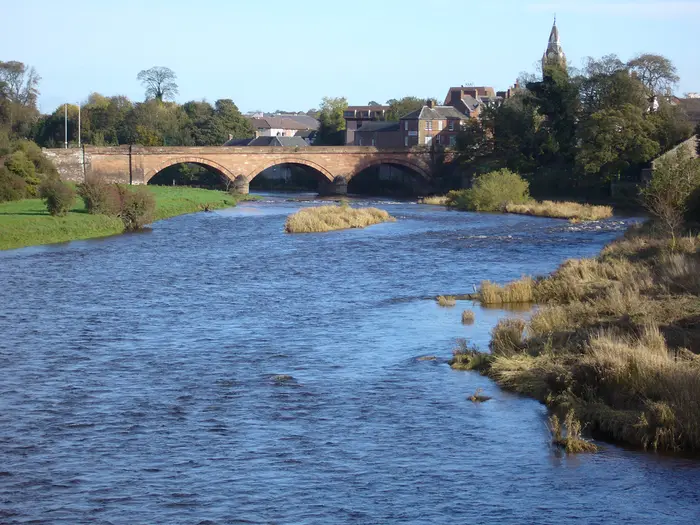
Image by Red Sunset The Annandale Way is a quiet Southern Uplands journey from Moffat to the Solway Firth, following the River Annan from its hill-country beginnings towards the sea. It suits walkers who want a lower-level long-distance route with real landscape variety rather than a high mountain challenge.
The walk begins with a proper upland day around the Devil’s Beef Tub, climbing onto open moorland near Annandale Head and the watershed between the Annan and the Tweed. After that, the character changes steadily into riverside paths, fields, farm tracks, lanes and small settlements through Annandale.
South of St Ann’s and Millhousebridge the route gives a choice: the western arm through Lochmaben, Castle Loch and Hightae, or the eastern arm through Lockerbie and Eskrigg Nature Reserve. Both lines rejoin near Hoddom, before the final easy miles through Brydekirk, Annan, Newbie and out to Barnkirk Point and Newbie Barns on the Solway.
This is not a technical walk, and the waymarking makes it accessible for a first multi-day hike. It still asks for sensible planning: the opening moorland can be boggy and exposed, some field sections become muddy after rain, and accommodation is thinner between the main towns.
This guide covers stages, route choices, days, accommodation, food, transport, terrain and the common mistakes to avoid.
Stage-by-Stage Guide
The stage notes below follow the common five-day itinerary using the western Lochmaben arm between St Ann's / Millhousebridge and Hoddom. South of St Ann's / Millhousebridge the Annandale Way also has an eastern Lockerbie arm; this is an equal alternative and is covered under the relevant stages.
Exact day distances vary slightly between maps and guidebooks, especially where the two arms are measured differently. Check current official mapping before booking accommodation or arranging baggage transfer.
Stage 1: Moffat to Moffat — Devil's Beef Tub circuit, 22 km
The first day is not a transfer stage: it is a full upland circuit from Moffat, returning to the town for a second night. It gives the Annandale Way its highest and roughest walking before the route settles into the lower River Annan valley.
The walk starts from Moffat, with the riverside start in town at Bridgend, then climbs towards the head of Annandale. The main features are the Devil's Beef Tub, the high moorland around Annandale Head and the commemorative cairn near the head of the Tweedhope Burn, close to the watershed between the Annan and the Tweed.
Underfoot this is the most demanding stage of the route. Expect heather moorland, rough sheep pasture, boggy sections near the head of Annandale and some lightly-pathed or pathless ground where the waymarking should be backed up by a map and compass or reliable offline mapping.
The high point is around 491 m near Chalk Rig Edge / Annandale Head. This is not technical hillwalking, but it is open country and can feel exposed in poor visibility, wind or persistent rain.
Food, water and accommodation are simplest on this stage because it begins and ends in Moffat. Carry enough food and water for the whole circuit, as there should be no assumption of services once away from town.
Moffat is the practical transport base for the start of the trail, although it has no railway station. Lockerbie is the nearest West Coast Main Line station and is linked to Moffat by the 380 bus; the X74 also links Moffat with Glasgow and Dumfries. Current bus times should be checked before travelling.
Navigation is most important on the moorland section around Annandale Head. In clear weather the circuit is straightforward to follow with waymarks and mapping, but in mist the broad, open ground can make it easy to drift from the line.
Stage 2: Moffat to St Ann's / Millhousebridge, 11 km
This is the first southbound stage after the opening circuit, leaving Moffat and beginning the journey down Annandale. It is a shorter day on the standard itinerary, useful after the longer moorland circuit.
The character changes from open upland to valley walking. The route follows the Annan corridor through quieter countryside, using a mix of riverside paths, field paths, farm tracks, lanes and some minor road walking.
Places on this part of the route include Beattock, Wamphray, Johnstonebridge, Millhousebridge and St Ann's. The exact stopping point matters for accommodation planning, as the middle stages have thinner choice than Moffat, Lochmaben, Lockerbie and Annan.
The walking is generally easier than Stage 1, but field sections can be muddy after rain. Expect livestock country and close gates carefully; dogs should be managed with particular care around sheep and cattle.
Food and water options are not as reliable as in the larger towns. Carry lunch and sufficient water from Moffat unless arrangements have been made in advance.
Accommodation at or near St Ann's / Millhousebridge is limited compared with the towns. Many walkers use pre-booked accommodation, pick-ups/drop-offs or baggage-transfer arrangements to make this part of the route work. Availability should be checked before travelling.
Road access is better here than on the moorland day, but public transport for intermediate villages should not be assumed. If relying on a bus, taxi, accommodation transfer or baggage service, confirm the detail before booking the stage.
Navigation is generally less demanding than Stage 1, but the route uses a mixture of farmland, lanes and riverside sections. Pay attention to waymarks at field exits, road crossings and where the route approaches the later split south of St Ann's / Millhousebridge.
Stage 3: St Ann's / Millhousebridge to Lochmaben, 16 km
From St Ann's / Millhousebridge the Annandale Way divides. The standard five-day itinerary used here takes the western arm to Lochmaben; the eastern arm goes to Lockerbie and is a valid alternative.
The Lochmaben arm keeps the walk on quiet lowland and village country. It is a mixed day of field paths, tracks, lanes and river-valley walking, with the ground generally more settled than the opening upland circuit.
The main draw of this arm is Lochmaben itself, with Castle Loch and the ruins of Lochmaben Castle nearby. This gives the stage one of the route's strongest combinations of wildlife, lochside scenery and local history.
Underfoot, expect mostly moderate walking with possible muddy field sections after rain. This is still working rural countryside, so gates, livestock and indistinct field margins are more relevant than mountain hazards.
Lochmaben is one of the more useful overnight stops on the western arm, with accommodation more concentrated than on the preceding rural stage. Exact options and current availability should be checked before committing to the western arm.
Food and water should still be planned conservatively. Lochmaben is the key resupply point at the end of the day, but walkers should carry what they need during the stage rather than relying on services en route.
Public transport and road access are more practical at Lochmaben than at smaller rural points, but onward travel details should be checked before travelling. If using baggage transfer, make sure the provider is clear that the route choice is the Lochmaben arm, not Lockerbie.
Navigation is mainly about following the correct branch at the route split. The Annandale Way is waymarked, but it is important to commit to the western Lochmaben arm and avoid accidentally following signs or mapping for the Lockerbie arm.
Eastern alternative: St Ann's / Millhousebridge to Lockerbie, about 20 km. This arm is slightly longer on the first day from the split, but it gives an overnight in Lockerbie, which has stronger transport links than most intermediate villages. It also allows a shorter following stage to Hoddom. The route passes near Eskrigg Nature Reserve, known for its small loch, wetland, woodland, red squirrels and birdlife. Lockerbie is on the West Coast Main Line, with direct trains from Glasgow, Edinburgh, Carlisle and London.
Stage 4: Lochmaben to Hoddom Castle, 22 km
This is the longest day on the western-arm itinerary and needs an early enough start, especially in shorter daylight months. It continues through quiet Annandale countryside before the western and eastern arms rejoin near Hoddom.
From Lochmaben the route heads on through the western side of the valley, with Hightae among the places on this arm before the line reaches Hoddom. The day is a mix of field paths, farm tracks, lanes, riverside sections and minor roads.
The principal destination is Hoddom, with Hoddom Castle set in parkland and Repentance Tower on the nearby hill. Hoddom Castle is a 16th-century tower house and the surrounding parkland is now a caravan park, making this a significant staging point on the lower route.
The walking is not technical, but the distance is the main challenge. Muddy fields after rain, road sections and the need to stay alert at waymarked turns are the practical issues.
Food and water should be carried for the day unless definite stops have been arranged. Do not rely on small settlements or caravan-park facilities without checking current opening and access arrangements before travelling.
Accommodation at Hoddom is more specific than in a town, so booking ahead is important. If staying elsewhere, arrange transfers in advance; the middle and lower stages are not places to improvise late in the day.
Road access exists around Hoddom, but public transport should be checked before relying on it. This is a sensible stage for walkers using baggage transfer, as the western-arm day is relatively long.
Navigation is usually straightforward with waymarks, but take care where the two arms rejoin near Hoddom. If walking the eastern Lockerbie arm instead, the day from Lockerbie to Hoddom is about 14 km and is generally the easier second half of that option.
Stage 5: Hoddom Castle to Newbie Barns / Annan, 17 km
The final stage is the easiest in character, following the lower River Annan towards the Solway Firth. The landscape opens out and the route becomes flatter as it approaches Annan, Newbie, Barnkirk Point and the coast at Newbie Barns.
Brydekirk is the key village on the lower river section, a quiet red-sandstone settlement on the gentle final stretch. Annan is the main town near the finish, with shops, food and its own railway station.
The walking is mostly low-level and easy underfoot compared with the earlier stages. Expect riverside paths, field paths, tracks, lanes and some road walking rather than rough upland ground.
The closing highlight is Barnkirk Point, looking over the mouth of the River Annan, followed by the Solway Firth finish near Newbie Barns. This is a land-based coastal finish; no ferry is involved.
Carry enough food and water from Hoddom unless certain of facilities on the way. Annan is the reliable service point near the end of the day and is the practical place to eat, resupply or wait for onward transport.
Accommodation is available in and around Annan, with more choice than at the immediate coastal finish. If finishing at Newbie Barns and returning to Annan for the night or for transport, plan that connection in advance.
Annan station is on the Glasgow South Western Line between Glasgow, Dumfries and Carlisle, making departure from the route straightforward. Train times should still be checked before travelling, particularly at weekends or on public holidays.
Navigation is generally simple on this lower section, but remain attentive through field edges, road crossings and the approach to Newbie and Barnkirk Point. After rain, muddy field sections can still slow progress even though the terrain is flat.
Recommended Itinerary
Distances on the Annandale Way vary slightly between mapping, guidebooks and GPS traces, particularly around the two southern arms. Use the distances below for planning, then check the current official mapping before booking fixed accommodation or baggage transfers.
Standard five-day itinerary: western arm via Lochmaben
This is the most balanced plan for most walkers. It keeps the opening Devil’s Beef Tub circuit as a separate day from Moffat, then follows the western arm through Lochmaben before the route rejoins near Hoddom.
| Day | From | To | Approx. distance | Why this stage makes sense | Services/accommodation notes |
|---|---|---|---|---|---|
| 1 | Moffat | Moffat, via the Devil’s Beef Tub circuit | 22 km | Keeps the highest and roughest ground as a self-contained hill day, with no pressure to move accommodation afterwards. This is the day with the most upland feel, around Annandale Head and the head of the Tweedhope Burn. | Stay in Moffat before and after this stage. Carry hill clothing, food and water; the route is more exposed and can be boggier than the lower valley stages. |
| 2 | Moffat | St Ann’s / Millhousebridge | 11 km | A shorter day after the Beef Tub circuit and the first proper southbound section of the walk. It helps avoid making the opening two days too heavy. | Accommodation choice is thinner around St Ann’s and Millhousebridge than in Moffat, Lochmaben, Lockerbie or Annan. A pickup/drop-off or baggage-transfer arrangement may be needed; this should be checked before travelling. |
| 3 | St Ann’s / Millhousebridge | Lochmaben | 16 km | Follows the western arm towards Lochmaben, giving a well-spaced middle stage and a practical overnight stop in a settlement on the route. | Lochmaben is one of the more useful overnight points on the western arm, with access to local services and accommodation. Book ahead rather than relying on walk-up availability. |
| 4 | Lochmaben | Hoddom / Hoddom Castle | 22 km | A longer but logical linking day from the Lochmaben arm to the point where the route rejoins near Hoddom. It sets up a manageable final day to the Solway. | Accommodation is more limited than in the larger towns. Hoddom Castle has camping/caravan-park facilities, but current availability and access should be checked before booking the stage around it. |
| 5 | Hoddom / Hoddom Castle | Newbie Barns / Annan | 17 km | A straightforward final stage down the lower Annan, through Brydekirk and Annan, before continuing to the Solway Firth finish at Newbie Barns. | Annan is the practical end-of-walk services point, with shops, food and a railway station. If finishing at Newbie Barns, plan how to return from the coastal finish to Annan; this should be checked before travelling. |
Eastern-arm alternative: via Lockerbie
South of St Ann’s / Millhousebridge the route splits. The western arm via Lochmaben is the standard version above, but the eastern arm via Lockerbie is an equally valid alternative and can be more convenient for rail access or accommodation.
| Day | From | To | Approx. distance | Why this stage makes sense | Services/accommodation notes |
|---|---|---|---|---|---|
| 3 alternative | St Ann’s / Millhousebridge | Lockerbie | About 20 km | This is the longer first half of the eastern arm, but it brings the route into a larger service town with a railway station. | Lockerbie is useful for accommodation, food and transport connections. It may suit walkers who prefer a town overnight rather than Lochmaben. |
| 4 alternative | Lockerbie | Hoddom / Hoddom Castle | About 14 km | A shorter follow-on day from Lockerbie to the rejoining point near Hoddom, with easier pacing after the longer previous stage. | The route passes the Lockerbie side of the Annandale Way, including the Eskrigg Nature Reserve area. Accommodation around Hoddom still needs planning in advance. |
Slower option
A slower six-day plan suits first-time multi-day walkers, anyone carrying camping gear, or walkers who want more margin around accommodation and transport. The simplest version is to keep Days 1–3 as in the standard itinerary, then split the 22 km Lochmaben to Hoddom stage using Hightae or another arranged pickup/drop-off point on the western arm.
Do not assume there is suitable accommodation exactly where a split is wanted. On this route, a slower itinerary often depends on accommodation providers, taxis, baggage transfer or pre-arranged lifts between the trail and overnight stops. Exact split points and distances should be checked against official mapping before booking.
Faster option
A four-day itinerary is possible for strong walkers, but it makes the opening day significantly harder. The most direct faster structure is:
| Day | From | To | Approx. distance | Why this stage makes sense | Services/accommodation notes |
|---|---|---|---|---|---|
| 1 | Moffat | St Ann’s / Millhousebridge, after completing the Devil’s Beef Tub circuit | About 33 km | Combines the 22 km upland circuit with the 11 km onward stage south from Moffat. This removes one overnight but creates a long first day with the roughest ground included. | Only suitable for fit walkers with an early start and secure accommodation or pickup at St Ann’s / Millhousebridge. Check current mapping and arrangements before committing. |
| 2 | St Ann’s / Millhousebridge | Lochmaben | 16 km | A shorter recovery day on the western arm. | Lochmaben is the practical overnight stop on this version. |
| 3 | Lochmaben | Hoddom / Hoddom Castle | 22 km | Keeps the main middle link intact and positions the final day well. | Book Hoddom-area accommodation or camping ahead; options are not as dense as in the towns. |
| 4 | Hoddom / Hoddom Castle | Newbie Barns / Annan | 17 km | Finishes with the easier lower-river stage to Annan and the Solway coast. | Annan is the best place to plan onward transport after reaching the finish near Newbie Barns. |
Planning the Route
How many days to allow
Plan the Annandale Way as a five-day walk unless there is a clear reason to move faster. That pattern fits the way the route is structured: the first day is a circuit from Moffat around the Devil’s Beef Tub, and the through-walk south from Moffat begins on day two.
Strong walkers can complete the route in four days, but this usually means longer days and tighter accommodation logistics. A slower pace is easier to arrange if you use accommodation pick-ups, drop-offs or extra nights in the main towns, but the route is not naturally broken into many short, evenly spaced stages.
Do not treat the first day as a normal point-to-point stage. You should normally book two nights in Moffat at the start: one before the Devil’s Beef Tub circuit and one after it, before walking south.
Natural stages and overnight stops
Accommodation and transport dictate the itinerary more than terrain. The walking becomes easier south of Hoddom, but the middle stages have thinner accommodation choice, so it is best to plan the whole route before booking individual nights.
The standard five-day plan often uses the western Lochmaben arm:
| Day | Stage | Approx. distance | Planning notes |
|---|---|---|---|
| 1 | Moffat to Moffat via the Devil’s Beef Tub circuit | 22 km | The hardest planning day for weather and underfoot conditions. Book the same Moffat accommodation for before and after this circuit if possible. |
| 2 | Moffat to St Ann’s / Millhousebridge | 11 km | A shorter day after the upland circuit. Check accommodation or pick-up arrangements carefully in this area. |
| 3 | St Ann’s / Millhousebridge to Lochmaben | 16 km | Western arm of the route, using Lochmaben as the practical overnight stop. |
| 4 | Lochmaben to Hoddom / Hoddom Castle | 22 km | A longer day, with the two route arms rejoining near Hoddom Bridge. Accommodation should be booked ahead. |
| 5 | Hoddom / Hoddom Castle to Newbie Barns / Annan | 17 km | Flat, easier walking by the lower Annan. Plan how to return from the Newbie Barns finish to Annan for services and the railway station. |
Treat these distances as approximate. Published stage lengths vary slightly, and current official mapping should be checked before making fixed accommodation or baggage-transfer bookings.
Choosing between the Lochmaben and Lockerbie arms
South of St Ann’s / Millhousebridge the Annandale Way splits into two legitimate alternatives. The western arm goes via Lochmaben and Hightae before reaching Hoddom, while the eastern arm goes via Lockerbie and Eskrigg Nature Reserve before rejoining near Hoddom Bridge.
The western arm is the usual line for the five-day itinerary above. It suits walkers who want to include Lochmaben, Castle Loch and Lochmaben Castle, and who are happy with the longer Lochmaben to Hoddom day.
The eastern arm is a strong practical alternative because it uses Lockerbie, which has a railway station on the West Coast Main Line. The split is roughly St Ann’s to Lockerbie at about 20 km, then Lockerbie to Hoddom at about 14 km, making the first of those two days longer but the following day easier and less hilly.
Choose the arm before booking. Switching late can disrupt accommodation, baggage transfer and transport plans.
Fast, slow and flexible itineraries
The Annandale Way is not a route that rewards rushing. The walking is mostly moderate, but the opening moorland day, boggy sections, field paths and occasional lightly pathed ground can all slow progress, especially after rain.
A four-day schedule is realistic for fit walkers with firm accommodation arrangements, but it leaves less room for poor weather on the Devil’s Beef Tub circuit. A five-day schedule is the better default for most independent walkers because it keeps the route manageable and allows the main towns and villages to be used sensibly.
Shortening a day is usually easier with a pre-arranged pick-up than by relying on convenient public transport from every small settlement. Extending the trip is simplest by adding nights in places such as Moffat, Lockerbie, Lochmaben or Annan, rather than trying to create many extra trail stages.
Section hiking
Section hiking is practical, but it needs more transport planning than a route with railway stations at both ends. Moffat has no railway station, so walkers starting there usually connect via Lockerbie or use longer-distance buses such as the X74, with current times checked before travelling.
Lockerbie is the most useful mid-route access point if you use the eastern arm. Annan is the practical public-transport point near the finish, with its own station on the Glasgow South Western Line.
The opening Devil’s Beef Tub circuit also works well as a standalone day from Moffat. The two-arm structure south of St Ann’s / Millhousebridge means a return visit can use the other arm, but accommodation and transport still need to be planned in advance.
Accommodation, food and baggage
Book accommodation before setting out, especially for the middle of the route. Moffat, Lochmaben, Lockerbie and Annan have the strongest practical role as overnight bases, while St Ann’s / Millhousebridge and Hoddom require more careful planning.
Do not assume every overnight point has food available at the time you arrive. Carry lunch and spare snacks each day, and check evening meals, shop opening times and breakfast arrangements when booking accommodation.
Baggage transfer and accommodation pick-ups/drop-offs are commonly used on this trail to bridge the thinner middle stages. Current availability, costs and coverage should be checked before booking.
Navigation and mapping
The Annandale Way is waymarked with its purple and blue markers, but you should still carry mapping. The most important navigation day is the Devil’s Beef Tub circuit, where the route reaches open moorland near Annandale Head and the Tweedhope Burn cairn.
A map also helps on field paths, forest and farm tracks, and where the route splits between the Lochmaben and Lockerbie arms. Relevant Ordnance Survey coverage includes OS Explorer 314, 322, 323 and 330, and OS Landranger 78 and 85.
A current GPX file and the official route information are useful checks, but waymarks should not be your only navigation tool in poor visibility or after local path changes.
Weather and ground conditions
Weather planning matters most on the opening Moffat circuit. That day reaches the highest and most exposed ground of the walk, and boggy moorland or rough sheep pasture can make progress slower than the distance suggests.
After rain, expect muddy field sections and wetter ground, even though much of the route is on firmer riverside paths, lanes and tracks. South of Hoddom the walking becomes flatter and easier, but wet fields can still affect pace.
If the forecast is poor for the Devil’s Beef Tub, staying based in Moffat gives the best flexibility. Avoid committing to a tight onward schedule that leaves no room to adjust that first upland day.
Transport checks before booking
For arrival, the usual rail gateway is Lockerbie, with onward bus connection to Moffat. The 380 Lockerbie–Moffat bus and X74 services linking Moffat with Glasgow and Dumfries should be checked before travelling.
For departure, Annan is the key transport point near the finish, with trains on the Glasgow–Dumfries–Carlisle line. The trail ends at Newbie Barns on the Solway Firth, so allow time and energy to get back from the coastal finish to Annan unless a lift or taxi has been arranged.
There are no ferry or tide logistics to plan for this finish. The main transport issue is simply connecting small trail settlements with Moffat, Lockerbie and Annan at the right times.
Towns, Villages and Overnight Stops
Accommodation on the Annandale Way is straightforward in the larger settlements but thin in the middle of the route. The easiest places to build an itinerary around are Moffat, Lochmaben or Lockerbie, Hoddom / Hoddom Castle, and Annan, with St Ann’s / Millhousebridge commonly used as the awkward but useful middle-stage break.
The route split south of St Ann’s / Millhousebridge matters for bookings. The western arm goes via Lochmaben and Hightae; the eastern arm goes via Lockerbie and Eskrigg Nature Reserve. Both rejoin near Hoddom, so choose the arm before reserving beds or baggage transfer.
Moffat
Moffat is the practical base for the start of the walk. The opening day is a circuit from the town around the Devil’s Beef Tub and back to Moffat, so most walkers need two nights here before heading south on the point-to-point part of the route.
This is one of the best-served stops on the Annandale Way, with small hotels, inns, guesthouses and B&Bs. It is also the sensible place to organise food, last-minute supplies and baggage arrangements before the quieter middle stages.
Moffat has no railway station. The nearest railhead is Lockerbie, about 15 minutes away by the 380 bus, and the X74 also links Moffat with Glasgow and Dumfries. Bus times should be checked before travelling, especially if arriving late or starting the Beef Tub circuit the same day.
Beattock
Beattock lies south of Moffat on the early valley section after the route leaves town for good. It can be useful for walkers adjusting the standard itinerary, but it is not usually the main overnight target on a five-day schedule.
Use Beattock as a practical waypoint rather than assuming full trail services. Accommodation, food and onward transport options should be checked before travelling if planning to stop here.
Wamphray and Johnstonebridge
Wamphray and Johnstonebridge sit on the quieter middle part of Annandale between the Moffat area and the St Ann’s / Millhousebridge area. They are useful for route-finding and pacing, but they should not be treated as guaranteed overnight hubs.
This part of the trail is where accommodation choice becomes thinner. Carry enough food and water for the day, and do not rely on finding regular cafés, pubs or shops en route unless current opening arrangements have been checked.
St Ann’s / Millhousebridge
St Ann’s and Millhousebridge form the common break between Moffat and the route split towards Lochmaben or Lockerbie. In the standard five-day western-arm itinerary, this is the end of the short second stage from Moffat.
This is one of the key planning points on the Annandale Way because services are limited compared with the towns. Many walkers either book early, use accommodation pick-ups and drop-offs, or rely on baggage-transfer arrangements to bridge the gap.
Do not leave food planning to chance here. Check accommodation availability, evening meals, packed lunches and any transport arrangements before booking the surrounding stages.
Lochmaben
Lochmaben is the main overnight stop on the western arm of the Annandale Way. It sits after the split south of St Ann’s / Millhousebridge and is the standard end point for the third day on the common five-day itinerary.
It is one of the better places on the route for accommodation, with the general mix of small hotels, inns, guesthouses and B&Bs found in the larger settlements. It also gives a more balanced western-arm itinerary before the longer onward stage to Hoddom.
The town is also a worthwhile stop because the route passes the Castle Loch area and Lochmaben Castle. Treat it as a practical overnight base first, with the loch and castle as useful additions if time and weather allow.
Hightae
Hightae lies on the western arm between Lochmaben and Hoddom. It is more relevant as a village passed during the day than as a primary overnight base.
If using Hightae to shorten or reshape the western-arm itinerary, accommodation and food options should be checked before travelling. Most walkers will find Lochmaben and Hoddom more practical for overnight planning.
Lockerbie
Lockerbie is the main service town on the eastern arm and the best transport-connected place on the whole route. The West Coast Main Line stops here, with direct trains from Glasgow, Edinburgh, Carlisle and London.
For walkers arriving by public transport, Lockerbie is also the railhead for Moffat, with the 380 bus linking the two. This makes it useful not only as an overnight stop on the eastern arm, but also as an access point at the start of the walk.
Choosing the Lockerbie arm gives a different shape to the middle of the route: the stage from St Ann’s to Lockerbie is longer than the western equivalent to Lochmaben, but the following section to Hoddom is shorter and easier to manage. Lockerbie is a sensible choice for walkers who value rail access, town services and a more convenient resupply point.
Eskrigg Nature Reserve
Eskrigg Nature Reserve lies on the eastern arm near Lockerbie. It is not an overnight stop, but it is a useful local feature for walkers taking the Lockerbie alternative.
The reserve is known for its small loch, wetland, woodland, red squirrels and birdlife. Plan it as a short on-route interest point rather than a place for services.
Hoddom and Hoddom Castle
Hoddom is the important meeting point after the Lochmaben and Lockerbie arms rejoin near Hoddom Bridge. In the common five-day western-arm itinerary, the fourth day finishes around Hoddom / Hoddom Castle.
Hoddom Castle is a particularly useful overnight area because it has a caravan park setting around the historic castle grounds. This makes it one of the more practical stopping points between Lochmaben or Lockerbie and Annan, especially for walkers using camping or caravan-park facilities.
Repentance Tower is nearby and is often visited as part of this stage, but services should still be planned carefully. Check current accommodation, food availability and baggage arrangements before relying on Hoddom as a stop.
Brydekirk
Brydekirk is a quiet village on the lower River Annan between Hoddom and Annan. It comes on the easier, flatter final stretch of the walk.
For most walkers it is a daytime waypoint rather than an overnight base. It can be useful for pacing the final stage, but Annan is the stronger choice for shops, food, accommodation and onward transport.
Annan
Annan is the main town near the finish and the most practical place to end the walking holiday logistically. The official coastal finish is farther on at Newbie Barns, but Annan has the services most walkers need afterwards.
The town has shops, food options, accommodation and its own railway station. Trains run on the Glasgow South Western Line between Glasgow, Dumfries and Carlisle, making departure from the route much simpler than from the actual shoreline finish.
Many walkers finish at Newbie Barns and then return to Annan for the night or onward travel. Build enough time into the final day for the extra logistics between the coast and the town.
Newbie, Barnkirk Point and Newbie Barns
Newbie, Barnkirk Point and Newbie Barns form the final approach to the Solway Firth. Barnkirk Point gives the estuary views near the mouth of the River Annan, and Newbie Barns is the end of the Annandale Way.
This is a finish point rather than a service centre. Do not assume accommodation, food or transport at the coast; plan the end of the walk around Annan unless specific arrangements have been made.
The finish is reached by land and does not involve a ferry. The practical issue is simply how to get back to Annan after completing the route, which should be arranged before setting out on the final stage.
Getting to the Start
By train
Moffat does not have a railway station. The usual rail approach is to travel to Lockerbie, on the West Coast Main Line, then continue to Moffat by bus or taxi.
Lockerbie has direct trains from Glasgow, Edinburgh, Carlisle and London. From Lockerbie, the 380 bus links to Moffat in about 15 minutes, making this the simplest public-transport route for most walkers. Current train and bus times should be checked before travelling, especially if arriving late in the day.
The walking start is in Moffat, with the riverside start at Bridgend. The first day is a circuit from Moffat around the Devil’s Beef Tub and back, so there is no need to arrange a transfer out of town for the opening stage.
By bus
Moffat is also served by longer-distance buses, including the X74, which links Moffat with Glasgow and Dumfries. This can be useful for walkers coming from Glasgow without changing onto the train at Lockerbie.
Bus services and stopping points can change, and rural evening or weekend options may be limited. This should be checked before travelling, and a taxi should be considered as a fallback if the last connection into Moffat is missed.
By car
Driving to Moffat is straightforward for the start, but the Annandale Way is a point-to-point walk finishing at Newbie Barns near Annan, so car logistics need planning before booking. The opening Devil’s Beef Tub day returns to Moffat, which makes it practical to leave luggage or a vehicle in town for the first night.
Long-stay parking should not be assumed. Ask accommodation in Moffat whether parking is available for the duration of the walk, and check whether any public parking is suitable for multi-day use before leaving a vehicle.
If leaving a car in Moffat, the return journey from the finish will need to be arranged separately. Annan has its own railway station on the Glasgow–Dumfries–Carlisle line, but onward connections back towards Moffat or Lockerbie should be planned in advance. A pre-booked taxi may be the simplest option if public-transport timings do not line up.
From the nearest airport
For walkers arriving by air, the practical approach is to route via a major city with onward rail or bus links to Dumfries and Galloway. Glasgow and Edinburgh both have direct trains to Lockerbie, from where Moffat is reached by the 380 bus or taxi.
Allow enough time for the airport-to-city transfer before the onward train or bus. Flight arrivals, city transfer times and the final connection into Moffat should all be checked before travelling.
Where to stay before starting
Moffat is the natural pre-walk base. It has the best position for the official start, and the first walking day returns to the town after the Devil’s Beef Tub circuit.
Most walkers should book at least one night in Moffat before starting. For a five-day itinerary using the opening circuit as day one, it is often convenient to book two consecutive nights in Moffat, then leave town southbound on day two.
Accommodation in Moffat includes small hotels, inns, guesthouses and B&Bs. Availability can tighten in the walking season, so book ahead and check whether luggage storage, packed lunches or parking are available if needed.
Getting Home from the Finish
The Annandale Way finishes at Newbie Barns, near Newbie, on the Solway Firth coast beyond Annan. The key practical point is that the railway station is in Annan, not at the coastal endpoint, so plan the final miles and your onward transport together rather than assuming the finish itself has public transport.
If finishing late in the day, the safest plan is to stay in Annan or pre-book a taxi from the finish. Newbie Barns is a rural coastal finish, and onward services should be checked before travelling.
By train
Annan is the nearest railway station to the finish. It sits on the Glasgow South Western Line, with trains on the Glasgow–Dumfries–Carlisle route, making rail the simplest way to leave the trail without returning to Moffat.
From Annan, typical onward options are to travel towards Dumfries and Glasgow, or south towards Carlisle for wider connections. Current train times, engineering works and last services should be checked before committing to a same-day journey, especially after a full final walking day.
Because the official finish is beyond Annan at Newbie Barns, allow time to get back into Annan after reaching the coast. Many walkers will find it simpler to end the walking day with accommodation in Annan, then take the train the following morning.
By bus
Bus options from the finish area are more limited than the rail option from Annan. Treat Annan as the practical public-transport hub at the southern end of the walk, rather than expecting a reliable bus from Newbie Barns itself.
If using buses for onward travel, check current timetables before travelling and have a fallback plan. Rural evening and Sunday services can be limited, and a missed connection at the end of the walk can be awkward.
By car/taxi
For a clean finish at Newbie Barns, pre-booking a taxi to collect you from the coastal endpoint is the most straightforward option. This is particularly useful if you need to reach Annan station for a specific train, are travelling with heavy luggage, or expect to finish late.
An alternative is to arrange collection from Annan instead, using the town as the practical end-of-day base after completing the coastal finish. Do not rely on finding a taxi immediately at Newbie Barns without arranging it in advance; this should be checked before travelling.
If leaving a car in the area, parking arrangements in Annan or near the finish should be confirmed locally before the walk. The route is point-to-point, so anyone with a car at Moffat will still need a plan to return north.
From the nearest airport
There is no airport-specific trailhead transport at the finish. The practical method is to travel first by train from Annan towards a larger rail-connected city, then continue to the relevant airport.
Glasgow is the most direct major city named on the Annan rail line via Dumfries. Edinburgh and London connections are more likely to involve changing onto wider rail services, so journey times and airport transfers should be checked before booking flights.
Where to stay at the finish
Annan is the sensible place to stay at the end of the Annandale Way. It is the main town near the finish, with shops, food and its own railway station, which makes it much easier to manage a relaxed final day and leave the following morning.
Accommodation on the route is concentrated in towns such as Annan, with a mix of small hotels, inns, guesthouses and B&Bs. Availability can vary, so book ahead if finishing in peak walking months or if your train plans depend on staying overnight in town.
Staying at the finish is especially sensible if you want to walk all the way to Barnkirk Point and Newbie Barns without rushing. It also avoids the risk of reaching the coast after the last convenient onward service.
Which Direction Should You Walk?
The Annandale Way is normally walked north to south, from Moffat to Newbie Barns near Annan. That is the direction used by the standard five-day itinerary, with the Devil’s Beef Tub circuit completed from Moffat on day one before the route heads down Annandale towards the Solway Firth.
Reverse walking is possible, but it is less natural for this particular route. The trail is built around following the River Annan from its upland headwaters towards the sea, so the southbound direction gives the clearest sense of journey.
North to south: Moffat to Newbie Barns
This is the better direction for most walkers. Starting in Moffat means the highest and roughest ground — the Devil’s Beef Tub, Annandale Head and the moorland near the Tweedhope Burn cairn — comes at the beginning, while legs are fresh and before the route settles into lower river-valley walking.
The opening day is also a circuit from Moffat, which is useful logistically. Most walkers can base themselves in town for that first hill day, rather than carrying full multi-day kit over the highest section.
The scenery progression works well southbound. The route begins in the Moffat Hills, follows the Annan through farmland, woodland, villages and market towns, then finishes with the flat lower river, Barnkirk Point and the Solway Firth near Newbie Barns.
Transport is also clean in this direction. Moffat has no railway station, but it is linked by bus to Lockerbie and by longer-distance bus services such as the X74. At the far end, Annan has its own railway station on the Glasgow–Dumfries–Carlisle line, making departure after the coastal finish straightforward. Current bus and train times should be checked before travelling.
Accommodation planning also tends to be easier southbound because the common walking schedules and baggage-transfer arrangements are built around this flow. The middle stages still need care, especially around St Ann’s, Millhousebridge and Hoddom, where accommodation choice is thinner than in Moffat, Lochmaben, Lockerbie and Annan.
South to north: Newbie Barns to Moffat
Walking northbound is perfectly feasible, but it changes the character of the route. Instead of walking from hills to sea, you start near the Solway Firth and work gradually inland towards the head of Annandale.
The main appeal is that the hills become the finale. The Devil’s Beef Tub and Annandale Head make a strong ending, especially for walkers who prefer to build towards the highest ground rather than start with it.
The drawbacks are practical. Finishing in Moffat means leaving by bus rather than stepping straight onto a train, so connections through Lockerbie or onward bus links need planning. This should be checked before travelling.
Northbound walkers also reach the roughest and highest ground at the end of the walk. That is not a technical problem, but the moorland around the head of Annandale is more demanding than the lower river sections, particularly in poor visibility or after wet weather.
Does direction affect the climbs?
Not enough to outweigh the logistics. The total ascent is modest for a Southern Uplands route, and the only notably upland section is the Devil’s Beef Tub circuit from Moffat.
Southbound, that harder day comes first and can be done from a Moffat base. Northbound, it becomes the final challenge. For most walkers, the southbound arrangement is more convenient and psychologically easier.
Wind and weather
There is no reliable direction choice that avoids bad weather on this route. The exposed section is the high ground around the Devil’s Beef Tub and Annandale Head; the important decision is to walk that day in suitable conditions, not to choose the whole route based on wind direction.
The lower Annan sections are generally more sheltered and easier underfoot, though field paths and moorland ground can still be muddy after rain.
Recommendation
Walk the Annandale Way north to south, from Moffat to Newbie Barns. It matches the standard itinerary, gives the route its natural source-to-sea shape, puts the roughest upland ground at the start, works best with the Moffat opening circuit, and finishes with simple onward travel from Annan.
Accommodation Along the Route
Accommodation on the Annandale Way is workable for inn-to-inn walkers, but it is not evenly spread. The strongest choice is in the towns — Moffat, Lochmaben, Lockerbie and Annan — while the quieter middle stages around St Ann’s, Millhousebridge and Hoddom need more careful planning.
Most walkers using the standard five-day schedule need two nights in Moffat: one before the opening Devil’s Beef Tub circuit and one after it, because day one returns to the town. From there, accommodation choices become thinner until the route reaches Lochmaben or Lockerbie, depending on which arm is chosen.
Booking ahead is strongly advised, especially for weekends, summer dates and any itinerary relying on a specific pick-up, drop-off or baggage transfer. Small rural B&Bs and inns can fill quickly, and some places may not operate year-round. Current availability should be checked before travelling.
Best overnight stops
| Place | Accommodation level | Best for | Notes |
|---|---|---|---|
| Moffat | Good | Start, pre-walk night, and night after the Devil’s Beef Tub circuit | The practical hub for the route. The opening day is a circuit from Moffat, so a standard five-day itinerary usually uses two nights here. |
| Beattock | Limited | Possible early-stage alternative near Moffat | Useful only if it fits a customised itinerary. Moffat has the stronger accommodation base. |
| Wamphray / Johnstonebridge | Limited | Splitting the Moffat to St Ann’s / Millhousebridge area | Accommodation choice is not a major strength of this section, so do not rely on finding something last-minute. |
| St Ann’s / Millhousebridge | Limited | End of the short second stage on the common five-day schedule | This is one of the key planning pinch points. Many walkers use accommodation pick-ups/drop-offs or baggage transfer around this area. |
| Lochmaben | Good | Western arm overnight stop | The standard five-day itinerary commonly uses the western arm via Lochmaben before continuing to Hoddom. Good place to plan a town-based night. |
| Hightae | Limited | Western arm alternative near Lochmaben | Better treated as a possible local alternative than a guaranteed overnight base. This should be checked before travelling. |
| Lockerbie | Good | Eastern arm overnight stop and transport access | A strong alternative to Lochmaben for walkers choosing the eastern arm. It has a railway station and makes the following stage to Hoddom shorter than the western-arm equivalent. |
| Hoddom / Hoddom Castle | Limited | Rejoin point of the two arms; final pre-coast overnight | Accommodation is more limited than in the towns, but Hoddom Castle is noted for caravan-park accommodation. Book early if stopping here. |
| Brydekirk | Limited | Possible final-stage stop or pick-up point | Generally more useful as a passing village than as a core overnight base. This should be checked before travelling. |
| Annan | Good | End-of-walk night and onward travel | The most practical place to stay after finishing near Newbie Barns. Annan has shops, food and its own railway station. |
| Newbie / Newbie Barns | None / very limited | Trail finish only | Treat the Solway Firth finish as the walking endpoint, not the main overnight base. Most walkers continue or transfer back to Annan. |
Standard five-day accommodation pattern
A practical inn-to-inn plan is usually built around:
- Moffat — arrive and stay before starting.
- Moffat — stay again after the Devil’s Beef Tub circuit.
- St Ann’s / Millhousebridge area — limited choice; plan carefully.
- Lochmaben on the western arm, or Lockerbie on the eastern arm.
- Hoddom / Hoddom Castle area — limited choice before the final stage.
- Annan — stay after reaching Newbie Barns, or leave by rail.
The western arm via Lochmaben is the common five-day line used in many itineraries. The eastern arm via Lockerbie is an equal alternative: it gives a longer day from St Ann’s to Lockerbie, then an easier shorter day onward to Hoddom.
Using transfers to make the route easier to book
The accommodation gaps on the Annandale Way are not severe, but they can be awkward. The most common problem is not the walking distance itself, but finding a suitable bed exactly at the stage end.
Pick-ups and drop-offs from accommodation providers can make the middle stages much easier. This is particularly useful around St Ann’s / Millhousebridge and Hoddom, where there is less choice than in Moffat, Lochmaben, Lockerbie or Annan.
Baggage transfer also suits this route well, especially for walkers staying in guesthouses and inns rather than camping. Current baggage-transfer arrangements, including Annandale Baggage details, should be checked before booking the itinerary.
Camping and caravan options
The route has some camping and caravan provision, including at Hoddom Castle, but it should not be treated as a continuous campsite-to-campsite trail without planning. Campsites and caravan parks are less frequent than the town accommodation, so daily distances may not line up neatly.
Campers should check opening dates and booking requirements in advance. This is especially important outside the main spring-to-autumn walking season, when smaller sites may have reduced availability.
Is it suitable for inn-to-inn walking?
Yes, the Annandale Way works well as an inn-to-inn route if accommodation is booked before travel. Moffat, Lochmaben or Lockerbie, and Annan give the walk a reliable town-based structure, while the quieter rural stops may need transfers or a flexible stage plan.
For the smoothest itinerary, avoid assuming that every signed stage end has plentiful beds. Build the plan around the towns first, then use pick-ups, drop-offs or baggage transfer to solve the thinner sections.
Camping and Wild Camping
The Annandale Way can be camped, but it is not the simplest Scottish trail for a tent-only itinerary. Much of the route follows a settled river valley through fields, farm tracks, villages and small towns, so good wild-camping spots are less frequent than on higher, more remote routes.
For most walkers, the practical approach is to use established campsites or caravan-park/touring facilities where available, and to book accommodation or arrange pick-ups on the thinner middle stages. Do not assume that every overnight stop on the standard itinerary has a convenient tent pitch.
Campsites and caravan parks
Camping provision is concentrated around the main settlements rather than evenly spaced along the trail. Moffat is the most useful base for the opening Devil’s Beef Tub circuit, while Lochmaben, Lockerbie, Hoddom and Annan are the main places to check for overnight options further south.
Hoddom Castle is a key practical stop because the western Lochmaben arm and eastern Lockerbie arm rejoin near Hoddom, and the site is associated with a caravan park. If relying on it for a camping night, check current touring and tent arrangements before booking.
| Section | Camping practicality |
|---|---|
| Moffat and the Devil’s Beef Tub circuit | Best treated as a Moffat-based day. The circuit returns to town, so there is little reason to wild camp on the exposed moorland. |
| Moffat to St Ann’s / Millhousebridge | Accommodation and camping choice becomes thinner. Plan this stage carefully before committing to a tent-only itinerary. |
| St Ann’s / Millhousebridge to Lochmaben or Lockerbie | Both arms pass through settled countryside. Check current campsite or accommodation availability in the chosen overnight town. |
| Lochmaben or Lockerbie to Hoddom | Hoddom is the main camping/caravan-park focus near the route junction. This should be checked before travelling. |
| Hoddom to Annan / Newbie Barns | The finish is close to Annan, which has shops, food and a railway station. Most walkers will finish and leave from Annan rather than camp near Newbie Barns. |
Wild camping on the Annandale Way
In Scotland, lightweight responsible wild camping is generally permitted under access rights when carried out in line with the Scottish Outdoor Access Code. That does not mean camping anywhere is appropriate. On this route, the practical limitations are often more important than the legal principle: fields, livestock pasture, riverside paths, farms, villages and managed visitor areas all reduce the number of suitable places.
Wild camping is least appropriate close to settlements, farm buildings, enclosed fields, crops, signed visitor sites, nature reserves and lochside recreation areas. Castle Loch and Eskrigg Nature Reserve are places to enjoy quietly during the day, not informal camping spots.
The opening upland section around the Devil’s Beef Tub has the most remote feel, but it is also a circuit from Moffat, includes rough sheep pasture and boggy moorland, and reaches the highest, most exposed part of the route. It is usually more sensible to camp or stay in Moffat and walk this section with a day pack.
Water and cooking
The River Annan is a constant presence, with tributaries and lochs along or near the route, but valley water should not be treated as automatically safe. The walk passes through farmland and settlements, so any water taken from streams, burns or the river should be filtered, treated or boiled.
Carry enough water between towns and villages, especially if camping away from services. Do not wash, cook or empty waste directly into the river, lochs or burns.
Use a stove rather than lighting a fire. Open fires are a poor fit for this route because of farmland, woodland, dry grass in good weather and the need to leave no trace.
Leave No Trace and local considerations
Keep any wild camp small, late and discreet, and move on early. Avoid blocking paths, gates, fishing access, farm tracks or riverside routes, and do not camp where livestock are present.
All waste must be packed out, including food scraps and sanitary items. Human waste should be dealt with well away from watercourses, paths, fields and buildings, and carried out where burial is not appropriate.
The main seasonal issues for campers are wet ground and exposure rather than technical difficulty. The moorland near Annandale Head can be boggy, and field sections can become muddy after rain; a tent pitch that looks usable on a dry map may be poor in prolonged wet weather.
Food, Water and Resupply
The Annandale Way is not a remote expedition, but food is unevenly spaced. Moffat and Annan are the clearest places to stock up, while the middle of the route passes through small villages, farms, field paths and quiet lanes where opening hours and food options should not be assumed.
Plan each day as if there may be no dependable food stop between your overnight stops. Carry lunch, snacks and enough spare food to cover a delayed arrival, especially on the opening Devil’s Beef Tub circuit and the quieter middle stages around St Ann’s, Millhousebridge, Hoddom and Brydekirk.
Main resupply strategy
Moffat is the practical base at the start of the walk and the best place to buy food for the opening circuit and the first southbound stage. Because day 1 returns to Moffat, there is no need to carry multi-day food from the start unless camping or travelling independently with limited shop access.
On the western arm, Lochmaben is the main named town between St Ann’s / Millhousebridge and Hoddom. On the eastern arm, Lockerbie is the main named town and is generally the more practical choice for walkers wanting a larger mid-route service stop, but current food options and opening hours should be checked before relying on them.
Annan has shops and food near the end of the route, and is the sensible place to eat or resupply before or after visiting the coastal finish at Newbie Barns. Do not assume there will be food available at the actual finish near Newbie Barns.
Water
The simplest and safest water plan is to fill up at accommodation each morning and again at cafés, pubs or other staffed services where available. In the quieter middle sections, ask your overnight accommodation about refill options before setting off.
The route follows the River Annan and passes burns, wet ground and lochside areas, but natural water should be treated or filtered. Much of the walk passes through sheep pasture, farmland and settled river valley ground, so clear-looking water is not automatically safe to drink.
For most stages, carrying around 1.5–2 litres of water is a sensible starting point in normal conditions, with more in warm weather or if you know there will be no reliable refill until the end of the day. The 22 km Devil’s Beef Tub circuit deserves a full day’s water from Moffat, as the upland section should not be treated as a resupply area.
Rural opening hours
Small-town and village food options can have short hours, seasonal variation and Sunday or early-closing days. Evening meals can also be limited if staying away from the larger towns, so book accommodation and dinner arrangements together where possible.
If relying on a pub, café, village shop, campsite shop or takeaway for a meal, check current opening times before travelling and again the day before arrival. This matters most around St Ann’s / Millhousebridge, Hoddom / Hoddom Castle and the smaller villages on the final approach to Annan.
| Section | Food availability | Water availability | Notes |
|---|---|---|---|
| Moffat and the Devil’s Beef Tub circuit | Best arranged in Moffat before setting out. No reliable food resupply should be expected on the upland circuit. | Fill in Moffat before leaving. Natural upland water should be treated if used. | Carry a full day’s lunch, snacks and water. This is the longest and most exposed food-and-water carry on the route. |
| Moffat to St Ann’s / Millhousebridge | Start with supplies from Moffat. Treat Beattock, Wamphray, Johnstonebridge, Millhousebridge and St Ann’s as places where services must be checked rather than assumed. | Fill before leaving Moffat; top up only where a staffed service or accommodation is available. | Shorter stage, but still carry lunch unless a definite stop has been arranged. |
| St Ann’s / Millhousebridge to Lochmaben, western arm | Limited until Lochmaben. Current food options in Lochmaben should be checked before relying on them. | Fill at the start; refill at accommodation or open services where available. Natural water should be treated. | Carry lunch and snacks from the previous overnight stop. This arm is the standard five-day line. |
| St Ann’s / Millhousebridge to Lockerbie, eastern arm | Lockerbie is the main service town on this alternative arm, but exact shops, cafés and opening times should be checked before travelling. | Fill at the start; refill in Lockerbie if services are open. | Useful alternative for walkers who want a stronger mid-route resupply point. The onward stage to Hoddom is shorter than from Lochmaben. |
| Lochmaben or Lockerbie to Hoddom / Hoddom Castle | Food should be planned before leaving Lochmaben or Lockerbie. Do not assume reliable daytime food before Hoddom. | Fill before departure. Refill at accommodation or open services only; treat natural water. | This is a key section for pre-booked evening meal arrangements, especially if staying around Hoddom / Hoddom Castle. |
| Hoddom / Hoddom Castle to Newbie Barns via Brydekirk and Annan | Annan has shops and food and is the main resupply point near the finish. Brydekirk and Newbie should not be treated as dependable food stops without checking. | Fill at Hoddom and again in Annan if needed. Natural lower-river water should be treated if used. | The actual coastal finish at Newbie Barns is not a resupply point, so plan food and onward travel around Annan. |
Terrain, Conditions and Difficulty in Practice
The Annandale Way is moderate because of its length, mixed rural surfaces and one rougher upland day, not because it has technical mountain ground. Most of the route follows the valley of the River Annan on riverside paths, field edges, farm and forest tracks, country lanes and minor roads. The high point is only about 491 m, but the opening circuit above Moffat gives the walk a distinctly hill-country start.
Underfoot, expect mostly firm and straightforward walking, with the slowest going on the moorland around the head of Annandale and in muddy fields after rain. The route is waymarked, but the rougher, more open sections are not a substitute for carrying a map or GPX, especially where the path is light on the ground.
What the walking is like underfoot
| Section | Practical terrain notes |
|---|---|
| Moffat and the Devil’s Beef Tub circuit | The hardest ground of the route. The circuit climbs from Moffat into heather moorland and rough sheep pasture around the Devil’s Beef Tub, Annandale Head and the Tweedhope Burn cairn. Expect boggy ground near the head of Annandale and some lightly-pathed cross-country walking. |
| Moffat to St Ann’s / Millhousebridge | Easier than the opening circuit, with more valley walking, field paths, tracks and quiet rural sections. Mud can still slow progress after wet weather. |
| Western arm via Lochmaben and Hightae | A varied lowland route with riverside, lochside, field and lane walking. It is the standard line used in many five-day itineraries and keeps the walk rural rather than town-focused. |
| Eastern arm via Lockerbie and Eskrigg | An equal alternative after the route split south of St Ann’s / Millhousebridge. It is slightly longer to Lockerbie, but the onward walking towards Hoddom is easier and less hilly. |
| Hoddom to Annan and Newbie Barns | The easiest section in terrain terms. The lower Annan is gentle and flat, with straightforward walking through Brydekirk, Annan and towards the Solway finish near Newbie Barns. |
Climbs, descents and effort
Most of the route’s ascent is concentrated early, especially on the Devil’s Beef Tub circuit from Moffat. This is also the longest and most committing-feeling day in the standard itinerary, because it goes into open hill ground before returning to the same town.
After Moffat, the trail becomes a lower-level river-valley walk. There are still undulations, field climbs, lane sections and occasional rougher patches, but the route no longer has the same upland character. South of Hoddom the walking becomes notably easier, flatter and more relaxed.
The total ascent is about 1,150 m over the full 90 km, so the challenge is cumulative rather than steep or technical. Walkers used to day walks of 15–22 km on mixed ground should find the route manageable, provided the opening day and wet ground are not underestimated.
Mud, bog and wet ground
The boggiest ground is around the head of Annandale on the opening circuit, where moorland, rough pasture and lighter paths can hold water. Waterproof boots or trail shoes with reliable grip are more useful here than lightweight footwear designed only for dry paths.
Lower down the valley, wet weather mainly affects field sections and riverside paths. These can become muddy and slower than their map distance suggests, especially after prolonged rain. The route is not technically difficult in poor conditions, but wet grass, churned field edges and slippery mud can make progress more tiring.
Waymarking and navigation
The Annandale Way is fully waymarked with its purple and blue markers. On clear valley paths, tracks and lanes, navigation is usually simple.
The places where walkers most need to pay attention are the open upland stretches near the Devil’s Beef Tub and the lightly-pathed cross-country sections. A map, compass or reliable offline GPX is sensible, particularly in mist or low cloud around Annandale Head. Current official mapping should also be checked before booking, as exact day distances and route details can vary slightly between sources.
Roads, lanes and farmland
This is not a wilderness route. Expect a practical mix of countryside walking: riverside paths, farm tracks, field paths, forest tracks, country lanes and some minor road walking. The road sections are part of the character of a lowland valley trail and help link smaller settlements and farms.
Much of the walking passes through working rural land. Keep dogs under close control, leave gates as found and allow time for field boundaries and waymarked diversions around farms or estate land. Any temporary access changes or path diversions should be checked before travelling.
Technical difficulty and exposure
There is no scrambling, no technical rocky ground and no mountain pass in the alpine sense. The Devil’s Beef Tub gives the most exposed-feeling terrain because the route reaches open moorland and skirts the rim of a steep-sided hollow, but the difficulty is normal hillwalking rather than mountaineering.
Wind, mist and rain can make the opening circuit feel much more serious than the rest of the trail. In poor visibility, the high moorland near Chalk Rig Edge, Annandale Head and the Tweedhope Burn cairn is where navigation matters most.
Seasonal conditions
Spring, summer and autumn are the natural seasons for the Annandale Way. Spring can bring wet fields and soft moorland but generally good walking temperatures. Summer gives the longest daylight for the 22 km days, though riverside and field sections can still be muddy after rain.
Autumn suits the route well, but shorter days make the opening circuit and the longer Lochmaben–Hoddom or Hoddom–Newbie Barns stages worth planning carefully. Winter is not excluded by altitude alone, but the combination of short daylight, wet ground and exposed upland weather makes it less forgiving than the route’s modest height suggests.
Weather and Best Time to Walk
The Annandale Way is best planned in spring, summer or autumn. It is a mostly low-level river-valley route, but the opening Devil’s Beef Tub circuit reaches open Southern Uplands moorland at around 491 m, so weather on day one can feel much more exposed than the rest of the walk.
Best months
Late spring to early autumn is the most practical window for most walkers. The route is generally easier to organise then, with longer daylight, more forgiving temperatures and better conditions underfoot on the field, riverside and moorland sections.
A good default choice is May, June or September: long enough days for the 22 km stages, less heat than high summer, and usually more comfortable walking conditions than winter. July and August are also workable, but book accommodation early, especially in Moffat, Lochmaben, Lockerbie, Annan and around the thinner middle stages.
Seasonal conditions at a glance
| Season | What to expect | Planning notes |
|---|---|---|
| Spring | Often one of the better periods, but wet spells can leave the moorland and field paths soft. | Good for daylight and cooler walking. Carry waterproofs and expect mud after rain. |
| Summer | Longest daylight and easiest logistics, but warm spells can make road, field and open valley walking tiring. | Start early on hot days, carry enough water between settlements, and check accommodation availability before committing to dates. |
| Autumn | Often a good walking season, with cooler temperatures and quieter accommodation demand outside busy periods. | Shortening days matter on the 22 km stages. Wet grass, mud and slippery field edges become more likely. |
| Winter | Possible in theory for experienced walkers, but not the best season for a first multi-day attempt. | Short daylight, cold rain, wind, hill fog, ice or snow on the Beef Tub circuit can make the route significantly harder. Accommodation and baggage options should be checked before travelling. |
Rain, mud and boggy ground
Wet weather is the main condition that changes the difficulty of the Annandale Way. Much of the route is on riverside paths, fields, farm tracks, lanes and woodland edges, so prolonged rain can turn otherwise straightforward walking into slow, muddy going.
The most weather-sensitive section is the opening circuit from Moffat around the Devil’s Beef Tub, Annandale Head and the Tweedhope Burn cairn. This includes rough sheep pasture, heather moorland and some boggy or lightly pathed ground, where waterproof boots and gaiters can be worthwhile after rain.
South of Hoddom the going becomes flatter and easier, but riverside and field sections can still be wet underfoot. Lightweight trail shoes may be comfortable in dry summer weather, but waterproof footwear is the safer all-round choice for a multi-day trip.
Wind, fog and exposure
The route is not a mountain traverse, but the high ground above Moffat is exposed. Strong wind, low cloud or hill fog can make the Devil’s Beef Tub rim and the moorland around Annandale Head feel serious, especially where the path is faint or the ground is rough.
Carry a map or reliable offline mapping for this opening day even though the Annandale Way is waymarked. If the forecast is poor, it is sensible to start early from Moffat and keep plenty of margin for slower navigation on the high ground.
The final approach to Barnkirk Point and Newbie Barns can also feel exposed in windy weather because the route finishes by the open Solway Firth. This is a weather consideration rather than a tidal or ferry-planning issue.
Snow, ice and winter practicality
Winter is realistic only for walkers who are comfortable with short days, cold rain, poor visibility and possible snow or ice on the Southern Uplands section. The low-level valley stages may remain walkable when the hills are unpleasant, but the first day is an important exception.
For most walkers, a winter Annandale Way is best treated as a flexible trip rather than a fixed itinerary. Be prepared to alter the day-one circuit from Moffat if the Beef Tub and Annandale Head are affected by snow, ice or persistent hill fog.
Daylight and stage timing
The standard five-day itinerary includes two longer days of about 22 km: the Moffat Devil’s Beef Tub circuit and the Lochmaben to Hoddom stage on the western arm. In spring and summer these are comfortable daylight walks for most fit walkers; in late autumn and winter they require tighter timing.
If walking outside the main season, avoid late starts and build in extra time for mud, navigation and café or shop closures. The eastern arm via Lockerbie is an equal alternative to the Lochmaben arm and may suit some itineraries better, but exact stage distances and transport timings should be checked before travelling.
Insects and ticks
Midges are not usually the defining issue on this route in the way they can be in wetter Highland areas, but sheltered woodland, damp riverside spots and still summer evenings can still be irritating. A small repellent is sensible in summer.
Ticks are a more practical concern because the route includes long grass, woodland edges, rough pasture and sheep country. Check skin and clothing at the end of each day, especially after the moorland opening stage and field sections.
Accommodation and seasonal logistics
Accommodation is concentrated in places such as Moffat, Lochmaben, Lockerbie and Annan, with thinner choice on the middle stages. In the main walking season, book ahead; outside it, check that accommodation, food options, baggage transfer and any pick-up/drop-off arrangements are operating before fixing the itinerary.
There are no special seasonal permits to plan around for the walk itself, but temporary path diversions, storm damage or local access changes can affect rural routes. Check the current Annandale Way route information before travelling, particularly after severe weather.
Safety Notes
The Annandale Way is a moderate, waymarked route rather than a technical mountain walk, but it still crosses rural ground where help may not be immediate. The main safety issues are weather exposure on the opening upland circuit, wet or boggy ground, quiet road sections, livestock and the usual risks of walking beside rivers and lochs.
Emergency help
In an emergency in the UK, call 999 or 112. On the hill or in remote countryside, ask for the police and explain that mountain rescue may be needed.
Do not rely on having mobile reception everywhere, especially on the more open upland and rural sections north of Beattock and around the head of Annandale. Carry a charged phone, a power bank for multi-day use, and a map or offline navigation that does not depend on signal.
Weather and exposure
The opening Devil’s Beef Tub circuit is the most exposed part of the route. It climbs onto open moorland around Annandale Head and the Tweedhope Burn cairn, reaching roughly 491 m, where wind, low cloud and rain can make navigation and temperature management more serious than the overall height suggests.
Carry waterproofs and an insulating layer even in summer. In hot weather, the open moorland, road sections and field walking can feel exposed, so start with enough water and sun protection; in cold or wet conditions, avoid long stops on the higher ground and keep spare clothing dry.
Navigation and waymarking
The route is waymarked with Annandale Way markers, but a map is still important. The upland section includes rough sheep pasture, boggy ground and lightly-pathed stretches where waymarks alone should not be treated as the only navigation method.
South of St Ann’s / Millhousebridge the route splits into western and eastern arms before rejoining near Hoddom. Make sure the day’s route is clear before leaving accommodation, especially if luggage transfer, pick-ups or accommodation bookings depend on taking the Lochmaben or Lockerbie line.
Roads, farms and livestock
Expect some country-lane and minor-road walking. Use verges where available, face oncoming traffic where safe, and take extra care on bends, narrow lanes and in poor visibility.
The route also passes through farm and sheep country. Leave gates as found, keep dogs under close control, avoid walking between livestock and young animals, and give animals plenty of space rather than trying to push directly through a group.
Rivers, lochs and wet ground
The Annandale Way follows the River Annan for much of its journey and also passes wetland and lochside areas such as Castle Loch and Eskrigg Nature Reserve, depending on the arm chosen. Riverbanks, boardwalks, field paths and muddy sections can be slippery after rain.
Keep back from eroded or undercut river edges, do not enter fast or swollen water, and take care where grass hides holes or soft ground. The moorland near the head of Annandale can be boggy, so waterproof footwear and poles can be useful for stability.
Solo walking
The Annandale Way is suitable for competent solo walkers, but some stretches are quiet. Leave a route plan with someone reliable, including the day’s start and finish, the chosen arm south of St Ann’s / Millhousebridge, and expected arrival time.
Solo walkers should be especially cautious about pressing on in poor visibility on the Devil’s Beef Tub circuit. If the weather is deteriorating, a shorter or lower-level day is safer than continuing onto open moorland without confidence in navigation.
Check before setting off each day
Before leaving each morning, check:
- The day’s weather, especially wind, rain and visibility for the Devil’s Beef Tub and Annandale Head section.
- The correct route line and whether the day follows the Lochmaben or Lockerbie arm.
- Current path diversions or access notices. This should be checked before travelling.
- Accommodation, pick-up, baggage-transfer and onward transport arrangements, particularly on the thinner middle stages.
- Phone charge, offline maps, food, water and spare clothing for the full day, not just the expected walking time.
Gear Recommendations
The Annandale Way does not need mountain expedition kit, but it does reward sensible Scottish hill and valley gear. The key is to be ready for one exposed upland day around the Devil's Beef Tub, followed by several days of riverside paths, farm tracks, lanes, wet fields and quieter cross-country sections.
Footwear
Waterproof trail shoes or lightweight walking boots are the best fit for most walkers. The route is generally low-level and non-technical, but the opening circuit above Moffat includes heather moorland, rough sheep pasture and boggy ground near the head of Annandale.
Boots give more ankle support on muddy fields and uneven upland turf. Trail shoes are comfortable for the lower Annan, country lanes and firmer tracks, but choose a pair with good grip rather than road-running soles.
Gaiters are useful rather than essential. They are most worthwhile on the Devil's Beef Tub circuit and after wet weather on field sections, where mud and long grass can quickly soak socks.
Waterproofs and warm layers
Carry full waterproofs every day: jacket and overtrousers. The route is not high by Scottish standards, but the high point near Annandale Head is around 491 m and can feel exposed in wind, rain or low cloud.
A warm mid-layer should be packed even in summer, particularly for the Moffat circuit and any long pauses on open ground. In spring and autumn, add a hat and gloves; cold rain and wind are more likely to be a problem than altitude.
A small dry bag or waterproof pack liner is strongly recommended. Much of the route follows river, field and farm terrain where wet grass and prolonged rain can make a pack damp even when the walking itself is straightforward.
Navigation
The Annandale Way is waymarked with its purple and blue markers, but do not rely on waymarking alone. A map is particularly useful on the opening upland circuit, on lightly-pathed cross-country ground and anywhere field exits are unclear.
Suitable OS mapping includes OS Explorer 314, 322, 323 and 330, or OS Landranger 78 and 85. The official guidebook and current route information are also useful, especially because day distances and route variants can vary slightly between sources.
A phone with offline mapping is practical, but it should not be the only navigation tool. Carry a power bank if using a phone for GPS, photos, accommodation details and transport information over several days.
Water and food carry
Carry enough water for a full walking day rather than assuming frequent refill points. The route passes towns and villages, but the middle stages have thinner services and some accommodation may involve pick-ups or drop-offs rather than facilities directly on the trail.
A 1.5–2 litre capacity is sensible for most days, with more in warm weather or if walking long stages without a planned stop. Do not rely on untreated river, burn or loch water as a routine supply.
Food should be planned by stage. Moffat, Lochmaben, Lockerbie and Annan are the main places to organise supplies, but food options between them should not be assumed; carry lunch and snacks each day, especially for the Devil's Beef Tub circuit and the quieter rural sections.
Trekking poles
Trekking poles are optional, but useful. They help on the rougher moorland around the Devil's Beef Tub and on slippery field paths after rain.
They are less important on the flatter lower Annan and lane sections. Fast walkers using lightweight shoes may appreciate poles for stability on wet grass and muddy ground.
Gear by walking style
| Walking style | Pack approach | Route-specific priorities |
|---|---|---|
| Inn-to-inn walkers | 20–30 litre daypack, especially if using baggage transfer | Waterproofs, warm layer, lunch, water, map/GPX, spare socks, power bank. Check current baggage-transfer arrangements before booking. |
| Campers | Full overnight pack, with weight kept realistic for wet fields and road walking | Reliable shelter, warm sleep system, stove/food plan, waterproof pack liner, camp shoes or dry socks. Campsites and caravan parks exist on the route, but availability and exact locations should be checked before travelling. |
| Fast or section hikers | Light pack, but not minimal hill kit | Waterproofs, emergency warm layer, offline navigation, enough food and water for service gaps, and a headtorch if linking long sections or using public transport at the start/end of the day. |
Camping-specific notes
Camping kit should be chosen for damp ground rather than alpine exposure. A tent with a solid waterproof floor, a pack liner and dry storage for spare clothes matter more here than specialist high-mountain equipment.
Because accommodation and camping options are concentrated around towns, villages and established sites, do not assume a convenient pitch at every preferred stopping point. This should be checked before travelling, particularly on the middle stages and around Hoddom.
Seasonal extras
In spring and autumn, carry a headtorch, gloves and an extra warm layer; shorter days can make delays more awkward on the rural sections. In summer, add sun cream, sunglasses or a cap, and insect repellent for riverside, lochside, woodland and wetland stretches.
After prolonged rain, expect muddier field paths and wetter moorland around the head of Annandale. In dry settled weather, the route can be walked with a relatively light pack, but waterproofs should still stay within easy reach.
Budget and Costs
The Annandale Way is usually a moderate-cost UK long-distance walk rather than an expensive expedition. There are no permit fees for walking the route, and the main costs are accommodation, food, transport to Moffat and back from Annan, plus any baggage transfer or taxi support used to bridge the thinner accommodation sections.
Exact prices vary by season, day of week and availability, especially in smaller places such as St Ann’s, Millhousebridge and Hoddom. Current accommodation, transport, taxi and baggage-transfer prices should be checked before booking.
Main cost variables
| Cost area | What affects the budget on this route |
|---|---|
| Accommodation | Cheapest if camping where available; higher if using B&Bs, inns, guesthouses or small hotels in Moffat, Lochmaben, Lockerbie and Annan. Choice is thinner on the middle stages, so availability can matter more than price. |
| Food | Lower if carrying lunches and buying supplies in towns; higher if relying on pub meals, cafés and hotel breakfasts. Do not assume food is available exactly at every stage end. |
| Transport | Moffat has no railway station, so most rail-based itineraries use Lockerbie plus a bus or taxi connection. Annan has its own station for the journey home. |
| Taxis | Useful for accommodation pick-ups/drop-offs around St Ann’s, Millhousebridge, Hoddom and the route split via Lochmaben or Lockerbie. Costs depend heavily on distance and timing. |
| Baggage transfer | Practical on this route because accommodation is not evenly spread. Annandale Baggage and any current route-support operators should be checked before booking. |
| Packages | Self-guided walking holidays are available through operators such as Let’s Go Walking; these normally cost more than arranging the walk independently but reduce planning time. |
Budget approach
The lowest-cost version is to use campsites or the cheapest available rooms, travel by public transport, carry lunches and avoid taxis except where absolutely necessary. This approach works best if stages are planned around confirmed places to sleep rather than assuming accommodation will be available at every natural stopping point.
Moffat, Lochmaben, Lockerbie and Annan are the most practical places for supplies and services. The middle of the route has fewer options, so a cheap itinerary may still need one paid transfer or taxi if accommodation availability does not line up with the preferred daily distances.
Camping can reduce costs, but it should not be treated as a guaranteed solution for every night. Campsites and caravan parks exist on or near parts of the route, including around Hoddom Castle, but current opening dates, pitch availability and facilities should be checked before travelling.
Mid-range approach
Most independent walkers will budget for B&Bs, guesthouses, inns or small hotels, with breakfast included where available and a mix of packed lunches and pub or restaurant meals. This is the most straightforward way to walk the route over five days, particularly if using Moffat for the opening Devil’s Beef Tub circuit before moving south.
A mid-range plan may include baggage transfer for comfort and one or two local taxi movements to connect accommodation. This is especially relevant around St Ann’s / Millhousebridge and Hoddom, where the route logistics can be less simple than in the larger towns.
The choice between the western Lochmaben arm and the eastern Lockerbie arm can affect costs as well as walking distance. Lockerbie has a railway station and may be convenient for transport-based planning, while the Lochmaben arm is commonly used in five-day itineraries; accommodation availability and transfer costs should be compared before committing.
Comfortable approach
A more comfortable budget uses private rooms throughout, baggage transfer, taxis for accommodation links, and possibly a self-guided package. This reduces daily admin and avoids carrying a full pack over the boggier upland sections around the Devil’s Beef Tub and the more awkward middle stages.
Self-guided operators can arrange accommodation and baggage logistics, and may be worth considering if travelling at a busy time or if the middle-stage accommodation is hard to secure independently. Package inclusions vary, so check whether luggage transfer, route notes, emergency support, evening meals and taxi links are included or charged separately.
Transport costs to allow for
Public transport is usually the most economical way to reach and leave the route. Moffat has no railway station; Lockerbie is on the West Coast Main Line and is linked to Moffat by the 380 bus, while the X74 links Moffat with Glasgow and Dumfries. Annan has its own station on the Glasgow South Western Line for leaving the finish area.
Train and bus fares can vary significantly depending on booking time and ticket type. The 380 Lockerbie–Moffat bus, X74 times and all rail connections should be checked before travelling, especially for weekend or bank-holiday itineraries.
A taxi from Lockerbie to Moffat, from Annan back to accommodation, or between off-route accommodation and stage ends can simplify logistics but will add noticeably to the total cost. Pre-booking is sensible in rural Dumfries & Galloway, particularly for early starts, late finishes or luggage moves.
Practical budgeting tips
- Book accommodation before finalising daily stages; the limiting factor is often where there is a bed, not how far the path goes.
- Carry lunch and snacks from Moffat, Lochmaben, Lockerbie or Annan rather than relying on small villages en route.
- Compare the Lochmaben and Lockerbie arms if accommodation or transport costs differ on the chosen dates.
- Confirm whether baggage transfer covers every overnight stop in the itinerary before booking rooms.
- Allow a contingency for taxis, especially if weather, fatigue or accommodation gaps make a planned stage awkward.
Luggage Transfer, Guided Tours and Support Services
Luggage transfer
Luggage transfer is useful on the Annandale Way, particularly because accommodation is concentrated in Moffat, Lochmaben, Lockerbie and Annan, with thinner choice around the middle stages near St Ann’s, Millhousebridge and Hoddom. Carrying only a day pack makes the rougher opening circuit around the Devil’s Beef Tub and the longer 22 km stages more comfortable.
The official Annandale Way trip-planning information points walkers towards baggage transfer for the route, and Annandale Baggage is the service to check when arranging bag moves between overnight stops. Current coverage, booking rules, bag limits and prices should be checked before travelling, especially if using accommodation pick-ups or drop-offs away from the main towns.
Book luggage transfer after accommodation is fixed, not before. The courier will normally need the full sequence of overnight stops, contact details and any access notes for guesthouses, inns, campsites or caravan parks.
Self-guided walking holidays
Self-guided packages suit walkers who want accommodation, luggage movement and route notes arranged together, while still walking independently each day. Companies such as Let’s Go Walking offer Annandale Way self-guided walking holidays, typically based around the common five-day itinerary from Moffat to the Annan / Newbie Barns finish.
These packages are most useful if availability is tight, if the middle stages need careful accommodation logistics, or if the route split between the Lochmaben and Lockerbie arms needs to be planned around beds and onward transport. Exact inclusions vary, so check whether the package covers baggage transfer, maps or guidebook, emergency support, transfers to off-route accommodation and the final connection from Newbie Barns or Annan.
Independent walkers with time to plan can arrange the trail without a package. The route is waymarked, the start and finish are accessible by public transport via Lockerbie / Moffat and Annan, and the main planning challenge is usually accommodation spacing rather than navigation or technical terrain.
Guided walking options
Fully guided group departures are not a core feature of the Annandale Way in the way they are on busier long-distance trails. Most organised support is self-guided rather than leader-led.
A guided option may still be worth looking for if walking as a group, arranging a private itinerary, or wanting local interpretation of the Border reiver history, the Devil’s Beef Tub, Lochmaben Castle, Hoddom Castle and the lower Annan. Availability, dates and costs should be checked before booking, as guided provision can change seasonally.
Taxi and transfer support
Taxi transfers can be useful on this route, especially where accommodation is not directly on the line of walk. They are most relevant around the middle of the route, where walkers may need to bridge gaps around St Ann’s, Millhousebridge, Johnstonebridge, Wamphray, Lochmaben, Lockerbie or Hoddom.
Transfers are also useful at the end of the walk if finishing at Newbie Barns and returning to Annan for shops, accommodation or the railway station. Agree pick-up points clearly in advance: some rural lanes, farm tracks and riverside access points may not be obvious to a driver without a precise location.
Do not rely on being able to arrange taxis at short notice in the smaller villages. Book ahead for early starts, evening pick-ups, Sunday travel, large groups or any transfer involving luggage.
Shorter Hikes and Best Sections
The Annandale Way works well as a section-hike because several natural breaks fall at towns or villages, and the opening Devil’s Beef Tub circuit can be walked as a self-contained day from Moffat. The main complication is transport: Moffat has no railway station, while Lockerbie and Annan do, so sections using those towns are simpler by public transport.
Distances below are approximate. Day lengths vary slightly between mapping sources and should be checked against current official mapping before booking accommodation or transport.
| Best for | Section | Approx. distance | Why choose it | Transport notes |
|---|---|---|---|---|
| Best day walk | Moffat to Moffat via the Devil’s Beef Tub | 22 km | The most distinctive hill-country day, with the rim of the Devil’s Beef Tub, Annandale Head and the high watershed near the Tweedhope Burn cairn. | Starts and finishes in Moffat. Moffat is linked by bus, including the 380 from Lockerbie and the X74 corridor; times should be checked before travelling. |
| Easier day walk | Hoddom / Hoddom Castle to Annan / Newbie Barns | 17 km | The gentlest part of the route, following the lower Annan through quieter, flatter country towards Brydekirk, Annan and the Solway Firth finish. | Annan has a railway station. The exact practical link between Newbie Barns and Annan station should be checked before travelling. |
| Best weekend by public transport | Lockerbie to Annan via Hoddom and the coast | About 31 km over 2 days | Uses the eastern arm from Lockerbie to Hoddom, then the final stage to Annan and Newbie Barns. Good for walkers wanting a point-to-point weekend without needing to reach Moffat. | Lockerbie and Annan both have railway stations. This is one of the simplest rail-based section options. |
| Best weekend for scenery | Moffat circuit plus Moffat to St Ann’s / Millhousebridge | About 33 km over 2 days | Combines the upland Beef Tub circuit with the transition south from Moffat into Annandale. It gives the clearest sense of the route’s source-to-valley character. | Based around Moffat for the first night. Onward transport from St Ann’s / Millhousebridge is less straightforward and should be arranged in advance. |
| Best 3–4 day section | Moffat to Hoddom via St Ann’s / Millhousebridge and Lochmaben | About 71 km using the western arm | The strongest compressed version of the standard route: high moorland above Moffat, the River Annan valley, Lochmaben, Castle Loch and the approach to Hoddom Castle and Repentance Tower. | Start access is via Moffat. Finish arrangements at Hoddom need planning; onward travel may require a taxi, pick-up, or continuing to Annan. |
| Best for villages and accommodation | Moffat to Annan via Lochmaben and Hoddom | About 88 km to the Annan/Newbie Barns finish using the standard western line | Passes the main walker-friendly stopping places on the common five-day itinerary: Moffat, St Ann’s / Millhousebridge, Lochmaben, Hoddom and Annan. | Accommodation is concentrated in the towns and villages, with thinner choice on the middle stages, so booking ahead matters. |
Best day hike: Devil’s Beef Tub circuit from Moffat
For a single day that captures the wildest part of the Annandale Way, the opening Moffat circuit is the clear choice. It is about 22 km and reaches the route’s highest ground near Annandale Head, with rougher moorland, sheep pasture and the rim of the Devil’s Beef Tub giving a very different feel from the lower river stages.
This is not the easiest day on the trail. The ground is more exposed, boggy in places and more lightly pathed than the valley sections, so a map and suitable hillwalking kit are useful even though the route is waymarked.
Moffat makes the logistics simple because the walk starts and finishes in the same town. There is no railway station in Moffat; the nearest rail access is Lockerbie, with bus links including the 380, and the X74 also serves the wider Glasgow–Dumfries corridor. Current bus times should be checked before travelling.
Best easy section: Hoddom to Annan and Newbie Barns
The final stage from Hoddom / Hoddom Castle to Annan and Newbie Barns is the best choice for an easier introduction. It is about 17 km, generally flatter, and follows the lower River Annan through Brydekirk and Annan before the coastal finish at Barnkirk Point and Newbie Barns.
This section suits beginners who want the character of the Annandale Way without the rougher upland start. It still needs normal walking footwear and weather protection, especially after rain on field paths, but it is the least hill-focused part of the route.
Annan has its own railway station, which makes the end of the walk straightforward. The practical connection between the Newbie Barns finish and Annan station should be checked before travelling, especially if finishing late in the day.
Best weekend section: Lockerbie to Annan via Hoddom
For a public-transport-friendly weekend, use the eastern arm from Lockerbie to Hoddom, then continue on the final stage to Annan and Newbie Barns. The distance is roughly 31 km: about 14 km from Lockerbie to Hoddom, then about 17 km from Hoddom to the finish.
This option avoids the harder Moffat upland circuit and uses two railway towns, making it one of the most practical short versions of the Annandale Way. It also includes Eskrigg Nature Reserve, Hoddom Castle, Repentance Tower, Brydekirk, Annan and the Solway Firth finish.
Accommodation or camping around Hoddom needs to be arranged in advance. Hoddom Castle is a key stopping point on this part of the route and is associated with a caravan park, but current availability and facilities should be checked before booking.
Best 3–5 day version
A good shortened long-distance version is Moffat to Hoddom using the standard western Lochmaben arm. This gives about 71 km over three or four walking days: the Devil’s Beef Tub circuit, Moffat to St Ann’s / Millhousebridge, St Ann’s / Millhousebridge to Lochmaben, and Lochmaben to Hoddom.
This keeps the most varied inland walking: moorland at the head of Annandale, the River Annan valley, Lochmaben and Castle Loch, then the historic approach to Hoddom Castle and Repentance Tower. The trade-off is that Hoddom is not as simple a transport endpoint as Lockerbie or Annan, so an onward lift, taxi or extra day to Annan may be needed.
If transport is more important than following the standard western arm, the eastern arm through Lockerbie is easier to build into a rail-based itinerary. South of St Ann’s / Millhousebridge, the route splits: the western arm goes via Lochmaben and Hightae, while the eastern arm goes via Lockerbie and Eskrigg Nature Reserve before rejoining near Hoddom.
Best section for scenery
The most dramatic scenery is on the Moffat to Moffat Devil’s Beef Tub circuit. It is the only genuinely upland day, with the deep hollow of the Beef Tub, open moorland, the head of Annandale and the watershed near the Tweedhope Burn cairn.
For gentler scenery, the final Hoddom to Annan / Newbie Barns stage is the best contrast. It follows the lower river through quieter countryside and finishes with open views over the Solway Firth towards the Cumbrian hills.
Best for beginners
Beginners should look first at Hoddom to Annan / Newbie Barns, or a rail-based Lockerbie to Annan weekend if comfortable with two days of walking. These sections are lower, less remote and easier underfoot than the opening Moffat circuit.
The Devil’s Beef Tub circuit is still moderate rather than technical, but it is a long day with rougher, boggier upland ground. It is better saved for walkers who already know they are comfortable with a full hill day in changeable Scottish weather.
Best for public transport
Lockerbie to Annan is the simplest section to plan by rail, using Lockerbie station at the start and Annan station at the end. It follows the eastern arm via Eskrigg Nature Reserve and Hoddom before continuing to the coast.
Moffat-based sections require a bus connection or other transfer because Moffat has no railway station. Lockerbie is about 15 minutes from Moffat by the 380 bus, and the X74 also links Moffat with Glasgow and Dumfries, but current timetables should be checked before relying on them.
Best for camping
Camping and caravan options exist on the wider route, and Hoddom Castle is the most useful named camping-style anchor for shorter itineraries because it sits where the two arms rejoin before the final stage. A practical camping weekend is therefore Lockerbie to Hoddom, then Hoddom to Annan / Newbie Barns.
Do not assume there will be convenient camping at every natural stage break. Sites and caravan parks are not evenly spaced through the middle of Annandale, so current campsite availability, baggage-transfer options and any accommodation pick-ups should be checked before travelling.
Highlights and Points of Interest
The Annandale Way is at its most rewarding when treated as more than a through-walk down a valley. Several places are worth allowing extra time for, especially Moffat at the start, the high ground around the Devil’s Beef Tub, the Lochmaben or Lockerbie branch in the middle, and the Solway finish near Newbie Barns.
Moffat
Moffat is the practical and natural base for the opening circuit. It is a former spa town with one of the widest high streets in Scotland, and it has enough services to make it the best place to organise food, accommodation and any last-minute kit before heading south.
The town is also part of the character of the route rather than just a start point. Moffat Toffee is a local speciality, and the riverside start at Bridgend gives a clear sense that the walk is about following the Annan from hill country to sea.
Devil’s Beef Tub
The Devil’s Beef Tub is the most dramatic landform on the route: a deep, steep-sided natural hollow in the hills above Moffat. Historically it is associated with Border reivers, who used the hollow to hide stolen cattle.
The opening circuit skirts the rim and gives the Annandale Way its only real hill-country day. This is the section to take slowly in poor visibility or wet ground, but it is also the part that gives the strongest sense of the Southern Uplands setting before the route drops into gentler valley walking.
Annandale Head and the Tweedhope Burn cairn
Near Annandale Head, the route reaches its northernmost and highest point, around 491 m on the high moorland near Chalk Rig Edge and Annandale Head. A commemorative cairn at the head of the Tweedhope Burn marks the watershed between the Annan and the Tweed.
This is one of the best places on the walk to pause, not because of facilities, but because it explains the geography of the route. From here the walk effectively turns from upland edge to river-valley journey, following the young River Annan southwards.
The River Annan
The River Annan is the constant feature of the walk, from its headwaters in the Moffat Hills to the Solway Firth. It is a noted salmon and fishing river, with clear water, wooded banks and tributaries including the Kinnel Water.
The river sections are especially valuable for walkers who enjoy quieter countryside rather than high summits. South of Hoddom the walking becomes flatter and easier, with the lower Annan giving a gentler finish after the rougher and hillier northern stages.
Castle Loch and Lochmaben Castle
The western arm through Lochmaben is the best choice if the priority is lochside scenery and castle history. Castle Loch is noted for wildfowl, and the route passes the ruins of Lochmaben Castle, a stronghold linked to the Bruce family.
This is one of the stronger places to allow extra time on the middle stages. The lochside sculpture trail adds a slower, local-interest stop to a route that is otherwise mostly about steady progress through valley farmland, woods and lanes.
Eskrigg Nature Reserve
The eastern arm through Lockerbie gives access to Eskrigg Nature Reserve, a small loch, wetland and woodland reserve near Lockerbie. It is known for red squirrels and birdlife.
This makes the Lockerbie arm the more obvious choice for walkers interested in wildlife and a quieter nature stop rather than the Lochmaben Castle and Castle Loch combination. The eastern arm is a fully valid alternative to the Lochmaben line and rejoins the route near Hoddom.
Hoddom Castle and Repentance Tower
Hoddom is an important landmark because the western and eastern arms come back together near Hoddom Bridge. Hoddom Castle is a 16th-century tower house set in parkland, now associated with a caravan park.
Nearby Repentance Tower is one of the most memorable historic features on the route: an unusual hilltop watchtower with the word “Repentance” carved above the door. It is worth building a little time into this stage if historic sites are a priority.
Brydekirk and the lower Annan
Brydekirk is a quiet red-sandstone village on the final, gentler section beside the lower River Annan. By this point the route has left the rougher upland and cross-country ground behind, and the walking is flatter and more settled.
This is not a major service hub in the way that Moffat, Lockerbie or Annan are, but it is a good place to appreciate the change in character. The river meanders through lower, quieter country as the route approaches the coast.
Annan
Annan is the main town near the finish and the most useful place to aim for if services or onward transport are needed. It is a historic red-sandstone market town with shops, food options and its own railway station.
For walkers finishing at Newbie Barns, Annan is the practical back-up point for food, transport and overnight plans. It also gives the final stage a clear town stop before the last push out towards the Solway.
Barnkirk Point and the Solway Firth
Barnkirk Point is the final headland before Newbie Barns, overlooking the mouth of the River Annan. The finish gives wide estuary views across the Solway Firth towards the Cumbrian hills of England.
This coastal ending is one of the route’s strongest rewards because it completes the journey from the head of Annandale to the sea. The area is also the site of the former timber Annan Lighthouse, adding a final local-history note before the walk ends near Newbie Barns.
Common Mistakes and Planning Tips
Treating the first day as an easy warm-up
The opening Devil's Beef Tub circuit is the most exposed and upland part of the Annandale Way. It is based on Moffat, but it is still a full hill-country day of about 22 km, climbing onto rough moorland near Annandale Head and the Tweedhope Burn cairn, with boggy and lightly-pathed ground in places.
Fix: start early, check the forecast before leaving Moffat, and carry hillwalking layers even in summer. Do not judge the whole route by the low-level river sections further south; the first day needs the most careful weather and navigation planning.
Forgetting that day one returns to Moffat
A common planning error is to book accommodation as if the route immediately leaves Moffat on day one. The usual 5-day itinerary begins with the Devil's Beef Tub circuit and returns to Moffat for a second night, before heading south towards St Ann's / Millhousebridge on day two.
Fix: book two nights in or around Moffat if following the standard itinerary. If shortening or reshaping the route, check the official route mapping carefully before committing to accommodation.
Booking the wrong arm after St Ann's / Millhousebridge
South of St Ann's / Millhousebridge the Annandale Way splits into two legitimate alternatives. The western arm goes via Lochmaben and Hightae; the eastern arm goes via Lockerbie and Eskrigg Nature Reserve. They rejoin near Hoddom Bridge.
Fix: choose the arm before booking beds or baggage transfer. The common 5-day line uses the western Lochmaben arm, but Lockerbie is an equal alternative and may suit walkers who want rail access or different accommodation options.
Assuming accommodation will be easy everywhere
Accommodation is concentrated in Moffat, Lochmaben, Lockerbie and Annan, with thinner choice on the middle stages. This can make the St Ann's / Millhousebridge and Hoddom parts of the route awkward if left until late.
Fix: book the middle nights first, then build the rest of the itinerary around them. If suitable accommodation is not available directly on the line, use pick-ups/drop-offs or baggage-transfer arrangements where offered. Current availability should be checked before travelling.
Underestimating transport at the start
Moffat is the route hub, but it does not have its own railway station. The nearest main rail access is Lockerbie on the West Coast Main Line, with a bus link to Moffat; the X74 also links Moffat with Glasgow and Dumfries.
Fix: plan the journey to Moffat as carefully as the walk itself. Check current train and bus times before booking, especially the Lockerbie–Moffat connection and any evening or weekend services.
Treating Annan as the exact finish
Annan is the practical end-town for food, accommodation and rail, but the route itself continues to the Solway Firth coast at Newbie Barns, near Barnkirk Point and Newbie. Stopping in Annan misses the coastal finish.
Fix: allow time and energy for the final section beyond Annan to Newbie Barns, then plan how to return to Annan for the railway station or onward accommodation. This should be checked before travelling.
Relying only on waymarks
The Annandale Way is waymarked, but it includes moorland, field edges, farm tracks, minor roads and some lightly-pathed cross-country sections. Waymarks can be missed more easily in poor visibility, after changes in field use, or at the route split south of St Ann's / Millhousebridge.
Fix: carry current mapping as well as following the purple and blue Annandale Way markers. A GPX track, the official route information and the Rucksack Readers guidebook are useful planning tools; paper OS mapping is also sensible for the exposed opening day.
Using old distances without checking the current route
Published distances for the Annandale Way vary slightly, especially depending on whether the western or eastern arm is walked. The headline route length is 90 km / 56 miles, but individual day distances can differ between maps, guidebooks and itineraries.
Fix: do not book tight transport connections or accommodation arrivals from a single old distance figure. Check the current official route mapping and the chosen arm before finalising daily stages.
Expecting frequent shops and cafés on the line
This is a quiet river-valley walk through small settlements, farms and countryside rather than a route with constant services. Moffat, Lochmaben, Lockerbie and Annan are the main practical bases; smaller places on the route should not be relied on for food without checking.
Fix: carry lunch, snacks and enough water for each stage, particularly across the middle sections and on the Devil's Beef Tub circuit. Any planned café, shop or pub stop in a smaller village should be checked before travelling.
Planning over-long days because the route is “moderate”
The Annandale Way is not technically difficult, but moderate does not mean effortless. Field walking, muddy sections after rain, minor road stretches and the upland opening day can slow progress.
Fix: use the 4–5 day range realistically. The 5-day itinerary gives a steadier pace and fits the route structure well; a 4-day schedule suits stronger walkers who are comfortable with longer days and fewer accommodation choices.
Ignoring wet-ground conditions
Much of the route is low-level and generally straightforward, but boggy moorland near the head of Annandale and muddy field sections after rain are part of the character of the walk. Lightweight town footwear is a poor choice if the weather has been wet.
Fix: wear proper walking footwear with grip and carry waterproofs. Gaiters can be useful in wet seasons, especially for the first day and field sections.
Leaving baggage transfer too late
Baggage transfer can make this route much easier, particularly where accommodation gaps require pick-ups or drop-offs. However, availability and arrangements can change.
Fix: organise baggage transfer at the same time as accommodation, not afterwards. Current operators, prices and coverage should be checked before booking.
Final Advice
The Annandale Way is best suited to walkers who want a quiet, manageable Scottish long-distance trail rather than a high mountain route. It works well as a first multi-day walk, provided the opening Devil’s Beef Tub circuit is treated with respect: that is the roughest, highest and most exposed part of the route, with boggy moorland and some lightly pathed ground where a map remains useful despite the waymarking.
The main planning task is not the difficulty of the walking, but the logistics between Moffat, St Ann’s / Millhousebridge, Lochmaben or Lockerbie, and Hoddom. Accommodation is concentrated in the larger settlements, and the middle stages have thinner choice, so book early, consider pick-ups/drop-offs where needed, and check current baggage-transfer availability before committing to an itinerary.
The route split south of St Ann’s / Millhousebridge deserves a deliberate choice. The western arm through Lochmaben gives access to Castle Loch and Lochmaben Castle, while the eastern arm through Lockerbie and Eskrigg Nature Reserve is an equal alternative and may suit walkers who prefer Lockerbie’s transport and services. Distances vary slightly between route descriptions, so use current official mapping when fixing overnight stops.
The walk is most rewarding as a full north-to-south journey: the shape of the route makes sense from the head of Annandale in the Moffat Hills, down the River Annan, to Barnkirk Point and the Solway Firth. It also section-hikes well because Lockerbie and Annan have railway access, and Moffat is linked by bus, but bus times — including the 380 Lockerbie–Moffat and X74 services — should be checked before travelling.
For most walkers, the best final approach is a five-day itinerary, keeping the Devil’s Beef Tub as a full first day from Moffat and avoiding over-complicated transfers. Pack for wet grass, mud and bog as well as firm tracks, carry proper navigation, and do not underestimate how quiet the route can feel between villages. In settled weather, with accommodation and transport arranged in advance, the Annandale Way is a calm, satisfying valley walk with a memorable upland opening and a clear sense of arrival at the Solway coast.
Beginning in the town of Moffat, the Annandale Way heads north to the dramatic uplands of Devil’s Beef Tub, the remote source of the River Annan. From here, the route returns south through rolling moorland and woodland, passing the Corehead and Ericstane valleys, and gently descends alongside the developing river. Expect open moors and expansive views before reaching Beattock, then continue through pastoral landscapes to arrive at Johnstonebridge. The majority of this section is on well-defined rural paths, farm tracks, and minor roads.
From Johnstonebridge, the Annandale Way follows the river’s course southward, traversing undulating farmland, wooded glens, and rural byways. The landscape becomes increasingly gentle, with sections through field margins and small hamlets. As you near Lockerbie, the trail merges with pleasant riverside paths and minor roads. This part of the hike is characterized by tranquil countryside, with limited but clear waymarking, and offers occasional views of the Annandale valley bordered by the Lowther Hills.
Departing Lockerbie on the easterly arm, the route follows rural tracks and riverside paths, passing close to the Eskrigg Nature Reserve, known for its red squirrels and birdlife. The trail continues through serene farmland, occasional forest patches, and over gentle hills, where the two arms rejoin before Hoddom. Heading south, you reach Hoddom Castle, a landmark set amid parkland and forest. Expect a mix of well-trodden field tracks and woodland ways, with some muddy areas possible after rainfall. Accommodation and facilities are available at Hoddom Castle, making it an ideal stopover.
The final stretch runs south from Hoddom Castle along the meandering lower Annan, following scenic riverside trails, woodland paths, and tranquil country lanes. The section passes Brydekirk village and continues with expansive views across the pastoral Solway Plain. On approaching Annan, the route enters the historic market town via riverside boulevards, concluding the journey at the River Annan’s tidal estuary. The terrain is mostly flat, and the route is easy to navigate, offering a relaxed finish to the Annandale Way.
Useful Links
Hand-picked external resources for planning and researching the Annandale Way — official trail sites, maps and GPX downloads, baggage transfer and local information. Each link opens in a new tab.
Official & reference
-
 Annandale Way official website (DG Trails) dgtrails.org
The official Annandale Way site, run by Dumfries & Galloway Council, covering the route, planning, news and completion certificates. The natural starting point for any walker planning the trail.
-
 Annandale Way - Wikipedia en.wikipedia.org
Encyclopedia overview of the 90 km trail, one of Scotland's Great Trails, including its route through Moffat, Lochmaben, Lockerbie and Annan, plus the history of Robert the Bruce, Hoddom Castle and the valley.
Maps & GPX
-
 Annandale Way - LDWA Long Distance Paths ldwa.org.uk
The Long Distance Walkers Association record for the trail, with an interactive map, route profile (ascent and high point), the relevant OS Landranger and Explorer sheet numbers, and the Rucksack Readers guidebook listing.
-
 Annandale Way OS map and GPX download (GPS Routes) gps-routes.co.uk
A free downloadable GPX track for the Annandale Way alongside an Ordnance Survey map viewer and printable map, useful for loading the route onto a GPS device or phone before you set off.
Planning & logistics
- Plan Your Trip - Annandale Way (DG Trails) dgtrails.org
The official trip-planning page covering getting there by car, train or bus, an interactive map of accommodation and shops along the route, and baggage transfer via Annandale Baggage.
-
 Annandale Way self-guided walking holiday (Let's Go Walking) letsgowalking.co.uk
A self-guided package over the trail with luggage transfer between accommodations, offering both the Lochmaben and Lockerbie arm itineraries; useful if you want pre-booked B&Bs and bags carried for you.
Local area & national parks
- The Annandale Way - Visit Dumfries & Galloway dumfries-and-galloway.co.uk
Regional tourism page for the trail with a stage-by-stage overview, a downloadable PDF map, and links to accommodation and travel for exploring the wider Dumfries & Galloway area the route crosses.
External links are provided for convenience and are not affiliated with HikeList. Always check official sources for the latest trail conditions before you set out.
How long does the Annandale Way take to walk?
The Annandale Way is about 88 km (roughly 55 miles) and is usually walked in five days, with fit walkers completing it in four. It begins with a hill circuit from Moffat to Annandale Head, near the source of the River Annan, before running down the valley to the Solway Firth. The route also breaks up naturally into shorter day walks, with local buses helping to split the longer sections.
How hard is the Annandale Way?
It is a moderate route with around 1,150 m of total ascent and a high point of 491 m, reached on the opening circuit in the Moffat hills. Beyond the first day the walking is mostly low-lying farmland, riverside and woodland paths with only short climbs. There are some open cross-country stretches where basic map-reading is useful, particularly if low cloud sits on the moorland.
Where does the Annandale Way start and finish?
The trail starts from Moffat at Bridgend, with an opening circuit past the Devil's Beef Tub to the official trailhead at Annandale Head, near the source of the River Annan. It then follows the river south to finish at Newbie Barns and Barnkirk Point on the Solway Firth, just beyond the town of Annan. Most people walk north to south, following the water from source to sea.
Does the Annandale Way go through Lockerbie or Lochmaben?
Either — the Annandale Way divides into two signed arms in mid-Annandale: a westerly arm through Lochmaben past Castle Loch, and an easterly arm through Lockerbie past Eskrigg Nature Reserve. The arms differ for roughly 19 km and rejoin just north of Hoddom for the final approach to Annan. The Lochmaben arm is the more strenuous option, while the Lockerbie arm is the easier of the two.
Is the Annandale Way waymarked?
Yes — the Annandale Way is waymarked throughout and is one of Scotland's Great Trails. Signage is generally good, but low cloud can make waymarks harder to follow on the higher moorland, and the open cross-country sections reward carrying an OS map as a back-up.
When is the best time of year to walk the Annandale Way?
Spring to autumn is the usual window for the Annandale Way, when days are longer and the paths are at their best. Because most of the route is low-lying river-valley walking it remains feasible outside high summer, though the exposed hill circuit above Moffat is best saved for clear weather. Rain is possible in any season in Dumfries and Galloway, so waterproofs are essential kit.
Where can you stay on the Annandale Way?
Accommodation is concentrated in the towns, with a wide choice of B&Bs, inns and small hotels in Moffat, Lockerbie and Annan and rather less in Lochmaben, so booking each night ahead pays off. There is a campsite and caravan park at Hoddom, roughly where the two arms rejoin. Baggage transfer along the route is offered by Annandale Baggage if you would rather walk with a light pack.
Are dogs allowed on the Annandale Way?
Yes — the Annandale Way is dog-friendly, with dogs expected to be kept on a lead or under close control in line with the Scottish Outdoor Access Code. Much of the route crosses working farmland, so leads are essential around livestock. There is no permit or fee to walk the trail.
Reviews
How would you rate Annandale Way?
Tap a star to start your review — you could be the first.