Czech Greenways
Czech Greenways: Complete Guide to Hiking the Scenic Route Across the Czech Republic
Embark on an unforgettable journey along the Czech Greenways, a scenic corridor stretching across the heart of the Czech Republic. This celebrated route weaves its way through rolling forests, vibrant fields, charming villages, and historic towns, offering a captivating blend of tranquil natural beauty and cultural discovery at every turn. As you traverse the trail, expect panoramic views of lush countryside, well-preserved castles, centuries-old monasteries, and timeless cobblestone town squares.
The Czech Greenways is more than just a hike—it's an immersive experience that invites adventure-seekers, history lovers, and nature enthusiasts alike to explore the very essence of Central Europe. With a well-marked path, comfortable accommodations, and friendly locals eager to share their heritage, this route ensures both seasoned hikers and casual explorers enjoy enriching days on the trail and memorable evenings in welcoming communities.
Route Overview
The Czech Greenways route traditionally starts in Prague and ends in Vienna, although many hikers choose to complete only the Czech section, finishing near the Austrian border at Znojmo. Over approximately 400 kilometers, the trail passes through notable towns and landmarks such as Tábor, Jindřichův Hradec, Telč, Třebíč, Vranov nad Dyjí, and Podyjí National Park. Most hikers allocate about 10 days to complete the Czech portion at a moderate pace, typically covering 30–40 kilometers per day.
Trail conditions vary widely, encompassing paved roads in urban and village zones, well-maintained gravel sections, packed dirt paths through forests, and occasional uneven or muddy tracks, particularly after rainfall. While elevation gain is moderate (around 1200 meters cumulatively), expect occasional steep ascents, especially in forested or hilly regions. Trail markings and signage are present throughout most of the route but can be inconsistent in less-traveled sections, making it advisable to use up-to-date maps or GPS.
Essential services such as accommodation, food, water sources, and restrooms are available in most towns and popular tourist areas along the trail. However, some rural stages require advance planning for overnight stays and resupply points. The route’s flexibility allows for tailored itineraries; hikers can adjust daily distances or choose alternative sections based on interest, fitness, or time constraints.
Historical Context of the Czech Greenways Trail
The Czech Greenways trace their roots through centuries of European history, connecting important cultural and historical landmarks across the Czech Republic. The routes largely follow traditional trading and pilgrimage paths that have long linked Prague with Vienna, meandering past medieval castles, baroque churches, and Renaissance towns that flourished along these vital corridors. Many sections of the trail pass through UNESCO World Heritage Sites, such as the picturesque old town of Český Krumlov and the historic center of Telč, steeped in stories of noble families, artistic achievements, and regional transformation.
During the 1990s, a group of Czech and American conservationists and historians initiated the modern Greenways project to revive these ancient routes for sustainable tourism and cultural preservation. Today, the Greenways not only highlight the architectural legacies and layered pasts of Czech communities but also foster international collaboration and community revitalization. Walking the trail, hikers can observe how the landscape and settlements have borne witness to wars, empires, and shifting borders, rendering each step along the Czech Greenways a journey through time as much as terrain.
Notable highlights
Prague: The journey often begins in the vibrant Czech capital, known for its striking Gothic and Baroque architecture, the iconic Charles Bridge, and the historic Prague Castle. Exploring the city before setting off provides insight into Czech culture and history.
Tábor: A picturesque medieval town perched above the Lužnice River, Tábor features winding cobbled streets, ancient fortifications, and the famous Hussite Museum, narrating stories of religious reform and warfare.
Český Krumlov: This UNESCO-listed town is famed for its fairytale castle complex, Renaissance and Baroque façades, and the meandering Vltava River. The charming historic center is a highlight for many Greenways travelers.
Telč: Another UNESCO World Heritage Site, Telč is celebrated for its stunning Renaissance square lined with pastel-colored townhouses and an ornate chateau surrounded by lakes and parkland.
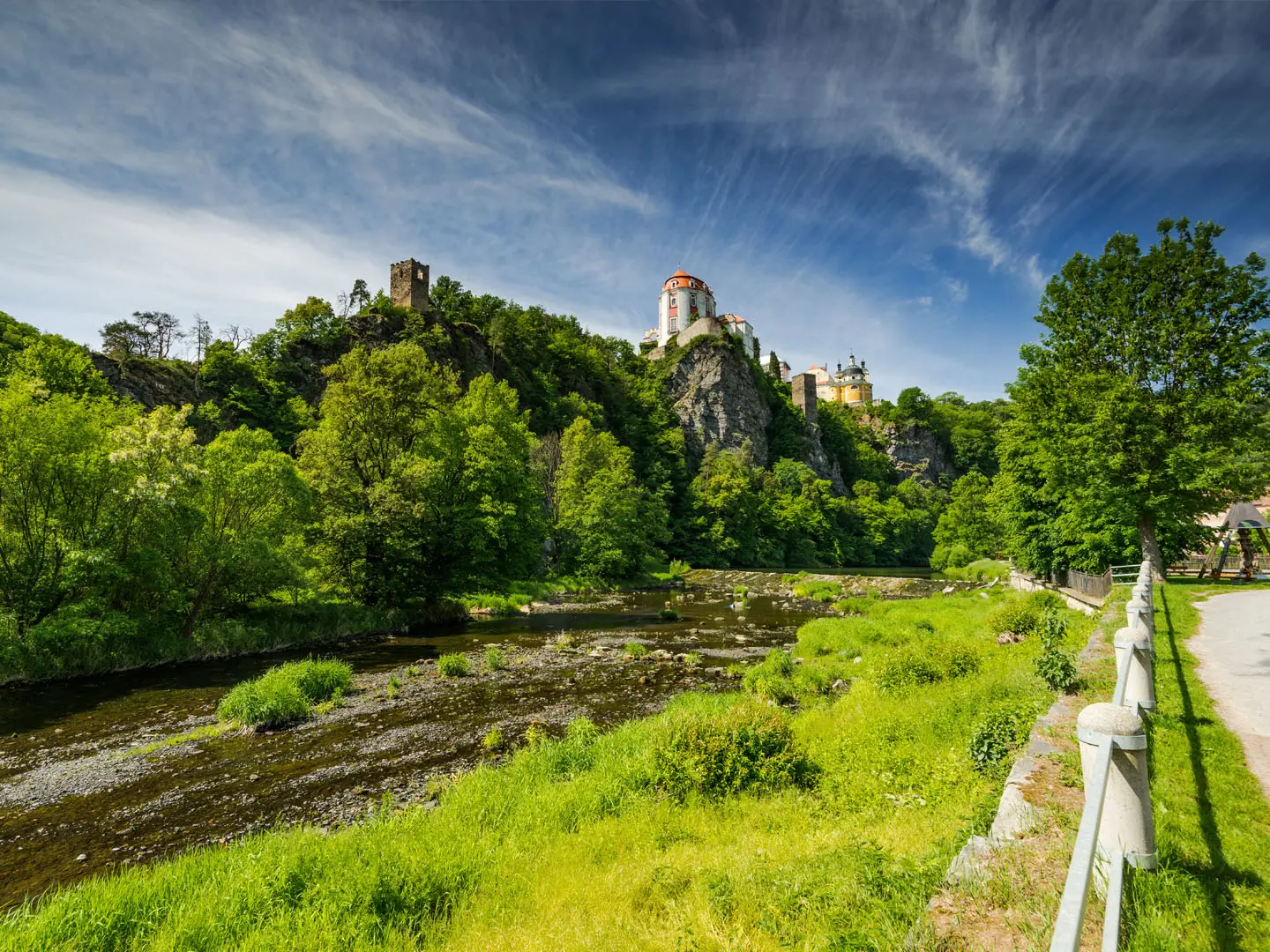
Vranov nad Dyjí: Overlooking the Dyje River, the dramatic Vranov Castle offers panoramic views, lush forest trails, and fascinating insights into Moravian history and aristocracy.
Podyjí National Park: This protected area on the Austrian border showcases pristine river valleys, deep forests, rare wildlife, and tranquil hiking paths, providing a natural counterpoint to the trail’s cultural sites.
Znojmo: Known for its medieval fortifications, Romanesque Rotunda, and vibrant wine culture, Znojmo is a charming stop for hikers looking to experience southern Moravian traditions and flavors.
Scenic Vltava and Dyje Valleys: Throughout the trek, hikers enjoy sweeping views of river valleys, vineyards, and rolling farmlands dotted with small villages and 19th-century chateaux.
Challenges to expect
Hikers on the Czech Greenways should be prepared for varying terrain that ranges from gently rolling countryside to steeper forested hills, especially near towns like Český Krumlov and Telč. Some stages include long distances with limited shade, making endurance and hydration important considerations during warmer months. Parts of the trail thread through rural areas where facilities and rest stops can be sparse, so careful daily planning is recommended.
Weather is another significant factor, particularly in spring and autumn when rain can be frequent and paths may become muddy or slippery. Summer brings warmer temperatures but can also result in crowded tourist areas, especially in the popular historic towns and national parks. While the Greenways are generally well-marked, occasional missing or confusing trail markers may require hikers to rely on detailed maps or GPS navigation, especially when connecting less-traveled segments or passing through urban sections.
Language barriers and limited English signage in some rural stretches can pose minor challenges for international visitors, but basic Czech phrases and a translation app can be helpful tools. Lastly, multi-day hikers should plan ahead for accommodation to avoid full bookings during the high season or in festival periods.
- Forest
- Urban
- Paved
- Gravel
- Dirt
- Hotels
- Hostels
- Campsites
- Wild camping spots
- Family Friendly
- Pet Friendly
- Restrooms
- Water Sources
- Campsites
- Picnic Areas
Departing from the historic center of Prague, the route heads south through parks, castle grounds, and quiet suburban areas before entering rolling farmland and forests. The day ends in the town of Benešov, with a few mild ascents and descents along paved and gravel paths.
The trail continues through scenic villages and dense forests, occasionally crossing small lakes and streams. Arriving in Tábor, hikers can explore the medieval fortifications and vibrant town atmosphere after a moderately hilly stage.
Leaving Tábor behind, this stage traverses rural South Bohemian countryside with wooded areas, ponds, and small settlements. The destination is the picturesque chateau town of Jindřichův Hradec, notable for its heritage buildings.
The path leads through rolling fields, woodlands, and lakes, gradually reaching the UNESCO-listed town of Telč, famous for its beautifully preserved Renaissance square and castle. The terrain consists mostly of dirt and gravel paths.
From Telč, the route heads southeast through tranquil farmlands and forest patches. Arriving in Třebíč gives hikers a chance to visit the town's historic Jewish Quarter and basilica, both UNESCO World Heritage Sites.
Enjoy a quieter day through a patchwork of fields and small villages, encountering fewer tourists and a more rural atmosphere. The stage ends in Moravské Budějovice, with its local charm and historic market square.
The trail proceeds south, initially across open landscapes before entering forested hills. Finish the day at Vranov nad Dyjí, under the imposing Vranov Castle overlooking the Dyje River.
Cutting through Podyjí National Park, this stage offers forest trails, river views, and protected nature. Arrive in Znojmo, a lively town with medieval walls and a renowned wine tradition.
Leaving Znojmo, the route follows the Moravian wine trails through rolling vineyards and charming villages, ultimately entering the Lednice-Valtice Cultural Landscape—a UNESCO site known for its chateaux, parks, and stately avenues.
The final stage brings hikers through vineyards, gentle hills, and borderland nature reserves. Cross into Austria near Mikulov or continue onward towards Vienna if desired. This section features a peaceful rural landscape and easy walking to finish the Greenways journey.