England Coast Path
Explore the England Coast Path: A Scenic Coastal Adventure
Discover the allure of the England Coast Path, a remarkable journey that traces the breathtaking coastline of Great Britain. Spanning 4,490 kilometers, this path offers an invigorating mix of sweeping vistas, rugged cliffs, and serene beaches. As you meander along, you'll encounter quaint seaside towns and historic landmarks, each with its own story to tell. The trail's moderate difficulty promises an accessible adventure for most hikers while still challenging the seasoned explorer. Experience the changing moods of the sea, from calm turquoise waters to powerful crashing waves. Along the way, enjoy spotting diverse wildlife and indulging in local delicacies at charming inns and eateries. Whether you're captivated by dramatic sunsets over the ocean or the tranquil rhythm of the tide, the England Coast Path promises a truly unforgettable coastal odyssey.
Route Overview
The England Coast Path is a National Trail that, upon completion, will be one of the longest continuous coastal walking routes in the world, stretching approximately 2,795 miles (4,500 km) around the entire coastline of England. The full path begins at Berwick-upon-Tweed on the northeast border with Scotland and winds counterclockwise along the coast, finishing at the same point, thus forming a complete loop. As the route hugs the coastline, it passes through a vast range of landscapes and notable locations including the Northumberland Coast, Yorkshire and Lincolnshire, the Norfolk and Suffolk coasts, the Thames Estuary, South East England, the White Cliffs of Dover, South Coast resorts, the dramatic Jurassic Coast, Somerset, and the wild coastline of Devon and Cornwall. The trail continues along the Severn Estuary, up through Wales’ border landscapes, and finally back to the northeast.
Due to its scale, the total hike duration varies significantly depending on walking pace and logistics; most through-hikers take at least 4–6 months to complete the entire route, but the majority of walkers choose to experience it in sections over weekends or holidays. The surface conditions range from sandy beaches and rocky coves to well-trodden cliff paths, rural tracks, sea walls, and promenades. Expect a mixture of easy promenades, remote footpaths, steps, and some challenging cliff sections, with varying degrees of exposure to the elements. Trail conditions can be changeable, especially in winter or after heavy rain, when some sections may be muddy, slippery, or temporarily diverted due to erosion.
Opportunities for resupply, accommodation, and public transport connections are plentiful, especially near towns and villages along the route, but more rural or wild stretches require careful planning. Since sections of the route are still under development, occasional detours may be necessary, and up-to-date maps or local authority information should be checked before setting out. The path is waymarked with the National Trail acorn symbol where established.
A Journey Through England's Coastal Heritage
The England Coast Path traverses a landscape steeped in history, revealing layers of the past on every step. This path not only offers stunning natural beauty but is also a gateway to exploring the rich tapestry of Britain's coastal heritage. The coastline has long been a crucial hub for maritime trade and defense, with remnants of ancient ports, shipwrecks, and fortifications, such as castles and lookout towers, dotting the trail. In the coming years, the path aims to connect these historical sites more cohesively, weaving a narrative of England’s industrious past. Walkers can also delve into stories of seaside towns that flourished during the Victorian era, with their ornate piers and promenades still attracting visitors today. Furthermore, this region has deeply influenced cultural arts, inspiring writers and artists alike. The path serves as a living museum, offering insights into the pivotal role the coast has played in shaping British identity and history.
Notable highlights
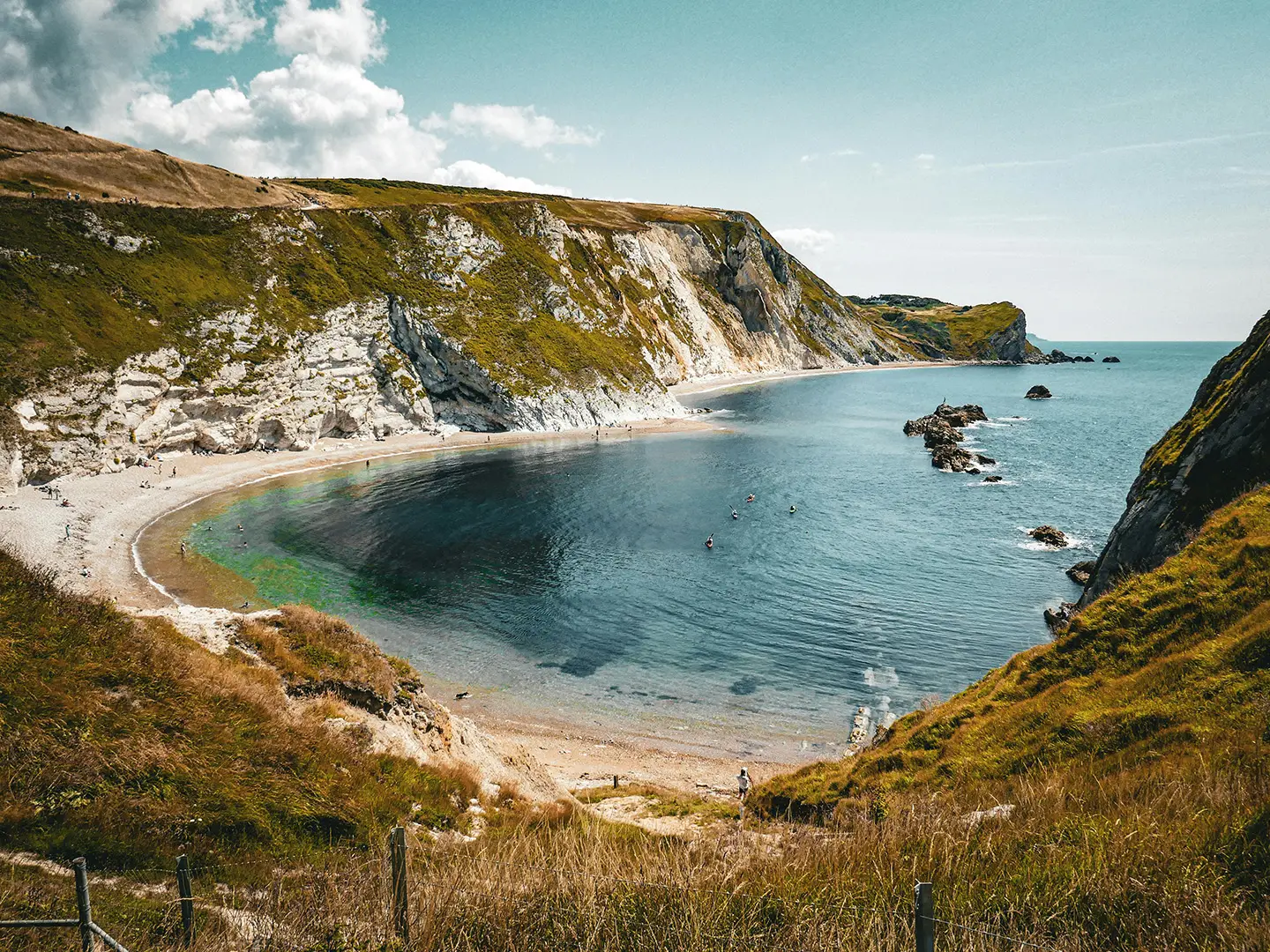
Durdle Door: This iconic natural limestone arch stands majestically along the Jurassic Coast. It is one of the most photographed landmarks on the trail, offering stunning views and a chance to explore its surrounding beaches.
Tintagel Castle: Perched dramatically on the rugged coastline of Cornwall, this medieval fortification is steeped in legend and myth, including associations with King Arthur. Visitors can explore the ruins and enjoy panoramic views of the Atlantic Ocean.
White Cliffs of Dover: Symbolic of Britain's natural beauty and strength, these majestic cliffs provide awe-inspiring views across the English Channel. The chalk cliffs are also home to a variety of bird species, making it a haven for birdwatchers.
Chesil Beach: This striking pebble beach stretches for 18 miles, separating the mainland from the Isle of Portland. Its unique geology and diverse habitats support a wide array of bird life, making it a fascinating stop for nature enthusiasts.
Lindisfarne: Known as Holy Island, this tidal island is rich in religious history with its ancient priory and castle. Accessible only at low tide, it offers a mystical experience amidst serene natural beauty and historical intrigue.
Challenges to expect
Hiking the England Coast Path presents several challenges that hikers should be prepared to tackle. The terrain varies significantly, with stretches involving steep climbs and descents, particularly in coastal regions such as Cornwall and Dorset. These areas can be demanding, requiring good physical fitness and sturdy footwear. Weather can also pose significant challenges; the path is exposed to the elements, and sudden storms or strong winds are not uncommon, especially along the western coast. These conditions can quickly alter the difficulty of the hike, so checking weather forecasts and packing appropriate gear is essential. Navigation can be tricky, as sections of the path may not be well-marked, particularly in rural or less-developed areas. Reliable water sources might also be sparse in some segments, necessitating careful planning to carry sufficient supplies. Finally, while encounters with wildlife are generally rare and non-threatening, it’s wise to be cautious and respectful of any marine wildlife or livestock that may be present along the route.
- Coastal
- Paved
- Gravel
- Dirt
- Rocky
- Hotels
- Guesthouses
- Campsites
- Hostels
- Wild camping spots
- Family Friendly
- Dog Friendly On Leash
- Restrooms
- Potable Water Sources
- Established Campsites
- Picnic Areas
- Public Transport Access Points
This section follows the spectacular Northumberland Coast, starting at the Scottish border in Berwick-upon-Tweed. The path travels past sandy beaches, historic castles like Bamburgh and Warkworth, and charming fishing villages including Seahouses and Craster. It offers opportunities to visit wildlife-rich reserves and enjoy panoramic sea views, often on well-defined tracks and sandy footpaths.
Continuing south, this stage skirts the dunes and estuaries of Druridge Bay, then enters more populated stretches around Blyth and Tynemouth before passing through the vibrant city of Sunderland. Expect a mix of rural and urban walking, from remote saltmarshes to sea promenades, with access to seaside resorts and lively quays.
Leaving Sunderland, the trail follows the rugged Durham Heritage Coast, marked by dramatic cliffs and wildflower meadows, before entering North Yorkshire. Highlights include the headlands of Saltburn and the moody cliffs leading to the historic fishing port of Whitby. The route features a combination of cliff-top walking, wooded valleys, and sandy beaches.
From Whitby, the path traverses the dramatic North Yorkshire and Holderness coasts, passing through Scarborough, Filey, and the remote cliffs of Flamborough Head. The final stretch to Hull includes long beaches and nature reserves along the Humber Estuary. Occasional diversions may be needed for erosion, but the route offers a blend of seaside resorts, wildlife areas, and expansive North Sea views.
This stage moves into Lincolnshire and the flatlands of the Wash, passing through Cleethorpes, Skegness, and the saltmarshes and mudflats of the Lincolnshire and Norfolk coasts. The walking is mostly flat, with dykes and embankment paths, occasional shingle, and wide open skies. This rural segment offers peace and an abundance of birdlife.
Following the North Norfolk and Suffolk coasts, this section highlights sandy beaches, saltmarshes, and pretty seaside towns like Cromer and Southwold. The trail mixes rural tranquility with vibrant holiday destinations, often running right beside the sea or slightly inland along quiet lanes and nature reserves. Some areas may be exposed, so check tide times for safe passage.
This section heads along the Suffolk and Essex coasts, passing through Felixstowe, Harwich, Walton-on-the-Naze, and the saltmarshes of the Blackwater Estuary. Expect tidal river crossings, shingle beaches, and historic port towns, with a balance of natural habitats and busy seaside spots. Watch for changes in the route due to estuary inlets and occasional diversions.
Continuing through Essex and Kent, the path follows the mouth of the Thames, passing busy ports like Southend and historic castles at Rochester and Deal before reaching the chalk cliffs of the Isle of Thanet. Frequent seaside promenades, beaches, and some urban stretches lead to Margate, a lively coastal resort with a cultural twist.
This dramatic stage includes the celebrated White Cliffs of Dover and promenade walking through Folkestone and Hastings. The route continues on through Eastbourne, where the South Downs rise abruptly from the coast, and on to Brighton. Expect continuous sea views, a mix of clifftop and seafront path, and vibrant coastal towns throughout.
Leaving Brighton, the path continues through popular seaside resorts such as Worthing, Bognor Regis, and Portsmouth before skirting around Southampton Water. There is a mix of urban promenade walking, quieter stretches along lagoons and saltmarsh, and views of the Solent. The route passes marinas, ports, and historic maritime sites.
The trail heads west past the New Forest’s coastal edge, then onto the Purbeck Heritage Coast and the start of the Jurassic Coast World Heritage Site. From Lymington and Bournemouth to Swanage and along to Weymouth and Dorchester, walkers will encounter famous cliffs, fossil beaches, and unique geology.
Continue on the iconic Dorset and East Devon sections of the Jurassic Coast, through Lyme Regis and Seaton to Sidmouth and Exmouth. Expect a challenging up-and-down route, with dramatic headlands, shingle bays, hidden coves, and beautiful sea views. This area is renowned for its fossils and spectacular cliff formations.
The path skirts around Exeter, then continues along the Exe Estuary, through Dawlish, Teignmouth, and Torquay, following the rugged and beautiful South Devon coastline to Plymouth. From there, the Cornwall segment leads through the dramatic cliffs and beaches of the north coast towards Padstow, with sweeping views and remote sections.
Stretching along the wild Cornish coast, this dramatic stage traverses some of the most rugged and beautiful cliff paths in England. Pass through surfing hotspots, fishing harbours like St Ives, and seaside towns, finally reaching the iconic Land’s End. Be prepared for steep ascents, remote terrain, and some of the most memorable coastal scenery on the entire route.
The route follows the southern Cornish coast, passing through Penzance, Falmouth, and Looe, offering lush river valleys, sandy bays, and historic villages before reaching Plymouth. This section features a mix of quiet inlets, ferry crossings, and bustling harbour towns, perfect for those seeking a blend of nature and history.
Heading into Devon and Somerset, the path traverses the rocky South Hams coast with its river crossings and then continues through seaside villages, beaches, and the rugged cliffs of North Devon. The day finishes at Minehead, the official start of the South West Coast Path National Trail, having passed though spectacular Atlantic-facing coastlines and the wilds of Exmoor.
From Minehead, the route cuts along the Bristol Channel, through Quantock Hills and coast, skirting the edge of Exmoor before crossing the Somerset Levels. After Bridgwater and Burnham-on-Sea, walkers follow the Severn Estuary into Gloucestershire and on to Chepstow, where the England Coast Path meets the Wales Coast Path.
This extensive stage heads north along the Severn Estuary, then follows the River Mersey past industrial heritage sites, wetlands, and saltmarshes. The trail passes Bristol, Gloucester, and into the Wirral Peninsula before entering Liverpool. Industrial landscapes mix with pockets of nature reserves and bustling maritime areas.
The trail heads along the Irish Sea coastline, crossing the River Ribble, through seaside towns like Southport, Blackpool, and Morecambe. Expect beaches, resort promenades, and sections along wildlife habitats, finishing at Lancaster with easy walking terrain along the coast and estuary.
This final stretch heads into Cumbria, following the Morecambe Bay coastline, the wild expanse of the Solway Firth, and quiet country lanes. The route passes through Cumbrian coastal villages and nature reserves before turning inland to reach Carlisle, a city rich in Roman and border history and serving as a fitting close to the England Coast Path journey.