Gastein Valley Trail
How would you rate Gastein Valley Trail?
Tap a star to share your experience and help other hikers.
Gastein Valley Trail: 7-Day Hohe Tauern Hut Hike
HikeList Score
Gastein Valley Trail scored 87/100 on HikeList's trail-quality metrics.
See score breakdownHide breakdown
- Ideal length 100
- Balanced challenge 100
- Scenery & wildness 85
- Varied terrain 83
- Accommodation 66
- Food & support 81
- Path quality 98
- Season flexibility 63
Computed from length, challenge, scenery & wildness, terrain variety, accommodation, food & support, path quality and season flexibility.
The Gastein Valley Trail is the waymarked Gastein Trail: an 87 km, 7-day mountain-hut traverse through the Gasteinertal in Salzburg, Austria. It links alpine pastures, forest, rocky high paths and spa towns on a horseshoe around the Gastein Valley inside the Hohe Tauern National Park. Officially graded moderate, it sits at the demanding end: expect 4,587 m of ascent, exposed alpine weather, rough ground and one black-graded section. It suits fit hikers with sure-footedness and multi-day mountain experience.
Route Overview
The official route runs point-to-point from Dorfgastein to Bad Hofgastein, though the start and finish are neighbouring valley towns, so it feels close to a circuit of the surrounding peaks. The stages climb to Heinrichalm, Biberalm and Schlossalm, traverse to Angertal, then cross the high ground by Stubnerkogel and Zittrauer Tisch before descending past Bockhartsee and the Erzwies mining area to Sportgastein. The final days pass Bad Gastein and finish in Bad Hofgastein. Trail Angels can package accommodation, luggage transport and shuttles. For comparison, see the Hohe Tauern Panorama Trail, the longer Alpe-Adria Trail or Tyrol’s Eagle Walk (Adlerweg).
Mining, Spa Towns and the Modern Gastein Trail
The Gastein Valley has Celtic and Roman traces, but its later wealth came from gold and silver mining around Böckstein and the high Erzwies/Bockhartsee district. Bad Gastein later became a fashionable thermal spa in the late 19th century, known for radon-bearing hot springs and its Belle Epoque buildings. The Gastein Trail is a modern, signposted long-distance route created by the regional tourism board to link these high pastures, mining paths and spa towns into one multi-day walk.
Notable highlights
- Zittrauer Tisch (standard high point around 2,300 m): The route reaches its highest standard section near Sportgastein, with an optional black-graded summit at about 2,463 m. The reward is a broad panorama over the Gastein Valley and Hohe Tauern.
- Stubnerkogel suspension bridge (140 m long): This footbridge hangs about 28 m above the ground near 2,300 m on the Stubnerkogel above Bad Gastein. It adds a memorable airy section to the high-stage skyline.
- Bockhartsee: A high mountain lake passed on the descent towards Sportgastein. It sits amid the former Erzwies mining district in the Hohe Tauern.
- Erzwies and Böckstein mining heritage: Old Bergbauwege mining paths and the mining village of Böckstein recall the gold and silver workings that shaped the valley’s history.
- Bad Gastein waterfall: The Gasteiner Ache drops in tiers through the centre of Bad Gastein, giving the later stages a dramatic town-centre landmark.
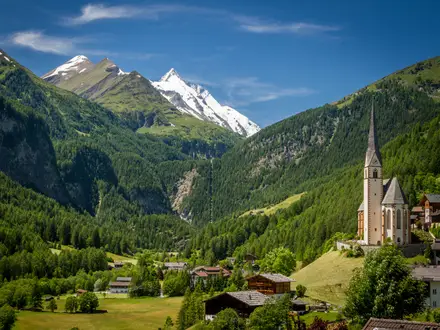
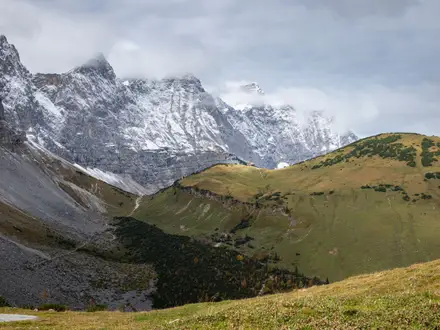
- Hohe Tauern National Park views: The route runs within Austria’s largest national park, with sustained views towards the Goldberg and Ankogel three-thousanders.
Challenges to expect
This is a moderate trail with alpine bite: 4,587 m of ascent, rocky and gravel surfaces, long climbs and changeable weather above the valley. Stage 4 includes the black-graded Hermann-Kreilinger-Steig, which is narrow and steep. Huts may only open from late June or early July, and lingering snow can affect early-season crossings, so booking and timing matter.
HikeList Score
Gastein Valley Trail scored 87/100 on HikeList's trail-quality metrics.
See score breakdownHide breakdown
- Ideal length 100
- Balanced challenge 100
- Scenery & wildness 85
- Varied terrain 83
- Accommodation 66
- Food & support 81
- Path quality 98
- Season flexibility 63
Computed from length, challenge, scenery & wildness, terrain variety, accommodation, food & support, path quality and season flexibility.
 Austria
Show more data Show less
- Mountainous
- Alpine Pasture
- Forest
- Rocky
- Dirt
- Gravel
- Huts
- Hotels
- Family Friendly
- Pet Friendly
- Restrooms
- Water Sources
- Shelters
Download Our Full Guide to Gastein Valley Trail FREE!
Get our comprehensive guide to this hike for free. Save it for later reading or print out at home.
In these collections
Photos from hikers
Taken on the trail by people who've reviewed Gastein Valley Trail.
Gastein Valley Trail: The Complete Guide
The Gastein Valley Trail is a seven-stage high route around the Gasteinertal, starting in Dorfgastein and finishing in Bad Hofgastein. It is a signed Austrian mountain walk for hikers who want hut-to-hut alpine days without losing the comfort of rail access, valley towns and spa hotels at either end.
The route climbs quickly from the valley onto open Almen, then holds a broad horseshoe of high paths through the Hohe Tauern National Park. Expect rocky traverses, gravel tracks, pasture paths, forest descents and wide views towards the Goldberg and Ankogel three-thousanders.
Its strongest days come around the Stubnerkogel, Zittrauer Scharte and the descent towards Sportgastein, with the 140 m Stubnerkogel suspension bridge, Unterer Bockhartsee and old Erzwies/Bockhart mining country adding real character. The final stages soften into Bad Gastein’s waterfall, historic promenades and the wooded Gadaunerer Schlucht before reaching Bad Hofgastein.
This is officially a moderate trail, but it sits at the demanding end of that grade. Around 4,587 m of ascent, rough high-alpine ground, fast-changing weather, seasonal snow risk and the black-graded Hermann-Kreilinger-Steig mean it suits fit, sure-footed walkers with proper mountain kit.
This guide covers the stages, day planning, accommodation, food, transport, terrain and common mistakes to avoid.
Stage-by-Stage Guide
Stage 1: Dorfgastein to Heinrichalm
Distance/ascent: 15.3 km / 1,327 m ascent
The opening stage leaves the valley village of Dorfgastein and climbs straight into the alpine pasture belt above the town. This is a big first day: the distance is moderate, but the height gain is substantial and there is little sense of a gentle warm-up.
The route passes the Dorfgastein gondola/Fulseck area before working up through named pasture stops including Amoseralm, Stoffalm, Huberalm and Drei-Waller-Kapelle, then continues to Heinrichalm. Expect a mix of farm and mountain paths, open grassland and steeper alpine walking rather than technical scrambling.
Views open quickly back over Dorfgastein and the Gasteinertal, with the stage setting the pattern for the whole trail: long high traverses above a deep settled valley. In clear weather, this is one of the best days for understanding the horseshoe shape of the route.
Food and water should be planned carefully. Several Almen are passed, but opening times are seasonal and should not be relied on without checking in advance; carry enough food and water to reach Heinrichalm. Heinrichalm is a seasonal high accommodation stop, so beds and meals need to be booked ahead.
Dorfgastein has excellent access at the start, with the railway station and the Dorfgastein gondola/Fulseck valley station acting as the practical jumping-off points. Once committed to the high route, public transport options are limited until a descent is made back towards the valley; any shuttle or valley exit from the high pastures should be arranged in advance.
Navigation is straightforward in settled weather if following the Gastein Trail / Gasteiner Höhenweg waymarking, but the climb involves multiple pasture tracks and paths where attention is still needed. Early-season snow patches and poor visibility can make the higher ground more serious than the map distance suggests.
Stage 2: Heinrichalm to Biberalm
Distance/ascent: 10.7 km / 701 m ascent
Stage 2 is shorter than the first day, but it remains a genuine mountain stage on high pasture and rougher upland paths. The route continues around the valley rim from Heinrichalm towards Kokaseralm, Präau-Hochalm, Hohe Scharte and Wetterkreuz before reaching Biberalm.
The walking is sustained rather than long. Expect open alpine ground, gravel and mountain paths, with some steeper sections as the route crosses high shoulders and passes.
Hohe Scharte and Wetterkreuz are the key points of the day, giving broad views across the Gasteinertal and towards the Hohe Tauern. In good weather this is classic high-level walking; in cloud or rain, the same open terrain can feel exposed and navigation becomes more demanding.
Food and water options are tied to the seasonal Almen and hut accommodation. Do not assume every named Alm will be open for food; start the day carrying enough to reach Biberalm unless opening times have been checked. Biberalm is a seasonal high stop with limited beds, so pre-booking is essential.
There is no simple railway access at the stage end. Public transport is concentrated in the valley towns, so leaving or joining the route here usually means arranging a descent, shuttle or other local transfer. This should be checked before travelling.
The main navigation issue is staying on the signed high route across open alpine ground. In mist, keep a close eye on waymarks and avoid being drawn onto pasture tracks that do not belong to the Gastein Trail.
Stage 3: Biberalm to Schlossalm
Distance/ascent: 8.3 km / 731 m ascent
Stage 3 is the shortest official stage by distance, but it still includes meaningful ascent and remains high-alpine in character. From Biberalm the route passes Kerscherhütte and Brandner Hochalm before climbing towards Kleine Scharte and the Schlossalm area.
The terrain is a mixture of alpine pasture, rocky or gravel mountain tracks and higher traversing paths. The day is compact, but it should not be treated as a rest day if the weather is poor or legs are tired from the first two stages.
Kleine Scharte and the approach to Schlossalm bring the route into one of the most accessible high areas of the Gasteinertal. The Schlossalm Bergstation and Hofgasteinerhaus area provide a practical high-level endpoint with broader logistics than the more remote Alm stops.
Food and water availability is better around Schlossalm than on the previous two high-stage finishes, but opening dates and operating times remain seasonal. Hofgasteinerhaus is one of the main accommodation options in this area; book ahead and confirm current arrangements before relying on it.
Schlossalm is one of the key points where the route can be shortened or exited using cable-car infrastructure, subject to operating dates and times. This makes Stage 3 useful as a bailout point if weather is deteriorating or if the high route has become too demanding.
Navigation is generally clear around the signed Schlossalm area, but ski-area infrastructure can make route choices less intuitive than on quieter pasture stages. Follow the Gastein Trail waymarks rather than assuming the most obvious track is the correct line.
Stage 4: Schlossalm to Angertal
Distance/ascent: 9.2 km / 78 m ascent on the standard stage; 11.5 km / 295 m ascent via the black-graded Hermann-Kreilinger-Steig variant
Stage 4 is short and has little ascent on the standard line, but it is important because of the optional harder variant. The standard route leaves the Schlossalm area and continues towards Weitmoser Schlossalm before descending or traversing into Angertal.
Under normal conditions, this is one of the gentler connecting stages of the trail. The terrain still belongs to the mountain environment, but the official standard stage is not a major height-gain day.
The serious option is the Hermann-Kreilinger-Steig, a black-graded variant. This should only be taken by sure-footed walkers with the right conditions, as black-graded Austrian mountain paths can involve exposed, rocky and secured sections. If the weather is poor, the path is wet, or there is lingering snow, the standard route is the sensible choice.
Food and water can be available around the Schlossalm/Hofgasteinerhaus area and at accommodation in or near Angertal, but current opening times should be checked. Carry enough for the stage regardless, especially if starting early or outside peak summer operation.
Angertal has road access and accommodation options in the valley-side setting, making it a more practical endpoint than the remote high Alm stages. Local Postbus, shuttle and luggage-transfer arrangements may be possible in the wider Gastein Valley, but exact services and timings should be checked before travelling.
Navigation is especially important at the choice point between the standard stage and the Hermann-Kreilinger-Steig variant. Do not drift onto the black-graded line accidentally; identify the intended route before leaving Schlossalm.
Stage 5: Angertal to Sportgastein
Distance/ascent: 16.2 km / 1,233 m ascent
Stage 5 is the major high-alpine day of the Gastein Valley Trail. It climbs from Angertal towards Stubneralm and Stubnerkogel, crosses high ground around the Zittrauer Scharte, and continues by Miesbichlscharte and Unterer Bockhartsee before descending into Sportgastein (Naßfeld).
This is the stage with the highest standard-route ground, reaching roughly 2,300 m near the Stubnerkogel and Zittrauer Scharte. Expect sustained rocky and gravel mountain paths, exposed high traversing and a more committing feel than the shorter middle stages.
The Stubnerkogel suspension bridge is a major feature of the day: a 140 m-long footbridge near 2,300 m with a drop of around 28 m beneath it. The optional spur to Zittrauer Tisch (Zitterauer Tisch) reaches 2,463 m, but it is black-graded and not part of the standard route; only attempt it in stable weather and if fully comfortable on exposed rocky ground.
The descent towards Unterer Bockhartsee passes through the old Erzwies/Bockhart gold-mining district, adding a strong historical element to the day. Crossing the dam at Unterer Bockhartsee is one of the standout moments before the route drops into the high basin of Sportgastein.
Food and water should be treated seriously on this stage. Do not rely on finding open refreshment points on the high traverse unless opening times have been checked; carry a full day’s food and water from Angertal. Accommodation at Sportgastein/Böckstein or nearby should be arranged in advance, especially in the main hiking season.
Sportgastein has road access at the head of the valley, and local transport or shuttle arrangements may connect with the wider Gasteinertal. Timetables and transfer options should be checked before travelling, particularly if planning to leave the trail here.
Navigation is usually helped by waymarking, but this is not a stage for poor preparation. Cloud, storms or lingering early-season snow can quickly turn the high crossing into a serious mountain day; start early, check the forecast and avoid committing to the Zittrauer Tisch spur unless conditions are clearly favourable.
Stage 6: Sportgastein to Bad Gastein
Distance/ascent: 15.8 km / 215 m ascent
Stage 6 changes the character of the trail, leaving the high basin of Sportgastein and heading down-valley through the mining landscape towards Böckstein and Bad Gastein. The ascent is modest compared with the earlier high stages, but the distance is still significant.
The route passes Astenalmen and continues towards Böckstein/Altböckstein, where the valley’s gold and silver mining heritage becomes a central theme. Böckstein, with its historic mining village character and Montanmuseum, is an important cultural stop on the route.
From Böckstein the trail follows the Kaiserin-Elisabeth-Promenade towards Bad Gastein. The walking becomes more valley-based and more civilised underfoot, with promenades replacing the rougher high-alpine terrain of the previous day.
Bad Gastein is one of the major service centres of the route. Food, accommodation and onward transport are much more straightforward here than at the high Alm stages, and the town’s thermal-spa history and Belle Époque buildings make it a practical and atmospheric overnight stop.
Public transport access is strong at Bad Gastein, which has a station on the ÖBB Tauernbahn. This makes Stage 6 a useful place to end a shortened itinerary or to rejoin the route for the final day.
Navigation is generally less demanding than on the high stages, but do not switch off completely around Böckstein and the promenade approaches. The Gasteiner Ache waterfall in Bad Gastein is a major landmark, with the river dropping through the centre of town in dramatic tiers.
Stage 7: Bad Gastein to Bad Hofgastein
Distance/ascent: about 12 km / 228 m ascent
The final stage links the two spa towns of Bad Gastein and Bad Hofgastein on a lower-level route of promenades, woodland and gorge walking. After the high alpine middle of the trail, this is a gentler finish, though it is still a proper walking day rather than a short town stroll.
The route leaves Bad Gastein via the Kaiser-Wilhelm-Promenade and continues towards the Gadaunerer Schlucht before reaching Bad Hofgastein. Expect more formed paths and valley-side walking, with forested sections and the gorge providing the main natural interest.
This stage is the best place to absorb the spa heritage of the Gasteinertal. Bad Gastein’s waterfall and terraced Belle Époque townscape contrast with the broader valley-floor setting of Bad Hofgastein, where the route finishes.
Food and water are far easier to manage than on the high stages because both ends are service towns. Even so, carry water for the walk itself, as facilities along the promenade and gorge section should not be assumed to be open at all times.
Bad Gastein and Bad Hofgastein both have railway access on the ÖBB Tauernbahn, making the final stage straightforward for onward travel or section-hiking. The finish in Bad Hofgastein is only a short distance down-valley from Dorfgastein, so local transport can also be used to return towards the start if needed.
Navigation is relatively simple compared with the high traverses, but the route still uses named promenades and the Gadaunerer Schlucht rather than a single valley road. After rain, take normal care on wooded and gorge paths, where surfaces can be slippery.
Recommended Itinerary
The most practical plan is the official 7-stage itinerary from Dorfgastein to Bad Hofgastein. It follows the natural hut and valley-accommodation spacing: three early high-level nights, a descent to Angertal, the major Stubnerkogel–Zittrauer Scharte crossing to Sportgastein, then two lower finishing stages through Böckstein, Bad Gastein and Bad Hofgastein.
High accommodation on the Almen is seasonal and limited, so the itinerary should be built around confirmed beds rather than adjusted casually on the trail. Hut opening dates, cable-car operating times and current high-route conditions should be checked before travelling.
Standard 7-stage itinerary
| Day | From | To | Approx. distance | Why this stage makes sense | Services/accommodation notes |
|---|---|---|---|---|---|
| 1 | Dorfgastein | Heinrichalm | 15.3 km | A full first day that climbs straight from the valley onto the alpine pastures. The ascent is substantial, so an early start from Dorfgastein is sensible. | Dorfgastein has rail access and the Dorfgastein gondola/Fulseck valley station. Heinrichalm is a high seasonal overnight stop; book ahead. |
| 2 | Heinrichalm | Biberalm | 10.7 km | Shorter in distance after the big opening climb, but still a proper mountain stage with high-pasture and pass terrain via the Hohe Scharte and Wetterkreuz area. | Overnight is again on the high route, with limited seasonal Alm/hut accommodation. Do not rely on turning up without a booking. |
| 3 | Biberalm | Schlossalm | 8.3 km | A compact but useful stage that keeps the itinerary realistic before the route drops towards Angertal. The walking remains alpine, with ascent towards the Kleine Scharte and Schlossalm. | Schlossalm is a key high access point, with Hofgasteinerhaus in the area. The Schlossalm cable car can be useful for shortening or exiting when operating; times should be checked before travelling. |
| 4 | Schlossalm | Angertal | 9.2 km standard; 11.5 km via the Hermann-Kreilinger-Steig variant | This deliberately shorter day gives the route breathing space before the hardest high crossing on Day 5. The black-graded Hermann-Kreilinger-Steig variant is only for sure-footed hikers comfortable with exposed, rough mountain ground. | Angertal brings the route back to valley-based accommodation. If using the black variant, check conditions locally before committing. |
| 5 | Angertal | Sportgastein | 16.2 km | The biggest alpine day of the itinerary: a long, high traverse over the Stubnerkogel area, Zittrauer Scharte and Miesbichlscharte before descending past Unterer Bockhartsee towards Sportgastein. The optional Zittrauer Tisch spur is black-graded and should not be treated as part of the standard day. | Sportgastein/Naßfeld has valley-basin accommodation options, with Böckstein lower down the valley also relevant for logistics. The Stubnerkogel cable car may help with shortening or exit plans when running; confirm current operation before relying on it. |
| 6 | Sportgastein | Bad Gastein | 15.8 km | A longer but lower stage after the high traverse, moving from the Sportgastein basin through the Astenalmen and Böckstein/Altböckstein mining area towards Bad Gastein. The ascent is much gentler than on Day 5. | Bad Gastein has a railway station and a wide choice of hotels and guesthouses. This is the first major spa-town overnight on the route and a useful recovery point. |
| 7 | Bad Gastein | Bad Hofgastein | ~12 km | A gentler final stage on promenades and wooded valley paths, including the Kaiser-Wilhelm-Promenade and Gadaunerer Schlucht, before finishing in Bad Hofgastein. | Bad Hofgastein has rail access and extensive spa-town accommodation. Stage 7 distance is commonly rounded; use the official 87 km total as the overall route figure. |
Slower or more supported option
The cleanest slower version is to keep the same 7 walking stages but add a buffer night before, during or immediately after the walk. This suits hikers who want more margin for poor weather, tired legs after the high stages, or a relaxed finish in Bad Gastein or Bad Hofgastein.
Cable cars at Dorfgastein, Schlossalm and Stubnerkogel can also reduce effort on selected sections when operating. Exact walking distances change depending on which lift is used, so check official mapping and current lift times before booking accommodation around a shortened day.
This option is best for hikers who are fit enough for the route but do not want every stage to be weather-dependent. It is also sensible early in the season, when lingering snow can affect the higher crossings.
Faster option
A 6-stage variant is offered by some operators, with the route combined differently and often listed at around 85 km. This is only a sensible choice for strong, sure-footed hikers who are comfortable with longer mountain days and have all accommodation and luggage logistics arranged in advance.
Do not simply merge arbitrary stages without checking the resulting distance, ascent and available overnight stops. The hut spacing on the early high route is limited, and Day 5 is already a demanding high-alpine stage in the standard itinerary. For a 6-stage plan, check official mapping before booking.
Planning the Route
The Gastein Valley Trail is easiest to plan around the official 7-stage structure. The route uses a logical chain of valley towns, high huts and alpine farms, so most walkers should not treat it as a flexible wild-camping itinerary or simply divide the kilometres evenly on a map.
The key constraint is accommodation on the high sections. Places such as Heinrichalm, Biberalm and the Schlossalm/Hofgasteinerhaus area are seasonal and limited, while the valley stops at Angertal, Sportgastein, Bad Gastein and Bad Hofgastein give more conventional hotel and guesthouse options. Beds on the high route should be booked before committing to travel dates.
How many days to allow
Seven walking days is the standard and most sensible plan. It keeps the big ascent days manageable, leaves the high traverse near the Stubnerkogel and Zittrauer Scharte as a full mountain day, and avoids rushing through the final valley and spa-town sections.
A quicker 6-stage version exists, but it is better suited to strong walkers who are already comfortable with long alpine days and who can secure accommodation at the right points. For most independent hikers, shortening the schedule increases the risk of arriving late at huts, missing cable-car or bus options, or being forced to walk high ground in poor afternoon weather.
Adding an extra night can be worthwhile if travel connections, weather or hut availability make the official sequence awkward. The most useful places for flexibility are the valley towns, especially where rail access and services are stronger, such as Bad Gastein or Bad Hofgastein.
Stage planning and natural stopping points
The stages are shaped by where overnight stops exist, not just by distance. Some days are short in kilometres but still feel serious because of ascent, rough ground or exposed high traverses.
| Stage | Route | Distance / ascent | Planning note |
|---|---|---|---|
| 1 | Dorfgastein to Heinrichalm | 15.3 km / 1,327 m ascent | A committing first day straight out of the valley; start early rather than treating it as a gentle arrival day. |
| 2 | Heinrichalm to Biberalm | 10.7 km / 701 m ascent | Shorter on paper, but still a high mountain stage between limited accommodation points. |
| 3 | Biberalm to Schlossalm | 8.3 km / 731 m ascent | Another compact but climbing stage; useful for keeping the high-route pacing under control. |
| 4 | Schlossalm to Angertal | 9.2 km / 78 m ascent | The easier standard line drops towards Angertal; the black-graded Hermann-Kreilinger-Steig variant is longer and more serious. |
| 5 | Angertal to Sportgastein | 16.2 km / 1,233 m ascent | The major high day over the Stubnerkogel / Zittrauer Scharte area, with the optional Zittrauer Tisch spur only for suitable conditions and ability. |
| 6 | Sportgastein to Bad Gastein | 15.8 km / 215 m ascent | A longer transition from the high valley basin towards Böckstein and Bad Gastein. |
| 7 | Bad Gastein to Bad Hofgastein | approx. 12 km / 228 m ascent | A gentler final stage using promenades and the Gadaunerer Schlucht route into Bad Hofgastein. |
Do not judge the route by Stage 3 or Stage 4 distances alone. The demanding days are Stage 1 and Stage 5, and the route’s overall seriousness comes from repeated mountain terrain, cumulative ascent and exposure to fast-changing alpine weather.
Shortening the route
The Gastein Valley has unusually good exit and shortening options for an alpine long-distance walk. Dorfgastein, Bad Hofgastein and Bad Gastein sit on the ÖBB Tauernbahn, while local Postbus services and the Dorfgastein, Schlossalm and Stubnerkogel cable cars can help reduce ascent, avoid a poor-weather section or leave the route early.
Cable cars should be treated as planning tools, not as guaranteed escape routes. Operating dates, daily hours and weather closures should be checked before travelling, especially early or late in the hiking season.
The most obvious places to shorten or step off are the valley-accessible points: Schlossalm, Angertal, Sportgastein/Böckstein, Bad Gastein and Bad Hofgastein. Exact bus links and current timetables should be checked before travelling.
Extending the route
The standard line already uses the main horseshoe around the valley, so extensions are best kept optional rather than built into the core plan. The clearest add-on is the black-graded spur to the Zittrauer Tisch at 2,463 m from the high Stage 5 traverse.
That spur is not part of the standard route high point and should only be attempted in stable weather by walkers with the right footwear, sure-footedness and time margin. If cloud, snow patches, fatigue or late timing are factors, stay on the main line.
Section hiking
Section hiking is practical because the valley has strong public transport and several access points. Dorfgastein, Bad Hofgastein and Bad Gastein have railway stations, and the lifts can help connect valley bases with higher sections.
The first half of the route is less convenient to split casually because the natural stops are high huts and Almen rather than towns. A section-hiking plan should be built around known access points such as Dorfgastein, Schlossalm, Angertal, Sportgastein/Böckstein, Bad Gastein and Bad Hofgastein, with transport checked for the exact date.
What to prioritise when planning
Accommodation is the first booking priority. High huts and alpine farms are seasonal and limited, and the best walking season overlaps with peak alpine holiday periods. Book overnight stops before finalising trains or luggage transfer.
Weather and snow conditions are the second priority. The best season is mid-June to mid-September, but early-season snow can remain on high crossings, and weather above the valley can change quickly. Build enough flexibility to delay or reroute around Stage 5 if conditions are poor.
Food and water need active planning between booked stops. Do not assume every Alm or hut will have the same opening hours, meal service or supplies throughout the season. Carry enough food for the day, plus an emergency margin, and check water availability when booking overnight accommodation.
Navigation is helped by waymarking as the Gastein Trail / Gasteiner Höhenweg, but this is still mountain navigation. Carry an offline map or GPS track and a paper or independent backup, particularly for cloud, storm risk or snow-affected ground near the high passes.
Transport is straightforward by alpine standards. The start at Dorfgastein and finish at Bad Hofgastein are both rail-accessible, and Bad Gastein gives another useful rail point on the final stages. Trail Angels can arrange shuttles and luggage transfer for walkers who want a supported itinerary.
Permits and access rules are not a major planning burden for the standard walk, but the route passes through Hohe Tauern National Park. Follow local national park rules, stay on marked paths where required, and check any temporary restrictions before travelling.
Towns, Villages and Overnight Stops
Accommodation on the Gastein Valley Trail alternates between valley settlements and high alpine stops. The valley towns have the best choice of hotels, guesthouses, restaurants, shops and transport, while the high Almen and huts are more limited, seasonal and should be booked well ahead.
Do not treat the high stages as flexible wild-camping country. Plan each night in advance, check current hut opening dates before travelling, and carry enough food for the day because there are no village shops once the route is high above the valley.
Dorfgastein
Dorfgastein is the start of the waymarked Gastein Trail and the most practical place to position yourself before Stage 1. The route climbs straight from the village onto the alpine pastures above town, so an overnight here makes the first long ascent more straightforward.
Accommodation is in the valley rather than on the hill: expect hotels and guesthouses, with more choice than at the high huts. Dorfgastein is also the sensible place to buy trail food before leaving the valley, as the first day heads into Alm country where resupply is limited.
Transport access is strong. Dorfgastein has an ÖBB Tauernbahn railway station, and the Dorfgastein gondola/Fulseck valley station is one of the useful cable-car access points for shortening or adjusting the route. Current train times, gondola operating dates and luggage-transfer options should be checked before travelling.
Heinrichalm / Heinreichalm
Heinrichalm, also spelt Heinreichalm, is the official Stage 1 overnight stop after the climb out of Dorfgastein. It sits high above the valley among alpine pastures, so it is a mountain stop rather than a village base.
Accommodation here is limited and seasonal. Book ahead and confirm opening dates, bed availability and meal arrangements before committing to an itinerary, especially early or late in the summer season.
There are no town services here. Treat Heinrichalm as a hut or Alm overnight: useful for breaking the route correctly, but not a place for shopping, cash withdrawals or last-minute gear fixes.
Biberalm
Biberalm is the official end of Stage 2 and another high, seasonal overnight. It comes after the route passes through open alpine terrain and named points such as Präau-Hochalm, Hohe Scharte and Wetterkreuz.
This is a practical mountain-stage stop, not a full-service settlement. Accommodation is limited, and beds should be reserved in advance; opening dates and food arrangements should be checked before travelling.
Because Stage 3 to Schlossalm is shorter in distance but still involves mountain walking, Biberalm is a useful place to recover and avoid making the early stages unnecessarily long. Carry enough snacks and supplies from the previous valley stop, as reliable resupply should not be assumed here.
Schlossalm and Hofgasteinerhaus
Schlossalm is the official Stage 3 overnight area, with Hofgasteinerhaus named as one of the accommodation options on the route. It is a high mountain stop above Bad Hofgastein, reached after the traverse from Biberalm via places such as Kerscherhütte, Brandner Hochalm and Kleine Scharte.
This is one of the more strategically useful overnights because the Schlossalm cable car gives the route a practical escape or shortening option. Cable-car operating times and seasonal dates must be checked before relying on it.
Accommodation and food are more structured here than at the smallest Almen, but it is still a mountain location rather than a valley town. Book ahead, confirm whether meals are available, and do not assume shop-style resupply.
Angertal
Angertal is the official Stage 4 overnight stop between Schlossalm and the big high traverse over the Stubnerkogel area. It is an important staging point because Stage 5 to Sportgastein is one of the longest and most alpine days of the route.
Accommodation is available in the Angertal area, but the choice is more limited than in Bad Gastein or Bad Hofgastein. It is worth booking early if following the standard seven-stage itinerary, as this stop sets up the demanding crossing via Stubneralm, Stubnerkogel, Zittrauer Scharte and Miesbichlscharte.
Angertal is also where route decisions matter. The black-graded Hermann-Kreilinger-Steig is associated with this part of the trail as a Stage 4 variant, so check conditions, weather and your own tolerance for exposed, secured mountain paths before choosing it.
Sportgastein (Naßfeld)
Sportgastein, also known as Naßfeld, is the official Stage 5 overnight stop at the head of the valley. It comes after the highest standard section of the trail near the Stubnerkogel and Zittrauer Scharte, with the optional black-graded spur to Zittrauer Tisch only for suitably experienced hikers in good conditions.
This is a high valley basin rather than a large town, so accommodation and food options are limited compared with Bad Gastein or Bad Hofgastein. Book ahead and confirm exactly what is open, particularly outside the main summer hiking window.
Sportgastein is a useful stop because it prevents the Stubnerkogel–Bockhartsee–Sportgastein stage being combined with the next descent towards Böckstein and Bad Gastein. After a long exposed day, it is the logical place to stop rather than pushing on late.
Böckstein / Altböckstein
Böckstein and Altböckstein lie on Stage 6 between Sportgastein and Bad Gastein. The route reaches this historic mining area after descending from Sportgastein via the Astenalmen and the old Erzwies/Bockhart mining landscape.
For most walkers, Böckstein is more of a route stop than the main overnight on the standard itinerary, which continues to Bad Gastein. It can still be useful as a shorter-day option if accommodation is arranged, or as a place to slow down and connect the trail with the valley’s gold and silver mining heritage.
Do not assume extensive services without checking. Anyone planning to stop here rather than continue to Bad Gastein should confirm accommodation, food and onward transport in advance.
Bad Gastein
Bad Gastein is the official Stage 6 overnight and the largest, most practical town stop in the second half of the walk. The route approaches via the Kaiserin-Elisabeth-Promenade and reaches the spa town known for its Belle Époque buildings, thermal-spa heritage and the tiered Gasteiner Ache waterfall through the centre.
Accommodation choice is much broader here than at the high huts, with hotels, guesthouses and spa-town facilities. It is a good place for a proper rest, laundry, food, and dealing with any kit or weather problems before the final stage.
Bad Gastein has an ÖBB Tauernbahn railway station, making it a strong access point for section-hikers, early exits or late starts. It is also linked by local valley transport, and Trail Angels logistics can be used for arranged shuttles or luggage transfer where booked.
Bad Hofgastein
Bad Hofgastein is the official finish of the Gastein Valley Trail. The final stage arrives from Bad Gastein via the Kaiser-Wilhelm-Promenade, Gadaunerer Schlucht and the gentler valley-side paths into the spa town.
This is a comfortable place to end the route, with the best practical finish-line services: hotels, guesthouses, thermal-spa accommodation, restaurants and transport connections. It is also a sensible extra-night stop if the final day is walked in poor weather or after several demanding high stages.
Bad Hofgastein has an ÖBB Tauernbahn railway station, so onward travel is straightforward by Austrian mountain-valley standards. The station is a short distance from the route and town, but exact local transfers, train times and luggage arrangements should be checked before travelling.
Getting to the Start
The Gastein Valley Trail starts in Dorfgastein, in Salzburg province. The practical arrival points are Dorfgastein railway station and the Dorfgastein gondola/Fulseck valley station, with the waymarked route climbing directly out of the village onto the alpine pastures above town.
By train
Dorfgastein is on the ÖBB Tauernbahn railway, the Salzburg–Villach line through the Gasteinertal. This is the simplest way to reach the start and is also useful at the end, as Bad Hofgastein, Bad Gastein and Dorfgastein all have railway stations in the same valley.
The valley is served by regular express trains, including Railjet and IC services, with direct connections from Salzburg, Villach, Vienna, Innsbruck and Munich. Exact journey times, train categories and seat-reservation requirements should be checked before travelling.
From Dorfgastein station, the start is close enough to be practical on foot for most hikers, especially if staying in the village the night before. If arriving on the morning of Stage 1, allow enough time for the first day’s climb: the official first stage to Heinrichalm is around 15 km with a substantial ascent from the valley floor.
By bus
Local Postbus services link the Gastein valley towns and can be useful for short transfers, section-hiking, or returning from Bad Hofgastein towards Dorfgastein after the finish. They also help connect valley accommodation with railway stations and lift stations.
Timetables vary by season and day of the week, so bus times should not be assumed, especially early in the morning or late in the afternoon. This should be checked before travelling.
By car
Driving to Dorfgastein is possible, but it creates a point-to-point logistics problem: the trail finishes in Bad Hofgastein, not back at the exact start. The two towns are close within the same valley, so return to Dorfgastein is usually handled by train, bus, taxi or an arranged shuttle rather than by walking back along the road corridor.
Long-stay parking details for Dorfgastein are not fixed trail information and should be arranged before arrival, ideally through accommodation or the local tourist office. Do not assume that short-stay lift or village parking is suitable for a full week on the trail. This should be checked before travelling.
Companies such as Trail Angels can arrange shuttles and luggage transfer for the Gastein Trail, which can simplify car-based logistics as well as hut-to-hut baggage planning. Availability, prices and pick-up points should be confirmed before booking.
From the nearest airport
For international arrivals, the most reliable onward plan is to connect into the Austrian rail network and travel by train to Dorfgastein on the Tauernbahn. The route has direct rail connections from major cities including Salzburg, Vienna, Innsbruck and Munich, making a rail-based transfer to the trail start straightforward once at a mainline station.
Airport-to-station transfers, train times and late-arrival options vary by city and airline schedule. This should be checked before travelling, particularly if planning to reach Dorfgastein and start hiking the same day.
Where to stay before starting
The most convenient pre-trail base is Dorfgastein itself. Staying in the village keeps the first morning simple and avoids depending on an early train or bus before a long uphill stage.
Accommodation in the Gasteinertal includes hotels and guesthouses in the valley towns, with more spa-town options in Bad Hofgastein and Bad Gastein. These are also on the rail line, but starting from them adds an extra transfer to Dorfgastein on the morning of Stage 1.
If travelling in peak summer, book the first night and all high-route accommodation in advance. The trail’s mountain huts and Almen are seasonal and limited, and early-season snow or weather can affect the high crossings, so current opening dates and route conditions should be checked before travelling.
Getting Home from the Finish
By train
Bad Hofgastein is the simplest exit point from the Gastein Valley Trail. The finish is in Bad Hofgastein, with Bad Hofgastein railway station a short, walkable distance from the trail and linked to the ÖBB Tauernbahn between Salzburg and Villach.
The valley has strong rail access by Austrian mountain-valley standards. Bad Hofgastein is served by regular express services, including Railjet and IC trains, with direct connections from Salzburg, Villach, Vienna, Innsbruck and Munich. Exact train times, platform details and reservation requirements should be checked before travelling.
If returning to the start at Dorfgastein, the train is usually the cleanest option: both Bad Hofgastein and Dorfgastein are on the same valley railway line. This is also useful if a car has been left near the start or if accommodation has been booked back in Dorfgastein.
If finishing late in the day, check the final train times before leaving Bad Gastein on Stage 7. The final stage is relatively low-level compared with the high alpine days, but a delayed start, bad weather or a long lunch in Bad Hofgastein can still leave little margin for onward travel.
By bus
Local Postbus services link the Gastein Valley towns and can be useful for short local transfers between Bad Hofgastein, Bad Gastein, Dorfgastein and other valley stops. They are most useful for reaching accommodation, connecting with the station, or returning to a nearby base rather than for long-distance travel out of the valley.
Bus services are timetable-dependent and may be less convenient in the evening or outside the main visitor season. This should be checked before travelling, especially if relying on a bus after completing the final stage.
By car/taxi
Although the route is point-to-point, the finish at Bad Hofgastein is only a short distance down-valley from the start at Dorfgastein. If a car has been left at the start, return by train is usually the most straightforward way to retrieve it.
Taxis can be used for local valley transfers, including station runs or a return to Dorfgastein if train times do not suit. Availability and fares should be checked before relying on a taxi late in the day.
Trail Angels can also arrange logistics such as shuttles and luggage transfer for the Gastein Trail. These services should be booked ahead rather than treated as an on-the-day fallback.
From the nearest airport
The practical airport strategy is to use the Tauernbahn from Bad Hofgastein to a main rail gateway, then connect onwards. Direct rail connections are available towards Salzburg, Munich, Vienna, Innsbruck, Villach and other major Austrian rail hubs.
Airport connections, onward city transfers and late-evening arrival options are timetable-dependent. If an international flight is involved on the same day as finishing the walk, build in generous time or stay in Bad Hofgastein overnight and travel the next morning.
Where to stay at the finish
Bad Hofgastein is a good place to stop rather than rush away. It is a thermal-spa town with hotels, guesthouses and spa hotels, and it gives an easy, low-stress end to the trail before taking the train out the following day.
Staying overnight is especially sensible if finishing late, if onward rail connections are awkward, or if the previous high stages have been affected by weather delays. Accommodation should be booked ahead in the main summer hiking season.
Which Direction Should You Walk?
The Gastein Trail is best walked in the official direction: Dorfgastein to Bad Hofgastein. This is the standard 7-stage itinerary, and it is the direction most closely matched to the published stage sequence, high-hut accommodation pattern and natural progression of the route.
Reverse walking is possible in practical terms because the start and finish both sit in the Gasteinertal and both have rail access. However, it offers few clear advantages and makes the route feel less neatly paced.
Standard direction: Dorfgastein to Bad Hofgastein
Starting in Dorfgastein gives the trail a decisive mountain beginning. The route climbs straight from the valley village onto the alpine pastures above town, with the first stage to Heinrichalm gaining substantial height and setting the tone for the week.
The official sequence then works well as a build-up. After the opening climb, the route moves through Heinrichalm, Biberalm and Schlossalm before dropping to Angertal, then tackles the biggest high-alpine traverse towards Stubnerkogel, Zittrauer Scharte, Unterer Bockhartsee and Sportgastein.
This direction also gives the best scenic progression. The trail starts with pasture and high paths above Dorfgastein, builds to the more dramatic Hohe Tauern terrain around Stubnerkogel and Sportgastein, then eases through Böckstein, Bad Gastein and the spa promenades towards Bad Hofgastein.
The finish is psychologically strong. After several demanding alpine days, the final approach through Bad Gastein, the Kaiser-Wilhelm-Promenade, Gadaunerer Schlucht and into Bad Hofgastein feels like a proper descent back into the valley rather than an abrupt stop.
Walking the route in reverse
Walking from Bad Hofgastein to Dorfgastein is logistically straightforward on paper. Bad Hofgastein, Bad Gastein and Dorfgastein all have ÖBB Tauernbahn stations, so access at either end is not the deciding factor.
The main downside is pacing. In reverse, the gentler spa-town and promenade sections come first, while the high hut stages and the long descent towards Dorfgastein are pushed later in the walk. That may suit hikers who want a softer start, but it weakens the route’s natural mountain-to-spa finish.
Reverse walkers also need to be more careful with accommodation planning. The high huts and Almen are seasonal and limited whichever way the route is walked, but the official stage order is built around Dorfgastein to Bad Hofgastein. Beds should be booked ahead, and any reverse itinerary should be checked carefully against current hut opening dates and available transfers.
There is no strong weather advantage in either direction. The important factor is not wind direction but timing: start early on the high stages, keep a close eye on fast-changing Hohe Tauern weather, and avoid committing to exposed ground such as the Stubnerkogel area, Zittrauer Scharte or the Hermann-Kreilinger-Steig in poor conditions.
Recommendation
Walk the Gastein Trail Dorfgastein to Bad Hofgastein unless there is a specific accommodation or transport reason to reverse it. The official direction gives the clearest stage flow, the most satisfying scenery progression, better alignment with hut logistics, and a more rewarding finish in the spa towns at the lower end of the valley.
Accommodation Along the Route
The Gastein Valley Trail is a mixed hut-and-valley route rather than a continuous hotel-to-hotel walk. The first part of the trail uses high mountain accommodation on or near the route, while the later stages return to places with hotels, guesthouses and spa-town infrastructure.
The key planning issue is availability on the high stages. Heinrichalm, Biberalm and the Schlossalm area are much more limited than the valley towns, and seasonal opening dates matter. Beds should be booked before committing to dates, especially in the mid-June to mid-September walking season and around weekends.
Main overnight stops
| Place | Accommodation level | Best for | Notes |
|---|---|---|---|
| Dorfgastein | Good | Pre-trail night, late arrivals, rail access | Practical starting base with railway access and the Dorfgastein gondola/Fulseck valley station nearby. Useful if starting early on Stage 1. |
| Heinrichalm / Heinreichalm | Limited | End of Stage 1 | High-route overnight stop. Book ahead and check current opening dates before travelling. |
| Biberalm | Limited | End of Stage 2 | Another limited high-stage stop. Do not rely on finding a bed without a reservation. |
| Schlossalm / Hofgasteinerhaus | Limited | End of Stage 3, high overnight before Angertal | The Schlossalm area gives a logical overnight before the easier Stage 4 into Angertal. Check whether your chosen accommodation is open and whether cable-car timing affects your plan. |
| Angertal | Limited | End of Stage 4, start of the big high traverse to Sportgastein | A practical valley-side stop before Stage 5, one of the more demanding days. Accommodation choice is less broad than in Bad Gastein or Bad Hofgastein. |
| Sportgastein (Naßfeld) / Böckstein | Limited to moderate | End of Stage 5, recovery after the high Stubnerkogel–Zittrauer Scharte traverse | Sportgastein is the official Stage 5 finish; Böckstein is also relevant on the following stage. Check current options and transport links before fixing the itinerary. |
| Bad Gastein | Good | End of Stage 6, spa-town stay, flexible resupply and transport | One of the strongest accommodation bases on the route, with hotels and guesthouses in a major Gastein spa town. The railway station also makes it useful for joining, leaving or shortening the walk. |
| Bad Hofgastein | Good | Finish, post-trail night, thermal-spa stay, rail departure | The official finish has a broad valley-town accommodation base and railway access. Good for adding a recovery night after the final stage. |
Booking strategy
Book the high overnights first, then build the rest of the itinerary around them. Dorfgastein, Bad Gastein and Bad Hofgastein offer the most flexibility, but the route is constrained by the smaller high stops at Heinrichalm, Biberalm and Schlossalm/Hofgasteinerhaus.
High huts and Almen are seasonal. The general walking season is mid-June to mid-September, but individual high accommodation may open later than the first snow-free lower paths. Opening dates, meal arrangements and bed availability should be checked before travelling.
For a standard 7-stage itinerary, the most important reservations are the nights after Stages 1, 2 and 3. If one of these is full, the whole schedule may need adjusting rather than simply walking on, because the next suitable stop may involve a long mountain day.
Valley hotels, huts and luggage transfer
This route does work for inn-to-inn walkers, but only if “inn-to-inn” is understood broadly: expect a mix of valley hotels, guesthouses, managed mountain huts and alpine dairy farms. It is not a pure spa-hotel itinerary unless transfers or cable cars are used to avoid some high overnights.
Trail Angels can arrange Gastein Trail logistics, including shuttles and luggage transfer. This can make the route easier to manage if carrying a full pack is not desirable, or if accommodation availability forces a night away from the exact stage end. Current transfer options and what can be moved to high stops should be checked before booking.
The Dorfgastein, Schlossalm and Stubnerkogel cable cars can also help shorten or adjust stages. They are useful fallbacks for hikers who want more valley comfort, but their operating times and seasonal schedules must be checked before relying on them.
Where accommodation is weakest
The weakest accommodation points are the remote high-stage stops. Heinrichalm, Biberalm and the Schlossalm area should be treated as reservation-only in practice, even if a booking is not formally required by the operator.
Angertal and Sportgastein are also less flexible than Bad Gastein or Bad Hofgastein. They are important overnight points for the official stages, but they are not the places to leave booking until the last minute in peak summer.
Bad Gastein and Bad Hofgastein are the best places to add rest time, upgrade comfort or recover after bad weather. They also give the easiest rail-based escape options if the high route is interrupted.
Camping and Wild Camping
The Gastein Valley Trail is best planned as a hut, Alm and valley-accommodation route rather than a camping trek. The official stage pattern uses places such as Heinrichalm, Biberalm, Schlossalm/Hofgasteinerhaus, Angertal, Sportgastein, Bad Gastein and Bad Hofgastein for overnight stops, with seasonal high accommodation and valley hotels or guesthouses doing the logistical work.
There are no campsite stops built into the standard 7-stage itinerary. If you want to camp in the Gasteinertal, treat it as an off-route arrangement based in the valley rather than as a simple pitch-at-the-end-of-each-stage plan. Any campsite availability near Dorfgastein, Bad Gastein or Bad Hofgastein should be checked locally before committing to a camping itinerary.
Wild camping
Do not assume wild camping is allowed on this route. The trail runs through high-alpine terrain inside the Nationalpark Hohe Tauern and crosses working alpine pasture, hut areas and sensitive mountain ground. Rules can vary by land status, municipality and protected-area management, so permission and current restrictions must be checked locally before pitching anywhere.
A tent should not be used as a way to avoid booking huts or Almen unless a legal place to camp has been clearly arranged in advance. In practice, the route is much easier and more responsible when overnights are booked at managed accommodation, especially on the high stages where weather, exposure and limited shelter matter.
Emergency bivouacking is a different matter from planned wild camping. If an accident, storm or navigational problem forces an emergency stop, keep the footprint minimal, leave at first light if safe, and do not make a fire.
Practical suitability for camping
Camping does not suit the main high section particularly well. The route includes sustained traverses around 2,000 m and above, rough rocky and gravel paths, exposed ground near the Stubnerkogel and Zittrauer Scharte, and a black-graded option on the Hermann-Kreilinger-Steig. Carrying full camping kit makes these days harder and less forgiving.
Early in the season, lingering snow can affect the high crossings, while summer mountain weather can change quickly above the valley. A heavier pack also makes the steep climbs from Dorfgastein and the long Angertal to Sportgastein stage more demanding.
If camping is part of the wider trip, the most practical approach is to use a legal valley campsite or other valley base before or after the trail, then walk the Gastein Trail with hut and town accommodation. This should be checked before travelling.
Water and cooking
Do not rely on untreated streams, pasture water or lake water as safe drinking water. The route passes alpine pasture, huts and settlements, so plan to refill at accommodation or recognised services where available, and carry enough for the high stages.
Stove use and open fires need particular caution in alpine pasture and protected mountain terrain. Open fires should be avoided, and any stove use must follow local rules and fire-risk restrictions. This should be checked before travelling.
Leave No Trace essentials
If camping is legally arranged, keep the pitch small, quiet and away from huts, livestock areas, paths and watercourses. Pack out all rubbish, food waste and hygiene products.
Do not dig fire pits, move stones into windbreaks or leave any visible trace of a pitch. Human waste must be dealt with responsibly and well away from water, paths and pasture use; where huts or valley facilities are available, use them instead.
The simplest low-impact plan for this trail is to book the established huts, Almen and valley accommodation early, travel light, and use camping only where it is explicitly permitted.
Food, Water and Resupply
Food planning on the Gastein Valley Trail is straightforward if accommodation is booked with meals, but it is not a route where every day has reliable shops on the high ground. The first three stages stay high among Almen and mountain huts, while the later stages return more often to valley settlements such as Angertal, Sportgastein, Böckstein, Bad Gastein and Bad Hofgastein.
The safest approach is to start each stage with enough food for the full walking day, even where an Alm or hut appears on the map. High huts and alpine farms are seasonal, opening times vary, and bad weather or early-season snow can affect access. This should be checked before travelling.
Food availability
Dorfgastein, Bad Gastein and Bad Hofgastein are the most practical places for proper resupply. They are valley towns with accommodation and visitor services, and are far more dependable than the high route for buying extra food.
On the mountain stages, plan around booked hut or Alm meals rather than casual shopping. Heinrichalm, Biberalm and the Schlossalm/Hofgasteinerhaus area are key overnight points on the official itinerary, but beds and meals should be arranged in advance. Do not assume that every named Alm between stages is open, staffed or able to provide food.
Stage 5 from Angertal to Sportgastein is the day that most warrants carrying a substantial packed lunch. It is a long high-alpine crossing over the Stubnerkogel/Zittrauer Scharte area, with rough ground, exposure and no reliable village resupply until the end of the stage.
Water
Refill at accommodation, huts and valley settlements whenever possible. This is the dependable water strategy for the route.
There are streams, alpine pasture areas, lakes and the Gasteiner Ache within the wider landscape, but natural water should not be treated as automatically safe to drink. Livestock on alpine pastures, hut activity and the old mining areas around Erzwies/Bockhart mean a filter, purification tablets or boiling is sensible if using water away from serviced buildings.
For most stages, carry enough water to cover several hours of climbing and exposed high traversing between reliable refills. Around 1.5–2 litres is a sensible starting point for many walkers in cool conditions; carry more in hot weather, on Stage 5, or if unsure whether huts are open.
Opening hours and closures
Mountain huts and Almen are seasonal, with the main trail season running roughly mid-June to mid-September. Early or late in the season, food and drink options on the high route may be limited or closed altogether.
Valley shops and food services can also have restricted rural opening hours, particularly on Sundays and public holidays. Buy lunch food the day before where possible, especially before leaving Dorfgastein, before the high crossing to Sportgastein, and before any stage where the next confirmed food stop is the overnight accommodation.
| Section | Food availability | Water availability | Notes |
|---|---|---|---|
| Stage 1: Dorfgastein to Heinrichalm | Best resupply is before leaving Dorfgastein. Possible seasonal Alm/hut food on the high route should not be relied on without checking. | Fill in Dorfgastein and again at booked accommodation. Treat any natural water. | Long climb out of the valley; carry lunch and snacks from the start. |
| Stage 2: Heinrichalm to Biberalm | Mainly hut/Alm-based. Arrange meals with the overnight stop rather than expecting shops. | Refill at Heinrichalm and Biberalm if staying there. Treat natural sources. | Shorter distance, but still a high mountain day with limited resupply. |
| Stage 3: Biberalm to Schlossalm | Food is most dependable through booked accommodation or services at the Schlossalm/Hofgasteinerhaus area. | Refill at accommodation/huts. Treat natural water if used. | Do not plan this stage around unconfirmed intermediate Almen. |
| Stage 4: Schlossalm to Angertal | Food is available at the overnight ends where accommodation/services are operating. | Refill before leaving Schlossalm and again at Angertal. | If taking the Hermann-Kreilinger-Steig variant, carry enough food and water for a slower, more committing day. |
| Stage 5: Angertal to Sportgastein | Limited on the high traverse; carry a full day’s food from Angertal. | Start full from Angertal. Natural water should be treated; do not rely on Unterer Bockhartsee as a drinking source without purification. | Longest and most demanding resupply gap; high, exposed terrain near Stubnerkogel and Zittrauer Scharte. |
| Stage 6: Sportgastein to Bad Gastein | Food is more realistic at the valley ends, with Sportgastein/Böckstein and Bad Gastein offering better options than the high route. | Refill at accommodation or valley services. Treat natural water. | The route passes through Böckstein/Altböckstein before reaching Bad Gastein, but specific shop and café hours should be checked before travelling. |
| Stage 7: Bad Gastein to Bad Hofgastein | Easiest resupply day: start in Bad Gastein and finish in Bad Hofgastein. | Fill before setting off; more dependable refill options are in the towns. | Gentle by comparison, with promenades and the Gadaunerer Schlucht, but still carry snacks and water for the full walk. |
Terrain, Conditions and Difficulty in Practice
The Gastein Valley Trail is officially graded moderate, but that rating needs reading in an alpine context. The route is waymarked and not a wilderness navigation challenge in settled weather, yet it still covers around 4,587 m of ascent, reaches roughly 2,300 m on the standard line, and spends several days on high mountain paths where weather, footing and exposure matter.
The easier parts are the clear waymarking, the staged hut-and-valley structure, and the option to shorten or simplify some sections using the Dorfgastein, Schlossalm and Stubnerkogel cable cars. The harder parts are the repeated climbs out of the valley, rough rocky and gravel surfaces, scree, cabled or secured sections, and the fact that a bad-weather day at 2,000 m feels very different from a poor-weather day on a lowland trail.
Underfoot: what the walking is actually like
Expect a mix of alpine pasture tracks, narrow mountain paths, rocky traverses, gravel and scree, forest descents, hut approach paths, valley promenades and town sections. The route climbs quickly from Dorfgastein onto open pasture and then stays high for much of the central traverse before dropping through Angertal, Sportgastein, Böckstein and Bad Gastein towards Bad Hofgastein.
The high sections require careful foot placement rather than scrambling ability for most walkers. Loose gravel, angled rock and stony path surfaces are common enough that flexible trail shoes can feel underpowered; sturdy hiking footwear with good edging and grip is the safer choice, especially with a multi-day pack.
There are secured and cabled sections on the route, most notably around the black-graded Hermann-Kreilinger-Steig variant and the rocky ground associated with the Zittrauer Tisch spur. These are the points where the trail moves beyond straightforward mountain walking and becomes unsuitable for anyone uncomfortable with exposure, narrow paths or using hands occasionally for balance.
Climbs, descents and cumulative fatigue
The distance is not extreme at 87 km, but the ascent is the real workload. Two stages are especially demanding on paper: Stage 1 from Dorfgastein to Heinrichalm gains about 1,327 m, and Stage 5 from Angertal to Sportgastein gains about 1,233 m. These are not gentle warm-up days; they need an early start, settled weather and realistic pacing.
Shorter stages can still feel hard because of rough ground and altitude. Stage 3 from Biberalm to Schlossalm is only about 8.3 km but still gains around 731 m, while the high traverse near Stubnerkogel and Zittrauer Scharte on Stage 5 is exposed to weather and reaches the highest ground of the standard route.
Long descents should not be underestimated either. Forest and valley approaches can become tiring late in the day, particularly after several consecutive stages on uneven ground. Poles are useful for saving knees on descents and for balance on loose gravel or wet pasture paths.
| Stage | Main terrain and difficulty points |
|---|---|
| 1: Dorfgastein to Heinrichalm | A major opening climb from the valley onto alpine pasture. The 1,327 m ascent makes this one of the hardest physical days, even before any bad weather or pack weight is considered. |
| 2: Heinrichalm to Biberalm | High pasture and mountain-path walking between Almen, with continued ascent and rougher mountain surfaces. A shorter day, but still alpine rather than low-level. |
| 3: Biberalm to Schlossalm | Short in distance but with significant climb to the Schlossalm area. The effort comes from ascent and uneven high-ground walking rather than mileage. |
| 4: Schlossalm to Angertal | The standard stage has little ascent by Gastein Trail standards, but the black-graded Hermann-Kreilinger-Steig variant is a different proposition, with secured/exposed terrain and a higher technical demand. |
| 5: Angertal to Sportgastein | The biggest high mountain day: around 16.2 km, 1,233 m of ascent, the Stubnerkogel area, Zittrauer Scharte, and the descent past Unterer Bockhartsee towards Sportgastein. This is the stage most affected by weather and snow conditions. |
| 6: Sportgastein to Bad Gastein | A longer stage through the upper valley, mining-history landscapes around the Erzwies/Bockhart area and Böckstein, then towards Bad Gastein. Less ascent than the major climbing days, but still a full mountain-walking day. |
| 7: Bad Gastein to Bad Hofgastein | The gentlest overall feel, using spa-town promenades, wooded terrain and the Gadaunerer Schlucht approach. It is still around 12 km, so tired legs from the previous six stages matter. |
Exposure and technical sections
The standard route is a mountain hiking trail, not simply a valley walk with views. The most exposed and serious-feeling ground is on the high central stages, especially around Stubnerkogel, Zittrauer Scharte and the optional Zittrauer Tisch spur.
The Hermann-Kreilinger-Steig is the key named warning point. It is a black-graded variant of Stage 4, so it should be treated as a choice for sure-footed, confident walkers in good conditions, not as a casual detour. If weather is poor, visibility is low, or anyone in the party is uncomfortable on cabled or exposed ground, the standard route is the more sensible option.
The optional Zittrauer Tisch at 2,463 m is also not part of the standard high point of the trail. The everyday route reaches roughly 2,300 m; the higher summit is an additional black-graded spur and should only be added if conditions, time and energy allow.
Weather, snow and seasonal conditions
The best season is mid-June to mid-September, aligned with high hut openings and more reliable snow clearance on the high crossings. Early in the season, lingering snow can still affect high traverses, especially near the Stubnerkogel, Zittrauer Scharte and other shaded or high-lying ground. Current trail conditions should be checked before travelling.
Weather changes quickly above the valley. A warm start in Dorfgastein, Angertal or Bad Gastein can turn into cold wind, rain or poor visibility on the high paths. Waterproofs, insulation, gloves or a warm hat, and reliable navigation should be carried even when the valley forecast looks benign.
Wet conditions make the trail substantially harder. Rocky and gravel sections become less secure, forest descents can be slippery, and cabled or exposed ground becomes a poor place to be rushing. After rain, allow more time than the stage distance suggests.
Pasture, huts and lower-valley terrain
Much of the route passes through alpine pasture and between Almen such as Heinrichalm, Biberalm and the Schlossalm area. These sections can feel open and straightforward in clear weather, but they are still mountain terrain: paths may be narrow, uneven or faint across pasture, and grazing animals should be given space.
The lower sections into Böckstein, Bad Gastein and Bad Hofgastein are more forgiving underfoot, with promenades, town approaches and the wooded Gadaunerer Schlucht on the final day. These easier surfaces arrive late in the route, when cumulative fatigue is already a factor.
Road walking is not a defining feature of the Gastein Valley Trail. The practical contrast is between high mountain paths and the more civilised spa-town or promenade sections near the end, rather than a route dominated by tarmac.
How difficult is it in practice?
Fit walkers with multi-day mountain experience should find the Gastein Valley Trail manageable in the official seven-stage format, provided they are comfortable on rough alpine paths and do not treat “moderate” as meaning easy. The route is best thought of as demanding moderate: technically within reach for competent hikers, but with enough ascent, exposure and weather risk to punish poor preparation.
It becomes significantly harder with a heavy pack, late starts, early-season snow, bad visibility, or pressure to reach pre-booked huts despite deteriorating weather. It becomes easier with light luggage, sensible pacing, flexible use of cable cars, and a willingness to avoid the black-graded options when conditions are not right.
Weather and Best Time to Walk
The practical walking season for the Gastein Valley Trail is summer, with the best window generally from mid-June to mid-September. This is when the route is intended to be walked, the high paths are most likely to be clear of snow, and seasonal huts and Almen on the route are open or beginning to open.
Do not treat the valley weather as a reliable guide to conditions on the trail. Several stages run high above the Gasteinertal, with the standard route reaching roughly 2,300 m near the Stubnerkogel and Zittrauer Scharte. At that height, wind, cloud, rain and temperature can change quickly, even when Dorfgastein, Bad Gastein or Bad Hofgastein feel warm and settled.
Best months
Late June to early September is the most dependable period for most walkers. By then, lingering snow is less likely on the high crossings, hut logistics are easier, and the route is more realistic as a continuous 7-day hike.
Mid-June can be excellent in settled weather, but early-season snow may still affect the higher traverses and passes. The high route around the Stubnerkogel, Zittrauer Scharte and Miesbichlscharte should be treated cautiously at this time, especially after a snowy winter or late spring storms.
September can offer clearer, quieter mountain days, but the margin becomes narrower: mornings are colder, daylight is shorter, and seasonal accommodation may begin closing. Hut opening dates, cable-car operating times and current trail conditions should be checked before travelling.
| Period | What to expect | Planning implications |
|---|---|---|
| Before mid-June | High sections may still hold snow; huts may not yet be open | Not a reliable time for the full route |
| Mid-June to late June | Start of the walking season, but snow can linger high up | Check high crossings and hut openings carefully |
| July and August | Main summer walking season | Book huts and accommodation ahead; start early on long high days |
| Early to mid-September | Often still within the walking season, but cooler and shorter days | Confirm hut dates and build in weather flexibility |
| After mid-September | Increasing risk of cold, snow and closed services | The full high route becomes unreliable |
Weather hazards on the route
The main weather risk is not extreme altitude, but exposure on sustained high traverses. Stages such as Angertal to Sportgastein cross serious mountain ground near the Stubnerkogel, Zittrauer Scharte and Unterer Bockhartsee, where a benign morning can turn into cold rain, fog or storm conditions.
Thunderstorms are a particular summer concern in the Alps. Long stages with more than 1,000 m of ascent, especially Stage 1 from Dorfgastein to Heinrichalm and Stage 5 from Angertal to Sportgastein, are best started early so the exposed ground is not being crossed late in the day.
Fog and low cloud can make navigation and judgement harder on rocky and gravel mountain paths, even though the trail is waymarked. On the black-graded Hermann-Kreilinger-Steig variant and the optional spur to the Zittrauer Tisch, poor visibility or wet rock can quickly make conditions more serious.
Snow and trail surface
Snow is the key early-season issue. Lingering patches can remain on shaded high ground and around the higher crossings after the valley has become fully walkable. If snow remains on steep or exposed sections, the difficulty can rise well beyond the route’s normal moderate grading.
After rain, expect slippery rock, wet grass, greasy forest descents and loose gravel. Waterproof footwear with a reliable sole is more important than on a lowland hut-to-hut walk, because several stages combine long ascents with rough high-alpine surfaces.
Accommodation season
High huts and alpine dairy farms on the route are seasonal and limited, so the walking season is tied closely to their opening dates. Some high accommodation typically opens from late June or early July rather than exactly at the start of the trail’s mid-June season.
Beds should be booked ahead, particularly for the high overnight stops such as Heinrichalm, Biberalm and the Schlossalm/Hofgasteinerhaus area. Current hut opening dates should be checked before committing to flights, trains or a fixed itinerary.
Is the Gastein Valley Trail realistic in winter?
The Gastein Valley Trail should not be planned as a winter hiking route. Its high traverses, rough paths, exposed sections and hut-based logistics are designed for the summer walking season, not for snow-covered mountain travel.
In winter or late spring, the route may be affected by snow, closed huts and mountain conditions requiring specialist equipment and judgement. Anyone visiting the Gasteinertal outside the summer hiking season should plan separate valley walks or use local winter infrastructure rather than assuming the long-distance trail is passable.
Safety Notes
The Gastein Valley Trail is waymarked and officially graded moderate, but it is still a multi-day alpine route with long high traverses, rough rocky ground and around 4,587 m of ascent. Treat it as a mountain walk, not a valley promenade: carry proper waterproofs, warm layers, navigation, food, water and a means of calling for help.
Emergency help and communication
In an emergency in Austria, call 112. Give your stage, direction of travel, nearest named point such as Heinrichalm, Biberalm, Schlossalm, Stubnerkogel, Zittrauer Scharte, Sportgastein or Bad Gastein, and any visible waymarks or hut/cable-car infrastructure.
Do not assume continuous mobile reception on the high sections or in enclosed terrain. Download offline maps, carry a charged phone and power bank, and leave the day’s plan with your accommodation or hut when walking alone.
Weather exposure and early-season snow
The exposed high ground around Schlossalm, Stubnerkogel, Zittrauer Scharte and the descent towards Sportgastein is vulnerable to fast-changing mountain weather. Cloud, wind, thunderstorms and sudden temperature drops can make a signed route feel much more serious.
The best season is mid-June to mid-September, but lingering snow can affect the high crossings early in the season. Check current trail and weather conditions before setting off each day, especially before Stage 5 and any black-graded variant or spur.
Black-graded sections and exposed ground
The Hermann-Kreilinger-Steig is a black-graded variant of Stage 4 and should only be taken by sure-footed walkers comfortable with exposed, secured or cabled mountain paths. Avoid it in poor visibility, thunderstorms, snow, ice or if the group is tired.
The optional spur to Zittrauer Tisch / Zitterauer Tisch is also black-graded and reaches 2,463 m. It is not part of the standard route high point, so there is no need to include it unless conditions, time and ability are all clearly suitable.
The Stubnerkogel suspension bridge is a built attraction, but it is airy and exposed. Anyone uncomfortable with heights should allow extra time and avoid rushing the crossing.
Heat, cold and long days
The route starts with a steep climb out of Dorfgastein and includes long days such as Angertal to Sportgastein and Sportgastein to Bad Gastein. In hot weather, start early, carry enough water between huts and Almen, and manage effort on the climbs.
At around 2,300 m on the standard route, conditions can be cold even when the valley is warm. A warm layer, waterproof jacket, hat and gloves are sensible kit for every stage, not just poor-weather days.
Water, gorges and wet paths
There are no special tide or river-fording issues on this route, but water still needs care. Keep to the marked path around Unterer Bockhartsee, the dam crossing, the Gasteiner Ache waterfall area in Bad Gastein and the Gadaunerer Schlucht.
Rock, timber walkways, gorge paths and riverside promenades can become slippery after rain. Do not climb barriers or approach waterfall edges for photographs.
Livestock and alpine pasture
Much of the route crosses alpine pasture and passes Almen, including high dairy farms. Give cattle and other livestock a wide berth, keep calm, and never walk between a cow and its calf.
Dogs should be kept under close control wherever livestock are present. If cattle become agitated, release the dog if necessary and move away steadily without running.
Road, town and lift-linked sections
Road walking is not a defining hazard of the Gastein Valley Trail, but the route passes through valley settlements and spa-town promenades where normal traffic awareness is needed. Take extra care at road crossings in Dorfgastein, Bad Gastein, Bad Hofgastein and around valley access points.
The Dorfgastein, Schlossalm and Stubnerkogel cable cars can help shorten or exit sections when operating, but they should not be treated as guaranteed safety back-up. Check current operating times before relying on a lift, particularly late in the day or outside the main summer season.
Solo hiking
Solo walkers should be realistic about the harder alpine sections. The route is signed, but a slip, storm or missed turning is more serious when walking alone on high ground between huts.
Tell accommodation where you are heading, book huts in advance, and avoid optional black-graded routes if weather, visibility or confidence is marginal.
Daily safety checks
Before leaving each morning, check:
- the current mountain weather forecast, including thunderstorms, wind and temperature at height;
- whether snow or ice remains on high crossings;
- hut, Alm and accommodation opening status for the next stop;
- cable-car operating times if planning to shorten a stage;
- the day’s distance, ascent and escape options;
- phone battery, offline maps and emergency contact details;
- food and water supplies for the full stage, not just to the next signed point.
If conditions deteriorate, use the valley access, huts, Almen and lift-linked points sensibly rather than pressing on to complete the schedule.
Gear Recommendations
The Gastein Valley Trail is not a technical mountaineering route, but it is a real multi-day alpine walk. Pack for steep climbs, rough rocky and gravel paths, exposed high traverses near 2,300 m, fast weather changes and long days between valley services.
Footwear
Wear proper mountain walking boots or robust trail shoes with excellent grip. The route includes scree, rocky high paths, gravel, forest descents and secured or cabled sections, so lightweight town-to-hut footwear is not enough.
Ankle support is useful if carrying a full pack or if descending slowly on loose ground. Waterproof footwear is strongly recommended, especially early in the season when lingering snow or wet alpine pasture can make high crossings cold and slippery.
Waterproofs and Warm Layers
Carry a full waterproof jacket and waterproof overtrousers, even in settled summer weather. The high sections around Schlossalm, Stubnerkogel, Zittrauer Scharte and Miesbichlscharte are exposed to rapid changes in mountain weather.
A warm mid-layer, hat and gloves belong in the pack throughout the walking season. At roughly 2,300 m on the standard route, wind chill can be significant even when Dorfgastein, Bad Gastein or Bad Hofgastein feel warm in the valley.
Navigation and Safety Kit
The trail is waymarked, but do not rely on signs alone. Carry offline mapping, a charged phone or GPS device, and a backup power bank; mist or poor visibility can make high traverses harder to follow.
A small first-aid kit, blister treatment and an emergency blanket are sensible for the more committing days. The Hermann-Kreilinger-Steig variant and the optional Zittrauer Tisch spur are black-graded terrain, so only take them with suitable footwear, stable weather and a head for exposure.
Water and Food Carry
Carry enough water for a full high-mountain day. Huts, Almen and valley settlements appear along the itinerary, but opening times are seasonal and should not be assumed on the day without checking.
Pack lunch or substantial snacks for the longer stages, particularly Angertal to Sportgastein, which is one of the biggest high days with around 16 km and 1,233 m of ascent. Energy-dense food is also useful if weather slows progress on rocky ground.
Trekking Poles
Trekking poles are highly useful on this route. They reduce strain on the long climbs out of the valley, help on gravel descents and add stability on rough pasture and scree.
Be ready to stow them on secured/cabled ground or anywhere hands are needed. This applies especially on black-graded variants and rougher rocky sections.
For Inn-to-Inn and Hut Hikers
Most walkers should pack for a hut-and-hotel itinerary rather than carrying overnight camping equipment. A compact rucksack, spare dry layers, hut or accommodation essentials, toiletries and clothes for valley hotels are enough if beds and luggage logistics are arranged in advance.
High huts and Almen are seasonal and limited, so check opening dates and booking requirements before travelling. If a sleeping liner, towel or other hut-specific item is required by booked accommodation, pack it rather than assuming it will be provided.
For Campers
Camping is not the natural planning style for this trail, which is built around managed mountain huts, Almen and valley accommodation. No camping rules or designated camping stages should be assumed from the route description alone.
Anyone planning to camp must check current local rules, permitted sites and Nationalpark Hohe Tauern restrictions before travelling. If camping is not clearly arranged, plan around booked accommodation instead of carrying a tent as a fallback.
For Fast or Section Hikers
Fast hikers using the Dorfgastein, Schlossalm or Stubnerkogel cable cars to shorten stages can travel lighter, but should still carry waterproofs, insulation, navigation, water and food. A short high section can still become serious in bad weather.
Section hikers should match kit to the chosen terrain. Valley promenade sections towards Bad Gastein and Bad Hofgastein need less mountain equipment, but high sections around Stubnerkogel, Zittrauer Scharte and Sportgastein require the same alpine day kit as the full route.
Sun, Snow and Seasonal Extras
Sun protection is important on open alpine pasture and high traverses: sunglasses, high-factor sun cream and a brimmed cap are worth carrying. Insect repellent can be useful around pasture, forest edges and valley promenades in warm weather.
The best season is mid-June to mid-September, but early-season snow can linger on high crossings. Before relying on the standard route in June or early July, check live trail conditions; if snow remains on exposed ground, use suitable equipment and judgement or shorten/reroute via the valley and cable cars where practical.
Budget and Costs
All costs on the Gastein Valley Trail are in EUR (€). No fixed price should be treated as reliable for this route: hut tariffs, hotel rates, cable-car fares, rail tickets and luggage-transfer costs change by season and booking conditions, so current prices should be checked before booking.
The main cost variables are accommodation style, whether meals are included, how often cable cars are used, and whether Trail Angels logistics such as shuttles or luggage transfer are added.
What you need to budget for
| Cost item | What to expect |
|---|---|
| Accommodation | A mix of seasonal mountain huts/alpine farms and valley accommodation in places such as Angertal, Sportgastein/Böckstein, Bad Gastein and Bad Hofgastein. Spa-town hotels can raise the total cost significantly. |
| Food | Mountain huts and Almen are the practical places to eat on the high stages, while the valley towns offer more choice. Budget for packed lunches or hut meals rather than relying on shops during the high traverses. |
| Rail travel | Dorfgastein, Bad Hofgastein and Bad Gastein are on the ÖBB Tauernbahn, with direct connections from major Austrian and nearby international cities. Rail fares vary by route, date and ticket type. |
| Local transport | Postbus services, valley taxis and cable cars can help with access, shortening stages or bad-weather changes. Check current timetables and fares before relying on them. |
| Cable cars | The Dorfgastein, Schlossalm and Stubnerkogel cable cars can be used to shorten or modify the route. Operating dates, weather closures and prices should be checked before travelling. |
| Luggage transfer / shuttles | Trail Angels can arrange logistics such as luggage transfer and shuttles. This is convenient but should be costed separately from the walking essentials. |
| Spa-town extras | Bad Gastein and Bad Hofgastein are thermal-spa towns, so spa entry, upgraded hotels and recovery days can add a substantial optional cost. |
Budget approach
A lower-cost trip keeps the itinerary simple: use the train to reach Dorfgastein, walk the standard stages, stay in the simpler hut or Almen accommodation where available, and minimise paid transfers and cable cars.
Food costs are controlled by choosing hut meals carefully, carrying trail snacks from the valley, and avoiding unnecessary detours into higher-priced spa hotels. Even on a budget, allow enough for hot meals on the high stages, as there are long sections where the mountain huts and Almen are the only practical services.
This approach still requires advance booking. The high huts are seasonal and limited, so leaving accommodation to chance is poor value and can force expensive changes.
Mid-range approach
A mid-range plan uses booked accommodation throughout, mixes mountain huts with comfortable guesthouses or hotels in the valley, and allows a modest daily food budget for hut meals, packed lunches and evening meals.
This is the most realistic style for many independent walkers. It gives enough flexibility to use a cable car or local transfer if weather, fatigue or timing makes a high stage awkward, without turning the trip into a fully serviced package.
Add a buffer for Bad Gastein and Bad Hofgastein. These are spa towns, and accommodation prices can vary sharply depending on hotel standard, season and availability.
Comfortable approach
A comfortable version uses better valley hotels, adds luggage transfer, and may include pre-booked shuttles through Trail Angels. It may also include spa time in Bad Gastein or Bad Hofgastein and extra nights before or after the walk.
This is the least stressful way to manage the mixed hut-and-town nature of the route, especially if carrying a full pack over rough, high-alpine ground is not appealing. It is also the most exposed to seasonal hotel pricing, so obtain a full quote before committing.
Accommodation costs
Plan around six on-route nights for the standard 7-stage itinerary, plus any pre-walk night in Dorfgastein and post-walk night in Bad Hofgastein. The on-route overnights typically mix high mountain accommodation such as Heinrichalm, Biberalm and Schlossalm/Hofgasteinerhaus with valley stays later in the route.
Mountain huts and Almen are usually simpler than valley hotels, but availability is limited and opening dates are seasonal. Valley towns offer more comfort and choice, particularly Bad Gastein and Bad Hofgastein, but prices can be higher.
Book the high-stage accommodation first, then build the rest of the itinerary around it. Current opening dates and prices should be checked before booking.
Food and drink
Food budgeting should assume that the high stages are not supermarket-to-supermarket walking. Carry snacks and emergency food, and expect to buy meals at huts, Almen or your overnight stop.
Breakfast may be included in some accommodation and charged separately in others. Packed lunches may be available from accommodation, but this should be arranged the evening before rather than assumed.
In Bad Gastein, Bad Hofgastein and other valley stops, there is more scope to choose between simple meals and higher-cost hotel or spa-town dining.
Transport costs
The route is cost-efficient to reach by public transport because Dorfgastein, Bad Hofgastein and Bad Gastein are served by the ÖBB Tauernbahn. Rail fares depend on the departure city, booking date and ticket type, so compare advance tickets and flexible fares before travel.
Because the walk starts in Dorfgastein and finishes in nearby Bad Hofgastein, there is usually no need for a long end-of-route transfer. This helps keep costs down compared with remote point-to-point Alpine treks.
Local Postbus services, taxis and shuttles are useful backups if a stage has to be shortened or abandoned. Do not rely on them without checking current timetables, availability and fares.
Cable cars and shortcuts
The Dorfgastein, Schlossalm and Stubnerkogel cable cars can reduce ascent or help adapt the route in poor weather. They are useful but not free, and using several lifts can noticeably increase the trip cost.
Operating periods and daily running times are seasonal and weather-dependent. This should be checked before travelling, especially early or late in the mid-June to mid-September walking season.
Camping
This is not best planned as a camping trek. The practical accommodation pattern is huts, Almen, guesthouses and hotels, with several high-stage overnight points that need advance booking.
Anyone intending to camp should independently check legal camping options, valley campsites and access logistics before building an itinerary around it. This should be checked before travelling.
Packages and luggage transfer
Trail Angels and BookYourTrail offer organised booking options for the Gastein Trail, including logistics such as luggage transfer and shuttles. These services can simplify the route, particularly because accommodation availability on the high stages is limited.
A package will normally cost more than arranging every hut, hotel and transfer independently, but it reduces planning time and can make the trip easier if travelling with limited flexibility. Compare what is included before booking: accommodation, meals, luggage transfer, shuttles and cable cars may not all be covered in the same way.
Practical budgeting advice
Build the budget in this order:
- Book the limited high-route accommodation first.
- Add valley accommodation in Angertal, Sportgastein/Böckstein, Bad Gastein and Bad Hofgastein as required by the chosen itinerary.
- Price rail travel to Dorfgastein and from Bad Hofgastein.
- Add a reserve for food, cable cars, local transport and bad-weather changes.
- Add optional costs such as luggage transfer, shuttles and spa visits.
For a self-guided walker, the safest financial assumption is that accommodation and food are the core costs, while cable cars, luggage transfer, taxis and spa-town extras are optional but useful buffers. Confirm current prices before booking.
Luggage Transfer, Guided Tours and Support Services
Luggage transfer
Luggage transfer is available for the Gastein Trail through Trail Angels, the route operator linked with the official booking platform BookYourTrail. This is the main named support option for walkers who want the route arranged as a self-guided trip rather than booking every hut, hotel and transfer independently.
Do not assume ordinary hotel-style luggage delivery works automatically to every overnight stop. The route uses a mix of valley accommodation and high mountain huts or Almen, including places such as Heinrichalm, Biberalm and Schlossalm/Hofgasteinerhaus, so baggage access depends on the exact itinerary and accommodation chosen. Check the baggage rules, delivery points, bag weight limits and any places where only a smaller overnight pack is practical before booking.
Luggage transfer suits walkers who are fit enough for the route but do not want to carry a full multi-day load over rough high paths, rocky traverses and long climbs. Even with baggage support, a proper day pack is still needed for waterproofs, warm layers, food, water, first aid, navigation, sun protection and emergency kit, especially on the high stages around Stubnerkogel, Zittrauer Scharte and Sportgastein.
Current prices, baggage conditions and seasonal availability should be checked when booking.
Self-guided packages
Companies such as Trail Angels offer bookable Gastein Trail arrangements via BookYourTrail. These are best for walkers who want the independence of walking without a guide, but want help with accommodation reservations, route logistics, luggage transfer and shuttle arrangements.
A self-guided package is particularly useful on this route because several overnight stops are seasonal mountain huts or alpine farms with limited beds. It also reduces the risk of building an itinerary around a hut, cable car or transfer that is not operating on the planned date.
Before paying, check exactly what is included:
| Item to check | Why it matters on this route |
|---|---|
| Accommodation list | The trail mixes high huts/Almen with valley hotels and guesthouses, so comfort level varies by night. |
| Luggage transfer coverage | Some high overnight points may have different baggage arrangements from valley towns. |
| Shuttle arrangements | Trail Angels can arrange shuttles, useful where public transport or cable-car timing does not fit the walking day. |
| Cable-car use | Dorfgastein, Schlossalm and Stubnerkogel cable cars can shorten or alter stages, but operating times change seasonally. |
| Bad-weather alternatives | High crossings and the black-graded Hermann-Kreilinger-Steig variant need sensible contingency planning. |
The official route season is summer, with the best window generally mid-June to mid-September, but high hut opening dates and early-season snow conditions vary. This should be checked before travelling.
Guided tours and mountain-guide support
The Gastein Trail is well waymarked and is commonly suitable as a self-guided walk for fit, sure-footed hikers with multi-day mountain experience. A full-time guide is not essential for competent walkers who can navigate, manage alpine weather and make conservative decisions on exposed or rocky ground.
Guided support is worth considering if the group is inexperienced on Austrian alpine trails, uncomfortable with exposed sections, or unsure about assessing conditions on the higher stages. It is especially relevant for walkers considering the black-graded Hermann-Kreilinger-Steig variant or the optional black-graded spur to the Zittrauer Tisch.
Specific guided departures and private guiding availability are not fixed details to rely on without checking. Ask Trail Angels, BookYourTrail or Gastein Tourism about current guided options, private mountain-guide arrangements and whether a guide is appropriate for the intended dates and route variant.
Shuttles, taxis, buses and cable-car support
The Gasteinertal has strong public transport for a mountain valley, with ÖBB Tauernbahn stations at Dorfgastein, Bad Hofgastein and Bad Gastein. Local Postbus services and cable cars link valley towns and high access points, while Trail Angels can arrange shuttles as part of supported logistics.
Private shuttles or taxis are most useful for filling gaps between the walking itinerary and public transport times, particularly around valley-based stops such as Angertal, Sportgastein, Böckstein, Bad Gastein and Bad Hofgastein. They can also be useful if poor weather, fatigue or lingering snow makes a high stage unwise.
Cable cars at Dorfgastein, Schlossalm and Stubnerkogel can shorten the route or help with escape plans, but they should not be treated as guaranteed unless the current timetable has been checked. Operating dates, first and last lift times, and weather closures can affect the day’s plan.
When support is unnecessary
Independent hikers with a light pack, reserved accommodation and good alpine judgement can organise the Gastein Trail without a package. Rail access is straightforward at the start and finish, and the route ends in Bad Hofgastein, only a short distance down-valley from Dorfgastein.
Support becomes more valuable if accommodation availability is tight, if luggage transfer is wanted, or if the itinerary depends on shuttles, cable cars or hut-to-hut reservations. For peak summer dates, book beds and logistics well ahead rather than arriving in the valley and trying to improvise the high overnight stops.
Shorter Hikes and Best Sections
The Gastein Valley Trail is unusually easy to shorten because the route sits above a well-served valley, with ÖBB Tauernbahn stations at Dorfgastein, Bad Hofgastein and Bad Gastein, plus local Postbus services, cable cars and Trail Angels shuttle options. The trade-off is that the best high-level sections are still proper alpine walks: check cable-car times, hut opening dates and live weather before committing to a shortened itinerary.
Best one-day walk: Bad Gastein to Bad Hofgastein
| Start | End | Approx. distance | Best for | Transport notes |
|---|---|---|---|---|
| Bad Gastein | Bad Hofgastein | ~12 km | Easiest taste of the route, spa towns, promenades and gorge walking | Both towns have ÖBB Tauernbahn stations |
This is the most straightforward day section for walkers who want a low-commitment sample of the trail. It follows the final stage from Bad Gastein towards Bad Hofgastein, using the Kaiser-Wilhelm-Promenade, the Gadaunerer Schlucht and valley-side walking rather than the big high-alpine traverses.
It also gives a strong cultural finish: Bad Gastein’s waterfall and Belle Époque spa-town setting at one end, Bad Hofgastein’s thermal-spa town facilities at the other. For beginners, this is the sensible section to choose before attempting the higher stages.
Best weekend section: Angertal to Bad Gastein via Sportgastein
| Start | End | Approx. distance | Suggested split | Transport notes |
|---|---|---|---|---|
| Angertal | Bad Gastein | ~32 km | Angertal → Sportgastein, then Sportgastein → Bad Gastein | Use local valley transport or arranged shuttle to Angertal; Bad Gastein has an ÖBB station |
This two-day section captures the most dramatic high-mountain part of the route without needing the full week. The first day is the major alpine crossing from Angertal to Sportgastein, passing the Stubnerkogel area, the high traverse near the Zittrauer Scharte and the descent past Unterer Bockhartsee into the Sportgastein basin.
The second day continues through the mining-influenced upper valley towards Böckstein and Bad Gastein. It is still a serious weekend: the Angertal–Sportgastein stage is about 16.2 km with around 1,233 m of ascent, so start early and avoid it in poor mountain weather.
Best 3–5 day section: Schlossalm to Bad Hofgastein
| Start | End | Approx. distance | Suggested split | Transport notes |
|---|---|---|---|---|
| Schlossalm | Bad Hofgastein | ~53 km | Schlossalm → Angertal → Sportgastein → Bad Gastein → Bad Hofgastein | Schlossalm can be reached using the cable car when operating; Bad Hofgastein has an ÖBB station |
This four-stage version gives the strongest concentration of the route’s headline scenery and easiest end-of-walk logistics. It includes the Schlossalm–Angertal traverse, the big high stage over the Stubnerkogel/Zittrauer Scharte area, the descent via Unterer Bockhartsee to Sportgastein, then the mining heritage around Böckstein and the spa-town finish through Bad Gastein and Bad Hofgastein.
Stage 4 has a standard route to Angertal and a black-graded variant via the Hermann-Kreilinger-Steig. Walkers shortening the trail to make it easier should stay with the standard line unless they are specifically equipped and experienced for the harder variant.
Best section for scenery: Angertal to Sportgastein
| Start | End | Approx. distance | Best for | Transport notes |
|---|---|---|---|---|
| Angertal | Sportgastein | ~16.2 km | Stubnerkogel, high traverses, Unterer Bockhartsee and the Sportgastein basin | Access and return rely on local valley transport, cable cars where useful, or arranged shuttle; this should be checked before travelling |
For a single high-alpine showpiece, this is the standout stage. It reaches the highest ground of the standard trail near the Stubnerkogel and Zittrauer Scharte, with the optional black-graded spur to the Zittrauer Tisch only for suitably experienced walkers.
The day is long, exposed and committing compared with the valley stages. It is the wrong choice for an uncertain forecast, lingering snow or a late start.
Best section for public transport: Bad Gastein to Bad Hofgastein
| Start | End | Approx. distance | Best for | Transport notes |
|---|---|---|---|---|
| Bad Gastein | Bad Hofgastein | ~12 km | Simple point-to-point day walk without shuttle complexity | ÖBB Tauernbahn stations at both ends |
This is the cleanest public-transport section because both ends are established valley towns with railway stations. It is also the easiest section to fit around arrival or departure days, especially if staying in Bad Gastein or Bad Hofgastein.
Best section for villages and accommodation: Sportgastein to Bad Hofgastein
| Start | End | Approx. distance | Suggested split | Transport notes |
|---|---|---|---|---|
| Sportgastein | Bad Hofgastein | ~28 km | Sportgastein → Bad Gastein → Bad Hofgastein | Bad Gastein and Bad Hofgastein have railway stations; access to Sportgastein should be checked before travelling |
This two-stage finish is the best short option for walkers who want less hut dependence and more valley facilities. It links Sportgastein, Böckstein, Bad Gastein and Bad Hofgastein, with accommodation options in the valley towns rather than relying only on high seasonal huts.
It is also the strongest short section for heritage: the route passes through the old mining landscape around Böckstein and then into the thermal-spa setting of Bad Gastein and Bad Hofgastein.
Camping and hut-based alternatives
The Gastein Valley Trail is best planned as a hut, Alm and valley-town route rather than a camping trek. The route infrastructure is based around managed mountain huts, alpine dairy farms and hotels or guesthouses in the valley towns.
Camping rules, bivouac rules and any restrictions inside the Nationalpark Hohe Tauern should be checked before travelling. For most walkers, the practical shorter-route alternative is to book hut or town accommodation and use the cable cars, Postbus services or Trail Angels logistics to trim the route.
Highlights and Points of Interest
The Gastein Valley Trail is strongest on high-level mountain scenery rather than individual monuments: the best days are the sustained traverses above the Gasteinertal, where the path moves between alpine pasture, rocky cols, cable-car high points and old mining country before dropping into the spa towns.
Route-order highlights
| Place / stage | Why it matters | Planning note |
|---|---|---|
| Alpine pastures above Dorfgastein, including Amoseralm, Stoffalm and Huberalm | The route climbs straight from Dorfgastein onto open alpine pasture, giving an immediate sense of the high horseshoe around the valley. | This is a steep first-day introduction rather than a gentle warm-up, so avoid rushing the start if carrying a full pack. |
| Hohe Tauern National Park high traverses | Much of the trail’s appeal is the sustained walking inside Austria’s largest national park, with views towards the Goldberg and Ankogel three-thousanders. | Weather changes quickly above the valley. Build in time for slower progress on rocky or gravel sections, especially early in the season if snow lingers. |
| Schlossalm and Hofgasteinerhaus | Schlossalm is one of the main high points on the route and a natural place to pause between the Biberalm and Angertal sections. | Cable-car infrastructure in this area can help shorten or adapt the route, but operating times should be checked before travelling. |
| Hermann-Kreilinger-Steig variant | The notable black-graded section of the trail adds a more serious alpine character, with secured or exposed ground. | Treat this as a mountain objective, not a casual detour. It is best left out in poor weather or by walkers who are not comfortable on exposed terrain. |
| Stubnerkogel suspension bridge | A 140 m-long footbridge near 2,300 m above Bad Gastein, with a drop of roughly 28 m beneath it. It is one of the most memorable man-made features on the route. | It sits on the big high Stage 5 traverse from Angertal to Sportgastein, so allow time for a stop without underestimating the rest of the day. |
| Zittrauer Scharte and optional Zittrauer Tisch / Zitterauer Tisch | The standard route reaches its highest ground at roughly 2,300 m near the Stubnerkogel and Zittrauer Scharte. The optional black-graded spur to the 2,463 m Zittrauer Tisch is the highest summit reachable from the trail, with a 360° panorama over the Gastein Valley and Hohe Tauern. | The Zittrauer Tisch is not part of the standard line. Only add it in stable weather, with enough time and confidence on black-graded alpine ground. |
| Unterer Bockhartsee | A high mountain lake reached on the descent towards Sportgastein, where the route crosses the dam. It is one of the clearest natural landmarks after the high traverse. | This section also leads through the old Erzwies/Bockhart gold-mining district, so it is worth taking time here rather than treating it only as a descent. |
| Sportgastein (Naßfeld) | The highest valley basin in Gastein, set at the head of the Hohe Tauern National Park, with broad pasture and enclosing peaks. | A good place to slow down after the demanding high Stage 5. Accommodation and services are more limited than in the main valley towns, so arrangements should be made in advance. |
| Böckstein / Altböckstein and the Erzwies/Bockhart mining heritage | The route passes through country shaped by historic gold and silver mining. Böckstein, including Altböckstein and its Montanmuseum, is the key cultural stop for this part of the trail. | Museum opening times and access should be checked before travelling if this is a priority. |
| Bad Gastein waterfall and Belle Époque spa townscape | The Gasteiner Ache drops around 341 m in tiers through the centre of Bad Gastein, cutting through a dramatic spa-town setting of terraced 19th-century grand hotels. | Bad Gastein is one of the best places on the route to spend extra time, especially if combining the hike with the valley’s thermal-spa heritage. |
| Kaiserin-Elisabeth-Promenade and Kaiser-Wilhelm-Promenade | These historic spa promenades give the final stages a gentler, more cultural character after the high alpine walking. | They are useful if legs are tired: the walking becomes less severe, but still gives strong local character rather than feeling like a road transfer. |
| Gadaunerer Schlucht and Bad Hofgastein | The wooded Gadaunerer Schlucht adds a final natural feature before the finish in Bad Hofgastein, another of the valley’s thermal-spa towns. | Bad Hofgastein is the most obvious place to add a recovery night at the end, particularly before taking the train out of the valley. |
Best places to spend extra time
Bad Gastein is the strongest choice for an additional night if townscape, thermal-spa history and the waterfall are priorities. The combination of the Gasteiner Ache, Belle Époque hotels and promenade walking makes it more than just a convenient overnight stop.
Sportgastein (Naßfeld) is the better choice for mountain atmosphere. It gives time to absorb the high valley basin after the Stubnerkogel–Zittrauer Scharte traverse and before the route drops towards Böckstein and Bad Gastein.
Böckstein / Altböckstein is the key stop for mining history. Walkers interested in the valley’s gold and silver heritage should allow enough time for the historic mining village and Montanmuseum, with current opening arrangements checked before travelling.
Bad Hofgastein works well as a comfortable finish. It has the advantage of being on the valley floor and close to onward rail connections, while still retaining the spa-town character that defines the lower Gasteinertal.
Common Mistakes and Planning Tips
The Gastein Valley Trail is straightforward to reach and well waymarked, but most planning errors come from treating it like a gentle valley walk rather than a multi-day alpine route. The fixes are mostly simple: book early, check live conditions, and keep the harder high stages flexible.
| Common mistake | Why it matters on this route | Better plan |
|---|---|---|
| Underestimating the word “moderate” | The official grading is medium/moderate, but the route still climbs about 4,587 m, reaches roughly 2,300 m on the standard line and includes rough, rocky, gravelly and exposed high paths. | Train and pack for a demanding multi-day mountain walk, not a low-level hut-to-hut stroll. Sure-footedness, weather judgement and the ability to handle long climbs are essential. |
| Leaving hut and Alm bookings too late | High accommodation such as Heinrichalm, Biberalm and the Schlossalm/Hofgasteinerhaus area is seasonal and limited. A missed booking can force awkward transfers down to the valley or a changed itinerary. | Book the high-stage accommodation before fixing travel dates. Opening dates vary through the summer season and should be checked before travelling. |
| Starting too early in the season without checking snow | The best window is mid-June to mid-September, but lingering snow can affect the higher crossings early in the season. This matters especially around the Stubnerkogel, Zittrauer Scharte and other high traverses. | Check current trail and weather conditions with official Gastein Trail information before committing to the high days. Carry kit suitable for cold, wet and windy mountain weather even in summer. |
| Treating cable cars as a guaranteed escape plan | The Dorfgastein, Schlossalm and Stubnerkogel cable cars can help shorten or adjust the route, but they are not a substitute for planning. Operating times, seasonal dates and weather-related closures can change. | Use cable cars as a useful backup or shortening option, but check current operating times before each relevant stage. Do not plan a marginal day that only works if the lift is definitely running. |
| Confusing the standard route with harder variants | The standard trail’s high point is around 2,300 m near the Stubnerkogel area. The Zittrauer Tisch at 2,463 m is an optional black-graded spur, and the Hermann-Kreilinger-Steig is a black-graded variant on Stage 4. | Decide in advance whether black-graded sections fit the group’s ability and the weather. Skip the optional Zittrauer Tisch in poor visibility, high wind, snow, storms or if anyone is not fully comfortable on exposed rocky ground. |
| Planning the 6-stage version without adjusting effort | Some operators describe a 6-stage variant of about 85 km, while the official itinerary is 87 km over 7 stages. Combining stages changes the difficulty, especially with the cumulative ascent. | Use the 7-stage itinerary unless there is a clear reason to compress the walk. If using a 6-stage version, check exactly which stages are combined and whether transfers or cable cars are involved. |
| Assuming every named Alm or stop will provide food and drink | The route passes managed huts and alpine dairy farms, but high mountain services are seasonal and may not operate every day. Weather or season can also affect what is available. | Carry enough food and water for each day’s walking, then treat open huts and Almen as welcome support rather than the only plan. Ask at the previous night’s accommodation what is likely to be open ahead. |
| Booking valley accommodation without thinking about stage ends | The route mixes high huts, Almen and valley towns. Stages such as Heinrichalm, Biberalm, Schlossalm, Angertal and Sportgastein do not all function like ordinary town stops with full services on the doorstep. | Match accommodation to the official stage ends, or arrange transfers in advance if sleeping off-route. Trail Angels can arrange shuttles and luggage transfer, but this should be booked ahead. |
| Ignoring the forecast on the exposed high days | Weather above the Gasteinertal can change quickly. High traverses, scree, cabled or secured sections and the Stubnerkogel/Zittrauer Scharte area are poor places to be caught by storms or bad visibility. | Check the mountain forecast daily, not just at the start of the trip. Be prepared to shorten, delay or descend if the forecast deteriorates. |
| Relying only on waymarks | The trail is waymarked as the Gastein Trail / Gasteiner Höhenweg, but alpine weather, snow patches, diversions or poor visibility can make navigation less obvious. | Carry an offline map or current GPX as well as following signs. Use the official Gastein Trail pages for current route information rather than an old file saved months earlier. |
| Overcomplicating transport at the end | The trail finishes in Bad Hofgastein, a short distance down-valley from Dorfgastein, and both towns have railway stations on the ÖBB Tauernbahn. | Plan rail travel around Dorfgastein, Bad Hofgastein and Bad Gastein rather than assuming a private transfer is necessary. Check current train times before booking onward travel. |
| Carrying too much because luggage transfer is possible | The route is still an alpine walk with steep climbs and rough ground. Overpacking makes the big ascent days harder, especially the climb out of Dorfgastein and the Angertal to Sportgastein stage. | If using luggage transfer, keep the day pack focused but complete: waterproofs, warm layer, food, water, navigation, sun protection and any personal essentials. If carrying everything, cut non-essential town clothing and duplicate items. |
The safest itinerary is the one that keeps the high sections flexible. The two details most worth checking immediately before departure are current hut opening dates and live mountain conditions; both can change the practical difficulty of the trail far more than the headline distance suggests.
Final Advice
The Gastein Valley Trail is best suited to fit walkers who want a managed Alpine hut-and-valley route without losing the feel of real mountain walking. It is waymarked and logistically friendly, but the 4,587 m of ascent, rough high traverses, exposure, fast-changing weather and black-graded Hermann-Kreilinger-Steig mean it should not be treated as a gentle spa-valley walk.
The main planning priority is accommodation. High huts and Almen such as Heinrichalm, Biberalm and the Schlossalm/Hofgasteinerhaus area are seasonal and have limited space, so book beds before committing to travel dates. Hut opening dates, cable-car operating times, live trail conditions and any lingering snow on the high crossings should be checked before travelling, especially from mid-June into early summer.
Stage 5 is the crux day for many walkers: Angertal to Sportgastein via the Stubnerkogel area, Zittrauer Scharte and the descent towards Unterer Bockhartsee. It delivers much of the route’s drama, including the 140 m Stubnerkogel suspension bridge and the optional black-graded Zittrauer Tisch spur, but it also demands the strongest weather judgement and enough energy in reserve.
As a full 7-day thru-hike, the route makes the most sense: the horseshoe shape, rail access at Dorfgastein and Bad Hofgastein, and the progression from pasture to high traverse, mining landscape, Bad Gastein and the final promenades all work well as one continuous journey. It is also practical as a section hike because the Gasteinertal has strong rail, Postbus and cable-car links, but shortening the route can mean missing the high-stage continuity that makes it distinctive.
Do not rely on the “moderate” grading alone. Pack and plan for Alpine conditions, start early on the higher days, be ready to bypass optional black-graded ground, and use the cable cars or valley transport if weather or fatigue makes a stage unsafe. With huts booked, forecasts respected and the high sections treated seriously, this is one of the more accessible ways to experience a multi-day Hohe Tauern traverse without losing the comfort of Austria’s valley towns at either end.
The trail leaves Dorfgastein and climbs into the alpine pasture zone to Heinrichalm, gaining about 1,327 m on the first stage.
A shorter high-level hut stage across mountain pasture terrain to Biberalm, with around 701 m of ascent.
The route continues to Schlossalm, adding about 731 m of ascent on a compact but still mountainous day.
A lower-ascent stage to Angertal, officially listed with 78 m of ascent, but notable for the black-graded Hermann-Kreilinger-Steig: narrow, steep and more serious than the numbers suggest.
The biggest mountain day: about 1,233 m of ascent to the high ground near Stubnerkogel and Zittrauer Tisch, then a descent past Bockhartsee and the Erzwies mining area to Sportgastein.
The route leaves Sportgastein for Bad Gastein, with around 215 m of ascent and a shift from high valley scenery towards the spa-town setting.
The final stage links Bad Gastein with Bad Hofgastein, gaining about 228 m and finishing in the valley’s thermal-spa area.
Reviews
How would you rate Gastein Valley Trail?
Tap a star to start your review — you could be the first.