Piatra Craiului Ridge Trail
How would you rate Piatra Craiului Ridge Trail?
Tap a star to share your experience and help other hikers.
Piatra Craiului Ridge Trail: Expert Ridge Traverse in Romania
HikeList Score
Piatra Craiului Ridge Trail scored 72/100 on HikeList's trail-quality metrics.
See score breakdownHide breakdown
- Ideal length 63
- Balanced challenge 44
- Scenery & wildness 88
- Varied terrain 94
- Accommodation 67
- Food & support 65
- Path quality 98
- Season flexibility 76
Computed from length, challenge, scenery & wildness, terrain variety, accommodation, food & support, path quality and season flexibility.
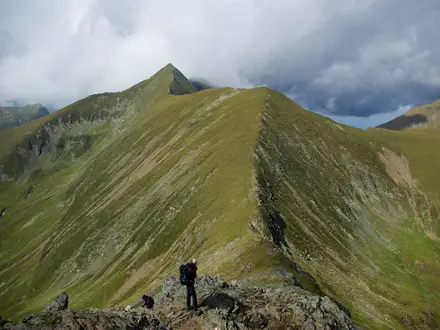
The Piatra Craiului Ridge Trail is a 20 km, usually 2-day, point-to-point traverse of the sawtooth limestone crest of Piatra Craiului National Park in Romania. It sits in the Southern Carpathians, in Transylvania, and is rated expert for good reason: expect exposed ridge walking, sharp rock, scree, very steep approaches and cable-assisted scrambling on the La Lanturi chains. It suits confident mountain hikers with a head for heights, not beginners or anyone uneasy on narrow, airy ground.
Route Overview
Most parties traverse the ridge between Cabana Plaiul Foii on the western side and Cabana Curmatura / Zarnesti on the north-east, walking either direction. A common line climbs from Plaiul Foii via the La Lanturi chains to the crest, reaches Varful La Om at 2,238 m, continues past Refugiul Saua Grindului, Varful Ascutit, Varful Turnu and the Curmatura saddle, then descends towards Cabana Curmatura and Prapastiile Zarnestilor to Zarnesti. Zarnesti is the main gateway; other access is from Plaiul Foii, Bran and the Magura, Pestera and Sirnea villages. For a less committing local option, see the Curmatura Hut Loop; for broader Carpathian ridge planning, compare the Carpathian Ridge Trail and Bucegi Plateau Circuit.
Piatra Craiului National Park and the King’s Rock
Piatra Craiului means “the King’s Rock”, a fitting name for the steep limestone karst ridge that runs roughly 25 km south-west to north-east through the Southern Carpathians. Its scenery and flora were recognised early: a small nature reserve was declared in 1938, and the wider range later became Piatra Craiului National Park, formally enlarged and confirmed under Law 5/2000. The massif is especially known for Dianthus callizonus, an endemic pink carnation found in the wild nowhere else.
Notable highlights
- Varful La Om (2,238 m): The highest point of the Piatra Craiului massif and the high point of the traverse, with views towards the Bucegi and Fagaras ranges.
- The La Lanturi chains: Cable-assisted rock sections on the steep ascent to the crest. Gloves are commonly advised, and some guides also recommend a helmet.
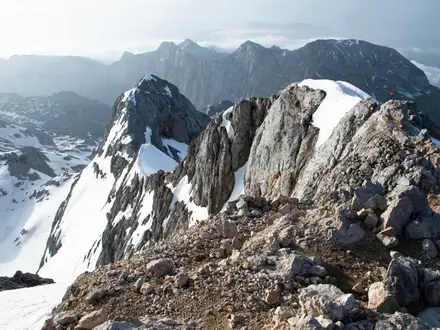
- The knife-edge limestone crest: The defining terrain of the hike, with narrow walking and severe exposure; in places the path is roughly 40 cm wide with huge drops either side.
- Garofita Pietrei Craiului / Dianthus callizonus: A vivid pink carnation that grows wild only on this massif and is the emblem of Piatra Craiului National Park.
- Prapastiile Zarnestilor / Zarnesti Gorge: A narrow limestone canyon used as the dramatic lower approach or descent on the Zarnesti side, also noted for the rare wallcreeper bird.
- Carpathian wildlife: The park holds brown bear, wolf and lynx, with chamois on the high crags; hikers should treat dawn, dusk and forest approaches with proper wildlife awareness.
Challenges to expect
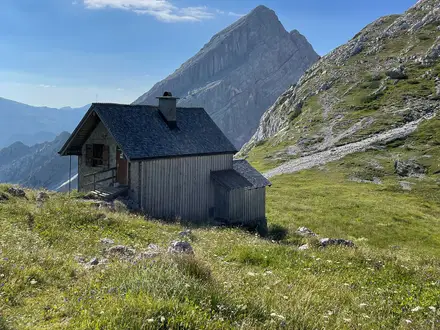
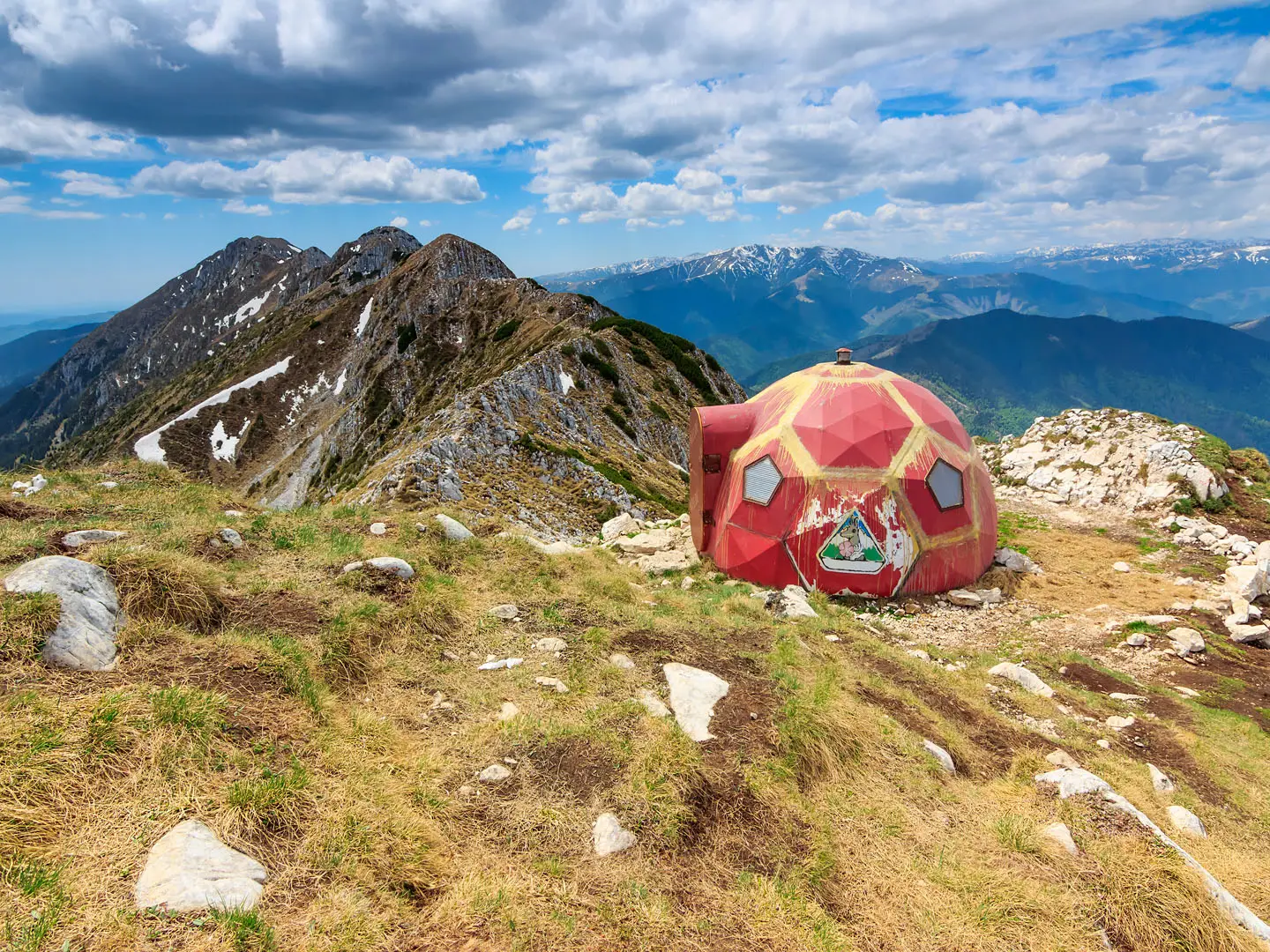
This is a serious ridge, not just a long walk. Expect chain-assisted scrambling, loose scree, sharp limestone, route-finding on exposed ground and very steep forest approaches. Rain, ice or lingering snow make the chains and crest dangerous. There is no water on the crest, so carry what you need from the start. Small refuges at Saua Grindului, near Ascutit and near La Om can fill quickly, especially at weekends.
HikeList Score
Piatra Craiului Ridge Trail scored 72/100 on HikeList's trail-quality metrics.
See score breakdownHide breakdown
- Ideal length 63
- Balanced challenge 44
- Scenery & wildness 88
- Varied terrain 94
- Accommodation 67
- Food & support 65
- Path quality 98
- Season flexibility 76
Computed from length, challenge, scenery & wildness, terrain variety, accommodation, food & support, path quality and season flexibility.
 Romania
Show more data Show less
- Mountain
- Ridge
- Rocky
- Forest
- Rock
- Scree
- Dirt
- Mountain Huts
- Refuges
- Wild Camping
- Pet Friendly
- Water Sources
- Campsites
- Shelters
Photos from hikers
Taken on the trail by people who've reviewed Piatra Craiului Ridge Trail.
The hike begins at Cabana Plaiul Foii, gradually ascending through dense forest before reaching the limestone crest of Piatra Craiului. The trail climbs steeply, with occasional scrambling as you approach the spectacular northern ridge. Upon gaining the ridge, you are rewarded with panoramic views and traverse several exposed sections, passing over Turnu Peak and moving toward the Curmătura Saddle. After a challenging trek along the rocky crest, the route continues southward toward Refugiul Șaua Grindului, where most hikers choose to spend the night in either the hut or at adjacent wild camping spots.
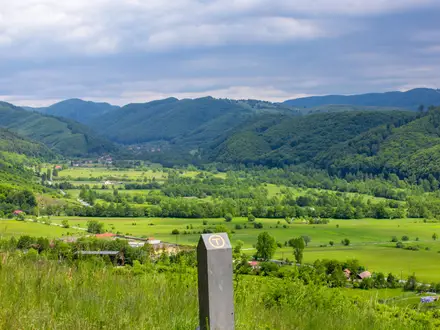
From Refugiul Șaua Grindului, the route climbs steadily to the highest point of the trail—La Om (Piscul Baciului) at 2,238 meters—before continuing along the ridge through more technical and exposed terrain with sweeping mountain vistas. The descent from the ridge leads hikers through alpine meadows and back into forests as the trail drops toward Cabana Curmătura or the village of Bran, depending on the chosen exit point. This section can also include alternative descent routes toward Zărnești via Prăpăstiile Zărneștilor Gorge, offering a dramatic finish with towering cliffs framing the path. The day covers considerable elevation loss and requires careful footing on steep, rocky paths.
Reviews
How would you rate Piatra Craiului Ridge Trail?
Tap a star to start your review — you could be the first.