Rila Monastery Pilgrimage Trail
How would you rate Rila Monastery Pilgrimage Trail?
Tap a star to share your experience and help other hikers.
Rila Monastery Pilgrimage Trail: St Ivan’s Cave Walk
HikeList Score
Rila Monastery Pilgrimage Trail scored 80/100 on HikeList's trail-quality metrics.
See score breakdownHide breakdown
- Ideal length 55
- Balanced challenge 100
- Scenery & wildness 85
- Varied terrain 83
- Accommodation 74
- Food & support 81
- Path quality 80
- Season flexibility 89
Computed from length, challenge, scenery & wildness, terrain variety, accommodation, food & support, path quality and season flexibility.
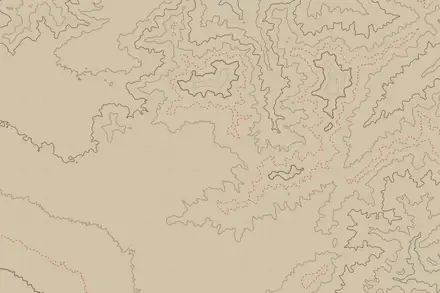
The Rila Monastery Pilgrimage Trail is a 13 km, one-day out-and-back walk in the Rilska River valley of the Rila Mountains in Bulgaria. Starting and finishing at Rila Monastery, it climbs through forest to St Luke’s Hermitage, St Ivan of Rila’s Cave and, for the fuller version, Kirilova Polyana. With about 440 m of ascent, well-trodden paths and a few steep, rocky sections, it suits walkers wanting a moderate half- to full-day pilgrimage hike rather than a high-mountain traverse.
Route Overview
Start at Rila Monastery, about 117 km south of Sofia, and walk up-valley from behind/east of the monastery. The marked forest path and valley road lead towards St Luke’s Hermitage, then to the chapel and cave of St Ivan of Rila. Many walkers continue to Kirilova Polyana, a meadow roughly 7 km from the monastery, before returning the same way. No end-point transfer is needed because this is an out-and-back route. The walk is short enough to combine with time inside the UNESCO-listed monastery. For harder Bulgarian mountain days, compare the Cherni Vrah Summit Trail or the Bezbog to Popovo Lake Trail.
Pilgrimage history of St Ivan of Rila
The route follows the story of St Ivan, or John, of Rila, the 10th-century hermit whose cave became one of Bulgaria’s major Orthodox pilgrimage sites. Disciples gathered around him and later founded the monastery associated with his relics and teaching. Rila Monastery grew into Bulgaria’s leading spiritual and cultural centre, with Hrelyo’s Tower dating to 1335. After a major fire in 1833, the monastery was rebuilt between 1834 and 1862 with nationwide donations and was inscribed as a UNESCO World Heritage Site in 1983.
Notable highlights
St Ivan of Rila’s Cave: The spiritual focus of the walk, where St Ivan lived out his final years. Pilgrims still climb through the narrow natural fissure known as the “miracle hole”.
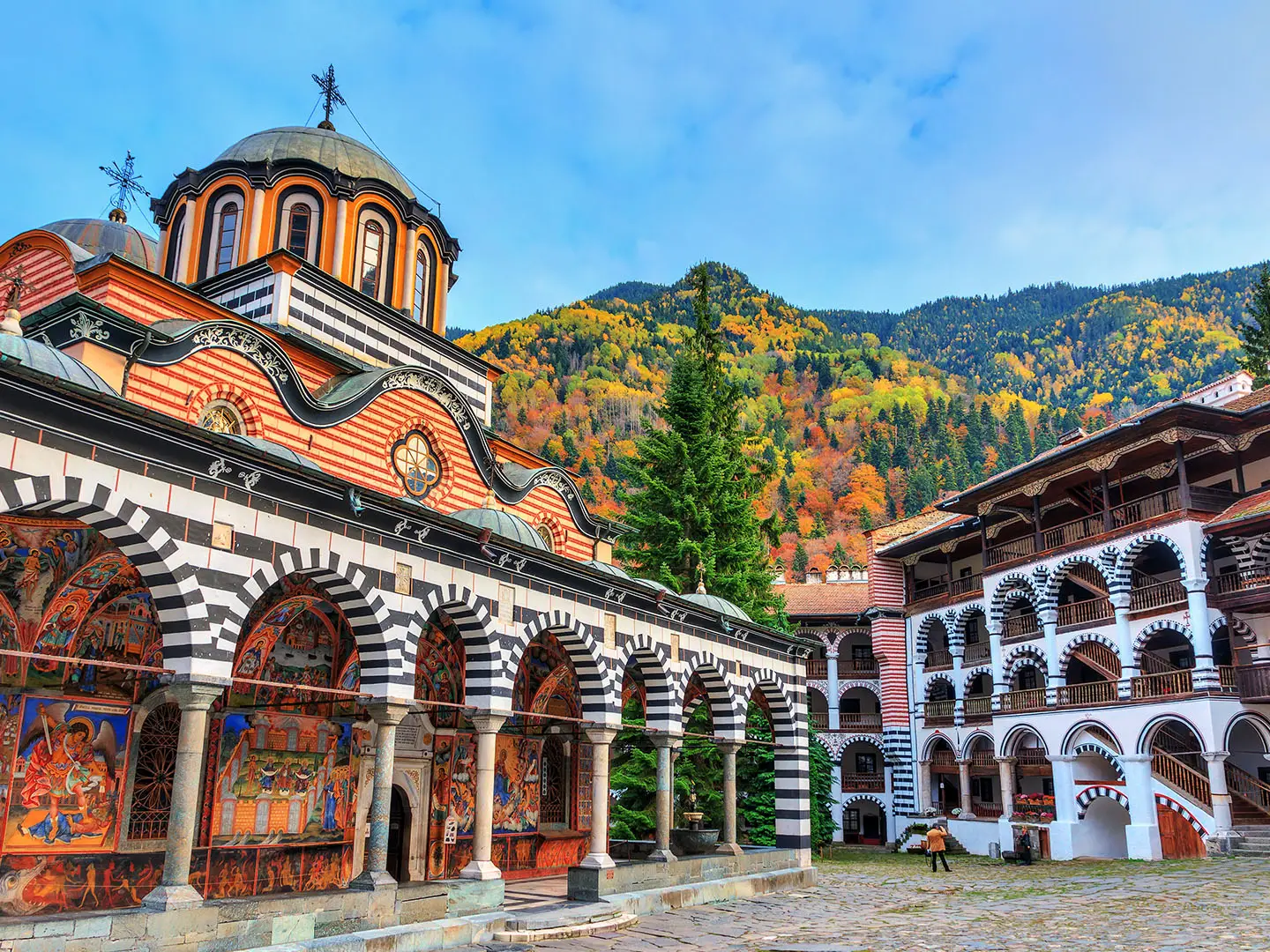
Rila Monastery: Bulgaria’s largest and most revered Orthodox monastery, and a UNESCO World Heritage Site. Its arcaded courtyard, frescoes and setting make it the natural start and finish for the walk.
St Luke’s Hermitage: A quiet forest hermitage about 3.7 km up the valley, with the Sveti Luka chapel built in 1798. It breaks the climb neatly before the cave section.
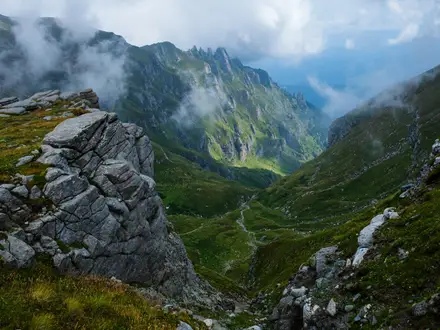
Kirilova Polyana: A grassy clearing roughly 7 km from the monastery, beneath limestone crags. It is the usual turnaround point for the full 13 km version.
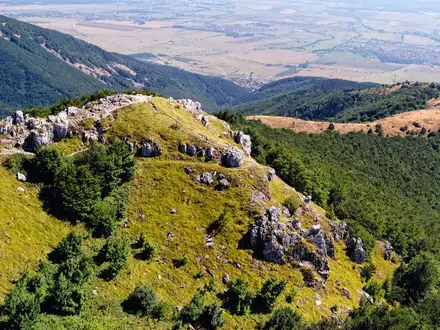
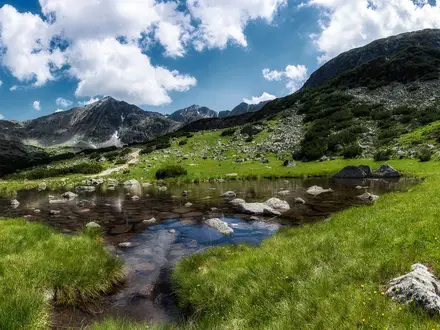
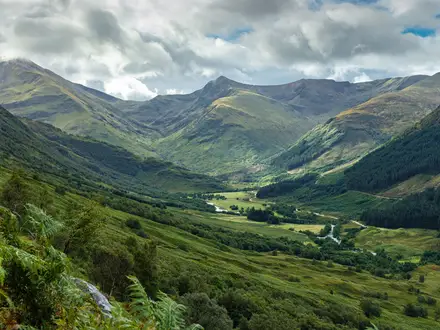
Rilska River valley: The route follows the river through Rila Monastery Nature Park, using footbridges, forest paths and short road-side sections through the gorge.
Challenges to expect
This is not a hard Rila traverse, but it is not entirely flat. Expect around 440 m of ascent, locally steep and rocky forest paths, muddy going after rain, and cold or snowy conditions outside the main season. The cave involves a short rocky scramble and a narrow passage. Navigation is straightforward on the well-trodden, signed route, but the high-mountain routes beyond the monastery are separate objectives; see also the Central Balkan Ridge Trail for a very different long ridge walk.
HikeList Score
Rila Monastery Pilgrimage Trail scored 80/100 on HikeList's trail-quality metrics.
See score breakdownHide breakdown
- Ideal length 55
- Balanced challenge 100
- Scenery & wildness 85
- Varied terrain 83
- Accommodation 74
- Food & support 81
- Path quality 80
- Season flexibility 89
Computed from length, challenge, scenery & wildness, terrain variety, accommodation, food & support, path quality and season flexibility.
 Bulgaria
Show more data Show less
- Forest
- River Valley
- Mountains
- Dirt
- Rock
- Paved
- Guesthouses
- Hotels
- Pet Friendly
- Water Sources
- Campsites
- Shelters
In these collections
Photos from hikers
Taken on the trail by people who've reviewed Rila Monastery Pilgrimage Trail.
Reviews
How would you rate Rila Monastery Pilgrimage Trail?
Tap a star to start your review — you could be the first.