Roman Road Trail (Split-Solin)
How would you rate Roman Road Trail (Split-Solin)?
Tap a star to share your experience and help other hikers.
Roman Road Trail (Split-Solin): Split to Salona Heritage Walk
HikeList Score
Roman Road Trail (Split-Solin) scored 69/100 on HikeList's trail-quality metrics.
See score breakdownHide breakdown
- Ideal length 55
- Balanced challenge 60
- Scenery & wildness 59
- Varied terrain 77
- Accommodation 91
- Food & support 68
- Path quality 87
- Season flexibility 89
Computed from length, challenge, scenery & wildness, terrain variety, accommodation, food & support, path quality and season flexibility.
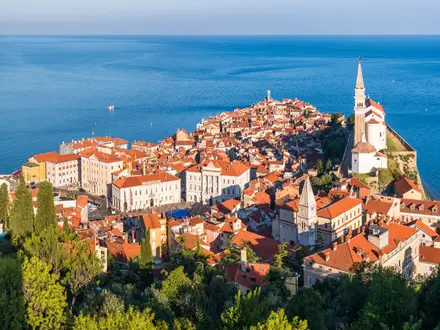
The Roman Road Trail (Split-Solin) is best understood as an easy half-day heritage walk in central Dalmatia, Croatia, not a formal waymarked long-distance trail. It links Split city centre, beside Diocletian’s Palace, with Solin and the Salona archaeological park, about 5-6 km north-east. Allow 2-4 hours of walking plus time for the ruins. It suits walkers who want Roman history, flat valley terrain and a practical day trip, rather than a mountain hike.
Route Overview
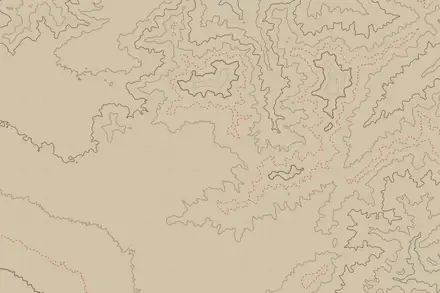
Start in Split city centre by Diocletian’s Palace and walk north-east towards Solin through urban streets, the Jadro river valley and sections associated with the old Split-Salona corridor. The route is point-to-point, ending at the Salona archaeological park, where the genuine Roman road remains, Cardo Maximus and Porta Caesarea, are inside the site. The Diocletian aqueduct’s arched section at Bilice sits just south of Solin and is a key feature to include if using the longer 7.5 km variant. Treat this as a self-guided urban-valley walk, not a continuous marked footpath. For other Croatian history-and-landscape walks, compare the Dubrovnik City Walls Trail and Krka Waterfalls Trail.
Roman Salona and the Split-Solin Corridor
Salona, at modern Solin, was the capital of the Roman province of Dalmatia and developed from a Greek-Illyrian settlement into a major Roman administrative, commercial and Christian centre. Roman roads linked it to the wider network, including the Via Gabiniana towards Andetrium and the Salona-Siscia road. Emperor Diocletian later built his palace at Spalatum, now Split. After Salona was sacked by Avars and Slavs around 614 AD, survivors sheltered inside the palace, helping form the city of Split.
Notable highlights
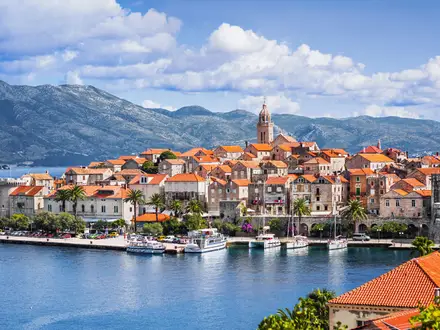
- Diocletian’s Palace, Split: A UNESCO World Heritage site and the natural starting point of the walk, with Roman walls, gates and the cathedral built into the late-Roman palace complex.
- Jadro river valley: The gentle green corridor between Split and Solin; the Jadro spring fed the Roman aqueduct that supplied Salona and Diocletian’s Palace.
- Diocletian aqueduct: A roughly 9 km Roman aqueduct, with its best-preserved arched section at Bilice just south of Solin.
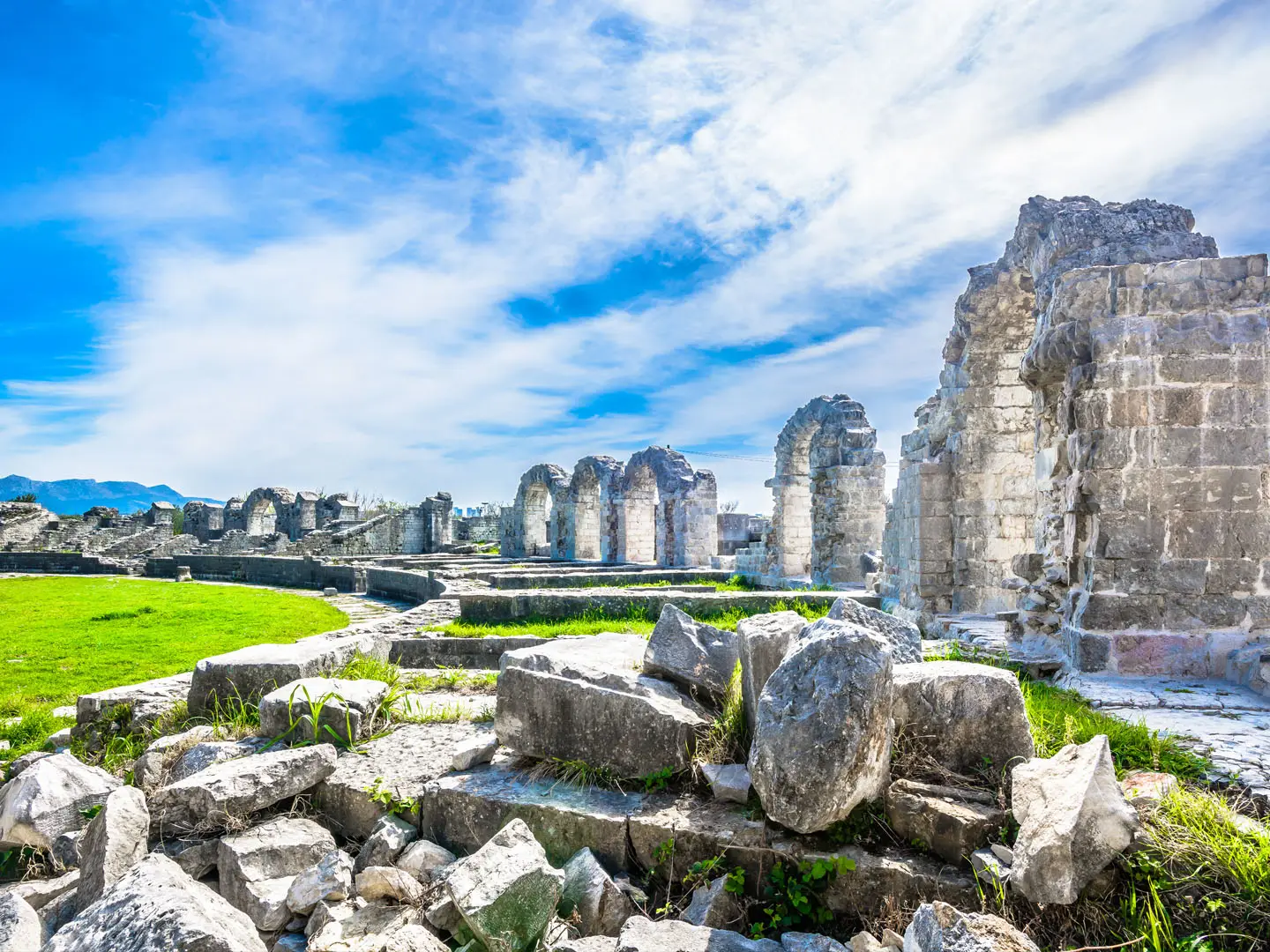
- Salona archaeological park, Solin: The largest archaeological park in Croatia and the former Roman provincial capital, with an amphitheatre, forum, early-Christian basilicas, necropolis and Tusculum building.
- Cardo Maximus and Porta Caesarea: Genuine Roman paved streets inside Salona, where worn cart ruts are still visible in the stone at Caesar’s Gate.
Challenges to expect
The walking is easy and low-level, but do not expect a signed trail from Split to Salona. Navigation is partly through urban streets and valley tracks, so use a map. Inside Salona, paths are rough, rocky and stony, with rocky steps in places. The route is largely unshaded; in summer, start early, carry water and use sun protection. For a hillier island contrast, see the Brač Island Summit Trail (Vidova Gora).
HikeList Score
Roman Road Trail (Split-Solin) scored 69/100 on HikeList's trail-quality metrics.
See score breakdownHide breakdown
- Ideal length 55
- Balanced challenge 60
- Scenery & wildness 59
- Varied terrain 77
- Accommodation 91
- Food & support 68
- Path quality 87
- Season flexibility 89
Computed from length, challenge, scenery & wildness, terrain variety, accommodation, food & support, path quality and season flexibility.
 Croatia
Show more data Show less
- Urban
- Valley
- Paved
- Dirt
- Gravel
- Rocky
- Stone
- Hotels
- Hostels
- Guesthouses
- Family Friendly
- Pet Friendly
- Restrooms
- Picnic Areas
Photos from hikers
Taken on the trail by people who've reviewed Roman Road Trail (Split-Solin).
Reviews
How would you rate Roman Road Trail (Split-Solin)?
Tap a star to start your review — you could be the first.