Ruta del Cares (Cares Gorge Trail)
How would you rate Ruta del Cares (Cares Gorge Trail)?
Tap a star to share your experience and help other hikers.
Ruta del Cares: Cares Gorge Trail Hiking Guide
HikeList Score
Ruta del Cares (Cares Gorge Trail) scored 82/100 on HikeList's trail-quality metrics.
See score breakdownHide breakdown
- Ideal length 55
- Balanced challenge 100
- Scenery & wildness 98
- Varied terrain 71
- Accommodation 91
- Food & support 61
- Path quality 98
- Season flexibility 89
Computed from length, challenge, scenery & wildness, terrain variety, accommodation, food & support, path quality and season flexibility.
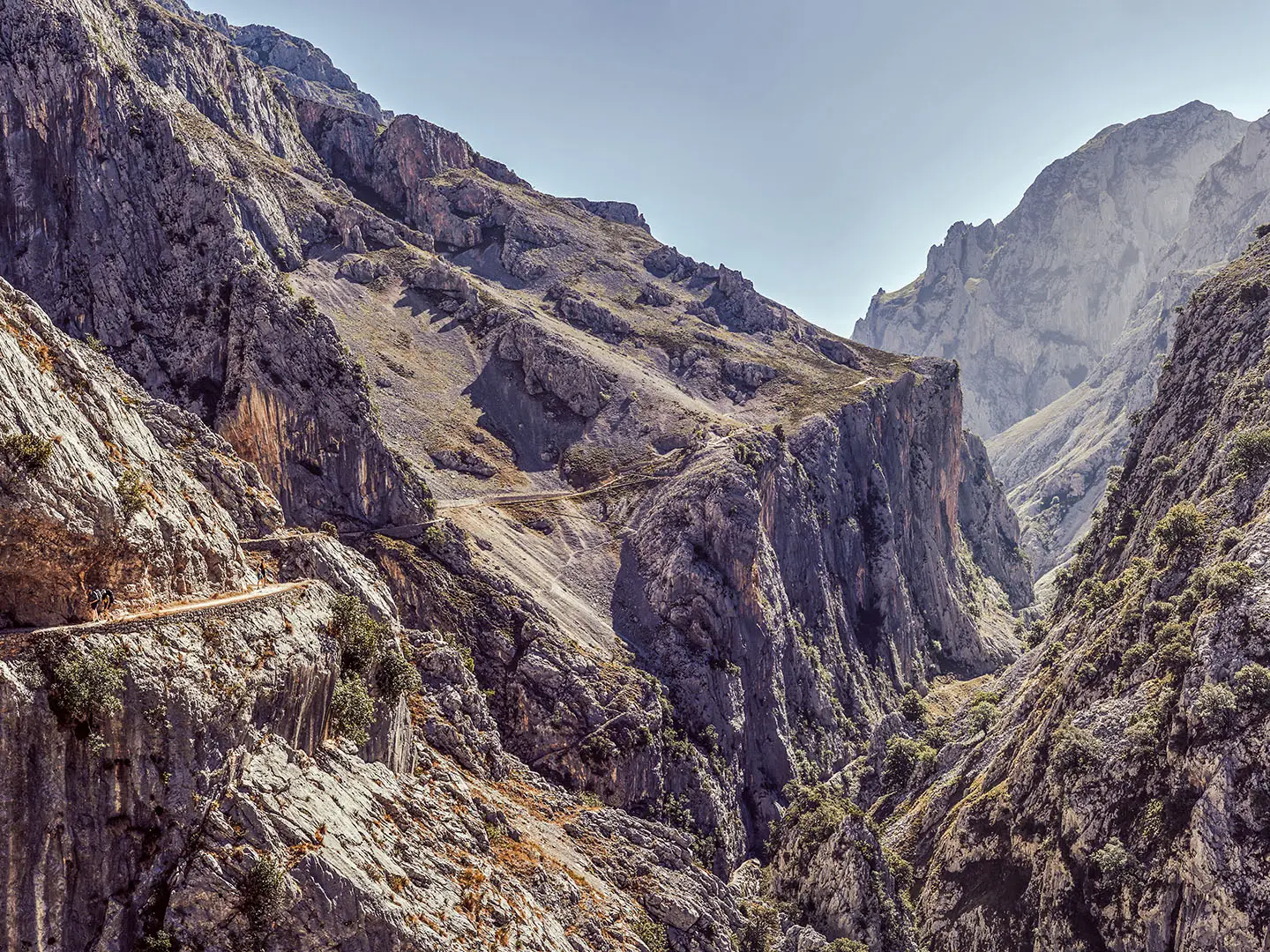
Ruta del Cares is an 11 km one-way day hike through the Cares Gorge in Picos de Europa National Park, northern Spain, between Caín and Poncebos. Waymarked as PR-PNPE 3, it is technically easy to moderate on a clear ledge path, but the length, exposure and unprotected drops make it a moderate walk overall. It suits sure-footed hikers who want a dramatic limestone gorge route without high-altitude navigation.
Route Overview
The official route is point-to-point between Caín in León and Poncebos / Puente Poncebos in Asturias, though many hikers walk out and back because public transport between the ends is limited and roundabout. The classic direction runs from Caín past the dam/reservoir and tunnelled section, then along the Cares River ledges to Puente Bolín, Puente de los Rebecos, the Culiembro area and the descent to Poncebos. Allow about 3 to 3.5 hours one way, or 6 to 7 hours for the 22 km return. For longer walking in the same region, compare Carros de Foc in Aigüestortes, the north-coast Camino del Norte or the inland Camino Primitivo through the Asturian mountains.
How the Cares Gorge Path Was Built
The route follows a water canal cut through the gorge between 1916 and 1921 to supply the Poncebos hydroelectric power station from near Caín. The works included roughly 9.5 km of canal and more than 5,500 m of tunnels, built with hand tools and gunpowder while crews lived in caves and huts. Between 1945 and 1950 the path was widened and improved for maintenance access, later becoming one of Spain’s most popular walks.
Notable highlights
- Cares Gorge (Garganta Divina): The defining feature of the walk: a deep limestone canyon with the turquoise Cares River far below and cliff walls rising up to around 1,000 m in places.
- Ledge path and tunnels: Much of the route is cut directly into vertical rock, with over 70 hand-dug tunnels that show the scale of the early-20th-century canal works.
- Puente Bolín and Puente de los Rebecos: These metal footbridges carry the path across the gorge high above the river, switching between the canyon walls.
- Culiembro wildlife viewing: Griffon vultures and choughs are often seen overhead, while chamois and free-roaming goats pick across the cliffs, especially around Culiembro.
- Canal heritage: The Caín dam, surviving canal channels and old hydroelectric infrastructure explain why this unlikely path exists.
- Caín and Poncebos: Small mountain trailhead villages with food and lodging options, giving access from the Leonese and Asturian sides of the Picos.
Challenges to expect
The path is well defined, but it is narrow, exposed and has sheer unprotected drops to the river. There is little shade, so July and August can be very hot and crowded. Rock and stone sections can be slippery when wet, and winter snow or ice makes the route risky. There are no reliable water sources or shops on the trail, so carry food and at least about 2 litres of water.
HikeList Score
Ruta del Cares (Cares Gorge Trail) scored 82/100 on HikeList's trail-quality metrics.
See score breakdownHide breakdown
- Ideal length 55
- Balanced challenge 100
- Scenery & wildness 98
- Varied terrain 71
- Accommodation 91
- Food & support 61
- Path quality 98
- Season flexibility 89
Computed from length, challenge, scenery & wildness, terrain variety, accommodation, food & support, path quality and season flexibility.
 Spain
SpainShow more data Show less
- Mountainous
- Gorge
- Dirt
- Rocky
- Stone
- Hotels
- Guesthouses
- Hostels
- Family Friendly
- Pet Friendly
- Restrooms
Photos from hikers
Taken on the trail by people who've reviewed Ruta del Cares (Cares Gorge Trail).
Reviews
How would you rate Ruta del Cares (Cares Gorge Trail)?
Tap a star to start your review — you could be the first.