Ruta del Emperador
How would you rate Ruta del Emperador?
Tap a star to share your experience and help other hikers.
Ruta del Emperador: Jarandilla to Yuste Hiking Guide
HikeList Score
Ruta del Emperador scored 70/100 on HikeList's trail-quality metrics.
See score breakdownHide breakdown
- Ideal length 51
- Balanced challenge 64
- Scenery & wildness 78
- Varied terrain 64
- Accommodation 74
- Food & support 81
- Path quality 98
- Season flexibility 63
Computed from length, challenge, scenery & wildness, terrain variety, accommodation, food & support, path quality and season flexibility.
The Ruta del Emperador is an easy 10 km point-to-point walk in La Vera, Cáceres province, Extremadura, on the Spain hiking guide. It runs from Jarandilla de la Vera to the Real Monasterio de Yuste in about 3 hours one-way, making it a half-day historical route rather than a multi-day trek. With only modest ascent and low official difficulty, it suits walkers who want village scenery, old tracks and Charles V history without a mountain crossing.
Route Overview
Walk the route linearly from the Parador de Jarandilla, the former Castle of the Counts of Oropesa, towards Aldeanueva de la Vera, Cuacos de Yuste and the Monasterio de Yuste. The official route is one-way, not a loop, so plan how you will return to Jarandilla. Underfoot, expect footpaths, cobbled or empedrado tracks and dirt forest tracks through La Vera’s watered, cultivated landscape of chestnut, oak and fruit orchards. It is open to walkers, horse riders and mountain bikers. For much longer Spanish walking routes, compare the Camino Francés or the mountain-village Alpujarras Trail.
Charles V’s Final Walk to Yuste
The Ruta del Emperador retraces the final leg of Emperor Charles V’s journey into retirement. After abdicating his crowns, he landed at Laredo in September 1556 and travelled south. From November 1556 he lodged in Jarandilla’s castle while his palace beside the Monastery of Yuste was completed. On 3 February 1557 he walked this last stretch to Yuste, where he spent his final eighteen months and died on 21 September 1558.
Notable highlights
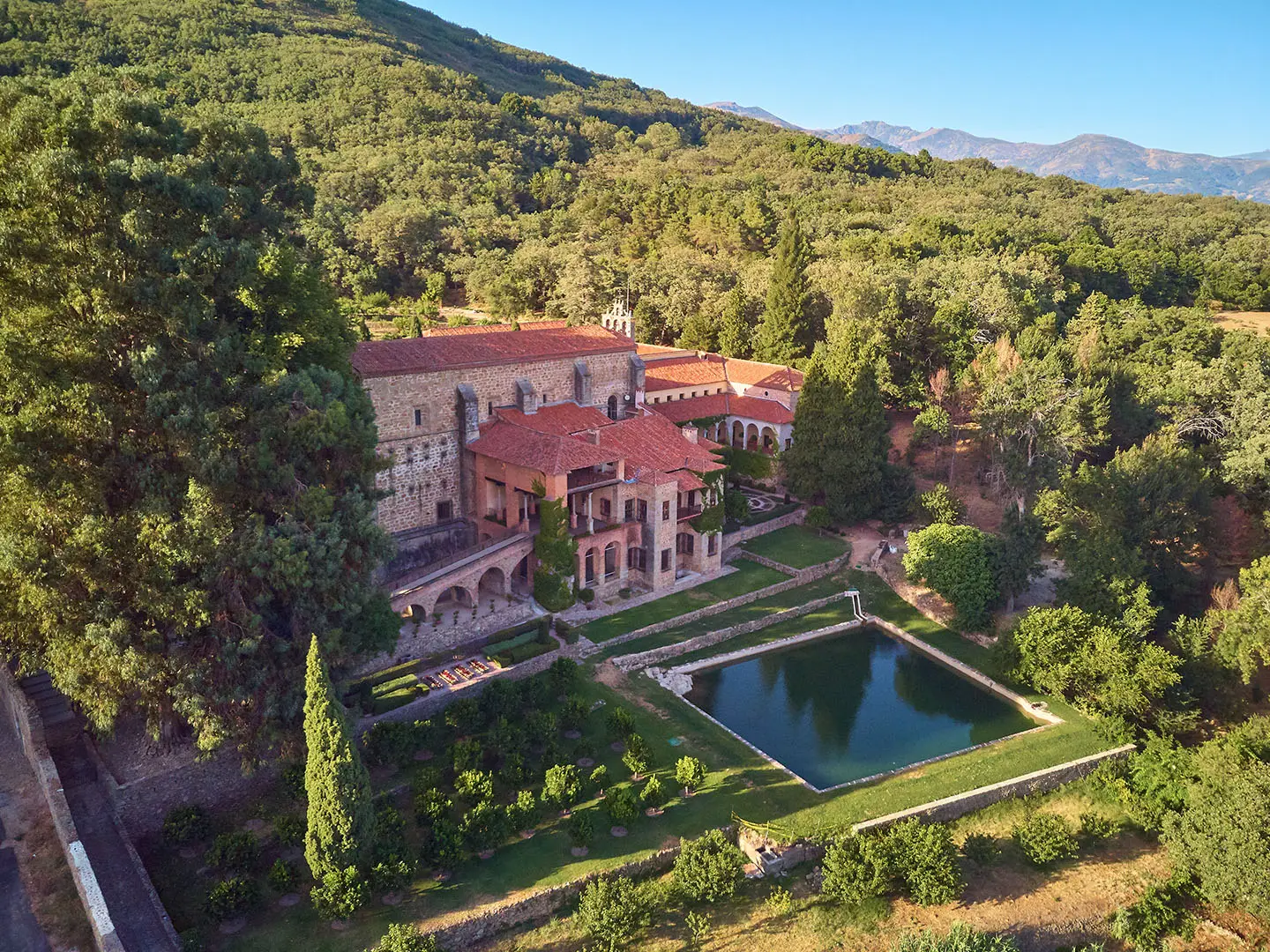
- Real Monasterio de Yuste: A Hieronymite monastery founded in 1402 and chosen by Charles V for his retirement. The route finishes here; visiting the interior requires a separate Patrimonio Nacional ticket.
- Parador de Jarandilla / Castle of the Counts of Oropesa: The 15th-century castle where Charles V stayed from November 1556 while his Yuste palace was completed. It is now a state Parador and the walk’s starting point.
- German Military Cemetery at Cuacos de Yuste: Spain’s only German military cemetery, with 180 graves from the First and Second World Wars. It lies near the end of the route.
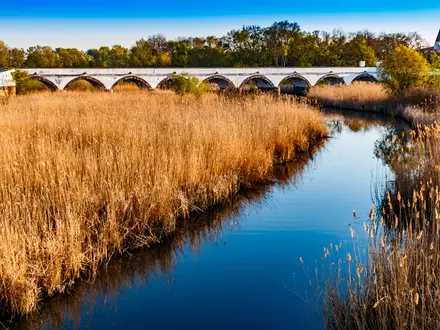
- Puente del Parral: An old stone bridge of Roman origin crossed on the way. It reflects the long-used tracks and village links of La Vera.
Challenges to expect
This is an easy foothill walk, but do not expect a surfaced promenade throughout. Cobbled sections can be uneven, dirt forest tracks may be rough after weather, and the linear format means you need a return plan. There is no notable summit and the route descends overall from Jarandilla towards Yuste, with modest undulation and an official maximum ascent figure of 178 m.
HikeList Score
Ruta del Emperador scored 70/100 on HikeList's trail-quality metrics.
See score breakdownHide breakdown
- Ideal length 51
- Balanced challenge 64
- Scenery & wildness 78
- Varied terrain 64
- Accommodation 74
- Food & support 81
- Path quality 98
- Season flexibility 63
Computed from length, challenge, scenery & wildness, terrain variety, accommodation, food & support, path quality and season flexibility.
 Spain
SpainShow more data Show less
- Forest
- Cultivated Landscape
- Cobbled
- Dirt
- Hotels
- Guesthouses
- Family Friendly
- Pet Friendly
- Restrooms
- Water Sources
- Picnic Areas
Photos from hikers
Taken on the trail by people who've reviewed Ruta del Emperador.
Start at the Parador de Jarandilla, the former Castle of the Counts of Oropesa, and follow the linear route through La Vera towards Aldeanueva de la Vera, Cuacos de Yuste and the Real Monasterio de Yuste. Allow about 3 hours one-way.
Reviews
How would you rate Ruta del Emperador?
Tap a star to start your review — you could be the first.