Serra da Estrela Traverse
How would you rate Serra da Estrela Traverse?
Tap a star to share your experience and help other hikers.
Serra da Estrela Traverse: A High-Mountain Crossing of Portugal
HikeList Score
Serra da Estrela Traverse scored 80/100 on HikeList's trail-quality metrics.
See score breakdownHide breakdown
- Ideal length 70
- Balanced challenge 80
- Scenery & wildness 85
- Varied terrain 83
- Accommodation 74
- Food & support 81
- Path quality 98
- Season flexibility 89
Computed from length, challenge, scenery & wildness, terrain variety, accommodation, food & support, path quality and season flexibility.
The Serra da Estrela Traverse is a roughly 45 km, 3-day, hard point-to-point crossing of mainland Portugal’s highest range, inside Serra da Estrela Natural Park in central Portugal. It suits experienced hikers who want granite high-plateau walking, glacial valleys and a passage over or near Torre, the country’s highest mainland point at 1,993 m. There is no single official trail branded by this name; it is a compact central-massif traverse using the park’s waymarked route network and local access paths.
Route Overview
Most traverses start on the Manteigas or Covilhã side, climb through or near the Zêzere glacial valley, Covão d’Ametade and the high plateau around Torre, then continue west towards Seia, Loriga or São Romão. Exact trailheads vary, but the route is linear and logistics matter: plan vehicle drops or transfers, especially if walking independently. Key places on or near common lines include Penhas da Saúde, Nave de Santo António, Lagoa Comprida and the gateway towns around the range. Do not confuse this shorter high crossing with the much longer Grande Rota do Zêzere. If comparing Portuguese options, also see Peneda-Gerês National Park Trails and the Fishermen’s Trail.
Glacial valleys, shepherding and protected mountain country
Serra da Estrela was shaped by Ice Age glaciers, leaving clear U-shaped valleys, cirques and lakes, especially in the Zêzere valley and at Covão d’Ametade. The range has long been used for seasonal transhumance and high-pasture grazing, linked with Serra da Estrela cheese, the Estrela Mountain Dog and shepherding culture. Protected as Serra da Estrela Natural Park in 1976, it is Portugal’s largest protected area and the only Portuguese region with waymarked long-distance trails covering a whole national park.
Notable highlights
- Torre (1,993 m): The highest point of mainland Portugal and the usual climax of the traverse. It is a plateau high point rather than a sharp summit, with a stone tower and road access.
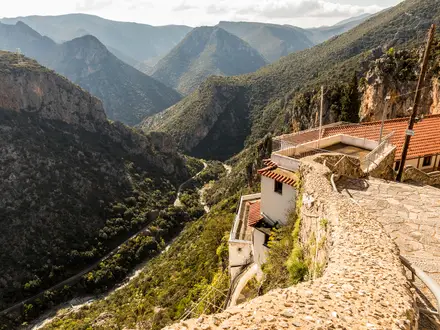
- Zêzere Glacial Valley (Vale Glaciar do Zêzere): A classic U-shaped glacial valley running about 13 km down towards Manteigas. Many traverses climb or descend through it, giving a clear view of the range’s glacial landforms.
- Covão d’Ametade: An ancient glacial cirque and lagoon near the head of the Zêzere valley. It sits below the Cântaro Magro crag and marks the transition from valley walking to the high massif.
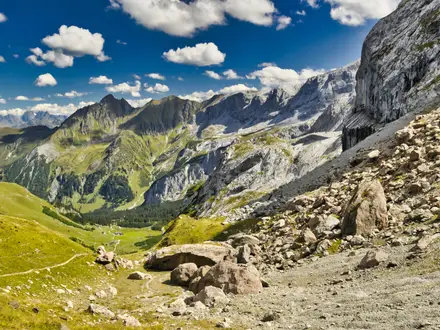
- Granite high plateau: Above the treeline, the route crosses exposed granite, grassland, boulders and glacial lakes such as Lagoa Comprida. This open plateau is the defining terrain of the crossing.
- Gateway mountain towns: Manteigas, Covilhã, Seia and Loriga provide accommodation and access. They also anchor the route in Estrela’s cheese, shepherding and mountain-dog heritage.
Challenges to expect
Expect steep gradients, stony paths, boulder fields, dirt and gravel tracks, plus short road sections near Torre and the towns. The plateau is exposed and can have severe mountain weather; winter brings snow and ice, so May to October is the main walking window. Navigation is helped by GR/PR waymarking, but there is no single fixed “Serra da Estrela Traverse”, so your line and overnight stops must be planned carefully.
HikeList Score
Serra da Estrela Traverse scored 80/100 on HikeList's trail-quality metrics.
See score breakdownHide breakdown
- Ideal length 70
- Balanced challenge 80
- Scenery & wildness 85
- Varied terrain 83
- Accommodation 74
- Food & support 81
- Path quality 98
- Season flexibility 89
Computed from length, challenge, scenery & wildness, terrain variety, accommodation, food & support, path quality and season flexibility.
 Portugal
Show more data Show less
- Mountain
- Glacial Valley
- Plateau
- Rock
- Dirt
- Gravel
- Hotels
- Guesthouses
- Pet Friendly
- Water Sources
- Campsites
- Shelters
In these collections
Photos from hikers
Taken on the trail by people who've reviewed Serra da Estrela Traverse.
The first day of the Serra da Estrela Traverse begins in the town of Manteigas, located deep in the Zêzere Valley. The route heads south, following established trails out of the valley floor and climbing steadily through forested lower slopes into more open, rocky terrain. Hikers will ascend past the scenic Covão d’Ametade, a glacial amphitheater and popular rest stop, then continue to climb through wildflower meadows and alpine pastures. Approaching the Torre summit, the trail becomes steeper and more exposed, potentially crossing late-season snow patches. The day finishes at Torre, the highest point in mainland Portugal at 1,993 meters, offering sweeping views of the mountain range.
Day two descends from the high point at Torre, following mountain tracks across plateaus interspersed with rocky outcrops and glacial terrain. The route traverses open moorland with minimal vegetation, offering frequent panoramic views and the chance to spot wildlife such as eagles or wild horses. Along the way, hikers pass glacial cirques and small tarns before eventually reaching Lagoa Comprida, a large mountain reservoir surrounded by granite boulders. This section is generally exposed, with limited shade or shelter, making weather awareness and water planning critical.
The final day of the traverse departs from Lagoa Comprida, gradually descending through high mountain plateaus and patchworks of pastureland. Hikers will wind south or southeast on a combination of dirt tracks and rocky trails, occasionally passing through small mountain hamlets. The scenery softens as you approach lower elevations, with forests and cultivated fields becoming more prominent. The day concludes with arrival in the town of Seia, a convenient endpoint with infrastructure for rest and onward travel.
Reviews
How would you rate Serra da Estrela Traverse?
Tap a star to start your review — you could be the first.