South Styrian Wine Route
How would you rate South Styrian Wine Route?
Tap a star to share your experience and help other hikers.
South Styrian Wine Route: Walking Styria’s Vineyard Road
HikeList Score
South Styrian Wine Route scored 77/100 on HikeList's trail-quality metrics.
See score breakdownHide breakdown
- Ideal length 55
- Balanced challenge 100
- Scenery & wildness 71
- Varied terrain 83
- Accommodation 74
- Food & support 81
- Path quality 80
- Season flexibility 89
Computed from length, challenge, scenery & wildness, terrain variety, accommodation, food & support, path quality and season flexibility.
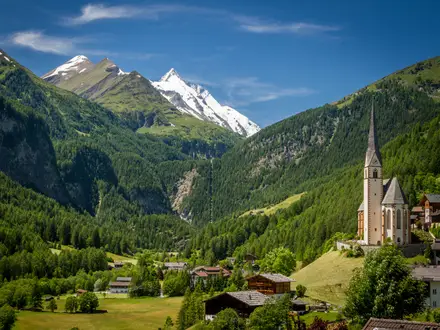
The South Styrian Wine Route is a roughly 25 km scenic wine road in Sudsteiermark, south-east Austria, running from Ehrenhausen an der Weinstrasse via Gamlitz to Leutschach an der Weinstrasse near the Slovenian border. It is not a dedicated long-distance hiking trail: most people drive, cycle or e-bike it. Strong walkers can cover it in one full day. Expect a moderate walk on hilly vineyard roads and tracks, with steep climbs, taverns and wide wine-country views.
Route Overview
This is best understood as a point-to-point wine-road walk rather than a waymarked thru-hike. The usual line runs east to south from Ehrenhausen an der Weinstrasse through Gamlitz, Ratsch an der Weinstrasse, Sulztal, Berghausen, Glanz, Langegg, Schlossberg and Eichberg-Trautenburg to Leutschach an der Weinstrasse. Access is also possible from Spielfeld and Strass. Some sections are paved minor roads shared with traffic, while others use gravel or dirt vineyard lanes and forested stretches. Many hikers choose shorter signed loops in the surrounding wine country instead of walking the full road. For a true Austrian long-distance trail, compare the Alpe-Adria Trail, Donausteig Danube Trail or Eagle Walk in Tyrol.
History of the South Styrian Wine Route
Opened in 1955, the South Styrian Wine Route is the oldest of Styria’s wine roads and was created to link winegrowing villages and support local livelihoods. Viticulture in southern Styria is much older, with roots going back to Roman times. The road passes through a long-settled cultural landscape of vineyards, Buschenschank taverns, manor houses and the Eggenberg monuments at Ehrenhausen. Its line along the post-1918 Austria-Slovenia border also explains the unusual “Neutral Street” section.
Notable highlights
- Klapotetz windmills: These wooden, multi-bladed bird-scaring windmills are an emblem of Styrian wine country. They clatter in the wind from late July to mid-November to help keep starlings off ripening grapes.
- Buschenschank wine taverns: Seasonal taverns run by winemakers themselves, serving their own wine with cold platters such as Brettljause. They are a practical and cultural highlight for walkers, though opening times vary.
- Sauvignon Blanc and Styrian wines: Sudsteiermark is Styria’s largest wine area, and Sauvignon Blanc is its flagship grape, alongside Welschriesling and Morillon. The route links a dense concentration of wine estates.
- Eggenberger Mausoleum and Schloss Ehrenhausen: Above Ehrenhausen, the Mannerist mausoleum and Renaissance castle mark one of the route’s main cultural stops before the vineyard hills begin.
- Neutral Street on the Slovenian border: For about 2.5 km the road itself forms the frontier between Austria and Slovenia, an unusual stretch where the border runs right along the carriageway.
- Sea-of-hills vineyard panoramas: The steep terraced vineyards create rolling views across southern Styria. Lookout points in the wider wine country, including the Demmerkogel area in neighbouring Sausal, extend the panorama.
Challenges to expect
The main challenges are heat, sun exposure and navigation rather than technical terrain. The full 25 km day includes hilly vineyard climbs, about 550 m of ascent and stretches on minor roads shared with vehicles. Shade can be limited among the vines, so carry water and sun protection. Signage is geared more to drivers, cyclists and local loops than to a single end-to-end hiking trail; use a map or GPS.
HikeList Score
South Styrian Wine Route scored 77/100 on HikeList's trail-quality metrics.
See score breakdownHide breakdown
- Ideal length 55
- Balanced challenge 100
- Scenery & wildness 71
- Varied terrain 83
- Accommodation 74
- Food & support 81
- Path quality 80
- Season flexibility 89
Computed from length, challenge, scenery & wildness, terrain variety, accommodation, food & support, path quality and season flexibility.
 Austria
Show more data Show less
- Hilly
- Vineyards
- Forest
- Paved
- Gravel
- Dirt
- Hotels
- Guesthouses
- Family Friendly
- Pet Friendly
- Restrooms
- Water Sources
- Picnic Areas
In these collections
Photos from hikers
Taken on the trail by people who've reviewed South Styrian Wine Route.
Walk the South Styrian Wine Route south-west through the vineyard villages and lanes around Gamlitz, Ratsch an der Weinstrasse, Sulztal, Berghausen, Glanz, Langegg, Schlossberg and Eichberg-Trautenburg to Leutschach on the Slovenian border. Expect a full day on hilly mixed surfaces, with Buschenschank taverns and some traffic-shared road sections.
Reviews
How would you rate South Styrian Wine Route?
Tap a star to start your review — you could be the first.