Stari Bar Fortress Trail
How would you rate Stari Bar Fortress Trail?
Tap a star to share your experience and help other hikers.
Stari Bar Fortress Trail: Old Town Ruins Above Bar
HikeList Score
Stari Bar Fortress Trail scored 70/100 on HikeList's trail-quality metrics.
See score breakdownHide breakdown
- Ideal length 55
- Balanced challenge 64
- Scenery & wildness 58
- Varied terrain 89
- Accommodation 91
- Food & support 68
- Path quality 92
- Season flexibility 76
Computed from length, challenge, scenery & wildness, terrain variety, accommodation, food & support, path quality and season flexibility.
The Stari Bar Fortress Trail is a short 2.4 km out-and-back heritage walk to and around Stari Bar, the ruined fortified Old Town above modern Bar in southern Montenegro. It is an easy half-day sightseeing route, listed as 1 day, with a gentle climb from the Stari Bar bazaar to the walled archaeological park. It suits hikers who want history, views towards Mount Rumija and the Adriatic hinterland, and a low-effort walk rather than a long-distance waymarked trail.
Route Overview
Start at the Stari Bar bazaar / Carsija below the main gate. From the old market street, walk uphill on cobbles to the arched entrance, then explore a loose circuit through the fortified Old Town ruins: towers, churches, stone alleys, the Sahat-Kula clock tower and viewpoints. Return the same way to the bazaar. Some visitors extend to the Ottoman aqueduct viewpoint near the old town. Most people drive or take a bus to the foot of Stari Bar and walk the final approach; walking all the way from central Bar is longer and mostly uphill. For a longer coastal outing from the same area, see the Bar to Old Ulcinj Trail, pair it with the gentle waterside Ali Pasha's Springs Trail further inland, or compare the easier Adriatic coast feel of the Budva to Sveti Stefan Coastal Path.
Stari Bar: A Fortified Town with Illyrian, Venetian and Ottoman Layers
Stari Bar was founded in Illyrian times and later passed through Roman/Byzantine, Serbian and Venetian control before Ottoman conquest in 1571. In the Montenegrin-Ottoman War, the town was besieged in 1877–78; Montenegrin forces blew up the aqueduct on 5 January 1878, cutting the water supply before the garrison surrendered. The 1979 Montenegro earthquake damaged the town and aqueduct, accelerating the shift of residents to modern coastal Bar. Today Stari Bar is preserved as an archaeological park and is on UNESCO’s tentative World Heritage list.
Notable highlights
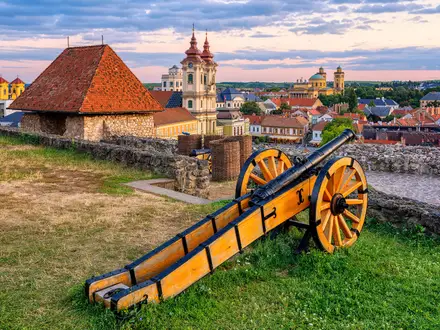
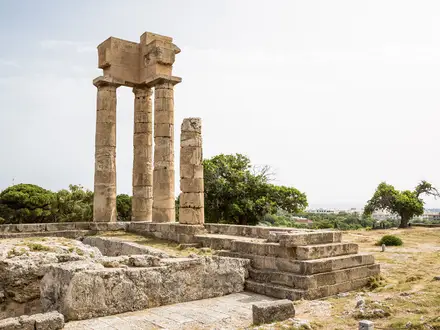
- Fortified Old Town ruins (walled archaeological park): The route leads into a spacious ruined medieval town with arches, towers, roofless buildings and stone lanes. It feels much larger once inside the walls than it appears from the gate.
- Main gate and Lion of Saint Mark (Venetian emblem): The arched, studded entrance is watched over by the carved Lion of Saint Mark, linking the site to Bar’s Venetian period before Ottoman rule.
- Ottoman aqueduct (16th–17th centuries): This line of roughly 17 stone arches carried spring water about 3 km from Mount Rumija to the town. It is a classic short extension and viewpoint from the old town area.
- Sahat-Kula clock tower (1753): The Ottoman-era clock tower is one of the most recognisable surviving structures in the ruins and a useful orientation point while wandering the site.
- Medieval churches (layered heritage): Ruined churches including St Veneranda and Gothic St Catherine reflect the town’s Catholic and Orthodox history.
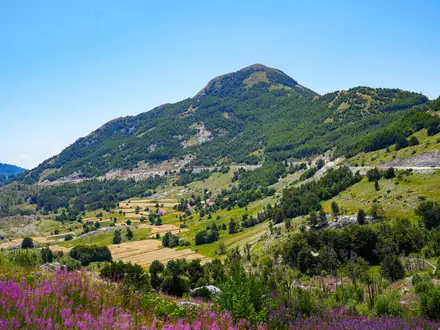
- Olive groves and Mount Rumija views: The old town sits among olive groves on the lower slopes below Mount Rumija, with views across the Adriatic hinterland around Bar.
Challenges to expect
The walk is easy, but the surface needs care. Expect cobbled street, stone steps, uneven flagstones and polished centuries-old stone that can be very slippery, especially when wet. Wear sturdy shoes rather than sandals. In July and August the site is exposed, with little shade and significant heat. Navigation is simple, but the circuit inside the ruins is informal rather than a single signed hiking trail.
HikeList Score
Stari Bar Fortress Trail scored 70/100 on HikeList's trail-quality metrics.
See score breakdownHide breakdown
- Ideal length 55
- Balanced challenge 64
- Scenery & wildness 58
- Varied terrain 89
- Accommodation 91
- Food & support 68
- Path quality 92
- Season flexibility 76
Computed from length, challenge, scenery & wildness, terrain variety, accommodation, food & support, path quality and season flexibility.
 Montenegro
Show more data Show less
- Coastal Hinterland
- Foothills
- Ruins
- Cobbled
- Stone
- Steps
- Uneven Flagstones
- Hotels
- Guesthouses
- Apartments
- Family Friendly
- Pet Friendly
- Restrooms
- Picnic Areas
Photos from hikers
Taken on the trail by people who've reviewed Stari Bar Fortress Trail.
Start at the Stari Bar bazaar / Carsija, climb the cobbled approach to the main gate, then explore a loose circuit through the fortified Old Town ruins, including stone lanes, churches, towers and the Sahat-Kula clock tower. Return the same way to the bazaar. Allow 1–2 hours to explore the ruins at a slow pace; some visitors add the nearby aqueduct viewpoint.
Reviews
How would you rate Stari Bar Fortress Trail?
Tap a star to start your review — you could be the first.