Weaver Way
How would you rate Weaver Way?
Tap a star to share your experience and help other hikers.
Weaver Way: Cheshire’s Canal-and-River Walk
HikeList Score
Weaver Way scored 77/100 on HikeList's trail-quality metrics.
See score breakdownHide breakdown
- Ideal length 70
- Balanced challenge 50
- Scenery & wildness 66
- Varied terrain 100
- Accommodation 100
- Food & support 88
- Path quality 84
- Season flexibility 89
Computed from length, challenge, scenery & wildness, terrain variety, accommodation, food & support, path quality and season flexibility.
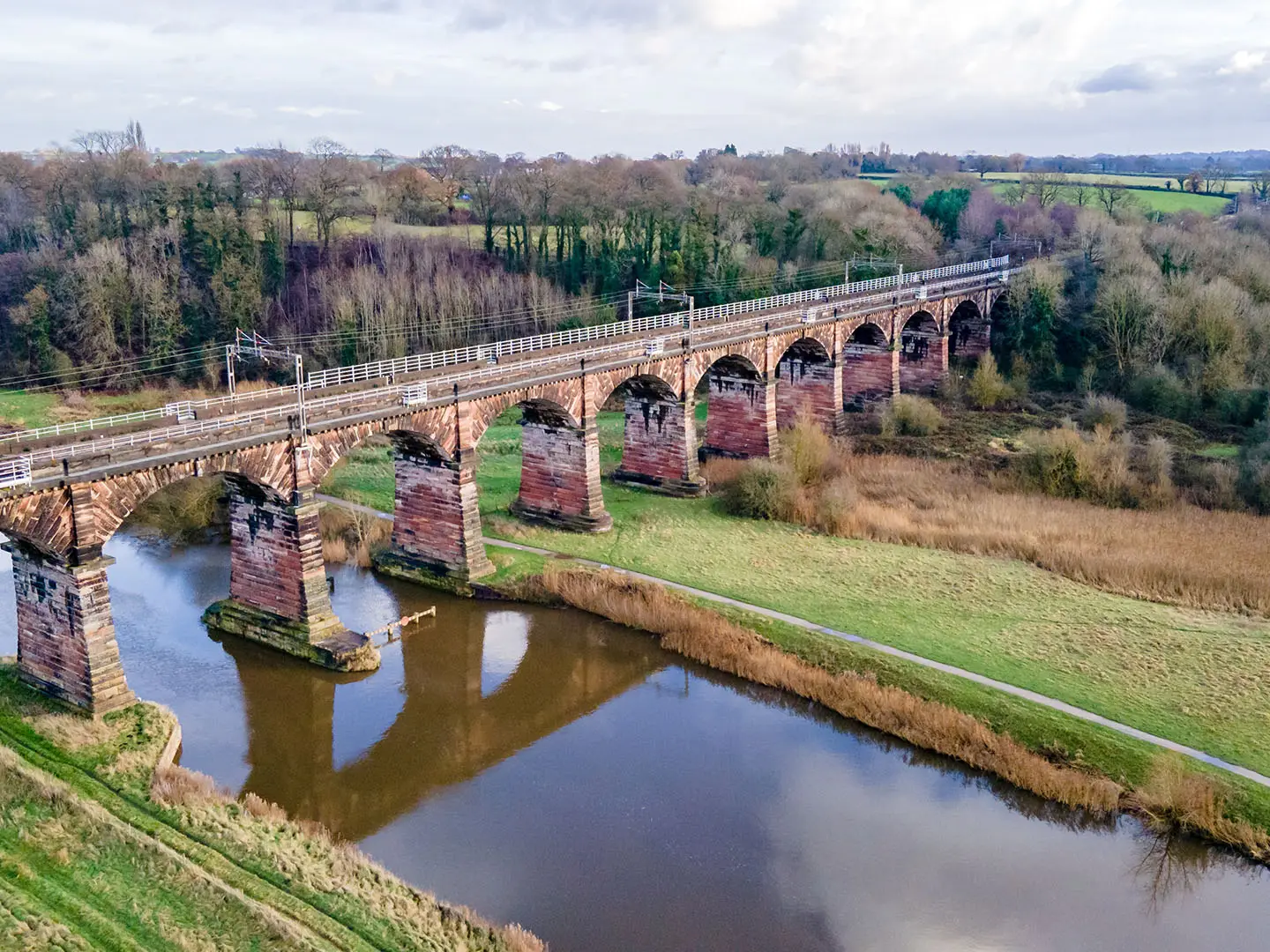
The Weaver Way is a 64 km waymarked point-to-point trail across Cheshire in north-west England, usually walked south to north from Audlem to Frodsham in about 3 days. It is an easy lowland route: mostly canal towpath and riverside path, with only 391 m of total ascent. It suits walkers wanting a gentle multi-day route with towns, pubs and transport nearby, rather than remote hill country.
Route Overview
The route starts at Audlem Locks near Bagley Lane Bridge and finishes at the A56 bridge in Frodsham. Although often described as tracing the River Weaver, it is better understood as a canal-and-river walk: it follows the Shropshire Union Canal out of Audlem, links with the Trent & Mersey Canal, and joins the River Weaver Navigation towards Winsford, Northwich and Frodsham. The most common direction is Audlem to Frodsham, but it is walkable either way. Useful overnight stops include Nantwich, Winsford, Northwich and Frodsham. If you enjoy waterside walking, compare it with the Ashby Canal Trail; for another lowland English route, see the Amber Valley Route.
Working Waterways and Cheshire Salt
The Weaver Way is a modern recreational route, but it links historic industrial waterways. The Shropshire Union Canal and Trent & Mersey Canal were part of the Industrial Revolution transport network, while the River Weaver was canalised as the River Weaver Navigation from the 1730s to move salt from the Cheshire “wiches”, including Northwich and Winsford. The Anderton Boat Lift, opened in 1875, connected the lower Weaver Navigation with the higher Trent & Mersey Canal.
Notable highlights
- Audlem Locks: The southern start of the Weaver Way, with a well-known flight of 15 narrow locks on the Shropshire Union Canal dropping onto the Cheshire Plain.
- Anderton Boat Lift: Near Northwich, this Victorian boat lift links the River Weaver and the Trent & Mersey Canal and is one of the route’s key industrial heritage sights.
- Northwich salt heritage: Northwich grew around rock-salt and brine extraction; the Lion Salt Works and Weaver Hall Museum explain the industry that shaped the town and the Weaver Navigation.
- River Weaver wildlife: The quieter waterways and flashes around Winsford and Northwich are good places to look for birds and wildlife, including kingfishers and geese.
- Frodsham: The northern finish is a market town of Saxon origin near the Mersey estuary. Frodsham Hill is a popular optional add-on, but it is not part of the waymarked Weaver Way.
Challenges to expect
The walking is easy underfoot by long-distance standards, but 64 km still needs pacing over several days. Expect muddy towpaths and riverside sections after rain, plus short road and pavement stretches through Nantwich, Winsford, Northwich and Frodsham. Navigation is helped by the “W and river” waymarks, though OS Explorer 257 and 267 are still useful. For hillier walking, compare the Beacons Way.
HikeList Score
Weaver Way scored 77/100 on HikeList's trail-quality metrics.
See score breakdownHide breakdown
- Ideal length 70
- Balanced challenge 50
- Scenery & wildness 66
- Varied terrain 100
- Accommodation 100
- Food & support 88
- Path quality 84
- Season flexibility 89
Computed from length, challenge, scenery & wildness, terrain variety, accommodation, food & support, path quality and season flexibility.
 United Kingdom
 England
Show more data Show less
- Canal Towpath
- Riverside
- Lowland Countryside
- Wetland
- Urban
- Towpath
- Dirt
- Paved
- Lanes
- Hotels
- Guesthouses
- Inns
- Bed And Breakfast
- Family Friendly
- Pet Friendly
- Restrooms
- Water Sources
- Campsites
- Picnic Areas
In these collections
Photos from hikers
Taken on the trail by people who've reviewed Weaver Way.
Start at Audlem Locks and follow the Shropshire Union Canal towpath north past Nantwich, before the route swings towards the River Weaver and Winsford. Easy waterside going, with quiet lanes and farmland; plan food and accommodation ahead.
Continue along the River Weaver Navigation through a landscape shaped by waterways, flashes and Cheshire’s salt industry. Northwich makes a practical overnight stop, with the Anderton Boat Lift and salt heritage sites nearby.
Follow the river north through peaceful wooded and wetland stretches towards Frodsham, the official finish at the A56 bridge near the Mersey estuary. Frodsham Hill above the town is a worthwhile optional extension, but it is not part of the waymarked Weaver Way.
Reviews
How would you rate Weaver Way?
Tap a star to start your review — you could be the first.