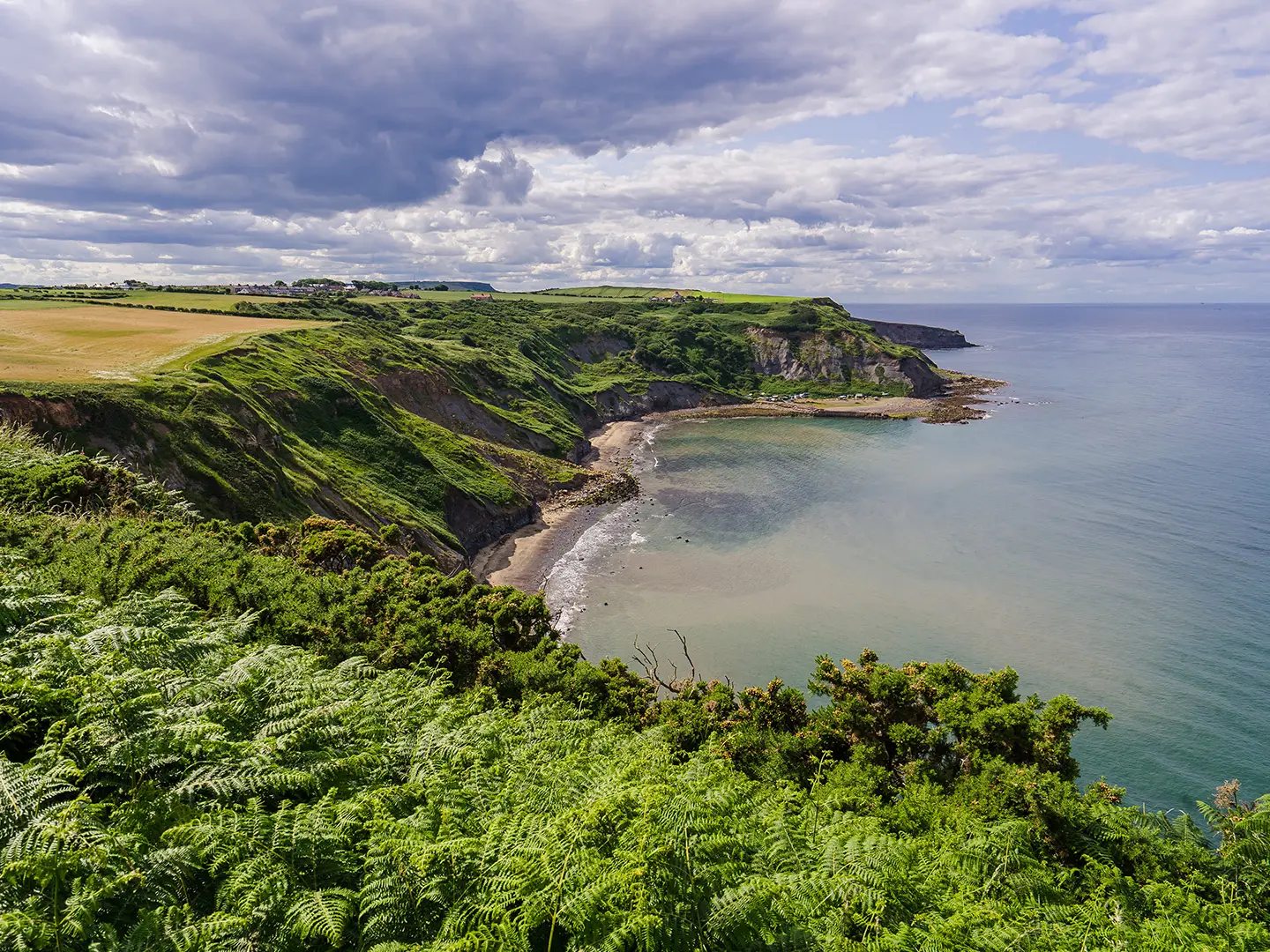
Cleveland Way
How would you rate Cleveland Way?
Tap a star to share your experience and help other hikers.
Cleveland Way: North York Moors and Coast Hiking Guide
HikeList Score
Cleveland Way scored 93/100 on HikeList's trail-quality metrics.
See score breakdownHide breakdown
- Ideal length 97
- Balanced challenge 100
- Scenery & wildness 85
- Varied terrain 89
- Accommodation 100
- Food & support 94
- Path quality 84
- Season flexibility 89
Computed from length, challenge, scenery & wildness, terrain variety, accommodation, food & support, path quality and season flexibility.
The Cleveland Way is a 175 km National Trail in North Yorkshire, England, usually walked in 8–9 days. It is a moderate point-to-point route from Helmsley to Filey Brigg, combining North York Moors heather moorland, Cleveland Hills escarpments and North Sea clifftop walking. It suits hikers who want a well-waymarked long-distance trail with village stops, coastal scenery and some rough, exposed sections rather than a remote wilderness trek.
Route Overview
The route starts in Helmsley, on the southern edge of the North York Moors, and runs roughly in a horseshoe: first inland across the moors, then south along the coast to Filey Brigg. Key moorland places include Rievaulx Abbey just off route, Sutton Bank, Osmotherley, Carlton Bank, Clay Bank, Urra Moor, Kildale, the Roseberry Topping spur, Great Ayton and Saltburn-by-the-Sea. The coastal half continues via Skinningrove, Staithes, Runswick Bay, Sandsend, Whitby, Robin Hood’s Bay, Ravenscar, Scarborough and Filey. For other coastal objectives, compare the Anglesey Coastal Path, Arran Coastal Way and Ayrshire Coastal Path.
History of the Cleveland Way
Designated under the National Parks and Access to the Countryside Act, the Cleveland Way officially opened on 24 May 1969 as England’s second National Trail after the Pennine Way. Its line links older moorland tracks, drovers’ routes and a cliff-top coast path. Along the way, the landscape carries visible layers of Cistercian monastic history, alum-mining, fishing and smuggling heritage, especially around Rievaulx, Whitby and the small North Yorkshire coastal villages.
Notable highlights
- Rievaulx Abbey: Just off the route near Helmsley, these are the ruins of a 12th-century Cistercian monastery in the Rye valley, once one of medieval England’s most powerful abbeys.
- Sutton Bank: A steep limestone escarpment with wide views over the Vale of York, famously praised by James Herriot as “the finest view in England”.
- Round Hill, Urra Moor: At 454 m, this is both the trail’s highest point and the highest point of the North York Moors, crossed on open heather moorland.
- Roseberry Topping: A distinctive half-cone hill reached on a short spur, known as the “Yorkshire Matterhorn”, with broad views over Teesside and the moors.
- Whitby Abbey: Clifftop ruins above Whitby whose silhouette helped inspire Bram Stoker’s Dracula; the town is a major landmark on the coastal section.
- Robin Hood’s Bay and Filey Brigg: Robin Hood’s Bay is a steep former fishing and smuggling village; Filey Brigg is the rocky promontory marking the trail’s finish.
Challenges to expect
Expect mostly straightforward but not flat walking. The Cleveland Hills and Urra Moor bring hilly, exposed moorland, while the coast has steep clifftop sections. Paths are well signed but can be muddy or waterlogged after rain, with flagged or paved stretches over peat. Winter is exposed and more challenging. Inland moorland accommodation is thinner, so book ahead. For a hillier UK comparison, see the Beacons Way.
HikeList Score
Cleveland Way scored 93/100 on HikeList's trail-quality metrics.
See score breakdownHide breakdown
- Ideal length 97
- Balanced challenge 100
- Scenery & wildness 85
- Varied terrain 89
- Accommodation 100
- Food & support 94
- Path quality 84
- Season flexibility 89
Computed from length, challenge, scenery & wildness, terrain variety, accommodation, food & support, path quality and season flexibility.
 United Kingdom
 England
Show more data Show less
- Moorland
- Coastal
- Hilly
- Dirt
- Gravel
- Rocky
- Paved
- Hotels
- Guesthouses
- Bed And Breakfasts
- Hostels
- Campsites
- Family Friendly
- Dog Friendly On Leash
- Restrooms
- Potable Water Sources
- Established Campsites
- Picnic Areas
- Public Transport Access Points
Download Our Full Guide to Cleveland Way FREE!
Get our comprehensive guide to this hike for free. Save it for later reading or print out at home.
In these collections
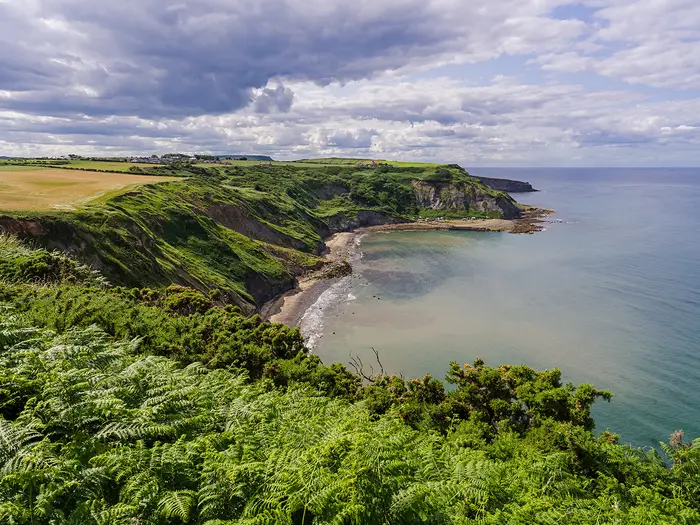
Photos from hikers
Taken on the trail by people who've reviewed Cleveland Way.
Cleveland Way: The Complete Guide
 i
Image by Michael Shannon
i
Image by Michael Shannon The Cleveland Way is England’s second National Trail: a 175 km / 109 mile horseshoe from Helmsley to Filey Brigg. It suits reasonably fit walkers who want a well-waymarked long-distance route with genuine variety, from abbey country and heather moorland to North Sea cliffs.
The inland half is the more exposed and serious section. After Sutton Bank and the Cleveland Hills, the route crosses high, open moorland including Urra Moor, where Round Hill reaches 454 m — the highest point of the North York Moors.
From Saltburn-by-the-Sea, the character changes completely but the walking does not become easy. The coastal path repeatedly drops to bays and fishing villages such as Staithes, Runswick Bay, Whitby and Robin Hood’s Bay, then climbs back onto the clifftops before the finish at Filey Brigg.
The route is straightforward to follow, with National Trail acorn waymarks and no technical scrambling. Its challenge is cumulative: around 5,031 m of ascent, exposed weather on the moors, switchback cliff walking on the coast, and thinner accommodation on the inland stages.
Most walkers take 8–9 days, though fit walkers often complete it in 7–8. Book the moorland nights early, carry proper waterproofs and warm layers, and take advantage of the stronger public transport once the route reaches the coast.
This guide covers stages, daily options, accommodation, food and water, transport, terrain, gear, luggage transfer, highlights and common mistakes.
Stage-by-Stage Guide
Stage 1: Helmsley to Sutton Bank — 16 km / 10 miles
The Cleveland Way leaves Helmsley from the Market Place, with National Trail acorn waymarks leading west out of the town. This is one of the gentler opening stages, moving from the Rye Valley through farmland, woodland and valley paths before climbing towards the limestone escarpment of the Hambleton Hills.
Paths are generally straightforward, but woodland and field sections can be muddy or slippery after rain. The day gains height steadily rather than brutally, with the main reward coming at Sutton Bank and the Roulston Scar escarpment.
Rievaulx Abbey lies about 1 km off route to the south and is the main detour to consider. The 12th-century Cistercian ruins sit in the wooded Rye Valley and are worth allowing extra time for if visiting; entry is managed by English Heritage and opening times should be checked before travelling.
The stage finishes at Sutton Bank, one of the classic viewpoints of the route. From the escarpment there are wide views over the Vale of Mowbray and Vale of York, with the Kilburn White Horse cut into the hillside below and visible around this part of the route.
Helmsley has full services, including pubs, cafés, shops and takeaways. Between Helmsley and Sutton Bank there is very little reliable food or water, apart from the seasonal café at Rievaulx Abbey if taking the detour; Sutton Bank National Park Centre has refreshments and toilets and is an important end-of-stage facility.
Sutton Bank is not a village stop and has no meaningful accommodation at the trailhead. Many walkers arrange a taxi back to Helmsley, continue to pre-booked accommodation nearby, or combine onward logistics with the next stage. There is road access and parking at Sutton Bank, but no railway station and no reliable bus option at the escarpment itself.
Navigation is easy from Helmsley, but take care if detouring to Rievaulx Abbey to rejoin the Cleveland Way correctly near Rievaulx Terrace. In poor weather, the escarpment edge deserves normal care, particularly where paths are wet underfoot.
Stage 2: Sutton Bank to Osmotherley — 19 km / 12 miles
This stage follows the high line of the Hambleton Hills and is a good introduction to the Cleveland Way’s moorland feel without the harder switchbacks that come later. Much of the walking is on broad, clear tracks, including the historic Hambleton Drove Road, once used for moving cattle south towards markets.
The terrain is undulating rather than severe. The going is generally firm on the ridge and drove road, though exposed in poor weather and potentially muddy on lower approaches into Osmotherley.
Soon after leaving Sutton Bank, the route passes viewpoints over the Kilburn White Horse and Gormire Lake. The lake sits below the escarpment and is one of only three natural lakes in Yorkshire, although there is no direct public access from the Cleveland Way itself.
The long ridge walk eventually leads towards Oakdale Reservoir and down into Osmotherley. Mount Grace Priory lies near the village edge and is a worthwhile add-on for walkers with time; it is one of England’s best-preserved Carthusian priories and is managed by English Heritage and the National Trust.
There are no dependable food or water stops between Sutton Bank and Osmotherley, so leave Sutton Bank prepared for the full day. Osmotherley has several pubs, a café and a village shop, making it the key service point after the escarpment.
Osmotherley is the main overnight halt for this stage, with B&Bs, pub accommodation and hostel/camping options nearby, including Cote Ghyll Mill Hostel and campsite outside the village. Accommodation should be booked ahead, especially because the inland moorland part of the trail has fewer fall-back options than the coast.
Public transport in Osmotherley is limited. Northallerton is the nearest major railway access point on the East Coast Main Line, with onward travel by taxi or sparse local bus services; current timetables should be checked before travelling.
Navigation is simple on the Hambleton Drove Road, which is broad and obvious. The track is also used by cyclists and horse riders in places, so keep aware on shared sections.
Stage 3: Osmotherley to Clay Bank Top — 18 km / 11 miles
This is one of the hardest inland stages of the Cleveland Way and is often the day that surprises walkers most. The route climbs out of Osmotherley onto the Cleveland Hills and then works over a succession of moorland tops, including Scarth Wood Moor, Live Moor, Carlton Bank, Cringle Moor, Cold Moor and Hasty Bank.
The stage feels like a rollercoaster: climb, descend, climb again. Around 884 m of ascent makes it far more strenuous than the distance suggests, and the repeated gradients are more tiring than the individual hills look on the map.
Much of the route is stone-flagged to limit erosion, but wet weather can still leave boggy sections on open moorland. The path is exposed across the tops, with little shelter if wind, rain or low cloud arrives.
Lord Stones at Carlton Bank is the key mid-stage stop, with a café and facilities at Lordstones Country Park. This is the main practical food and water point between Osmotherley and Clay Bank Top, but opening times should be checked before relying on it.
The Wainstones on Hasty Bank are the most distinctive landmark of the day. The Cleveland Way threads through the sandstone boulders rather than bypassing them, so follow the waymarked line carefully and avoid creating alternative paths around the rocks.
Clay Bank Top is a road crossing on the B1257 with a car park, not a settlement. There are no facilities, shops or accommodation at the finish, so onward logistics must be arranged in advance. Many walkers use taxis to reach Stokesley, Great Ayton or other nearby accommodation, while stronger itineraries continue towards Kildale.
There is road access at Clay Bank Top, but no regular public transport to rely on. Taxi arrangements should be made before setting out, as mobile reception and availability can be unreliable at rural road crossings.
Navigation is generally good, but mist on the tops can make the moorland sections feel less obvious. Carry the relevant OS mapping or a reliable GPS track, and be ready for sudden changes in weather across the exposed summits.
Stage 4: Clay Bank Top to Kildale — 15 km / 9.3 miles
This is a shorter stage on paper, but it is the most open and remote-feeling part of the Cleveland Way. From Clay Bank Top the trail climbs onto Urra Moor, crossing broad heather moorland to Round Hill, the highest point of the route and of the whole North York Moors at 454 m.
The walking is less relentlessly up-and-down than Stage 3, but it is more exposed. In clear weather the high moor gives wide views; in mist or driving rain, the same ground can become disorientating.
The route passes Round Hill and continues towards Bloworth Crossing, where it meets the line of the former Rosedale Ironstone Railway. From there the trail eventually descends towards Kildale, with views opening over the Esk Valley and the Cleveland Plain.
There are no food or water stops between Clay Bank Top and Kildale. Carry a full day’s water and enough food for a slow crossing, especially in warm weather or if visibility is poor.
Kildale is a small village with very limited accommodation and no shop, so this is another stage where booking and meal planning matter. Some walkers stay locally if space is available, while others use nearby villages or move on to Great Ayton.
Kildale has a railway station on the Esk Valley Line, linking Whitby and Middlesbrough via Nunthorpe. Services are rural and infrequent compared with mainline routes, so current train times should be checked before building an itinerary around them. Toilets are available at the station.
Navigation needs particular care at the start from Clay Bank Top: take the correct Cleveland Way line climbing with the wall on the left, rather than a local bridleway that does not rejoin the trail. Across Urra Moor, stone markers and the trod are clear in good conditions, but GPS backup is sensible in low cloud.
There is no shelter on the high moor. Waterproofs, warm layers and navigation tools should be carried even if the day starts bright.
Stage 5: Kildale to Saltburn-by-the-Sea — 24 km / 14.75 miles
This is the longest inland stage and the transition day from moorland to coast. It starts among the moorland edges above Kildale, passes the optional spur to Roseberry Topping, then continues through Great Ayton, Guisborough Woods, Skelton and Saltburn Woods before reaching the North Sea at Saltburn-by-the-Sea.
The terrain is varied rather than consistently hard. Expect moorland paths, forestry tracks, farmland, village walking and a wooded descent into Saltburn; after the exposed high moors, the changing surfaces and service points make this a more varied day.
Roseberry Topping is the obvious optional detour. The spur is about 2 km each way and climbs steeply to the 320 m summit, but the distinctive half-cone hill gives excellent views over Teesside and back towards the Cleveland Hills.
The main route also passes Captain Cook’s Monument on Easby Moor, a 12-metre obelisk commemorating James Cook, who grew up in Great Ayton below. Great Ayton is a useful mid-stage village with shops, cafés and pubs, and makes a practical alternative overnight stop for walkers splitting the day.
Beyond Great Ayton, the Cleveland Way continues through Guisborough Woods, the longest woodland section of the trail, with a viewpoint at Highcliff Nab above Guisborough. Further on, refreshment may be available around Slapewath before the route continues through Skelton and down through Saltburn Woods.
Saltburn-by-the-Sea has full resort services: accommodation, pubs, cafés, shops, a railway station, the pier and the cliff lift. It is the first coastal overnight stop and a natural place to reset supplies before the clifftop section begins.
Transport is strong at both ends compared with the earlier moorland stages. Kildale and Great Ayton are on the Esk Valley Line, while Saltburn has its own railway station on the Tees Valley Line with onward connections via Middlesbrough.
Navigation is generally straightforward, but there are more junctions than on the high moors because of woodland tracks, village edges and urban approaches. Keep following the National Trail acorns carefully through Guisborough Woods, Skelton and the descent into Saltburn.
Stage 6: Saltburn-by-the-Sea to Staithes — 17 km / 10.5 miles
This stage begins the coastal half of the Cleveland Way and immediately changes the character of the walk. From Saltburn the route climbs above the sea and follows clifftop paths eastwards, with farmland on one side and the North Sea on the other.
The day is shorter than some, but the elevation changes are sharper than expected. The path drops steeply into Skinningrove and climbs back out, then rises towards Boulby Cliff, the highest point on England’s east coast at 203 m.
Landmarks come quickly after leaving Saltburn, including the Charm Bracelet sculpture on the cliff above the town. Skinningrove provides a brief village break, while the high cliffs beyond give expansive sea views and pass near the visible Boulby Potash Mine.
The final approach leads to Staithes, a compact fishing village tucked into a narrow, cliff-sided harbour. Its steep lanes, pubs, cafés and accommodation make it one of the most atmospheric overnight stops on the coast.
Food and water are limited between Saltburn and Staithes. Skinningrove has some facilities, but do not rely on frequent options during the day; carry enough water from Saltburn.
Staithes has B&Bs, guesthouses and pub accommodation, but summer demand can be high. There is no railway station in Staithes; buses link the coast, but timetables should be checked before travelling, and taxis from Whitby or Saltburn may be needed for some itineraries.
The main hazard is the cliff-edge path, especially between Skinningrove and Staithes. Sections are unfenced, exposed and affected by coastal erosion, so stay on the signed line and avoid the cliff edge even where the trod appears clear.
Stage 7: Staithes to Robin Hood’s Bay — 27 km / 16–17 miles
This is a long coastal stage with several villages and the major town of Whitby breaking up the day. It is less remote than the moorland stages, but the repeated descents and climbs into bays make the distance feel substantial.
The route runs from Staithes through Hinderwell and Runswick Bay, then on towards Kettleness, Sandsend and Whitby before continuing south along the cliffs to Robin Hood’s Bay. Underfoot, expect clifftop path, village lanes, urban walking through Whitby and more rural cliff walking beyond the town.
Runswick Bay is the first major highlight, with a steep descent into the village and a climb back out. Kettleness and the surrounding coast show the area’s history of alum working and erosion, while Sandsend provides a useful stop before Whitby.
Whitby is the main resupply point on the whole coastal section. The route passes the harbour area and East Cliff, with Whitby Abbey above the town and the famous 199 steps linking the old town to St Mary’s Church and the abbey headland. Supermarkets, pubs, cafés, fish and chip shops and accommodation are all available here.
South of Whitby the route returns to open clifftops via Saltwick Bay before continuing to Robin Hood’s Bay. The village is steep, tightly packed and well supplied with pubs, cafés and B&Bs, but it has no large shop, so stock up in Whitby if staying there.
Accommodation is plentiful in Whitby and available in Robin Hood’s Bay, but both are very popular in summer and at weekends. Boggle Hole YHA lies south of Robin Hood’s Bay, but baggage-transfer users should note that Sherpa Van does not deliver to Boggle Hole; use a Robin Hood’s Bay drop point instead.
Whitby has a railway station on the Esk Valley Line, and buses link Whitby, Robin Hood’s Bay and Scarborough. Robin Hood’s Bay has no railway station, so section walkers should plan around bus times or taxis.
Navigation through Whitby is well waymarked, but the urban section has more junctions and distractions than the open coast. South of Robin Hood’s Bay, coastal erosion has led to a signed diversion taking walkers inland via Rocket Post Field and down to the Cinder Track; follow the current National Trail signs and do not rely on old GPX files in this area.
Stage 8: Robin Hood’s Bay to Scarborough — 21 km / 13 miles
This stage is a classic coastal rollercoaster, with repeated drops into narrow valleys and climbs back to the cliff tops. It is not technically difficult, but the cumulative ascent is significant and the short steep sections can be tiring late in the walk.
From Robin Hood’s Bay the route passes Boggle Hole, Stoupe Beck, Ravenscar, Peak Alum Works, Hayburn Wyke, Cloughton Wyke and Scalby Mills before entering Scarborough by North Bay. Paths are a mix of clifftop grass, steps, woodland descents and village or resort approaches.
Boggle Hole is a steep early descent into a narrow wyke, with a YHA hostel and café near the beach. Ravenscar follows later from a high clifftop position, with National Trust facilities and the strange remains of a planned Victorian resort that was never completed.
Peak Alum Works near Ravenscar is one of the most important industrial heritage sites on the coast, with visible remains of former alum production. Hayburn Wyke is another memorable feature: a wooded ravine dropping to a rocky shore, followed by a steep climb out.
Food and water are available at Boggle Hole YHA, Ravenscar and around Hayburn Wyke, but gaps remain long enough to justify carrying water and snacks. Scarborough has full services at the end of the stage, including supermarkets, pubs, cafés and a wide range of accommodation.
Scarborough is the main transport hub on the coastal section. Its railway station has connections on the Hull–Scarborough line and onward links to York and the East Coast Main Line, and buses connect Scarborough with Robin Hood’s Bay and Whitby.
Navigation is generally clear, but do not miss the signed descents into the wykes. Hayburn Wyke in particular can be muddy and slippery, with wooden steps and steep woodland paths requiring care after rain.
The coast here is actively eroding in places. Follow any temporary diversion signs and avoid walking close to the cliff edge, even where informal paths appear to continue.
Stage 9: Scarborough to Filey Brigg — 16 km / 10 miles
The final stage is a relatively straightforward clifftop walk compared with the previous coastal days. It leaves Scarborough by the South Bay side, then continues above Holbeck, Cayton Bay, Lebberston Cliff, Newbiggin Cliff and North Cliff before reaching Filey Brigg.
The walking remains undulating, with around 345 m of ascent, but the gradients are generally less wearing than the Robin Hood’s Bay to Scarborough stage. Paths are well waymarked and mostly follow the coastal line, with resort-edge sections near Scarborough and Filey.
Holbeck is notable for the 1993 Holbeck Hall Hotel landslip, a reminder of how unstable this coastline can be. Cayton Bay offers a broad sandy beach below the cliffs, with access by a steep path and limited seasonal facilities.
The official finish is Filey Brigg, the rocky promontory projecting into the North Sea. It is also where the Cleveland Way meets the Yorkshire Wolds Way, and the National Trail completion marker is found here.
Food and water are limited between Scarborough and Filey. Start with what is needed for the day; Cayton Bay may have seasonal facilities, but Filey town is the reliable service point with pubs, cafés, shops and fish and chips.
Accommodation is in Filey rather than on the Brigg itself, with B&Bs, hotels and guesthouses available. Book ahead in summer and during busy holiday periods.
Filey railway station is on the Hull–Scarborough line and is about 1.5 km from Filey Brigg via the town. Buses also connect Filey and Scarborough, making this one of the easier stages for onward travel.
The final approach to Filey Brigg is clear, but the Brigg itself is rocky and can be slippery when wet. After reaching the finish, most walkers return through Filey for food, accommodation or transport rather than retracing the coastal path to Scarborough.
Recommended Itinerary
Standard 9-day itinerary
This is the most balanced Cleveland Way schedule for most walkers. It keeps the exposed moorland days manageable, uses the main overnight hubs, and gives a practical split once the route reaches the coast at Saltburn-by-the-Sea.
| Day | From | To | Approx. distance | Why this stage makes sense | Services/accommodation notes |
|---|---|---|---|---|---|
| 1 | Helmsley | Sutton Bank | 16 km | A steady opening day from the official start in Helmsley, with time for Rievaulx Abbey just off route and the climb to the Sutton Bank escarpment. | Sutton Bank itself has very limited accommodation and is more of a road-head/visitor-centre location than a village. Book early in the Sutton Bank/Kilburn area, continue to an on-route option such as Boltby/High Paradise Farm, or arrange a shuttle/taxi plan from Helmsley. |
| 2 | Sutton Bank | Osmotherley | 19 km | A classic Cleveland Hills stage, passing the Kilburn White Horse and continuing across open upland before dropping to one of the best-served inland villages. | Osmotherley is the key moorland service stop, with pubs, a tearoom, a village store, B&Bs and Cote Ghyll Mill hostel/campsite about 1 mile from the centre. Book ahead, especially in summer. |
| 3 | Osmotherley | Clay Bank Top | 18 km | One of the tougher inland days, with a switchback over Live Moor, Carlton Bank and Cringle Moor before Clay Bank. The distance is moderate, but the repeated climbs make it feel longer. | Clay Bank Top has no accommodation on the trail: it is a road crossing and car park. Arrange a pick-up to nearby accommodation, book somewhere that offers walker transport, or stop earlier at Lord Stones Country Park if that fits the booking plan. |
| 4 | Clay Bank Top | Kildale | 15 km | A shorter day over the highest ground of the route, including Urra Moor and Round Hill at 454 m, then onward past Bloworth Crossing to Kildale. The shorter distance is useful because this is exposed moorland. | Kildale is tiny and accommodation is very limited. It has a railway station and toilets, but no pub or shop. Book the in-village options early and plan food carefully. |
| 5 | Kildale | Saltburn-by-the-Sea | 24 km | A long but rewarding transition from the moors to the North Sea, with the Roseberry Topping spur available for walkers with the time and legs. Saltburn is the first major coastal service town. | Saltburn-by-the-Sea has a good spread of guesthouses, hotels, holiday lets, food options and a railway station. It is a sensible resupply point after the thinner inland section. |
| 6 | Saltburn-by-the-Sea | Staithes | 17 km | A shorter coastal day, useful after the long Kildale to Saltburn stage. The route moves into the cliff-and-cove character of the North Yorkshire coast. | Staithes is popular and capacity is limited, with pubs, cafés and small-provision options rather than full supermarket facilities. Book 2–3 months ahead for summer weekends and school-holiday periods. |
| 7 | Staithes | Robin Hood's Bay | 27 km | The longest standard day, passing Runswick Bay, Sandsend and Whitby before continuing to Robin Hood's Bay. It is very scenic but has constant coastal undulation and plenty of ascent in short bursts. | This is the day many walkers split in Whitby. Robin Hood's Bay is a very popular overnight stop with pubs, cafés, B&Bs, shops and toilets; book well ahead in summer. Sherpa Van baggage drops for this area are to Robin Hood's Bay village rather than Boggle Hole. |
| 8 | Robin Hood's Bay | Scarborough | 21 km | A strong coastal walking day via the cliffs around Ravenscar before finishing in Scarborough, the largest service town on the route. | Scarborough has the widest accommodation choice of the trail, plus supermarkets, restaurants, pharmacies and a railway station. Some accommodation providers require a 2-night minimum stay, so check booking terms before committing. |
| 9 | Scarborough | Filey | 16 km | A manageable final day along the coast to Filey, followed by the final walk out to Filey Brigg, the official finish. | Filey has guesthouses, B&Bs and a railway station on the Hull–Scarborough line. The finish at Filey Brigg is about 1 km from the town centre, so allow time after reaching Filey itself. |
Slower 10–11 day options
A slower schedule suits first-time long-distance walkers, anyone wanting more time in Whitby and the coastal villages, or walkers who prefer to keep the longest day below the standard Staithes to Robin Hood's Bay stage. It is also useful where Scarborough accommodation requires a 2-night stay.
| Option | How to adapt the standard itinerary | Who it suits | Practical notes |
|---|---|---|---|
| 10 days via Whitby | Split Day 7 into Staithes to Whitby, then Whitby to Robin Hood's Bay. | Walkers who want time for Whitby, the Abbey area and a shorter approach to Robin Hood's Bay. | This is the cleanest way to soften the standard itinerary. Whitby has abundant accommodation, food and resupply, but summer rooms should still be booked early. |
| 10 days with Scarborough buffer | Keep the standard walking stages but spend two nights in Scarborough. | Walkers finding 2-night minimum accommodation policies, or anyone wanting a rest day before the final stage. | Scarborough is the easiest place on the route to add a rest day because it has full services and rail access. |
| 11 days relaxed | Add both a Whitby overnight split and a Scarborough rest/buffer night. | Walkers prioritising comfort, sightseeing and shorter coastal days over speed. | This is a sensible first National Trail schedule if daily distance is a concern, but accommodation still needs to be booked well ahead in Staithes, Whitby and Robin Hood's Bay. |
The inland section is harder to slow down neatly because Sutton Bank, Clay Bank Top and Kildale all have limited accommodation. If shortening those days, plan the overnights first and build the walking stages around confirmed beds or pre-arranged pick-ups.
Faster 7-day itinerary
A 7-day Cleveland Way is realistic only for fit, experienced walkers who are comfortable with several long days and less time in the villages. It compresses the inland section sharply and includes one particularly hard day between the Kildale/Captain Cook's Monument area and Staithes.
| Day | From | To | Approx. distance | Why this stage makes sense | Services/accommodation notes |
|---|---|---|---|---|---|
| 1 | Helmsley | Osmotherley | 36 km | Combines the first two standard days into one long opening stage, reaching the best-served inland village. | Start early and avoid underestimating the climb onto the escarpment. Osmotherley has the strongest service base before the more isolated moorland stretch. |
| 2 | Osmotherley | Clay Bank Top | 18 km | Keeps the demanding Cleveland Hills section as its own day rather than adding it to an already long stage. | Clay Bank Top has no accommodation, so a pick-up, transfer or off-route booking must be arranged before travelling. |
| 3 | Clay Bank Top | Captain Cook's Monument / Kildale area | 19 km | Crosses Urra Moor and the highest point of the Cleveland Way, then positions the walker for the long push to the coast. | Accommodation is limited around Kildale and may require careful booking or transport. Check official mapping before booking. |
| 4 | Captain Cook's Monument / Kildale area | Staithes | 34 km | A gruelling but logical compression from the eastern moors to the coast and on to Staithes. | This is the hardest day in the fast schedule. Some walkers use a taxi or shuttle for part of the logistics; any such plan should be arranged in advance. |
| 5 | Staithes | Robin Hood's Bay | 27–29 km | Keeps the dramatic Whitby coast in one long day, broadly matching the standard itinerary's longest coastal stage. | Food and services are available through Whitby, but do not rely on arriving late in Robin Hood's Bay without a booking. |
| 6 | Robin Hood's Bay | Scarborough | 22 km | A full but manageable clifftop day to the largest town on the route. | Scarborough has extensive services, but check for 2-night minimum accommodation requirements. |
| 7 | Scarborough | Filey | 17 km | A shorter final day allows time to reach Filey Brigg and travel home from Filey station. | Filey has rail access and enough accommodation for walkers who prefer to stay after finishing. |
Which itinerary to choose
For most walkers, the 9-day itinerary is the best balance of distance, logistics and enjoyment. The main pressure points are Sutton Bank, Clay Bank Top, Kildale, Staithes and Robin Hood's Bay; book these before filling in the easier coastal towns.
Choose the 10-day Whitby split if the 27 km Staithes to Robin Hood's Bay day looks too long, or if time in Whitby is a priority. Choose the 7-day plan only if long-distance fitness is already proven and accommodation transfers have been arranged around the awkward inland stops.
Planning the Route
The Cleveland Way is best planned around overnight stops, not just preferred daily mileage. The inland half has long gaps between services and limited beds, while the coast gives far more freedom to adjust stages.
Most walkers should allow 8–10 walking days. The official 9-day structure is the most natural fit because it matches the main accommodation points, especially across the Cleveland Hills and open moorland.
How many days to allow
| Itinerary | Who it suits | Planning implications |
|---|---|---|
| 7 days | Very fit walkers travelling light | Possible, but it compresses the moorland stages and leaves little margin for bad weather or tired legs. |
| 8–9 days | Most reasonably fit long-distance walkers | The best balance of manageable days, accommodation availability and time to enjoy the coast. |
| 10–11 days | Slower walkers, photographers, first-time long-distance hikers or anyone wanting weather flexibility | Easier pacing and more scope to split coastal days, but accommodation still needs booking carefully inland. |
| Shorter highlights trip | Walkers with less time | Osmotherley to Robin Hood's Bay gives a strong mix of Cleveland Hills, high moor and coast. |
The longest practical day in the standard schedule is the coastal stage from Staithes to Robin Hood's Bay, around 27 km. The shortest is Clay Bank Top to Kildale, around 15 km, but that short distance is useful because it crosses remote, exposed country around Urra Moor and Round Hill.
Accommodation dictates the inland stages
The first half, from Helmsley to Saltburn-by-the-Sea, is the part that needs the most planning. Accommodation is thinner, services are widely spaced and the route spends more time on exposed moorland.
Book the inland nights before committing to trains or baggage transfer. In summer, leaving the moorland section until late can force awkward detours, taxi transfers or overlong days.
| Area | Why it matters |
|---|---|
| Helmsley | The logical start base; YHA accommodation is available here. There is no railway station, so arrival needs a bus connection. |
| Sutton Bank / Boltby | The first overnight area has limited options. High Paradise Farm at Boltby is an on-route, walker-friendly stop. |
| Osmotherley | A key resupply village with pubs, cafés and a small shop before the more remote Cleveland Hills stages. |
| Carlton Bank / Lord Stones | Lord Stones Country Park provides rare on-trail services on the moor, including accommodation and a café. |
| Clay Bank Top | A remote road crossing with no facilities. The nearest accommodation is around 2 miles north at Great Broughton, so arrange a taxi or B&B pick-up if staying off route. |
| Kildale | Very small, with very limited accommodation and no shop. Do not rely on buying food here. |
The coastal half, from Saltburn-by-the-Sea to Filey, is much easier to adapt. Staithes, Runswick Bay, Whitby, Robin Hood's Bay, Scarborough and Filey provide more accommodation and food options, so stages can be shortened, lengthened or split more easily.
That flexibility reduces outside peak season. For July and August, book coastal villages and towns such as Whitby, Robin Hood's Bay and Staithes several months ahead where possible.
Food and water planning
Food planning matters most before and during the moorland section. Between Osmotherley, Clay Bank Top and Kildale, services are sparse and there are places where nothing can be bought on route.
Carry lunch, snacks and enough water for a full day across the Cleveland Hills and Urra Moor. Natural water exists on the moors, but quality is variable, so carrying 2 litres or more is sensible on remote days, especially in warm weather.
Key service points to plan around:
- Osmotherley: good resupply point, with pubs, cafés and a small shop.
- Lord Stones, Carlton Bank: the main mid-moor café stop.
- Clay Bank Top: no facilities; arrive self-sufficient.
- Kildale: no shop; public toilets only, with very limited local services.
- Saltburn onwards: regular pubs, cafés and shops along the coast.
- Whitby and Scarborough: full resupply towns with supermarkets.
On the coast, food and drink stops are usually no more than a few hours apart, but do not assume every café is open early, late or outside the main season.
Transport at the start and finish
Transport is straightforward at the coast and less convenient at the start. Helmsley has no railway station, so the first logistical job is getting there by bus.
Typical access options are:
- Train to York, then the M31 / Stephensons 31X bus to Helmsley.
- Train to Scarborough or Malton, then bus 128 to Helmsley.
- Malton is the closest rail access, around 16 miles from Helmsley.
Current bus times should be checked before travelling, especially for Sunday, bank holiday or out-of-season journeys.
The finish is simpler. Filey has a railway station on the Hull–Scarborough line, with onward connections via Scarborough and York. The bus 128 between Scarborough and Helmsley can also be useful for returning to a car, but timetables should be checked before relying on it.
Section hiking options
The Cleveland Way works well as a section hike, especially because the coast has better public transport. The cleanest two-part split is:
- Helmsley to Saltburn-by-the-Sea — the inland moorland and Cleveland Hills section.
- Saltburn-by-the-Sea to Filey — the North Yorkshire coast section.
Useful access points include Osmotherley by bus, Saltburn-by-the-Sea by train, Whitby by bus, Robin Hood's Bay by bus, Scarborough by rail and Filey by rail. Osmotherley and Robin Hood's Bay are more dependent on bus schedules, so these are less flexible than Saltburn, Scarborough or Filey.
For a shorter high-value trip, Osmotherley to Robin Hood's Bay combines the Cleveland Hills, Urra Moor, the descent towards the coast and the classic fishing-village section.
Short detours and extensions
The best short detour is Roseberry Topping, reached by an out-and-back spur from the main route. Allow roughly 30 minutes return if conditions are good.
For a much longer continuation, the Yorkshire Wolds Way (around 79 miles / 127 km) can be linked at Filey, where the two National Trails meet, to create a combined route of around 188 miles / 302 km. Another option is the Tabular Hills Walk, which links the Scarborough area back to Helmsley to create a circular route of around 157 miles rather than returning by transport.
Navigation, weather and permits
The route is well waymarked with National Trail acorn signs in both directions, and no permits are required. Navigation is generally straightforward, but do not rely on waymarks alone in poor visibility on Live Moor, Cringle Moor and Urra Moor, where open moorland and path choices can become less obvious.
Carry mapping for the full route. OS Explorer OL26 covers the western North York Moors and OL27 covers the eastern side; a dedicated Cicerone guidebook is also available. A GPX file can be downloaded from the National Trail website.
Weather planning matters most on the inland half. The high moors are exposed to wind, rain and low cloud, so check the forecast each morning and keep waterproofs, warm layers and spare food accessible.
The coast is easier to follow, but cliff-path diversions can occur, including around the Robin Hood's Bay area. Check the official National Trail diversion notices before travelling.
Baggage transfer
Baggage transfer is useful on this route because several inland days involve exposed ground and limited services. Companies such as Sherpa Van cover the route from Helmsley to Filey, with published pricing around £17 per bag per move; confirm current prices and coverage before booking.
Baggage transfer does not remove the need to carry proper hill kit, food and water during the day. It only reduces overnight weight.
Do not plan a baggage drop at Boggle Hole YHA between Robin Hood's Bay and Ravenscar. It is accessed by path only, and Sherpa Van uses Robin Hood's Bay instead.
Towns, Villages and Overnight Stops
Accommodation planning on the Cleveland Way is uneven. The coastal half has regular towns and villages with good transport, while the inland moorland half has several long, exposed sections where beds, food and shops are much thinner.
For a standard 8–9 day itinerary, the key overnight hubs are usually Helmsley, Osmotherley, the Clay Bank/Kildale/Great Ayton area, Saltburn-by-the-Sea, Staithes, Whitby or Robin Hood's Bay, Scarborough and Filey. Book the moorland stops first, then build the rest of the itinerary around them.
| Place | Best use for hikers | Service level |
|---|---|---|
| Helmsley | Night before starting | Strong accommodation, pubs, shops; no railway station |
| Sutton Bank / Cold Kirby | End of Day 1 area | Limited beds; visitor centre at Sutton Bank |
| Osmotherley | Key moorland overnight | Pubs, café, shop, B&Bs and hostel options |
| Clay Bank Top | Stage end / road access | No facilities; arrange transfer or taxi |
| Kildale / Great Ayton | End of moorland crossing | Kildale has station and camping barn; Great Ayton has better village services |
| Saltburn-by-the-Sea | First coastal overnight | Good accommodation, pubs, rail station |
| Staithes | Coastal village overnight | Pubs, cafés, small shops; book ahead |
| Whitby | Major coastal hub | Full resupply, wide accommodation, rail and bus links |
| Robin Hood's Bay | Characterful overnight | Pubs, cafés, B&Bs; steep village; book ahead |
| Scarborough | Penultimate-night hub | Largest town on route, rail station, full services |
| Filey | Finish-town overnight or departure | Smaller accommodation range, railway station |
Helmsley
Helmsley is the official start of the Cleveland Way, with the National Trail acorn waymarks leading out from the Market Place beside Helmsley Castle. It is the best place to stay the night before setting off, rather than arriving on the morning of the walk and rushing straight onto the trail.
As the only market town inside the North York Moors National Park, Helmsley has a strong choice of hotels, guesthouses, B&Bs and a YHA hostel. Food is straightforward, with pubs such as the Black Swan Hotel, The Feathers Hotel and the Royal Oak, plus independent shops, a small Co-op, bakery, butcher, deli and Helmsley Brewing Company.
There is no railway station at Helmsley. Access is by bus, including the 128 from Scarborough/Pickering and services from York; current timetables should be checked before travelling.
Rievaulx Abbey
Rievaulx Abbey sits just off the route near Helmsley, around 0.5 miles from the trail. It is a worthwhile early detour if the first day has been planned with enough time, but it is not an overnight hub.
The abbey ruins are the main reason to stop. Walkers intending to visit should allow for the extra distance and time before continuing towards Sutton Bank.
Sutton Bank and Cold Kirby
Sutton Bank is a natural end point for the first stage from Helmsley, but it is not a strong overnight village. It is a dramatic limestone escarpment with views over the Vale of Mowbray and Vale of York, and the North York Moors National Park Visitor Centre provides refreshments, toilets and walking information.
Accommodation at Sutton Bank itself is limited. Some walkers use nearby hamlets such as Cold Kirby or local farmhouse accommodation, while others push on slightly or arrange transport to a bed off route.
The Kilburn White Horse is passed nearby, and the gliding club/airfield is another useful landmark. Do not rely on Sutton Bank as a full-service stop: check accommodation availability before fixing the first day.
Osmotherley
Osmotherley is one of the most useful overnight stops on the inland half of the Cleveland Way. It sits at the end of the second standard stage and has enough services to make it a natural place to pause before the harder Cleveland Hills section.
The village has three pubs, a tearoom/café and a well-stocked village store, so it is a good place to eat properly and resupply before the next moorland day. The old village cross and green in the centre also make it a convenient rest point for walkers arriving through the village.
Accommodation includes B&Bs such as Vane House in the village, Cote Ghyll Mill a short walk away, and YHA accommodation. Osmotherley is also used by Coast to Coast walkers and cyclists, so beds can fill quickly at weekends and in peak season.
Baggage-transfer operators such as Sherpa Van serve Osmotherley. Book this stop early, especially if walking in summer.
Live Moor, Carlton Bank and Lord Stones
The section over Live Moor, Carlton Bank and Cringle Moor is one of the most exposed inland stretches, with limited village services between Osmotherley and Clay Bank. For practical purposes, Lord Stones on Carlton Bank is the key serviced stop.
Lord Stones Country Park sits on or beside the Cleveland Way and has a café/restaurant, making it a useful food and drink stop on a day when options are otherwise sparse. It also has camping and glamping options, including camping pitches, woodland pitches, glamping pods and seasonal Round Houses.
There are no village shops here. Carry the day's food and enough water from Osmotherley unless specific opening times have been checked before travelling.
Clay Bank Top
Clay Bank Top is a road crossing and car park, not a village. It is commonly used as a stage end because it fits the walking distances, but there are no facilities at the pass itself.
Walkers ending a day here need a pre-arranged lift, taxi, accommodation transfer or baggage-transfer plan. Do not arrive expecting food, shops or an easy walk-in village bed.
This is one of the awkward logistics points of the Cleveland Way. Accommodation and baggage movements around Clay Bank should be arranged before booking the rest of the inland itinerary.
Kildale
Kildale is a small village and a key transport point after the high moorland crossing from Clay Bank Top over Urra Moor and Bloworth Crossing. It has a railway station on the Esk Valley Railway, with services towards Whitby and Middlesbrough.
The village itself has limited food options, so it is better treated as a transport and overnight base than a full resupply stop. Stock up before arriving, especially if camping or using self-catering accommodation.
Kildale Camping Barn and campsite at Park Farm is a practical walker option a short walk from the Cleveland Way, with cooking facilities, fridge, crockery, mattresses, showers and toilets. Toilets are also available at the station.
Great Ayton
Great Ayton is around 4 miles off the Cleveland Way, but it is an important alternative overnight base for the Clay Bank/Kildale stage. It is accessible by train from Kildale, with a short journey on the Esk Valley line; current fares and timetables should be checked before travelling.
The village has a better service base than Kildale, with several B&Bs, a pub, restaurant and café. Organised walking holidays often use Great Ayton for transfers from Clay Bank or Kildale because it offers more accommodation choice.
Great Ayton is also associated with Captain Cook, and the Cook Schoolroom Museum is in the village. Roseberry Topping is accessible as a spur nearby, making this a good stop for walkers who want to include the hill without overloading the main walking day.
Roseberry Topping
Roseberry Topping is not an overnight stop, but it is one of the most popular short spurs on the route. Its distinctive half-cone profile makes it a clear landmark between the moorland and lowland sections towards the coast.
If including the spur, allow extra time and energy before continuing towards Saltburn-by-the-Sea. The nearby Great Ayton area is the most practical base if the itinerary needs to be adjusted around it.
Guisborough and Skelton
Guisborough is near the route rather than a standard on-trail overnight target, while Skelton lies on the approach towards Saltburn-by-the-Sea. These places can be useful if adjusting stage lengths, but they are not the usual named stops in a classic 9-day itinerary.
Accommodation, food and transport arrangements for either should be checked before travelling. Most walkers continue through this part to reach Saltburn-by-the-Sea, where the coastal section begins and services are stronger.
Saltburn-by-the-Sea
Saltburn-by-the-Sea is the point where the Cleveland Way first reaches the North Sea coast and is around the halfway point of the trail. It is a strong overnight stop after the longer Kildale to Saltburn stage.
Accommodation is much easier here than on the moors, with B&Bs, pubs, a YHA hostel and camping options. Food and drink are well covered by places such as The Spa Hotel, The Victoria, the Ship Inn and the Marine Hotel.
Saltburn has a railway station on the Middlesbrough–Saltburn line, with frequent trains to Middlesbrough and onward connections. The Victorian cliff lift, pier and seafront make it a pleasant place to stop, but it can be busy in summer.
Skinningrove
Skinningrove lies on the coastal section between Saltburn-by-the-Sea and Staithes. It is more of a through-point for most Cleveland Way walkers than a principal overnight base.
Use it as a place to break the day if services fit your timing, but do not assume the same accommodation choice as Saltburn, Staithes or Whitby. If planning to stop here overnight, this should be checked before travelling.
Staithes
Staithes is one of the best coastal village overnights on the Cleveland Way. The trail passes through this historic fishing and former smuggling village, with narrow lanes, cliffside houses and a compact lower village.
There are three dog-friendly pubs, a couple of cafés, a fish and chip shop, and small shops selling holiday essentials and local goods. Accommodation includes options such as the Captain Cook Inn, which has en-suite rooms, and The Endeavour B&B.
Staithes has bus connections to Whitby and Middlesbrough, which makes it useful for section walkers as well as end-to-end walkers. It is a small and popular village, so accommodation should be booked ahead in season.
Runswick Bay
Runswick Bay is a small coastal village between Staithes and Whitby. It is often used as a lunch stop or a shorter-day overnight alternative rather than a main itinerary hub.
The village has a shop, pub, several B&Bs and holiday cottages, but capacity is limited. The Cleveland Way passes through, with a descent to the village and beach, so factor the climb back out into the day's effort.
Sandsend
Sandsend sits on the coast path just north of Whitby and is usually the final stop before descending into the town. It has tea shops and pubs and is popular with day visitors from Whitby.
Some B&B accommodation is available, but most walkers continue to Whitby the same day because the town has a much wider range of beds, food and resupply options. Sandsend is best treated as a good break point rather than a default overnight.
Whitby
Whitby is the major town on the coastal section and one of the most practical overnights on the whole Cleveland Way. It has the widest range of services between Saltburn-by-the-Sea and Scarborough, making it the best place for a full resupply.
Accommodation includes hotels, B&Bs, two hostels including the YHA at the abbey, and camping. Food options are extensive, with traditional pubs, restaurants and several well-known fish and chip shops, including the Magpie Café.
Whitby has supermarkets, outdoor shops and pharmacies, so it is the place to replace kit, stock up on snacks or sort minor foot problems. The abbey, 199 steps, St Mary's Church, whalebone arch and harbour swing bridge are all close to the route.
Transport is good by coastal standards. Whitby station is on the Esk Valley line to Middlesbrough, and regular bus services include the X93/X94 towards Scarborough and Middlesbrough; current timetables should be checked before travelling.
Book accommodation well ahead. Whitby is extremely popular in summer and at weekends, and late bookings can push walkers into more expensive or less convenient options.
Robin Hood's Bay
Robin Hood's Bay is a steep former fishing and smuggling village and a memorable overnight stop. It has an upper village with car parks and some accommodation, and a lower old village with pubs, cafés, restaurants and small shops reached by a steep cobbled lane.
The Bay Hotel sits at the bottom of the village in a strong cliff-edge position, and there are other pubs and B&Bs in and around the village. It is also the eastern end of Wainwright's Coast to Coast Walk, so it can be busy with both Cleveland Way and Coast to Coast walkers.
Boggle Hole YHA is about 1 mile south of Robin Hood's Bay in a cove, with private rooms and a café/restaurant serving breakfast, packed lunches and evening meals. Baggage-transfer planning needs care: Sherpa Van cannot deliver to Boggle Hole, so luggage should be dropped in Robin Hood's Bay instead.
Ravenscar
Ravenscar sits between Robin Hood's Bay and Scarborough and is known as 'the town that never was', after a Victorian seaside resort plan that was never completed. For walkers, it is most useful as a quieter overnight alternative or substantial break point.
There is a National Trust information centre, toilets and refreshments. Raven Hall Country House Hotel and Lodges has a clifftop position with direct Cleveland Way access and views over Robin Hood's Bay.
Accommodation is limited compared with Whitby, Robin Hood's Bay and Scarborough. East Yorkshire Buses route 115 runs between Scarborough and Ravenscar with limited daily services; current timetables should be checked before travelling.
Scarborough
Scarborough is the largest town on the route and the strongest service hub after Whitby. It is the standard penultimate-night stop for many walkers before the final stage to Filey.
Accommodation choice is extensive, including hotels, guesthouses, B&Bs and self-catering. The town also has multiple supermarkets, outdoor shops, pharmacies and a full range of places to eat, making it a good option for a rest day or for resetting plans if weather or fatigue has delayed the schedule.
Scarborough railway station is on the Hull–Scarborough line, with connections to York and Hull and onward links to the East Coast Main Line. Bus services also run along the coast.
Some walkers stay in Scarborough rather than Filey because the accommodation range is larger, then use bus, taxi or rail logistics around the final stage. The Weston hotel on South Bay is positioned directly on the final Cleveland Way stage towards Filey.
Cayton Bay
Cayton Bay lies on the final coastal section between Scarborough and Filey. It is usually a through-point rather than a main overnight stop on the standard itinerary.
It can be useful for breaking up the final day if needed, but most walkers continue to Filey and the official finish at Filey Brigg. Any overnight plan here should be checked before travelling.
Filey and Filey Brigg
Filey is the finish town for the Cleveland Way, with the official end at Filey Brigg just beyond the town. It is also linked with the Yorkshire Wolds Way, so it is a recognised long-distance walking endpoint rather than just a seaside finish.
Accommodation includes guest houses, B&Bs and hotels, but the range is smaller than in Scarborough. There are seafront shops, cafés and restaurants, enough for a finish-night stay or a meal before travelling home.
Filey has a railway station on the Hull–Scarborough line, with connections towards Hull, Bridlington and Scarborough; change at Scarborough or Hull for York and the East Coast Main Line. East Yorkshire bus routes 12, 12A and 12C serve Scarborough and Bridlington, but current timetables should be checked before travelling.
The official finish at Filey Brigg is around 1–2 km beyond the town centre. After the finish photo, allow time either to walk back to Filey station or to arrange a taxi back into town.
Getting to the Start
Helmsley is the official start of the Cleveland Way, with the National Trail acorn waymarks leading out from the Market Place beside Helmsley Castle. The key planning point is simple: Helmsley has no railway station, so almost every public-transport journey finishes with a bus or taxi.
For most walkers arriving by rail, York plus the 31X bus to Helmsley is the most straightforward route. If travelling from the coast, Scarborough plus the 128 bus is the other practical approach.
By train
There is no train station at Helmsley. The nearest useful rail connections are Malton, York and Scarborough, but each still requires onward road or bus travel.
| Rail hub | Usefulness for Helmsley | Onward connection |
|---|---|---|
| York | Best all-round rail hub | 31X bus direct to Helmsley Market Place, or taxi |
| Malton | Nearest station, about 16 miles from Helmsley | Taxi, or limited route 177 bus |
| Scarborough | Best if arriving from the east coast | 128 bus to Helmsley via Pickering |
York is on the East Coast Main Line, with fast services from London King's Cross, Leeds and Newcastle. Typical rail times are about 2 hours from London King's Cross, around 25 minutes from Leeds and about 1 hour from Newcastle, before taking the bus onward to Helmsley.
Malton is on the York–Scarborough line and is the closest rail station to Helmsley. From Malton, a taxi is often the simplest onward option; route 177 also runs between Malton and Helmsley via Nunnington and Harome, but it is a limited community transport service.
Scarborough is also on the York–Scarborough line and works well for walkers approaching from the coast. From Scarborough station, the 128 bus runs to Helmsley via Pickering, with a journey of about 1.5 hours.
All rail and onward bus timings should be checked before travelling, especially if arriving late in the day.
By bus
The main bus routes for reaching Helmsley are:
| Route | Main places served | Notes |
|---|---|---|
| 31X | York Exhibition Square – Easingwold – Coxwold – Ampleforth – Helmsley | Most practical public-transport option from York and the East Coast Main Line |
| 128 | Scarborough – Pickering – Helmsley | Useful if travelling via Scarborough or the east coast |
| 177 | Malton – Nunnington – Harome – Helmsley | Limited-frequency community transport service |
| Moorsbus | Seasonal North York Moors services | Routes and dates vary by year |
The 31X from York to Helmsley Market Place takes about 1 hour 11 minutes and usually has several departures per day. A subsidised £3 single fare applies until March 2027, but current fares and times should still be checked before travelling.
The 128 from Scarborough to Helmsley via Pickering is the main east-coast approach. It is useful for anyone starting after time in Scarborough, or connecting from the York–Scarborough railway line.
The 177 from Malton to Helmsley is useful on paper because Malton is the nearest station, but its limited frequency makes it less flexible than the York option. Do not rely on it without checking the current timetable.
For live planning, check current bus and train times with North Yorkshire travel information and Traveline. Pay particular attention to the last bus into Helmsley if travelling on the afternoon or evening before starting the trail.
By car
Helmsley is reached by road via the A170 between Thirsk and Scarborough, or from the south via the B1257 from Malton. Typical driving times are about 40–50 minutes from York, around 1 hour 15 minutes from Leeds and roughly 45 minutes from Middlesbrough or Teesside, traffic permitting.
The main long-stay option is Cleveland Way Car Park, YO62 5AT, next to Helmsley Castle and close to the trail start. It has 156 car spaces, 9 coach spaces, toilets, 24-hour access and long-stay parking for Cleveland Way walkers. An overflow car park is available at the same site during busy periods.
Current parking prices and weekly rates should be checked locally before leaving a vehicle; the car park contact number is 01653 600666. This should be checked before travelling.
Car drivers also need a plan for the end of the walk. The trail finishes at Filey Brigg, and Filey has a railway station on the Hull–Scarborough line. A common return plan is train from Filey to Scarborough, then train to York, followed by bus or taxi back to Helmsley to collect the car.
From the nearest airport
Leeds Bradford Airport and Manchester Airport are usually the most practical choices for longer-distance and international arrivals because they connect more easily with rail travel to York. From York, take the 31X bus to Helmsley.
Teesside International Airport is geographically closest to Helmsley, about 23.6 miles away, but public transport onward is limited. A taxi to Helmsley may be the simplest option, or take a taxi to Darlington or Middlesbrough station for onward rail and bus connections. Flight availability at Teesside is limited and should be checked before planning around it.
Leeds Bradford Airport is about 36 miles from Helmsley, with a drive or taxi journey of about 1 hour. By public transport, travel first towards Leeds or Bradford, then by rail to York, and continue by 31X bus.
Newcastle Airport and Manchester Airport are also workable. From Newcastle, travel by rail towards York or Darlington and continue by bus or onward connection; from Manchester Airport, take the train towards York, typically with a change at Leeds, then the 31X bus to Helmsley.
Where to stay before starting
Staying in Helmsley the night before is the simplest way to avoid missed connections and start walking without a rushed morning. Accommodation should be booked ahead for weekends, bank holidays and busy holiday periods, as Helmsley is popular with visitors as well as Cleveland Way walkers.
Options in and around the town include:
| Accommodation | Type / useful notes |
|---|---|
| YHA Helmsley, Carlton Lane, YO62 5HB | Hostel with dorms and private rooms, laundry, bike storage, car parking, packed lunches, evening meals and garden camping |
| Black Swan Hotel, Market Place | Town-centre hotel on the route at the trail start |
| Feathers Hotel, Market Place, YO62 5BH | Town-centre hotel |
| Carlton Lodge | B&B option used by Cleveland Way walkers |
| Stilworth House, 1 Church Street, YO62 5AD | B&B |
| Feversham Arms | Higher-end hotel option |
Helmsley has food options and shops, so it is also a practical place to pick up last items before the first moorland stages. Do not leave essential resupply planning until the morning if starting early, as opening times may not match walking plans.
Getting Home from the Finish
The Cleveland Way finishes at Filey Brigg, not in Filey town centre. There is no public transport at the Brigg itself, so plan on walking the final stretch into Filey before catching a train, bus or taxi.
Allow around 20–30 minutes from Filey Brigg to Filey town centre by the coast path and promenade, descending towards Coble Landing and continuing along the seafront. If catching a booked train, allow 30–40 minutes from the finish to the station so there is time for photos, tired legs and navigation through town.
By train
Filey railway station is the most useful way to leave the finish. It is on the Hull–Scarborough line, operated by Northern Trains, and is within walking distance of the seafront and town centre.
The station is unstaffed, with ticket machines and real-time information displays. Buy tickets in advance, use the Northern app or National Rail, or use the machine at the station.
| Journey | Typical route / notes | Approximate journey time |
|---|---|---|
| Filey to Scarborough | Direct northbound train; Scarborough is the main local rail hub | 14 minutes |
| Filey to Hull | Direct southbound train via Hunmanby, Bempton, Bridlington, Driffield, Beverley and Cottingham | Timetable-dependent |
| Filey to York | Direct services via Hull on some trains; otherwise change as required | Around 2 hours 25 minutes |
| York onward | East Coast Main Line connections to London King's Cross, Edinburgh, Leeds and Newcastle | Varies |
Trains between Filey and Scarborough run roughly hourly through the day. Services are thinner in the evening, so anyone finishing late should check the final departures before starting the last stage from Scarborough.
As a rough guide, Filey to Scarborough can be around £4.60 for a day return, Filey to Hull around £17.30, and Filey to York around £33, with advance fares sometimes cheaper. Fares change, so confirm current prices before booking.
York is the best rail gateway for longer onward journeys. From York, London King's Cross is around 1 hour 50 minutes, Leeds around 30 minutes and Newcastle around 50 minutes by fast mainline services.
By bus
Filey bus station is in the town centre, close to the railway station. East Yorkshire buses serve the town, with the most useful route for finishing walkers being the coastal service towards Scarborough.
Routes 12, 12A and 13 run between Bridlington, Hunmanby, Filey and Scarborough. Filey to Scarborough takes around 24 minutes, with buses roughly every 30 minutes in normal daytime service; summer services are often more frequent and winter services reduced. This should be checked before travelling.
For York or Leeds by bus, take an East Yorkshire service from Filey to Scarborough, then change to Yorkshire Coastliner routes 840 or 843 on the Scarborough–Malton–York–Leeds corridor. Through-ticketing is available on coordinated East Yorkshire and Coastliner services, but ticket validity and timetables should be checked before travelling.
Bus is a useful fallback for Scarborough if the next train is inconvenient, but it is not a late-night guarantee. If the final stage is likely to end after the evening services, book accommodation in Filey or arrange a taxi in advance.
By car/taxi
If a car has been left at the start in Helmsley, retrieving it from Filey is possible but awkward by taxi alone. Helmsley is about 60 miles / 96 km from Filey by road, and a taxi is likely to be expensive — roughly £70–£100+ depending on operator, time and availability.
Most walkers either use public transport back via Scarborough and York, arrange a lift, or pre-plan a car shuffle. The main road approach between the coast and Helmsley uses the A64/A170 corridor via Scarborough and Pickering.
Scarborough is 9 miles / 14.4 km from Filey and has more taxi availability than Filey, as well as wider onward transport options. A taxi between Scarborough and Filey takes around 12 minutes and typically costs about £20–£30; confirm the fare when booking.
For local taxis at the finish, Lazer Radio Taxis in Filey can be contacted on 01723 515515. This is particularly useful if arriving after public transport has thinned out or if accommodation is away from the town centre.
From the nearest airport
There is no airport at Scarborough or Filey. For most walkers, York is the natural interchange for airport travel because it connects easily with the East Coast Main Line and onward services.
| Airport | Practical route from Filey | Allow |
|---|---|---|
| Leeds Bradford Airport | Filey to York, York to Leeds, then bus or taxi to the airport | Around 3.5–4 hours |
| Newcastle Airport | Filey to York, York to Newcastle, then Metro to the airport | Around 4 hours |
| Manchester Airport | Filey via York or Hull, then onward rail services to Manchester Airport | Around 2.5–3.5 hours, route-dependent |
| Teesside International Airport | Geographically nearer, but with limited services | Not practical for most walkers |
Leeds Bradford Airport is about 71 miles from Filey by road, while Newcastle Airport is about 100 miles away. If flying home on the same day as finishing, build in a generous buffer: the walk from Filey Brigg to town, reduced evening services and missed connections can quickly make a same-day airport transfer tight.
Where to stay at the finish
Staying in Filey after finishing is often the simplest option, especially if arriving late in the afternoon, walking in poor weather, or travelling onward the next morning. Filey has a good range of guesthouses, hotels, holiday cottages and self-catering accommodation, and it is much easier to find a bed here than on the inland moorland stages.
Useful central options include White Lodge Hotel on The Crescent, All Seasons Guest House on Rutland Street, The Forge Guest House on Rutland Street, Athol House on West Avenue and Filey Grange. Availability is tighter on July and August weekends, so book ahead in summer.
Filey has pubs, cafes, fish and chip restaurants, convenience shops and public toilets on the promenade. The town is small and walkable, with most facilities within easy reach of the railway and bus stations.
Scarborough is a better overnight choice if onward transport is the priority, as it has broader rail, bus, taxi and coach connections. Filey is the better choice if the aim is to finish quietly, clean up, eat, and leave by train the next morning.
Which Direction Should You Walk?
The Cleveland Way is best walked in its standard direction: Helmsley to Filey Brigg. This is the traditional and most common way to do it, and it is also the direction used by the main guidebooks, official route sections and most baggage-transfer arrangements.
Walking it in reverse is entirely possible. The route is waymarked as a National Trail and there is no technical terrain that only works one way. However, the practical advantages mostly sit with the standard Helmsley-to-Filey direction.
Standard direction: Helmsley to Filey Brigg
This direction gives the most logical flow for the walk. You start in Helmsley, climb gradually into the Cleveland Hills and the exposed moorland around Urra Moor, then reach the North Sea at Saltburn-by-the-Sea before following the coast south to Filey Brigg.
That progression works well psychologically. The tougher, more accommodation-thin moorland stages come early, while the second half brings more frequent settlements, stronger public transport and the long coastal finish through places such as Staithes, Runswick Bay, Whitby, Robin Hood's Bay, Ravenscar, Scarborough and Filey.
It also gives the better ending. Filey Brigg is a clear natural terminus: a rocky promontory on the North Sea, with the trail finishing at the coast rather than simply stopping in a town.
Reverse direction: Filey Brigg to Helmsley
Walking from Filey to Helmsley is a valid option, especially if accommodation is difficult to find in the normal direction during busy periods. Fewer walkers go this way, so reversing the route can sometimes open up availability on popular dates.
The trade-off is that the walk starts with the coastal section immediately and ends inland at Helmsley. Helmsley is an attractive market town, but it does not have the same sense of arrival as finishing on Filey Brigg.
Reverse walkers also end at the less convenient transport point. Filey has a railway station, while Helmsley has no railway station and requires onward travel by bus or other transfer.
Transport strongly favours Helmsley to Filey
Transport is one of the clearest reasons to walk the Cleveland Way in the standard direction. Helmsley is the awkward end: it has no railway station, so reaching the start involves a bus connection, such as the 128 from Scarborough/Pickering, or services from York. This should be checked before travelling.
Filey is the easier end. It has its own railway station on the Hull–Scarborough line, with connections via Scarborough and York to the wider rail network. Scarborough, just before the final stage, is also a major rail hub for the route.
For most walkers, it is better to deal with the bus-only logistics at the beginning, while fresh and on a planned outbound journey, and finish with a straightforward rail departure from Filey.
| Direction | Start logistics | Finish logistics | Practical verdict |
|---|---|---|---|
| Helmsley → Filey Brigg | Bus-only start; no railway station at Helmsley | Railway station at Filey, with connections via Scarborough and York | Best for most public transport users |
| Filey Brigg → Helmsley | Easy rail access to Filey | Bus or transfer needed from Helmsley | Less convenient at the end of the walk |
Wind and weather
The prevailing wind in this part of Yorkshire is broadly south-westerly to westerly. Walking Helmsley to Filey often puts that wind behind you for more of the route, including exposed sections across the moors and along the coast.
In reverse, you are more likely to face into the wind on the clifftop path and again across the high moorland. This is not a reason to cancel a reverse itinerary, but in cold, wet or squally weather it can make the walk feel noticeably harder.
Are the climbs easier one way?
There is no major gradient advantage in either direction. The Cleveland Hills involve repeated ascent and descent whichever way you walk, and the coastal section has its own constant rise-and-fall along the cliffs.
Round Hill on Urra Moor, the high point of the trail at 454 m, is reached across open moorland rather than by a single decisive mountain-style climb. Direction does not change the overall effort: the Cleveland Way is hilly either way.
Accommodation flow
The standard direction puts the more limited accommodation areas earlier in the walk. Places such as Osmotherley, Clay Bank and Kildale need careful advance booking, particularly in the main walking season.
After Saltburn-by-the-Sea, the accommodation picture generally becomes easier, with more options in the coastal towns and villages. This creates a useful rhythm: book the inland stages tightly, then enjoy more flexibility on the coast where services are stronger.
Reverse direction can help if the normal flow is fully booked. It is a sensible fallback for peak summer dates, but it should be chosen deliberately rather than by default.
Baggage transfer and guidebook direction
Most guidebooks and route descriptions are written Helmsley to Filey, which makes navigation, daily planning and distance-checking simpler in the standard direction. GPX files and official section descriptions are also usually sequenced this way.
Baggage-transfer arrangements are commonly built around the Helmsley-to-Filey flow. If using a transfer company, check the exact accommodation list before booking; Sherpa Van, for example, does not deliver to Boggle Hole and uses Robin Hood's Bay instead.
Recommendation
Walk the Cleveland Way from Helmsley to Filey Brigg unless there is a strong reason not to. It gives the best transport logic, the best scenery progression, a likely wind advantage, simpler use of guidebooks and baggage services, and the most satisfying finish on the coast.
Choose Filey to Helmsley mainly if accommodation availability makes the standard direction impractical, or if personal travel plans specifically work better that way. The walking itself is perfectly viable in reverse, but for most independent hikers the standard direction is the more practical and rewarding choice.
Accommodation Along the Route
Accommodation is one of the main planning constraints on the Cleveland Way. The route works very well as an inn-to-inn walk, but the beds are not evenly distributed: the inland moorland section has several small-capacity stops, while the coast has far more choice.
Book the moorland nights first, especially Sutton Bank, Clay Bank Top and Kildale. Coastal towns such as Whitby, Robin Hood's Bay and Scarborough have more beds, but summer demand is high and popular places can fill 4–5 months ahead.
As a broad 2025 guide, expect B&Bs, guesthouses and hotels from around £70+ per night, hostel or bunkhouse beds from around £40+, and camping from around £10+. Current prices, seasonal opening and minimum-stay rules should be checked before booking.
Main overnight stops
| Place | Accommodation level | Best for | Notes |
|---|---|---|---|
| Helmsley | Good | Start night, resupply, comfortable first base | Hotels, guesthouses, B&Bs, self-catering and YHA accommodation. A sensible place to arrive the evening before starting, with pubs, restaurants and shops. |
| Sutton Bank | Limited | Essential first-night stop on the standard itinerary | Very few beds on or near the escarpment. High Paradise Farm is on route and has rooms, a cottage, camping and a walkers' tea room. Boltby and Kilburn provide off-route alternatives, but capacity is small. |
| Osmotherley | Good for a village | Pubs with rooms, B&Bs, bunkhouse/camping | One of the better inland stops. Options include The Golden Lion, Three Tuns Inn, YHA Osmotherley at Cote Ghyll Mill, Cote Ghyll Mill B&B, Woodlands Farm, Vane House and Dale View. Book ahead despite the better choice. |
| Clay Bank Top | None | Pick-up point for off-route accommodation | Clay Bank Top is a moorland road crossing, not a village. Beak Hills Farm is close to the trail before Clay Bank Top; Great Broughton and Chop Gate are common off-route bases. Many walkers rely on accommodation pick-up here. |
| Kildale | Limited | Shorter moorland stage, railway access | A small village with very few beds. The Old Rectory B&B is in the village on the Cleveland Way. Kildale's railway station helps with logistics if accommodation is unavailable. |
| Saltburn-by-the-Sea | Good | First coast night, restock, wider choice | A useful reset after the moors, with B&Bs, guesthouses, hotels, pubs and camping. Options include Kent House B&B and The Spa Hotel. Skinningrove has some additional cottage and B&B options further along the coast. |
| Staithes | Limited to moderate | Characterful fishing-village stop | Compact but viable, with B&Bs and rooms such as Roraima House, Trig Point 49 and Endeavour Restaurant with Rooms. Book early in summer. |
| Runswick Bay | Limited | Shorter coastal day or quiet overnight | Very small, with limited walker accommodation. The Runswick Bay Hotel and holiday cottages are options, but most walkers continue to Sandsend or Whitby. |
| Sandsend | Limited | Alternative to Whitby, shorter coastal staging | Small but workable, with a handful of hotels/B&Bs including The Woodlands Hotel, Beach Hotel and Estbek House. Total capacity is limited, so book ahead. |
| Whitby | Excellent | Wider choice, budget options, transport | Major tourist town with many hotels, guesthouses and B&Bs. YHA Whitby beside Whitby Abbey is a strong budget option but should be booked early in summer. Whitby also works well for public transport logistics. |
| Boggle Hole / Robin Hood's Bay | Good but high demand | Classic coastal overnight, hostel or village stay | YHA Boggle Hole is popular and seasonal, with daily opening April–August and weekends only for much of the rest of the year. Robin Hood's Bay has B&Bs, hotels and cafés, but also heavy demand from Coast to Coast walkers. Sherpa Van does not deliver baggage to Boggle Hole; use Robin Hood's Bay for luggage drops. |
| Ravenscar | Very limited | Emergency or short-stage option | A small, isolated clifftop village with very few accommodation options. It is not a strong full-service stop, and many walkers continue to Scarborough. |
| Scarborough | Excellent | Large seaside base, transport, flexible booking | Wide range of hotels, guesthouses, B&Bs, hostels and self-catering across budgets. Easier to book than the smaller coastal villages and useful for rail connections. |
| Filey | Good | Finish night before travelling home | Hotels, B&Bs, guesthouses and self-catering. Filey's railway station makes it a practical final overnight before onward travel. |
Where booking pressure is highest
The hardest accommodation night is Clay Bank Top. There is no accommodation at the road crossing itself, so the practical choice is to book an off-route B&B, inn or hotel that can collect from and return walkers to the trail. This arrangement is normal on the Cleveland Way and should be made at the same time as the room booking.
Sutton Bank is the next major bottleneck. The escarpment has very limited on-route capacity, and nearby Boltby or Kilburn involve leaving the trail. Book this night before committing to the rest of the itinerary.
Kildale is also small. If beds are unavailable, some walkers adjust the stage and use larger nearby settlements or the railway to make the logistics work, but this should be planned in advance rather than solved at the end of a moorland day.
On the coast, the main pressure points are Whitby, Robin Hood's Bay and Boggle Hole in peak season. Robin Hood's Bay is especially busy because it is also used by Coast to Coast walkers. For July, August, bank holidays and weekends, booking 4–5 months ahead is sensible.
Hostels, camping and lower-cost options
The Cleveland Way has useful hostel options, but they do not remove the need to book. YHA Helmsley is at the start but is primarily group-focused, YHA Osmotherley at Cote Ghyll Mill is useful for the inland section, YHA Whitby is a strong coastal option, and YHA Boggle Hole is one of the best-positioned budget stops on the coast.
Camping is possible at selected points, including places such as High Paradise Farm and Cote Ghyll Mill, but the route is not a simple campsite-to-campsite trail. Campsites are unevenly spaced, and the moorland section still needs careful planning.
Some smaller B&Bs and coastal properties are seasonal, often operating mainly from Easter to October. Outside the main walking season, opening days, food availability and minimum-stay rules should be checked before travelling.
Luggage transfer and off-route pick-ups
Baggage transfer is well established on the Cleveland Way and makes inn-to-inn walking straightforward for most walkers. Services such as Sherpa Van cover the route from Helmsley to Filey and list many walker-friendly accommodation stops.
Clay Bank Top is the key place where accommodation pick-up matters. Book a property that explicitly offers collection, or arrange a taxi in advance; do not assume there will be accommodation at the trailhead.
Boggle Hole is the notable luggage exception. Sherpa Van does not deliver there, so walkers staying at YHA Boggle Hole should arrange for bags to be dropped at Robin Hood's Bay instead and plan the short walk between the two.
Camping and Wild Camping
The Cleveland Way can be walked as a camping trip, but it needs more planning than a B&B itinerary. The inland half has thin campsite coverage, exposed moorland and limited water; the coastal half is easier for serviced camping but poor for any informal overnight stop because the path runs through cliffs, farmland, villages and holiday-park country.
For most walkers, the best approach is to book key campsites in advance and carry a lightweight tent, sleeping bag and stove. The walking is not technical, but carrying camping kit over the Cleveland Hills and Urra Moor makes the exposed moorland stages noticeably harder.
Key campsites on or near the route
The most important camping stops are Osmotherley, Carlton Bank/Lordstones and Kildale. These fill the awkward inland gap before the trail reaches the coast at Saltburn-by-the-Sea.
| Route section | Camping option | Practical notes |
|---|---|---|
| Near the start / Helmsley area | Golden Square Caravan & Camping Park, Bungdale Head Farm, Carlton Grange | Useful if arriving the day before starting from Helmsley. These are not all directly on the trail, so check access and transport before booking. |
| Helmsley to Sutton Bank | High Paradise Farm, near Boltby | Roughly 12 miles from the Helmsley start and directly on the Cleveland Way. Tent camping is offered alongside B&B and cottage accommodation; there is also a seasonal tearoom. A useful first-night option before Sutton Bank. |
| Near Sutton Bank | Wethercote Farm Campsite | A small Camping and Caravanning Club certified site near Sutton Bank, with toilets and showers. Tent, caravan and motorhome pitches are available; prices have been listed from around £10 per night, but current rates should be checked before travelling. |
| Sutton Bank to Osmotherley | Cote Ghyll Caravan & Camping Park, Osmotherley | A well-equipped site about 10 minutes' walk from Osmotherley village, with grass and hardstanding pitches, showers, laundry, shop and café/takeaway. Direct access from the park gateway links with the Cleveland Way and other long-distance paths. |
| Osmotherley to Clay Bank Top area | Lordstones Country Park, Carlton Bank | One of the key inland camping stops, on or very close to the Cleveland Way on the Cleveland Hills escarpment. Offers tent pitches plus pods, bell tents, yurts and other glamping options, with a bar/grill, café and farm shop on site. Open all year; book ahead in busy periods. |
| Clay Bank Top area | Beak Hills Farm | A more rustic, lower-cost option near the Clay Bank Top / Lordstones area, slightly off the trail. Useful where Lordstones is full or if a simpler overnight stop is preferred. |
| Clay Bank Top to Kildale | Kildale Camping Barn, Byre and Campsite, Park Farm | About 5 minutes' walk from the Cleveland Way. Offers tent pitches, a basic camping barn and byre accommodation, with toilets, showers, hot and cold water and limited charging sockets. Kildale has no shop or pub, so arrive with food and enough water. |
| Saltburn-by-the-Sea to Staithes / Runswick Bay | Runswick Bay Caravan & Camping Park | Right on the Cleveland Way as it passes through Runswick Bay. Has electric hook-up pitches, hard standings, a tent field and some glamping options. Walking distance to the beach, pubs and bus stop. |
| Whitby to Robin Hood's Bay / Ravenscar area | Middlewood Farm Holiday Park, Fylingthorpe, Robin Hood's Bay | A 5-star site around 15 minutes' walk from Robin Hood's Bay village and beach, with camping, touring pitches, glamping pods and motorhome/caravan hook-ups. No fires on site; dogs must be kept on leads. Check-in and check-out times should be checked when booking. |
| Whitby to Robin Hood's Bay | Boggle Hole YHA | A useful coastal hostel option between Whitby and Robin Hood's Bay, with tent camping also available. Note that some baggage-transfer operators do not deliver to Boggle Hole, so campers using luggage transfer should check arrangements before booking. |
| Scarborough area | Scarborough Camping and Caravanning Club site | Scarborough is a practical overnight point before the final stage to Filey, with well-serviced camping available in the area. Exact access from the trail should be checked before relying on it. |
| Finish / Filey | Filey Brigg Country Park | A useful final-night campsite at the Filey end of the trail, especially if finishing late or travelling home the following morning. |
There is no campsite directly at the Clay Bank Top layby. Walkers planning a camping itinerary need to aim for Lordstones or Beak Hills before Clay Bank Top, or continue on to Kildale.
Wild camping legality and practical reality
There is no general right to wild camp in England, including the North York Moors. Almost all land along the Cleveland Way is privately owned, and legal wild camping requires landowner permission.
The North York Moors are predominantly private farmland, managed grouse moor and estate land. This is not an area with a broad tolerated wild-camping arrangement comparable with Dartmoor, and wild camping should not be treated as part of an official Cleveland Way plan.
Some hikers do pitch discreetly on open heather moorland in the Cleveland Hills and around Urra Moor, with the stretches between Helmsley and Carlton Bank often regarded as the most viable. Without landowner permission, however, this remains unauthorised and should not be relied on as a legitimate overnight option.
The coastal half is effectively unsuitable for wild camping. The route is a mix of clifftop path, farmland, villages, beaches, holiday parks and developed coastal land, with few safe or discreet places to pitch and significant cliff-edge hazards.
Fire rules and protected moorland
Do not light open fires on the moorland. The heather moors are protected habitat and can become extremely flammable in dry weather.
Camp stoves also need care on dry peat and heather. Use a stable stove base, keep heat away from vegetation and do not cook where a spill or flare-up could start a fire.
Fires should only be used where a campsite explicitly allows them in a designated place. Several formal sites restrict fires, so check rules before arrival.
Water and food planning for campers
Water is the main camping constraint on the inland section. Springs marked on maps can be poor or unreliable on the dry ridges, so do not plan a night around an uncertain source.
Reliable stream crossings include Mere Beck in the Carlton Bank area and Sledhill Gill between the Cleveland Hills and Kildale area. Any natural water should be filtered or treated.
Carry at least 2 litres of capacity when leaving a campsite for the moorland stages. This is particularly important between Osmotherley, Lordstones, Clay Bank Top, Urra Moor and Kildale, where villages and shops are limited.
Kildale has no shop or pub. Campers staying at Kildale Camping Barn, Byre and Campsite should arrive with evening food, breakfast and enough water or a clear plan for resupply.
Once the trail reaches the coast, water and food become much easier. Saltburn-by-the-Sea, Staithes, Runswick Bay, Whitby, Robin Hood's Bay, Scarborough and Filey all make resupply simpler, with cafés, pubs, shops or other visitor services.
Booking strategy
Book the inland campsites first. Cote Ghyll, Lordstones and Kildale are the critical links for a camping itinerary, and peak summer weekends can make availability tight.
High Paradise Farm is useful for splitting the first day before Sutton Bank, while Lordstones is especially valuable for avoiding an awkward push through the Cleveland Hills. If those sites are full, daily distances may become longer than a standard 8–9 day schedule.
The coast has better coverage, but it is also busy in July and August. Runswick Bay, Robin Hood's Bay/Fylingthorpe, Scarborough and Filey should still be booked ahead if walking in the main holiday season.
Leave No Trace essentials
Use formal campsites wherever possible. If camping with landowner permission away from a campsite, keep the pitch small, stay only one night and leave no sign of the camp.
All litter, food scraps and hygiene waste must be packed out. Human waste should be buried with a trowel at least 200 m from water, paths and buildings, unless toilets are available.
Do not damage walls, fences, crops, heather or moorland vegetation. Keep noise low, avoid blocking farm access and respect livestock, working farms and shooting estates.
Best camping sections
The best serviced camping rhythm is Helmsley area or High Paradise Farm, Osmotherley, Lordstones or Beak Hills, Kildale, then the coastal sites at Runswick Bay, Robin Hood's Bay/Fylingthorpe, Scarborough and Filey.
The hardest section to plan is the inland run from Osmotherley through the Cleveland Hills, Clay Bank Top, Urra Moor and Kildale. This is where campsite spacing, water and weather exposure matter most.
The easiest section to camp is the coast from Saltburn-by-the-Sea to Filey, provided formal campsites are used. The walking still has repeated clifftop ups and downs, but services and public transport are far stronger than on the moors.
Food, Water and Resupply
The Cleveland Way is straightforward for food and water on the coast, but the inland half needs proper planning. From Helmsley to Skelton/Saltburn there are long moorland sections with very few shops, limited water and no cash machines between Helmsley and Skelton.
Self-caterers should treat Helmsley, Osmotherley, Skelton, Saltburn-by-the-Sea, Whitby, Scarborough and Filey as the main resupply points. Lordstones at Carlton Bank is useful, but it is a cafe and deli/local produce stop rather than a full supermarket.
Food and resupply strategy
Stock up well in Helmsley before starting. Helmsley has a Co-op supermarket, local stores, butchers, bakeries, pubs and cafes, and it is the last full resupply before the moorland section begins.
Osmotherley is the key inland resupply village. It has a small village shop, three pubs serving food and a cafe, but the shop is limited and rural opening hours matter; arrive before closing and do not assume late-evening supplies will be available.
The central moorland section is the leanest part of the route. Between Osmotherley and Clay Bank Top, Lordstones Country Park at Carlton Bank is the only mid-route food stop, with a cafe and deli/local produce shop on the Cleveland Way. Clay Bank Top itself has no facilities.
Kildale should not be treated as a resupply point. It has station toilets, limited accommodation, but no shop and no pub, so food for the overnight and the next day must be arranged in advance if staying there.
Great Ayton and Guisborough can provide more substantial services, but they are off-route options rather than automatic resupply stops. Skelton is the first proper grocery stop after the long moorland section, followed by full resupply in Saltburn-by-the-Sea.
From Saltburn to Filey, food becomes much easier. Coastal villages and towns provide regular pubs, cafes and tea rooms, with major year-round resupply in Whitby and Scarborough. Smaller coastal stops can still be seasonal, especially outside the main April/May to October visitor season.
Water: what to carry
Water is genuinely scarce on the moorland half. Leaving each overnight stop on the inland stages, carry at least 2 litres, and more in hot weather or if relying on a long day with no guaranteed refill.
The most awkward stretch is Clay Bank Top to Kildale and onward to Saltburn-by-the-Sea, especially if combining or loosely planning around those stages. Over the Clay Bank–Kildale–Saltburn section there is minimal reliable food and water, and Kildale has no shop or guaranteed public tap beyond station toilets.
Natural water on the moors should not be drunk untreated. Streams and run-off on sheep-grazed heather moorland can carry livestock and agricultural contamination, including Giardia and Cryptosporidium risk; use a proper filter capable of removing protozoa, or purification tablets, before drinking from any natural source.
On the coastal section, 1.5 litres is normally enough for most walkers because cafes, pubs and public toilets are more frequent. In warm weather, on Sundays, or outside the main visitor season, carry more and do not rely on every small cafe being open.
Section-by-section food and water table
| Section | Food availability | Water availability | Notes |
|---|---|---|---|
| Helmsley to Sutton Bank | Full resupply in Helmsley. Cold Kirby has no facilities. Sutton Bank National Park Visitor Centre has a cafe and refreshments. | Refill in Helmsley before leaving; Sutton Bank Visitor Centre has toilets and refreshments. | Sutton Bank is the only stop between Helmsley and Osmotherley. Check visitor centre opening before relying on it outside the main season. |
| Sutton Bank to Osmotherley | No intermediate facilities. Osmotherley has a small village shop, three pubs serving food and a cafe. | Carry enough from Sutton Bank or Helmsley; refill at accommodation or food stops in Osmotherley. | No shops between Helmsley and Osmotherley. Osmotherley is a key place to restock for the moors. |
| Osmotherley to Clay Bank Top | Lordstones at Carlton Bank has a cafe and deli/local produce shop. No other food before Clay Bank Top. | Carry at least 2 litres from Osmotherley. Lordstones is the main mid-stage refill option. | Lordstones is year-round, but hours vary; shorter opening applies on some weekdays and Sundays. Clay Bank Top has no facilities. |
| Clay Bank Top to Kildale | No reliable food on route. Kildale has no shop and no pub. | Water is limited. Kildale station has toilets, but do not rely on Kildale as a full water stop. | Arrange food in advance if overnighting in Kildale. This is one of the most important planning points on the trail. |
| Kildale to Saltburn-by-the-Sea | Great Ayton is an off-route resupply option with shops, Co-op, cafes and pubs. Slapewath has pub/food options. Skelton has a food shop/supermarket. Saltburn has full resupply. | Carry generously from Kildale. Reliable refills are more likely once closer to towns and pubs. | Skelton is the first proper grocery point after the long inland gap. Saltburn is the first major coastal resupply town. |
| Saltburn-by-the-Sea to Staithes | Saltburn has full resupply. Skinningrove has limited facilities. Staithes has pubs and cafes but no major supermarket. Runswick Bay has a coffee shop and pub/hotel, but no shop. | Easier than the moors; ask at cafes and pubs, and use public toilets where available. | Do not assume a grocery resupply in Staithes or Runswick Bay. Seasonal hours can affect coastal cafes. |
| Staithes to Robin Hood's Bay | Sandsend has tea shops and pubs. Whitby is a major resupply point with supermarkets, cafes, restaurants and outdoor gear shops. Robin Hood's Bay has cafes, pubs, tea rooms and small shops. | Whitby is the most reliable refill point. Between Whitby and Robin Hood's Bay, options are sparse apart from the Hornblower Cafe. | Whitby is the best place on this part of the trail to buy several days of food or replace kit. Robin Hood's Bay is not a supermarket stop. |
| Robin Hood's Bay to Scarborough | Ravenscar has visitor centre snacks and Raven Hall Hotel meals. Hayburn Wyke Inn is on route. Scarborough has full resupply. | Coastal refills are generally available at cafes, pubs and public toilets; Scarborough is fully serviced. | Ravenscar has no general shop, so do not depend on it for groceries. |
| Scarborough to Filey | Scarborough has full resupply. Cayton Bay has limited facilities. Filey has shops, cafes and pubs. | Carry from Scarborough; Filey has services at the end of the stage. | An easy food day compared with the moorland stages, but still carry enough water for the clifftop walk. |
Opening hours, Sundays and seasonal closures
Rural opening hours can make a planned resupply unusable if arrival is late. This is most important at Osmotherley, Lordstones, Skelton and the smaller coastal villages.
Lordstones is usually the only mid-moorland food stop between Osmotherley and Clay Bank Top, so its current hours should be checked before travelling. Sutton Bank Visitor Centre and smaller coastal cafes can also operate reduced or seasonal hours.
Whitby and Scarborough are the safest year-round food stops. Both are large enough to rely on for supermarkets, meals and general supplies, while smaller places such as Runswick Bay, Ravenscar and Robin Hood's Bay are better treated as meal stops rather than full resupply points.
On Sundays, expect reduced village shop hours and possible gaps in service. Pubs often still serve food, but kitchen times vary and should be checked before booking a stage that depends on a pub meal.
Terrain, Conditions and Difficulty in Practice
The Cleveland Way is not technically difficult, but it is more demanding than its modest height suggests. The practical difficulty comes from 5,031 m of total ascent, exposed moorland, wet or slippery surfaces after rain, and the repeated down-and-up pattern on the coastal cliffs.
The route is well waymarked with National Trail acorn signs and is mostly on clear, maintained paths. In good weather it is a straightforward long-distance walk for a reasonably fit hiker; in wind, fog or prolonged rain, the moorland and clifftop sections feel significantly tougher.
The Two Terrain Halves
The first half, from Helmsley to Kildale, is an inland route of woodland, fields, limestone escarpment, Cleveland Hills ridges and open heather moor. The hardest ground here is not boggy wilderness so much as the cumulative climbing over moorland tops such as Live Moor, Carlton Bank, Cringle Moor, Cold Moor, Hasty Bank and Urra Moor.
The second half, from Kildale to Filey Brigg, becomes a North Sea coast walk. It is not flat: the path repeatedly drops into bays and fishing villages, then climbs back to the clifftop. Grassy cliff paths are easy in dry weather but can become muddy, greasy and exposed in poor conditions.
Underfoot Surfaces
| Surface type | Where it occurs | What to expect |
|---|---|---|
| Woodland and field paths | Helmsley to Sutton Bank; pastoral sections near Great Ayton | Can be muddy after rain; woodland steps may be slippery |
| Limestone escarpment path | Sutton Bank and the Hambleton Hills | Clear, well-trodden ridge walking; exposed in wind |
| Moorland tracks | Cleveland Hills, Urra Moor, Bloworth Crossing, Battersby Moor | Open and clear, but exposed; mist can make navigation feel more serious |
| Stone slabs and paved erosion repairs | Scarth Wood Moor, Live Moor, Cringle Moor, Cold Moor, Hasty Bank | Helpful in wet ground, but slabs and cobbles can be slippery when wet |
| Rocky ground and scrambling | Wainstones on Hasty Bank; Filey Brigg at the finish | Wainstones is the only genuine hands-on section; Filey Brigg is rocky underfoot |
| Grassy clifftop paths | Much of Saltburn-by-the-Sea to Filey | Pleasant when dry; muddy and slippery after rain or in winter |
| Gravel, aggregate and stony tracks | Some coastal sections and inland tracks | Generally easy walking |
| Tarmac lanes and village streets | Approach to Kildale; Boulby and Cowbar; coastal settlements | Modest road walking, not a dominant feature of the route |
| Beach or sand | Briefly around Cattersty Sands near Skinningrove; Sandsend approach | Short sections rather than long beach walking |
| Old railway trackbed | Robin Hood's Bay diversion via the Cinder Track | Easy underfoot on the diverted line |
Hardest Sections in Practice
Osmotherley to Clay Bank is usually the toughest inland day. It packs in repeated climbs and descents over Live Moor, Carlton Bank, Cringle Moor, Cold Moor and Hasty Bank, with a mix of stone slabs, cobbled sections, rocky descents and open moorland.
The Wainstones on Hasty Bank are the most technical point on the Cleveland Way. The route clambers through and between large sandstone boulders rather than bypassing them, and a few moves require hands for balance. It is not a roped scramble, but it needs concentration, especially in wet or windy weather.
The climb out of Clay Bank towards Urra Moor is one of the sharpest pulls on the whole trail: a steep stone-stepped ascent gaining about 180 m in a short distance. Once above it, the going becomes a much clearer moorland track across the high open ground towards Round Hill and Bloworth Crossing.
On the coast, the effort comes from repetition. Boulby Cliffs, the climb out of Skinningrove, the descent and re-ascent at Runswick Bay, the climb above Robin Hood's Bay towards Ravenscar, and the drop to and climb from Cayton Bay all add real legwork.
Moorland Exposure and Navigation
The moorland section is the part of the trail where weather matters most. Cringle Moor, Hasty Bank and Urra Moor are open, high and exposed, with little shelter from wind or driving rain.
Round Hill on Urra Moor is the high point of the Cleveland Way at 454 m, and it is also the highest point of the North York Moors. In clear conditions the track is broad and straightforward; in mist, this open ground feels much more remote and demands proper map, compass or GPS use rather than relying only on waymarks.
Cold wind can be a problem even outside winter, particularly in spring. Waterproofs, warm layers and gloves are sensible on the moorland half even when the day starts mild in the valleys.
Mud, Bog and Wet Ground
The Cleveland Way is not a deep-bog route if the line is followed, because extensive stone slabbing and path repairs protect many of the worst moorland erosion areas. This is particularly useful on sections around Scarth Wood Moor, Live Moor, Cringle Moor, Cold Moor and Hasty Bank.
That said, wet ground is still a normal part of the walk. Field edges, woodland paths, the Chapel Wood Farm area, north-facing slopes and grassy coastal paths can all become muddy after rain.
On the coast, mud is often a bigger issue than expected. The grassy clifftop line can become slippery in winter and after prolonged rain, and care is needed where the path runs close to eroding cliff edges.
Coastal Cliffs, Erosion and Diversions
The coastal half follows cliffs formed from glacial till, sandstone and shale, and erosion is an ongoing feature of the route. Stay back from cliff edges, especially after rain, high winds or visible slumping.
A permanent diversion at Robin Hood's Bay has been in place since July 2021 after erosion affected the original cliff path. The route now goes inland via Rocket Post Field, descends by an accessible ramp and uses a short section of the Cinder Track before entering the village.
The Hayburn Wyke area between Ravenscar and Scarborough has also been affected by landslips, with inland diversions used when needed. Current National Trail diversion notices should be checked before walking the coastal stages.
Climbs and Descents
The inland climbing is concentrated in the Cleveland Hills. The route repeatedly rises and falls over moorland tops rather than holding a single steady ridge, so the ascent accumulates faster than the map profile may suggest.
The coastal climbing is different: shorter but frequent. Expect steep pulls out of villages and bays, paved steps through settlements, and grassy climbs back to the cliff path.
Whitby adds a distinctive urban climb: after crossing the harbour swing bridge, the route climbs the 199 Church Stairs to Whitby Abbey. These steps are not technical, but they can be crowded and slippery in wet weather.
Road Walking, Gates, Stiles and Livestock
Road walking is present but modest for a National Trail. Expect lanes and tracks between Sutton Bank and Osmotherley, tarmac on the final approach to Kildale, and short road sections through coastal hamlets such as Boulby and Cowbar.
The route uses a mix of kissing gates, standard field gates, squeeze stiles and stone squeeze gaps. There is no especially notorious sequence of awkward stiles, but the inland field sections involve regular gate-and-field walking.
Livestock may be present in pastoral sections, including early field stages and areas near Great Ayton. Dogs should be kept under close control, and normal field-crossing care applies around cattle and sheep.
Seasonal Conditions
Spring is often a good walking season from April onwards, though lingering mud can remain on shaded or north-facing moorland slopes. Exposed tops can still feel cold in wind.
Summer gives the firmest underfoot conditions and the easiest walking on grass and moorland tracks. Late August into September brings heather colour on the moors, but exposed sections can still be hot, windy or wet depending on the day.
Autumn can be excellent, but mud becomes more likely from October onwards and shorter daylight affects the longer coastal stages, especially Staithes to Robin Hood's Bay.
Winter makes the route considerably harder. Moorland exposure, fog, cold wind and very muddy coastal paths mean it is not the best season for inexperienced long-distance walkers.
Weather and Best Time to Walk
The Cleveland Way is best planned around exposure rather than temperature alone. The inland half crosses open moorland and the Cleveland Hills, where wind, rain and low cloud can make modest heights feel severe; the coastal half is lower but exposed to North Sea winds, sea fret and slippery clifftop paths.
The strongest overall window is late April to early June. For the most colourful moorland scenery, aim for mid-August to mid-September, when the heather is usually at its best, but expect busier accommodation on and near the coast.
Best months at a glance
| Period | Verdict | What to expect |
|---|---|---|
| Late April to early June | Best overall | Drier conditions, improving daylight, wildflowers and less pressure on accommodation than peak summer. Early April can still be muddy after winter. |
| June to August | Good but busy | Warmest and longest days, but coastal towns such as Whitby, Robin Hood's Bay and Scarborough are busy. Sea fret can make the coast cold and grey even when it is warm inland. |
| Mid-August to mid-September | Best for heather | The moors are at their most colourful, with good daylight still available. Book beds early, especially if finishing stages in popular coastal villages. |
| September to mid-October | Excellent shoulder season | Quieter than August, often still settled, with autumn colours building on the moors. Days shorten quickly and rain becomes more likely into October. |
| November to February | Avoid for most walkers | Short days, mud, fierce winds, possible snow or ice on the moors, and reduced accommodation availability. Realistic only for experienced, well-equipped walkers. |
| March | Possible, variable | Can be mild in settled spells, but winter ground conditions often linger and the moors can still feel cold and exposed. |
Spring: April and May
Spring is one of the most reliable times to walk the route. April is typically the driest month, and by May there is enough daylight for steady full-day stages without the pressure of a winter finish time.
Expect May daytime highs around 11–14°C, with nights still cool at around 6–8°C. Cold north-easterly winds can make the Cleveland Hills and Urra Moor feel much colder than the thermometer suggests.
The main spring issue is ground condition. Paths can remain muddy or waterlogged after winter, especially on peat moorland around Urra Moor and Bloworth Crossing, though they improve quickly after dry spells.
Accommodation is usually easier to secure than in high summer, but the inland moorland section is still thin on options. Sutton Bank, Osmotherley, Clay Bank Top and Kildale stages should be booked well ahead if following a fixed itinerary.
Summer: June to August
Summer gives the longest daylight and the easiest stage planning. Around the June solstice there are more than 17 hours of daylight, and July and August still give long walking days.
July and August are the warmest months, with inland highs around 18–21°C and slightly cooler conditions on the coast. Heat is rarely the main difficulty, but exposed climbs, limited shade on the moors and long coastal days still make water planning important.
The coast is busiest in summer. Accommodation pressure is highest in places such as Saltburn-by-the-Sea, Staithes, Runswick Bay, Whitby, Robin Hood's Bay, Scarborough and Filey, and last-minute bookings can be difficult.
A distinctive summer hazard is sea fret, or haar. Cold fog can roll in from the North Sea with little warning, reducing visibility on the clifftop path and making the coast feel damp and cold while inland areas remain warm. Carry an extra layer even on sunny summer mornings.
Ticks are a genuine consideration on the North York Moors, especially from late spring through early summer and again into autumn. Long trousers, avoiding brushing through heather and bracken where possible, and a thorough tick check at the end of each day are sensible precautions.
Autumn: September and October
September is a strong choice for experienced and first-time long-distance walkers alike. Early September often still catches the heather, the coastal crowds ease, and there is usually enough daylight for the standard stages.
By October the route becomes more changeable. Rainfall increases, paths start to soften, and the coastal path can become muddy and slippery after wet weather.
Daylight is the limiting factor later in the season. By October there are roughly 11 hours of daylight, falling towards 10 hours by late October, so long days such as Staithes to Robin Hood's Bay need an early start and realistic pacing.
Accommodation becomes more available after the summer peak, but some services begin reducing hours outside the main season. This should be checked before travelling, especially if relying on evening meals or off-season coastal accommodation.
Winter: November to March
The Cleveland Way is not seasonally closed, but winter is not recommended for most walkers. The route has no technical ground, yet the combination of exposed moorland, short days, mud and limited accommodation makes it significantly harder than its summer grade suggests.
December and January have only about 7.5 hours of daylight, which leaves little margin for delays, navigation problems or transport connections. Standard summer stages can become unrealistic unless walking quickly and starting early.
The moorland section over the Cleveland Hills and Urra Moor can be bleak, boggy and hard to navigate in low cloud. Snow and ice are possible on the higher ground, including around Round Hill on Urra Moor at 454 m, though heavy snow is not guaranteed every year.
Winter winds can be severe. North-easterlies off the North Sea are particularly punishing on the escarpments and clifftop sections, while rain can turn the coastal path muddy and slippery.
Accommodation is another practical barrier. Many coastal B&Bs and guesthouses reduce availability or close in the winter months, so a winter itinerary needs firm bookings rather than assumptions.
Weather hazards by part of the route
Sutton Bank to Kildale is the most weather-exposed inland section. Live Moor, Carlton Bank, Cringle Moor, Clay Bank, Urra Moor and Round Hill are open to wind and driving rain, with little shelter once committed to the tops.
Mist and low cloud can descend quickly on the Cleveland Hills and Urra Moor. Even with National Trail waymarking, carry proper navigation and do not rely solely on visibility from one waymark to the next.
Saltburn-by-the-Sea to Filey is exposed in a different way. The clifftop path is vulnerable to strong onshore winds, sea fret and sudden coastal squalls, and wet grass or mud near cliff edges needs care.
Cliff-path diversions can occur after erosion or heavy rain, particularly on the coastal section. Check current National Trail diversion notices before walking the coast, especially around known erosion-prone stretches.
Rain, mud and footwear
Rain is possible in every month, so waterproofs are non-negotiable. The wettest period is late autumn into winter, with November typically one of the wettest months.
On the moors, peat sections can become boggy or waterlogged after rain, even where flagstones or paved sections help through the worst ground. Around Urra Moor and Bloworth Crossing, expect wet feet in unsettled weather unless footwear is properly waterproof.
On the coast, mud can be hard work after prolonged rain, particularly where the clifftop path crosses fields or worn grassy sections. Trail shoes are fine in dry summer conditions, but boots or grippier waterproof footwear are the safer choice in spring, autumn and winter.
Practical planning advice
For most walkers, the best balance is late April to early June: decent daylight, improving ground, lower accommodation pressure and less risk of summer coastal crowds. For scenery, mid-August to mid-September is the standout heather season, provided accommodation is booked early.
Whatever the month, pack for both halves of the trail: windproof and waterproof layers for the moors, warm layers for sea fret on the coast, and enough food and water for the exposed inland days where there are no convenient shops or cafés between stops.
Safety Notes
The Cleveland Way is a non-technical National Trail, but it should not be treated as a low-risk stroll. The main safety issues are exposure on the moorland half, active cliff erosion on the coast, patchy mobile signal, and a few road and livestock hazards.
Emergency help and location sharing
In an emergency in the UK, call 999 or 112. Emergency services cover police, ambulance and rescue response; Cleveland Mountain Rescue Team operates in the North York Moors.
Mobile reception can be unreliable, especially on the open moorland between Osmotherley and Kildale. The National Trail advises walkers not to rely on phone reception for navigation, so download OS mapping and any GPX files before setting off.
The North York Moors National Park recommends using the what3words app for precise location sharing with emergency services. Download it before the walk, carry a fully charged phone, and use a power bank on longer days.
For non-emergency trail issues, the Cleveland Way Trail Officer can be contacted via the official National Trail website; current contact details should be checked there before travelling.
Moorland exposure and navigation
The inland half crosses open heather moorland and the Cleveland Hills, including Live Moor, Carlton Bank, Cringle Moor, Cold Moor / Hasty Bank, and Urra Moor. These sections are exposed, with limited shelter and fewer easy escape options if weather deteriorates.
The highest point is Round Hill on Urra Moor at 454 m, and Bloworth Crossing is one of the most remote points on the trail, with no services or shelter. Paths can be rough, boggy or waterlogged after rain, even where the route is well waymarked.
Hill fog, often called moorland fret, can reduce visibility to a few metres even in summer. Carry OS Explorer OL26 and OL27, or equivalent offline GPS mapping, plus a compass; do not rely solely on acorn waymarks in poor visibility or fading light.
During the grouse shooting season, 12 August to 10 December, shooting takes place on North York Moors heather moorland. Stay on rights of way and follow any local safety instructions encountered on the day.
Coastal cliffs and erosion
From Saltburn-by-the-Sea to Filey Brigg, the route becomes a clifftop walk above the North Sea. Cliff erosion is active and unpredictable along this coast, so keep well back from the edge at all times and do not step towards the brink for photographs or views.
The section between Saltburn and Staithes includes Boulby Cliff, the highest point on England’s east coast at around 203 m. The drop is serious and the path should be followed carefully, particularly in wind, rain or poor visibility.
Cliff collapses and diversions are a recurring issue on the coastal half. The path between Whitby and Saltwick Bay was moved permanently inland after cliff collapse, and the path south of Robin Hood’s Bay has had an emergency diversion via Middlewood Farm, the old railway cinder path and Mark Lane.
Check the official National Trails diversion notices before every coastal day, and again during the walk if conditions are unsettled. This should be checked before travelling.
Weather, heat and cold
The moorland sections are exposed to sudden wind and rain, while the coast can feel much colder than inland when North Sea winds or sea fret set in. Spring and autumn days can still be cold on high ground, especially above 400 m.
Carry waterproofs and an extra warm layer even when the forecast looks settled. In hot weather, the exposed moors and clifftops can increase dehydration risk, so start each stage with enough water rather than assuming there will be reliable supplies en route.
Check the forecast each morning using the Met Office or Mountain Weather Information Service. If visibility, wind or rain is poor, be particularly cautious on Urra Moor, the Cleveland Hills and the clifftop sections.
Road walking
The Cleveland Way includes some road sections, especially near villages and approaches such as the Cold Kirby area, the Guisborough outskirts and near Saltburn. These are mostly quiet country lanes, but they still need care.
Wear a bright or high-visibility outer layer in poor light. On narrow roads, walk facing oncoming traffic unless the road layout makes the opposite side safer.
Livestock and dogs
Sheep are common across the open moorland and are usually not a major hazard, but dogs should be kept on a lead near livestock. Cattle need more caution, especially cows with calves or animals in confined areas.
A cattle incident was documented in May 2024 at the Wainstones, where large cattle were present on high moorland with limited escape routes and cliff edges nearby. If cattle approach, stay calm, move steadily away, do not run, and divert around the field edge if needed.
Water safety
There are natural water sources on the moors, but their quality is uncertain. Carry enough water for each stage, and do not drink from streams unless properly treated.
The coastal half is mainly a clifftop walk rather than a beach route. Beach access is limited at many points, and swimming is not part of the normal Cleveland Way itinerary.
Solo walking
Solo walkers should leave a clear itinerary with a trusted contact before setting off, including the day’s start, finish and expected arrival time. Check in at the end of each day, especially after the more remote moorland stages.
Tell accommodation providers roughly when to expect arrival. Before each stage, know the nearest practical road access or settlement in case weather, injury or fatigue makes it sensible to leave the trail early.
Daily safety checklist
Before leaving each morning:
- Check the weather forecast for moorland or coastal exposure.
- Check the National Trails website for active diversions and closures.
- Download or refresh offline maps before leaving Wi-Fi.
- Charge phone and power bank.
- Carry waterproofs, warm layer, map and compass.
- Start with enough food and water for the full stage.
- Tell someone the day’s plan and expected finish time.
- Stay well back from cliff edges on every coastal section.
Gear Recommendations
The Cleveland Way is not technically difficult, but it is hard on kit. The first half crosses exposed heather moorland and the Cleveland Hills; the second half follows a windswept North Sea coast with repeated steep drops and climbs. Pack for wet ground, wind exposure and long sections with limited water, especially before Saltburn-by-the-Sea.
Footwear
Waterproof walking boots are the safest default for most walkers. The moorland can be boggy or waterlogged after rain, while the coast has rocky, uneven clifftop path and a lot of short, steep ascent and descent.
Good ankle support is useful on the rougher moor tracks and on the coastal switchbacks between Saltburn-by-the-Sea and Filey. Break boots in properly before the trail; blisters are one of the most common reasons walkers fail to finish multi-day walks.
Experienced fast hikers can use trail shoes, but waterproof or GTX versions are a better choice for wet heather and boggy moor days. Breathable trail shoes dry faster once soaked, but they saturate quickly on wet moorland.
Gaiters are worth carrying for the inland moorland stages after rain. They are much less useful on the coastal half, where mud is less of a persistent issue than wind, steps and rough path.
Bring at least 2–3 pairs of quality walking socks, ideally merino or merino-blend. If buying new footwear for the route, allow for foot swelling over consecutive walking days; many walkers need around half a size more than everyday shoes.
Waterproofs, Wind Protection and Layers
Full waterproofs are essential: a proper waterproof jacket and waterproof trousers, not just a light shower shell. Weather changes quickly on the open moors, and the coast is exposed to wind throughout the year.
A windproof outer layer matters particularly from Saltburn-by-the-Sea to Filey. Even in dry weather, the clifftop section can feel cold when the wind is coming off the North Sea.
Use a waterproof pack liner or dry bags inside the rucksack. A pack cover helps in rain, but a liner is more reliable for keeping spare layers, electronics and sleeping kit dry.
For clothing, use a simple layering system:
| Item | Route-specific use |
|---|---|
| Merino or synthetic base layer | Comfortable over several days; merino helps with odour control |
| Lightweight fleece or active mid-layer | Useful for cool starts and windy clifftops |
| Packable insulated jacket | Valuable on exposed moorland stops and cold evenings, even in summer |
| Hat and gloves | Essential in spring and autumn; advisable on Round Hill and Urra Moor even in summer |
| Sun hat and sunglasses | Needed on open moor and clifftop sections with little shade |
Shorts or convertible trousers are fine on the coast in settled summer weather. Full trousers are better on the moorland stages, where heather and bracken can scratch bare legs and ticks are more likely.
Navigation
The Cleveland Way is well waymarked with National Trail acorns. On the coast, England Coast Path waymarking with the acorn and blue ‘N’ markers is also used. Even so, do not rely only on signs.
Carry paper mapping as well as a phone. The most useful options are:
| Navigation option | Best use |
|---|---|
| OS Explorer OL26 | Helmsley to around Clay Bank |
| OS Explorer OL27 | Clay Bank through to Filey |
| Harvey XT40 Cleveland Way map | Whole route on one lightweight waterproof sheet |
| Cicerone guidebook or map booklet | Route notes plus compact OS-based mapping |
| OS Maps app / GPX | Useful for checking position and following the line in poor visibility |
A compass is rarely needed on a clear, waymarked trail, but it is sensible standard kit for the open moors. Phone navigation is useful, but mobile signal can be variable inland, so download maps for offline use before leaving accommodation.
Two places deserve extra attention. Near Slapewath, plantation work can mean the path alignment changes, so follow current mapping and waymarks carefully. At Runswick Bay, make sure the route back from the beach onto the cliffs is identified before continuing along the shore.
Water and Food Carry
Water is one of the most important gear decisions on the Cleveland Way. The inland moorland stages have far fewer refill points than the coast, especially between Osmotherley, Clay Bank, Kildale and onward towards Saltburn-by-the-Sea.
Carry at least 1.5–2 litres when leaving a moorland stop. Two litres is the safer minimum for the Osmotherley–Clay Bank and Clay Bank–Kildale stages, and more may be needed in hot weather.
A 2–3 litre hydration bladder is useful on the moor days because it makes regular drinking easier. On the coastal half, where villages, cafés and pubs are much more frequent, a 1 litre bottle is often enough in normal conditions.
Do not assume food will be available at the right point in the day on the inland half. Carry lunch and high-energy snacks for the moorland stages, especially where accommodation and services are thinner. The coast is easier to resupply, with larger stops including Whitby and Scarborough.
Water purification tablets are lightweight backup on the moorland sections. Peaty streams should not be treated as guaranteed safe drinking water without treatment.
Trekking Poles
Trekking poles are strongly recommended for most walkers. They are most useful on the coastal half, where the path repeatedly drops towards sea level and climbs back up again, placing constant strain on knees and hips.
Poles also help on the Cleveland Hills and on boggy moorland, where they improve balance and allow the ground ahead to be tested. Lightweight collapsible poles are best for inn-to-inn walkers because they can be stowed easily when not needed.
Power, Safety and Small Essentials
A 10,000 mAh power bank is a sensible size for most walkers using a phone for navigation, photos and accommodation logistics. It should give roughly 1.5–2 phone charges, depending on the device and conditions.
Carry a headtorch, even if each day is planned to finish before dark. It is useful for early starts, late arrivals, campsites and unexpected delays on longer coastal days.
A compact first-aid and foot-care kit is essential. Prioritise blister prevention and treatment: tape such as zinc oxide or Leukotape K, blister plasters such as Compeed, and a small pair of scissors. Add antiseptic wipes, painkillers, bandage, rehydration sachets, an emergency whistle and a foil blanket for the exposed moorland sections.
Sun, Insects and Ticks
Use SPF 30+ sunscreen from May to September. The open moors and clifftops have little shade, and wind can disguise how quickly skin is burning.
Lip balm with SPF is useful on windy days. Insect repellent is not as critical as it would be in the Scottish Highlands, but midges can be present in sheltered boggy moorland areas in summer.
Ticks are present in heather and bracken. Wear long trousers on the moorland stages if conditions suit, check skin after each day, and carry a tick remover or tick tweezers.
Camping Gear
Camping is possible on the Cleveland Way, but wild camping in England is not legal without landowner permission. Use authorised campsites and plan them in advance, especially on the inland section where options are thinner.
A freestanding tent is preferable because wind can make clifftop pitching awkward. Use proper pegs and guylines, and do not rely on a minimal fair-weather shelter for exposed coastal sites.
For spring and autumn, use a 3-season sleeping bag with comfort around 0°C. In June to August, a lighter 1–2 season bag is usually adequate, provided the forecast is settled and warm layers are carried.
Campers should also carry a sleeping mat, stove, lightweight cookset and water treatment. Check water availability at campsites before depending on taps; where uncertain, carry enough water into camp. This should be checked before travelling.
Pack Weight by Walking Style
| Walking style | Recommended approach |
|---|---|
| Inn-to-inn with baggage transfer | Use a daypack under about 8–9 kg including water, food, waterproofs and spare layers. Keep the main bag within the baggage operator’s limit; 20 kg is a common maximum. |
| Self-supported without camping | A 10–13 kg pack is realistic. Keep weight low because the coastal section becomes tiring with a heavy rucksack. |
| Camping | Aim for 12–14 kg including tent, sleeping bag, mat, stove and food. Heavier loads make the coastal climbs noticeably harder. |
| Fast or section hiking | Trail shoes can work in dry conditions, but carry full waterproofs, enough water for the moorland, phone navigation plus a map, and a compact blister kit. |
Seasonal Adjustments
Spring and autumn require warmer layers, gloves and a hat as standard. The moors around Urra Moor and Round Hill are exposed, and wind chill can be significant despite the modest altitude.
Summer walkers should not under-pack waterproofs. Rain and wind are still realistic, but the bigger additions are sun protection, extra water capacity and tick checks after moorland days.
Winter walking is possible for suitably equipped walkers, but the Cleveland Way is best treated as a spring-to-autumn route. The coastal path can be hazardous in adverse winter weather, and daylight is short for the longer stages.
Budget and Costs
The Cleveland Way can be walked cheaply with a tent, but most walkers spend more than on a remote wild route because many nights fall in small villages or popular coastal resorts. Costs are lowest inland outside weekends, and highest on the coast in July and August.
All prices below are in GBP and should be treated as planning ranges. Accommodation, baggage transfer and public transport fares change regularly, so check current prices before booking.
Typical total budgets
These estimates assume a standard 9-day walk and include accommodation, food and end-to-end transport, but exclude new kit and travel insurance.
| Style | Likely total | What it assumes |
|---|---|---|
| Camping budget | £255–£410 | Campsites, self-catering where possible, simple café/pub spending, advance public transport |
| Mid-range | £850–£1,250 | Mix of B&Bs, inns and bunkhouses, pub/café meals, public transport |
| Comfortable | £1,400–£1,920 | Better B&Bs/inns, most meals out, full baggage transfer, flexible transport |
| Self-guided package | £1,100–£1,520 pp sharing | Accommodation, baggage transfer and route notes arranged by an operator; travel to/from the trail usually extra |
Solo walkers should budget more. Many B&Bs price by room rather than by person, and package operators commonly charge several hundred pounds more for single occupancy.
Accommodation costs
Accommodation is the biggest variable. The inland section from Helmsley through the Cleveland Hills to Kildale has fewer places to stay, so availability can matter more than price. Book the moorland nights well ahead, especially for weekends.
The coast from Saltburn-by-the-Sea to Filey has a wider choice, but prices rise sharply in school holidays and at weekends. Robin Hood's Bay, Whitby, Staithes and the smaller coastal villages can be particularly expensive in peak season.
| Accommodation type | Typical cost | Notes |
|---|---|---|
| Camping | £10–£20 pppn | Cheapest option, but campsite spacing needs planning. The National Trails Cleveland Way Camping Guide is useful for current options. |
| Hostel / bunkhouse | £40+ pppn | Good value where available. YHA Helmsley often has dorm beds in the lower budget range; private rooms cost more. |
| B&B / guesthouse / inn | £70–£100 pppn | Common choice for most walkers. Coastal prices can be higher in summer. |
| Comfortable B&B / inn | £90–£120+ pppn | More realistic for peak-season coastal nights or better rooms. |
Examples of current-style pricing give a useful sense of scale: Cote Ghyll Mill near Osmotherley lists twin rooms at around £125 per night, or about £62.50 per person sharing, while single rooms are around £95. YHA Kildale Camping Barn is a basic option near Kildale, with paid showers.
Clay Bank Top is a key planning point because it is not a full village with broad accommodation choice. Some nearby accommodation may involve pick-up and drop-off, including glamping-style options at Clay Bank Huts from 2025; check current arrangements before relying on this.
Food and drink
A realistic food budget depends on whether breakfast is included and how often pub dinners are used. B&B breakfasts are usually included, while campers and hostel users should allow for buying or carrying breakfast supplies.
| Item | Typical cost |
|---|---|
| Bought breakfast | £8–£12 |
| Café lunch | £8–£12 |
| Pub main course | £13–£18 |
| Pub dinner | £15–£25 |
| Fish and chips on the coast | £10–£15 |
| Simple self-catering day | £15–£20 |
| Pub/café day | £30–£40 |
| Comfortable eating-out day | £45–£60 |
Helmsley, Great Ayton, Saltburn-by-the-Sea, Whitby, Scarborough and Filey are the easiest places to resupply properly. Osmotherley has limited village facilities, while Sutton Bank mainly has the National Park Visitor Centre café during opening hours.
The high moorland section needs more care. Between Clay Bank Top and Kildale there are essentially no facilities, and Kildale has no shop. Carry food and adequate water for the full moorland days, particularly between Osmotherley, Clay Bank Top and Kildale.
Ravenscar is also limited, with little to rely on beyond hotel facilities. On the coast, Robin Hood's Bay, Staithes and Runswick Bay have places to eat, but small-village opening hours and summer crowds can make it unwise to arrive without a backup snack.
Transport to and from the trail
Helmsley has no railway station, so most walkers reach the start by train to York or Scarborough, then bus. The Coastliner 31X links York and Helmsley via Easingwold, and the UK bus fare cap keeps many single bus journeys at £3, currently extended until at least March 2027. After that, allow roughly £3–£5 for the York–Helmsley bus unless the fare cap changes; current fares should be checked before travelling.
Train prices vary heavily by booking time and ticket type. London King's Cross to York can be roughly £25–£80+ depending on advance fares versus flexible walk-up tickets.
The finish is easier. Filey has a railway station on the Hull–Scarborough line, with connections towards York. Filey to York advance tickets can be as low as about £6.85, while average or flexible fares are commonly much higher, around £24–£33+.
For a cost-conscious trip, allow about £30–£50 for the bus to Helmsley and train home from Filey if booking advance rail fares. A more flexible transport budget is £40–£100.
Local buses, taxis and section-walking costs
The coastal half is much easier to manage by public transport than the inland half. Frequent buses along the coast are useful for bail-outs, rest days and section hiking, especially around Saltburn-by-the-Sea, Whitby, Scarborough and Filey.
The moorland section is less forgiving. If accommodation is off route around Clay Bank Top, Kildale or other inland stages, a taxi or accommodation pick-up may be needed. Taxi prices vary by distance and availability; this should be checked before travelling.
When section-walking, factor in extra bus and rail fares for returning to a parked car or accommodation base. The coast is generally simpler and cheaper to split than the Helmsley to Kildale section.
Baggage transfer
Sherpa Van is the main baggage-transfer provider on the Cleveland Way. Current published pricing is £17 per bag per move from Helmsley to Robin Hood's Bay, with a minimum booking charge of £34.
South of Robin Hood's Bay, some moves are priced differently: Robin Hood's Bay to Cloughton or Scarborough, and Scarborough to Filey, are listed at £45 per move for up to three bags, with £17 per additional bag. Bags are limited to 20 kg each.
For a 9-day walk with one bag, a full-trail baggage transfer typically comes out around £150–£200. Boggle Hole is not serviced for baggage drop-off; bags are dropped at Robin Hood's Bay instead.
Maps, guidebooks and trail extras
Budget for navigation even though the Cleveland Way is well waymarked. OS Explorer OL26 and OL27 cover the North York Moors and usually cost around £10–£14 each, or an OS Maps subscription is about £30 per year.
A dedicated Cleveland Way guidebook, such as the Cicerone guide, is typically around £15–£20. National Trail leaflets and route information are free to download, but printed mapping remains useful on the exposed moorland sections and where coastal diversions are in place.
Package holiday costs
Self-guided packages are relevant on the Cleveland Way because they remove the hardest planning jobs: booking the thin inland accommodation, arranging luggage transfer and dealing with off-route transfers where needed.
Typical self-guided prices are around £1,100–£1,520 per person sharing, depending on duration and accommodation level. Examples include 10-night itineraries at about £1,386 per person and 11-night itineraries at about £1,520 per person.
Solo prices are significantly higher. One 9-day/10-night package is priced from about £1,140 per person sharing, compared with about £1,675 for a solo walker. Package prices usually exclude travel to Helmsley and home from Filey, so add rail and bus fares separately.
How to keep costs down
The best-value months are usually April to June and September to October, when conditions are still suitable but coastal accommodation is less pressured than in the school summer holidays.
Book the inland nights first, then fill in the coast. If the budget is tight, mix camping or bunkhouse nights with B&Bs rather than trying to camp every stage regardless of spacing.
Carry food over the high moorland stages and avoid relying on pub opening hours in small villages. On the coast, buying supermarket food in Whitby, Scarborough or Filey can offset the cost of several pub meals.
Luggage Transfer, Guided Tours and Support Services
The Cleveland Way is well served by baggage couriers and self-guided walking-holiday companies. Support is most useful on the inland half, where accommodation is thinner and the moorland stages are exposed; once the route reaches the coast, transport and services are generally easier to work around.
Fully self-sufficient walkers do not need a support service if accommodation, food stops and transport have been planned carefully. The trail is waymarked, and most walkers using luggage transfer still navigate independently and carry a normal daypack with waterproofs, warm layers, food, water, map or guidebook, and phone.
Luggage transfer on the Cleveland Way
Luggage transfer is the simplest add-on for walkers who want to book their own accommodation but avoid carrying a full overnight pack. Bags are collected from each night’s accommodation and moved to the next stop, usually with a maximum weight limit.
| Operator | What they offer | Key details |
|---|---|---|
| Sherpa Van | Baggage transfer covering the Cleveland Way from Helmsley to Filey | 2026 season: 30 March–18 October. Helmsley to Robin Hood’s Bay: £17 per bag per move. Robin Hood’s Bay to Scarborough and Scarborough to Filey: £45 for up to 3 bags, then £17 per extra bag. Minimum booking £34. Maximum bag weight 20 kg. |
| Brigantes English Walks | Standalone luggage transfer, plus full self-guided packages | Standalone transfer: 1 bag £34/day; 2+ bags £17/bag/day. Bags are normally delivered to the next accommodation by early afternoon. Maximum bag weight 20 kg. Package season runs 1 April–30 September. |
Prices, seasons and booking conditions change, so current details should be checked before booking. Peak summer weeks need early booking, especially where baggage transfer depends on a chain of small B&Bs, inns and guesthouses.
A critical practical point is Boggle Hole. Sherpa Van does not deliver to Boggle Hole because of access difficulties; walkers staying there should arrange a drop at Robin Hood’s Bay, carry overnight essentials to Boggle Hole, then resume transfer from the next suitable stop.
Keep transferred bags compact and within the stated weight limit. Do not pack medication, waterproofs, warm layers, navigation, lunch or valuables in the transfer bag, as it may not be available until later in the day.
Self-guided walking-holiday packages
Self-guided packages suit walkers who want the route logistics handled but do not want a group leader. These holidays typically include pre-booked accommodation, daily luggage transfer, route notes or maps, an information pack or app, and an emergency or support line.
They are particularly useful on the Helmsley to Saltburn section, where overnight options are more limited than on the coast. They can also help with awkward stage planning around places such as Clay Bank Top, where walkers often need accommodation or transport arrangements away from the exact trail line.
| Operator | Typical Cleveland Way offer |
|---|---|
| Macs Adventure | 9-day option from about £1,065 per person; 11-day option from about £1,339 per person. Includes accommodation, luggage transfer for 1 bag up to 20 kg, information pack and smartphone app with route tracking. Available April–October. |
| Brigantes English Walks | Nine itinerary options, from 5 days/6 nights to 11 days/12 nights. Approximate prices range from £780–£810 per person for a 5-day itinerary to about £1,490 per person for an 11-day itinerary, based on two people sharing. Includes accommodation, breakfast and daily baggage transfer. Rest days can be added. |
| Contours Walking Holidays | Full 109-mile trail from about £1,520 per person for 11 nights. Shorter breaks are also available, including Helmsley to Osmotherley. Includes accommodation, luggage transfer, maps, route notes and holiday pack. Dog-friendly options are available on selected tours. |
| Mickledore | Flexible self-guided arrangements with pre-booked accommodation, luggage transport, detailed route descriptions, guidebooks and maps. |
| Absolute Escapes | Self-guided packages with accommodation, baggage transfers, guidebooks and 24/7 support. |
| Celtic Trails | Self-guided walking holidays with planned itineraries, hand-picked lodging and luggage transfers. |
Other companies offering Cleveland Way trips include UTracks, Walk Your Way, Walkers’ Britain & Europe, Freedom Walking Holidays, Orbis Ways, Wild Rover Travel and Walk With Williams. Inclusions vary, so check whether the quoted price covers luggage transfer, maps or guidebooks, single supplements, rest days and any transfers away from the trail.
Self-guided packages are not always the cheapest way to walk the route, but they reduce the risk of being left with no bed in the thinner inland sections. Solo walkers should check single-room availability and supplements early, as small accommodation providers may have limited capacity.
Guided walking options
Guided options are more limited than self-guided holidays. The main guided Cleveland Way product is offered by HF Holidays, using Larpool Hall in Whitby as a base rather than moving accommodation each night along the trail.
HF Holidays’ 7-night guided holiday includes en-suite accommodation at Larpool Hall, meals, guided walks with a qualified leader and transport to and from the walking sections. Group size is up to 15 people, and the grading is moderate to challenging, with some days in the 15–20+ mile range.
This format suits walkers who want company, leader support and vehicle logistics, and who do not want to self-navigate each stage. It is less suited to walkers who specifically want the continuous point-to-point experience of sleeping in a different trail village or town each night.
Taxi transfers and local support
Taxi transfers can be useful where accommodation is away from the trail, particularly on the inland moorland stages. They can also help if a day needs shortening because of weather, injury or a missed connection.
No single taxi operator covers every practical need on the route, so arrangements are best made through accommodation providers or as part of a self-guided package. This should be checked before travelling, especially for early starts, Sunday services and remote pick-ups near the moorland sections.
Weather Goat Walk Support offers budget-priced walk planning and support for northern National Trails, including the Cleveland Way, and can be useful for walkers who want lighter-touch help rather than a full package. Details and availability should be checked directly before relying on it.
What to book ahead
Book accommodation first, then match luggage transfer and any taxis to the exact overnight stops. This matters most between Helmsley and Saltburn-by-the-Sea, where accommodation is thinner and summer beds can go early.
For July and August, start planning months ahead if using B&Bs or inns on the inland half. Luggage-transfer slots should also be booked ahead for peak summer weeks, and all prices, dates and weight limits should be checked when booking.
Shorter Hikes and Best Sections
The Cleveland Way works well as a section-hike because the coast has strong public transport and closely spaced villages. The inland moorland sections are much harder to split without a car, taxi or pre-arranged pick-up, with Kildale the key exception because it has a railway station.
Best single-day walk: Whitby to Robin Hood's Bay
| Start | End | Distance | Best for | Transport |
|---|---|---|---|---|
| Whitby | Robin Hood's Bay | ~11 km / 7 miles one way | Classic Yorkshire coast scenery, Whitby Abbey, clifftop walking and the descent into Robin Hood's Bay | Bus X93 Max links Robin Hood's Bay with Whitby and Scarborough; Whitby has a railway station |
This is the most straightforward day walk on the Cleveland Way and one of the best ways to sample the coastal half without committing to a longer trip. Start from Whitby, with the abbey, 199 steps and harbour close to the route, then follow the clifftop path south to Robin Hood's Bay.
The finish is practical as well as scenic. Buses run between Robin Hood's Bay and Whitby, with the Robin Hood's Bay stop on Thorpe Lane and the Whitby bus stop beside the train station; current times should be checked before travelling.
For a longer outing, return to Whitby using the old Cinder Track, the disused railway line, to make a circular walk rather than retracing the clifftop path.
Best weekend section: Whitby to Scarborough
| Start | End | Distance | Suggested split | Transport |
|---|---|---|---|---|
| Whitby | Scarborough | ~33.5 km / 21 miles | Day 1 Whitby to Robin Hood's Bay; Day 2 Robin Hood's Bay to Scarborough | Train stations at Whitby and Scarborough; buses serve Robin Hood's Bay and Scarborough |
This is the strongest two-day coastal section. The first day is the classic Whitby to Robin Hood's Bay walk, while the second continues past Ravenscar and Hayburn Wyke towards Scarborough.
Robin Hood's Bay is the natural overnight stop, with pubs, B&Bs and guesthouses in the village. It books up quickly in summer, so accommodation should be reserved well ahead.
Day 2 gives a more committing stretch of coast, with the old radar station, the high clifftop around Ravenscar, Hayburn Wyke's wooded bay and waterfall, then Scarborough Castle coming into view near the end. Hourly buses are available on the Robin Hood's Bay–Scarborough section, but always check current timetables before relying on them.
Best 3–5 day section: Saltburn-by-the-Sea to Filey
| Start | End | Distance | Typical duration | Transport |
|---|---|---|---|---|
| Saltburn-by-the-Sea | Filey / Filey Brigg | ~84 km / 52 miles | 4–5 days | Trains to Saltburn from Middlesbrough and Northallerton; Filey has a railway station on the Hull–Scarborough line |
The coastal half is the easiest part of the Cleveland Way to turn into a short independent holiday. It has the best mix of rail access, bus options, accommodation, cafés, pubs and coastal villages.
A typical five-day split is:
| Day | Section | Approx distance |
|---|---|---|
| 1 | Saltburn-by-the-Sea to Runswick Bay | 11.3 miles |
| 2 | Runswick Bay to Whitby | 8.2 miles |
| 3 | Whitby to Ravenscar | 10.1 miles |
| 4 | Ravenscar to Scarborough | 10.2 miles |
| 5 | Scarborough to Filey | 10.2 miles |
This section includes Boulby Cliff, Staithes, Runswick Bay, Whitby, Robin Hood's Bay, Ravenscar, Hayburn Wyke, Scarborough and the final approach to Filey Brigg. It is still a proper coastal walk, with repeated climbs and descents between bays, but logistics are far simpler than on the inland moorland half.
Best moorland section: Kildale to Saltburn-by-the-Sea
| Start | End | Distance | Best for | Transport |
|---|---|---|---|---|
| Kildale | Saltburn-by-the-Sea | ~24 km / 14.75 miles | A long moor-to-coast day with rail access at both ends | Kildale is on the Esk Valley Line; Saltburn has trains from Middlesbrough |
This is the best car-free way to sample the moorland side of the Cleveland Way. Kildale is the most useful rail access point on the inland half, and Saltburn gives an easy railway finish after the route reaches the North Sea.
The day crosses Easby Moor, passes Captain Cook's Monument, gives the option of the Roseberry Topping spur, then continues through the Guisborough area before the route drops towards Saltburn. It is a long day, so it suits fit walkers rather than beginners.
For a two-day moorland trip, add the previous stage from Clay Bank Top to Kildale, around 15 km / 9.3 miles. Clay Bank Top has no public transport, so that version normally needs a taxi or pre-arranged lift.
Best inland introduction: Helmsley to Osmotherley
| Start | End | Distance | Suggested split | Transport |
|---|---|---|---|---|
| Helmsley | Osmotherley | ~41 km / 26 miles | Helmsley to Sutton Bank, then Sutton Bank to Osmotherley | Helmsley has no railway; Osmotherley has limited onward transport |
This two-day section gives a good first taste of the inland Cleveland Way: Rievaulx Abbey just off route, the Sutton Bank escarpment, Kilburn White Horse, Hambleton Drove Road and the approach to Osmotherley.
It is less convenient than the coast. Helmsley is reached by bus, including the 128 from Scarborough/Pickering or services from York, while Sutton Bank and Osmotherley generally require careful planning, a taxi or a pick-up. Current bus provision should be checked before travelling.
Best section for scenery: Saltburn-by-the-Sea to Whitby
| Start | End | Distance | Best for | Transport |
|---|---|---|---|---|
| Saltburn-by-the-Sea | Whitby | ~31 km / 19.5 miles | The most varied coastal scenery, fishing villages and high cliffs | Rail access at Saltburn and Whitby |
For pure coastal variety, Saltburn to Whitby is the standout shorter section. It takes in Boulby Cliff, Staithes, Runswick Bay and the approach to Whitby with the abbey above the town.
It can be walked as a hard one-day outing by strong walkers, but it is better as a relaxed two-day section with an overnight stop at Staithes or Runswick Bay. Accommodation in the smaller coastal villages should be booked early in summer.
For inland views, Sutton Bank is the key shorter target. The escarpment gives the finest broad views on the moorland half, looking west over the Vale of Mowbray.
Best for beginners and families
| Walk | Distance | Why it works | Transport notes |
|---|---|---|---|
| Osmotherley circular walks | 3–5 miles | Short village-based walks with a moorland feel | Check local buses or use a car/taxi |
| Lord Stones Country Park area | Short walks | Parking, café, shop and views towards Roseberry Topping and the Cleveland Hills | Best treated as car-based unless transport is arranged |
| Ravenscar Round | ~6 miles | Old railway line, alum works and clifftop scenery without a full point-to-point day | Accessible from the Ravenscar car park |
| Staithes and Port Mulgrave circular | ~4 miles / 2.5 hours | Fishing village streets, coast and woodland return, with pubs and cafés in Staithes | Check current bus options before travelling |
Beginners should choose a circular walk or a short coastal point-to-point before attempting the high moorland stages. The Cleveland Way is well waymarked, but exposed ground, mud after rain and repeated coastal climbs can make even short sections feel harder than the map suggests.
Best sections for public transport
The easiest public transport day is Whitby to Robin Hood's Bay, because it combines rail access at Whitby with regular buses back from Robin Hood's Bay. It is short enough for a comfortable day and has reliable settlement facilities at both ends.
For a longer car-free walk, Kildale to Saltburn-by-the-Sea is the best moorland-to-coast option because both ends have railway access. It is much more practical than the Clay Bank Top, Sutton Bank or Osmotherley sections, which usually need taxis or pick-ups.
For multi-day walking, Saltburn-by-the-Sea to Filey is the most practical section. Saltburn, Whitby, Scarborough and Filey all have railway stations, and the coastal corridor has more bus options than the inland moorland half.
Best for villages and accommodation
The coast between Saltburn-by-the-Sea and Scarborough is the best choice if accommodation and evening facilities matter. Staithes, Runswick Bay, Whitby, Robin Hood's Bay, Ravenscar and Scarborough create a much denser chain of stops than the inland moorland stages.
Robin Hood's Bay is the classic overnight for a weekend walk, while Whitby and Scarborough are the easiest larger bases. Boggle Hole YHA, between Robin Hood's Bay and Ravenscar, is a popular walkers' hostel and is reached on foot from Robin Hood's Bay in about 1.5 miles.
Small coastal villages can fill quickly in school holidays and summer weekends. Book accommodation before fixing train times if walking with a tight schedule.
Best for camping
The coastal half from Saltburn-by-the-Sea to Filey is the most practical part of the Cleveland Way for a camping-based section, mainly because the wider accommodation and service network is stronger than on the inland moors. It also has better public transport at the start, finish and several intermediate towns.
Do not assume camping removes the need to plan stages. Campsite availability, opening periods and pitch rules change, and this should be checked before travelling, especially in the smaller coastal villages and during summer.
Highlights and Points of Interest
The Cleveland Way is at its best when treated as more than a point-to-point walk. Several of its strongest places are short detours, historic sites or coastal villages where an early finish is worthwhile.
Best places to allow extra time
| Place | Why pause here | Planning note |
|---|---|---|
| Rievaulx Abbey | Major 12th-century Cistercian ruins in the Rye valley | Just off the route near Helmsley; opening times and admission should be checked before travelling |
| Sutton Bank | One of the trail’s finest viewpoints over the Vale of Mowbray and Vale of York | Good place to linger if the weather is clear |
| Cleveland Hills | The most satisfying upland walking on the route, with repeated climbs and wide views | Exposed and more committing than the coastal towns suggest |
| Roseberry Topping | Distinctive pointed hill on a signed spur, with broad views over Teesside and the moors | Optional, but one of the best short side trips on the trail |
| Whitby | Abbey, harbour, 199 steps, Captain Cook links and the strongest town facilities on the coast | A natural place for a longer stop or overnight |
| Robin Hood’s Bay | Steep former fishing and smuggling village, also linked with the Coast to Coast Walk | Popular with day visitors; accommodation should be booked ahead |
| Ravenscar and Peak Alum Works | Cliff-top views and industrial archaeology on the old alum coast | Worth slowing down for rather than treating as a pass-through |
| Filey Brigg | Rocky promontory and official finish of the Cleveland Way | Leave enough time to walk out to the end rather than rushing for transport |
Helmsley, Rievaulx and the Rye valley
Helmsley makes a practical and rewarding start: the official route leaves from the market town beside Helmsley Castle, with pubs, cafés and shops before the quieter moorland stages begin. It is worth arriving early enough to sort provisions and visit the castle area rather than treating Helmsley only as a trailhead.
Rievaulx Abbey is one of the most important historic stops on the whole route. The ruins lie about half a mile south of the trail in the wooded Rye valley, and the detour is strongly worthwhile if time and daylight allow.
Founded in 1132, Rievaulx was the first Cistercian monastery in northern England and became one of medieval England’s most powerful abbeys. The chancel and transept walls still stand to full height, giving the site far more impact than a small ruin; check current English Heritage opening times before building it into a walking day.
Sutton Bank, Kilburn White Horse and Gormire Lake
Sutton Bank is the first major viewpoint of the Cleveland Way and one of its most famous. The route follows the Roulston Scar limestone escarpment above the Vale of Mowbray and Vale of York, where James Herriot called the view ‘the finest view in England’.
The Kilburn White Horse is passed early on the second stage as the path continues along the escarpment. This large turf figure was cut into the hillside below Sutton Bank in 1857 by local volunteers, and is one of the route’s most recognisable landmarks.
Gormire Lake can be seen from the Sutton Bank area. It is one of the few natural lakes in Yorkshire, formed by glacial action at the foot of Whitestone Cliff, and adds a distinctive lowland feature beneath the high escarpment views.
Ancient routes and monastic detours near Osmotherley
Between Sutton Bank and Osmotherley, the trail follows the line of the Hambleton Drove Road. This ancient route was used long before the modern National Trail and is especially associated with Scottish cattlemen driving herds south to market towns in the 18th and 19th centuries.
Near Osmotherley, Mount Grace Priory is another strong historic detour. It is a well-preserved Carthusian priory and an English Heritage site, best planned deliberately rather than squeezed into a long walking day.
The Cleveland Hills switchback
The inland middle of the trail contains some of the most demanding and memorable walking. The route crosses a succession of moorland tops and edges including Scarth Wood Moor, Live Moor, Carlton Bank, Cringle Moor, Cold Moor, Hasty Bank and Urra Moor.
This is not technical ground, but the repeated climbs, open exposure and lack of frequent services make it feel more remote than the map may suggest. The reward is a long run of views north towards Teesside and across the heather moors.
The Wainstones, between Carlton Bank and Clay Bank, are a particularly striking natural landmark. These sandstone outcrops on Hasty Bank are popular with climbers and make a good place to pause on one of the hillier inland days.
Lord Stones Café at Carlton Bank is a rare food stop in this exposed part of the route. Do not rely on it without checking current opening times, but it can make a useful break on the Cleveland Hills section.
Urra Moor, Round Hill and Bloworth Crossing
Round Hill on Urra Moor is the high point of the Cleveland Way at 454 m, and also the highest point of the North York Moors. The setting is open heather moorland rather than a sharp summit, so the sense of height comes from space, exposure and distance rather than drama.
The area has ancient Bronze Age cairns and old stone markers, including carved hand and face markers used to guide walkers. In poor weather this section can feel bleak and navigationally more serious, even though the trail is waymarked.
Bloworth Crossing lies nearby, on the line of an old ironstone railway that once carried ore towards Teesside. It is one of the most remote-feeling points of the Cleveland Way and a good reminder that the moors combine natural exposure with industrial history.
Roseberry Topping, Great Ayton and Guisborough Woods
Roseberry Topping is a short signed spur from the main trail and is one of the most worthwhile optional climbs. The distinctive half-cone profile has earned it the nickname the Yorkshire Matterhorn, and the summit gives broad views over Teesside and back across the moors.
Nearby Easby Moor carries the Captain Cook monument, and the route then passes through Great Ayton, Cook’s childhood home village. The Captain Cook Schoolroom Museum is here for walkers wanting a cultural stop before the route turns towards the coast.
Guisborough Woods gives a clear change in character before Saltburn-by-the-Sea. It is the longest stretch of forestry on the Cleveland Way and provides a more sheltered interlude after the exposed moorland tops.
Saltburn-by-the-Sea and the first sight of the North Sea
Saltburn-by-the-Sea marks the route’s arrival at the coast and feels like a genuine shift in the walk. After the open moors, the Victorian seaside town, historic cliff lift and pier create a very different type of stage end.
This is also where services become more frequent than on the inland half. Walkers who have had tight accommodation options across the moors will usually find the coastal section easier to break into flexible stages.
Skinningrove, Boulby Cliff and the high coast
Between Saltburn and Staithes, Skinningrove offers a quieter stop with ironstone and fishing heritage. It is tucked into a valley and feels less resort-like than the larger towns on the coast.
Boulby Cliff is one of the major natural features of the coastal half. At 203 m, it is the highest cliff on the eastern coast of England, and the cliff-top path here explains why ‘Cleveland’ is associated with cliffland.
Boulby Potash Mine is visible nearby from the coast path and is noted as the deepest mine in Europe. This section forms part of the Heritage Coast running south from Saltburn towards the Scarborough area.
Staithes and Runswick Bay
Staithes is one of the finest villages on the Cleveland Way: a compact former fishing and smuggling village wedged tightly between cliffs. Its narrow lanes make it a place to explore slowly, especially if staying overnight.
The village also has Captain Cook associations, as Cook worked here briefly before going to sea in Whitby. In the late 19th and early 20th centuries it was also associated with the Staithes Group of artists.
Runswick Bay, reached further south, is another former smuggling village in a sheltered bay. The wide sandy beach below the cliffs makes it a good place to break up the long coastal day towards Whitby and Robin Hood’s Bay.
Whitby and Whitby Abbey
Whitby is the biggest and most important town on the Cleveland Way coast. It is the place to allow extra time for food, resupply, transport links and sightseeing rather than hurrying straight through.
Whitby Abbey stands above the town on East Cliff. The clifftop ruins, the churchyard, the harbour and the 199 steps all feed into Whitby’s association with Bram Stoker’s Dracula, written after Stoker stayed in the town in 1890.
The town also has deep maritime history. Whitby was associated with whaling, shipbuilding and the jet trade, and Captain Cook’s Endeavour and Resolution were built here; the Captain Cook Memorial Museum and the whalebone arch on West Cliff are both notable stops.
Robin Hood’s Bay, Ravenscar and the alum coast
Robin Hood’s Bay is a steep former fishing and smuggling village dropping to a rocky shore. Its cobbled lanes, tight cottages, pubs and cafés make it one of the most atmospheric overnight stops on the route.
It is also well known as the finish of the Coast to Coast Walk, so it can be busy with walkers and day visitors. Accommodation should be booked ahead in the main season.
Ravenscar gives one of the best high-level coastal views back across Robin Hood’s Bay. It is known as ‘The Town that Never Was’, a planned Victorian resort where roads and plots were laid out but the town never developed.
Below and around Ravenscar, the Cleveland Way passes through the Peak Alum Works. Alum was produced here from around 1650 to 1862 for textile dyeing and leather tanning, and the surviving industrial remains make this one of the most distinctive heritage sites on the trail.
Hayburn Wyke, Scarborough and the final coast to Filey
Hayburn Wyke is a quieter natural highlight between Ravenscar and Scarborough. The wooded cove and twin waterfalls descending onto a pebble beach offer a secluded contrast to the larger coastal towns.
Scarborough is the main resort and transport hub on the coastal section. Scarborough Castle stands on the headland above North and South Bays, while the town has the facilities expected of a proper Yorkshire seaside resort.
Between Scarborough and Filey, the route passes the Holbeck Hall coastal erosion site, where the hotel famously slipped into the sea in 1993. It is a clear reminder that the cliff path is an active, changing landscape, and any current diversion notices should be checked before walking.
Filey Brigg gives the Cleveland Way a fitting finish. The rocky promontory is a geological Site of Special Scientific Interest, with low cliffs, sea views, birdlife and chances of seeing seals.
A stone sculpture marks the meeting point of the Cleveland Way and the Yorkshire Wolds Way. The official end is worth walking properly rather than treating Filey town as the finish.
Seasonal colour and wildlife
Late July to September is the classic period for heather colour on the moors, when the inland half can turn vivid purple. Spring and autumn can be excellent too, but the exposed tops need appropriate clothing in any season.
On the moors, look for golden plover, merlin and lapwing. On the coastal cliffs, gannets, fulmars and kittiwakes are among the seabirds commonly associated with this coastline, while Filey Brigg is especially good for migratory birds.
Common Mistakes and Planning Tips
The Cleveland Way is straightforward to follow, but it is easy to plan it badly. Most problems come from treating the moorland half like a serviced village-to-village walk, or treating the coast like flat seaside walking.
Mistake: leaving accommodation too late
Accommodation is the biggest planning pinch point on the Cleveland Way, especially between Helmsley and Saltburn-by-the-Sea. The inland stages pass through small villages and roadheads where beds are limited; Cold Kirby, Clay Bank Top and Kildale are not places where walkers can assume there will be multiple options.
Clay Bank Top is effectively a road crossing rather than a village, so many walkers stay off-route at Great Broughton or arrange a pick-up. Kildale is very small, has minimal facilities and no pub, so its few beds can fill quickly.
The coast has more choice, but demand is high in summer. Robin Hood's Bay, Whitby, Staithes and other coastal stops can be booked up months ahead in peak season.
Better plan: book the moorland nights first, then build the rest of the itinerary around those fixed points. For summer coastal stops, aim to book around 4–5 months ahead where possible, and earlier for popular weekends or school-holiday dates.
Mistake: assuming Helmsley has a railway station
Helmsley is the official start, but it has no railway station. This catches out walkers who plan a simple train-to-start itinerary.
The practical approach is usually to travel by rail to a nearby hub, then continue by bus or taxi. Malton and Thirsk are the nearest stations, and Helmsley can also be reached by bus services from York, or by the 128 from Scarborough/Pickering. Services can be infrequent and Sunday services are especially limited.
Better plan: check the final door-to-door journey before booking accommodation for the first night. If starting on a Monday, do not assume a Sunday bus connection to Helmsley will be available; this should be checked before travelling.
Mistake: assuming every village has a shop or pub
Several inland stops are sparse on services. Cold Kirby has no pub and no shop; the nearest pubs are at Scawton or Hambleton, each around 1.5 miles away. Sutton Bank has the National Park visitor centre café, but it is not a full village stop with accommodation directly on the trail.
Clay Bank Top has no shop, pub or village facilities. Bloworth Crossing is one of the remotest points on the route and has no services at all. Kildale has very limited facilities, no pub, and any small shop or post office provision should be checked before relying on it.
Lord Stones Café at Carlton Bank is a useful service point on the Osmotherley to Clay Bank stage, but it only helps on that specific day. High Paradise Farm tea room near Sutton Bank can also be useful, but seasonal hours should be checked before travelling.
Better plan: carry lunch and emergency snacks on every moorland stage. Do not set off from Osmotherley, Clay Bank Top or Kildale assuming food will appear en route.
Mistake: underestimating the Cleveland Hills
The inland half is not technically difficult, but it is much hillier than many first-time walkers expect. The Osmotherley to Clay Bank stage is a classic trap: the distance is modest, but the repeated climbs over Live Moor, Carlton Bank, Cringle Moor, Cold Moor and Hasty Bank make it a hard day.
The Clay Bank Top to Kildale stage crosses open moorland towards Urra Moor and Round Hill, the highest point of the North York Moors. In poor visibility this ground can feel much more committing than the map suggests.
Better plan: avoid compressing the early stages just to save a day. The official 9-day schedule gives the hills room; fit walkers can complete the trail faster, but only if the itinerary still respects the cumulative ascent and exposure.
Mistake: treating the coastal half as easy walking
After Saltburn-by-the-Sea, the route changes character rather than becoming effortless. The clifftop path has repeated descents and climbs into places such as Staithes and Runswick Bay, and these can be tiring with a full pack.
The Kildale to Saltburn-by-the-Sea stage is also easy to underestimate. At around 24 km, it is one of the longer days and includes the Roseberry Topping area after several days already spent on the moors.
Better plan: judge coastal stages by ascent and fatigue, not just distance. If using a baggage-transfer service, the coast may feel easier underfoot, but the switchback profile still needs realistic daily distances.
Mistake: not planning water properly on the moors
The moorland stages have long stretches with no reliable public water. Natural streams should be treated before drinking because of upland grazing and contamination risk.
Osmotherley to Clay Bank and Clay Bank to Kildale can be particularly exposed in warm weather, with limited shade and few dependable refill points. Small hamlets, farms and rural B&Bs should not be treated as daytime water sources unless access has been arranged.
Better plan: carry at least 2 litres on moorland stages, and more in hot weather. Refill whenever there is a reliable opportunity, particularly before leaving Osmotherley, Lord Stones Café, Clay Bank Top accommodation or Kildale.
Mistake: relying only on waymarks
The Cleveland Way is a National Trail and the acorn waymarks are generally good. That does not make a map optional.
Waymarks can be missing, damaged, hidden by vegetation or confusing where a diversion is in place. Open sections around Urra Moor and Bloworth Crossing can be disorienting in mist, with few obvious landmarks.
Better plan: carry OS Explorer OL26 and OL27, or use an offline mapping app with the route downloaded. A paper map or offline backup is especially important on the moorland days and where coastal diversions are active.
Mistake: using an old GPX without checking diversions
Coastal erosion means the Cleveland Way can change, particularly around Robin Hood's Bay. Diversions have affected the cliff path immediately south of Robin Hood's Bay, the Mount Pleasant North area, Boggle Hole to Stoupe Beck, and parts of the route near Skelton.
A GPX file downloaded months earlier may not match the route on the ground. Even an otherwise accurate track can be wrong where a temporary or permanent diversion has been introduced.
Better plan: check the official National Trails diversion notices before setting off and again before the coastal stages. If signs on the ground differ from a GPX line, follow the current diversion signage rather than trying to force the old route.
Mistake: ignoring wind, cold and visibility
The Cleveland Way does not reach high mountain altitude, but the moorland is exposed. Live Moor, Carlton Bank, Cringle Moor, Hasty Bank, Clay Bank and Urra Moor can be windy, cold and difficult to navigate in mist.
Round Hill on Urra Moor is open and shelterless. Wet weather can also leave moorland ground boggy, even in summer.
The coast is exposed too. Boulby Cliff, between Saltburn-by-the-Sea and Staithes, is the highest cliff on England's east coast at 203 m, and North Sea winds can make this section feel harsher than expected.
Better plan: check a North York Moors forecast, not just a general Yorkshire forecast. Carry waterproofs, warm layers and gloves on the moorland half even in summer, and allow time for slower progress in wind or poor visibility.
Mistake: booking baggage transfer without checking the exact stop
Most standard overnight stops are workable with baggage transfer, but not every location is accessible by van. Boggle Hole YHA is a common example: Sherpa Van cannot deliver directly there because it is a walk off the road.
Baggage for Boggle Hole may need to be dropped at Robin Hood's Bay and collected separately, for example by local taxi arrangement. This must be organised in advance.
Better plan: check every overnight address with the baggage-transfer company before confirming the itinerary. Do not assume that a recognised walking stop is automatically covered.
Mistake: choosing the wrong season for the kind of walk wanted
April to October is the normal walking season. August brings the busiest coastal period, with fuller accommodation and crowded cafés and pubs, but also the best chance that seasonal services are open.
Late September and October are quieter, though some accommodation and seasonal cafés begin closing or reducing hours. Winter walking is possible, but the high moors are colder, wetter and more exposed, and some moorland B&Bs close from November to March.
If the heather bloom is a priority, late August to early September is the better target. July is usually too early for peak purple moorland colour.
Better plan: match the date to the priorities: book early for August, verify services carefully for autumn, and treat winter as a more self-sufficient undertaking.
Mistake: forgetting the final walk from Filey Brigg
The official finish is Filey Brigg, not Filey railway station. After reaching the rocky promontory, there is still a walk back into Filey town for accommodation, food or onward trains.
This matters if catching an evening train, especially after the Scarborough to Filey stage. Fatigue, photos at the finish and the walk back from the Brigg can all take longer than expected.
Better plan: build extra time into the final day. Filey has a railway station on the Hull–Scarborough line, with onward connections via Scarborough or York, but the station is not at the trail's official endpoint.
Mistake: not identifying bail-out options in advance
The route is well served on the coast, but the inland half has fewer easy exits. Kildale is a useful exception because it has a small station on the Esk Valley line, with trains towards Whitby and Middlesbrough.
Services on the Esk Valley line are infrequent, so it is not a turn-up-and-go solution. It can still be valuable if weather, injury or fatigue makes continuing unwise.
Better plan: note realistic bail-out points before starting the moorland stages. Save relevant bus and train information offline, because mobile reception and service frequency should not be relied on at short notice.
Final Advice
Who the Cleveland Way suits best
The Cleveland Way is best for reasonably fit walkers who want a long-distance trail with strong waymarking but real hillwalking demands. It is not technical, yet the 5,031 m of total ascent, exposed moorland, and repeated steep coastal descents make it a proper multi-day undertaking.
It is a good first National Trail for hikers who have already done a few two- or three-day walks. It is less suitable as a first ever multi-day hike unless fitness, footwear and packing have been tested beforehand.
What to plan most carefully
Accommodation is the main pressure point. The inland moorland section around Sutton Bank, Osmotherley, Clay Bank Top and Kildale has fewer options than the coast, so those nights should be booked first and well ahead.
The coast is easier for services, but popular stops such as Staithes, Runswick Bay, Whitby and Robin Hood's Bay can still fill quickly in summer. For July and August, booking several months ahead is sensible.
Transport also needs planning at the start. Helmsley has no railway station, so arrival depends on bus connections, including the 128 from Scarborough/Pickering or services from York; times should be checked before travelling. The finish is much easier, with Filey station on the Hull–Scarborough line and onward connections via Scarborough and York.
Full route or section hike?
The full Helmsley to Filey Brigg thru-hike is the most rewarding way to walk the Cleveland Way. The route’s defining strength is the transition from the Cleveland Hills and open heather moors to the North Sea cliff coast, and that contrast is lost if only one half is walked.
For limited time, the coastal section from Saltburn-by-the-Sea to Filey is the most practical shorter option. It has stronger public transport, more accommodation, and the headline coastal places: Staithes, Runswick Bay, Whitby, Robin Hood's Bay, Ravenscar, Scarborough and Filey.
The moorland section from Helmsley to Saltburn is quieter and excellent walking, but it is less convenient as a standalone trip because transport and accommodation need more careful organisation.
The most rewarding parts
The Cleveland Hills between Osmotherley and Clay Bank Top give some of the best ridge walking on the trail, with the switchback over Carlton Bank, Cringle Moor and the surrounding moorland tops. Round Hill on Urra Moor, at 454 m, is the high point of both the route and the North York Moors.
Sutton Bank and the Kilburn White Horse are early highlights, while the optional spur to Roseberry Topping is worth building into the Kildale to Saltburn stage if time and weather allow. On the coast, Whitby and Robin Hood's Bay are the standout overnight stops, and the finish at Filey Brigg gives the route a clear and satisfying end point.
Final warnings and recommendations
Do not underestimate the inland half. It is the quieter, more exposed and less-serviced part of the Cleveland Way, so carry enough food, waterproofs and warm layers, even when the forecast looks settled.
Navigation is usually straightforward thanks to National Trail acorn waymarks, but logistics are where mistakes happen: booked beds, food carry, baggage transfer details and transport to Helmsley matter more than complex route-finding.
Check National Trail diversion notices before setting off, particularly for the coastal cliff path where erosion can affect sections near places such as Robin Hood's Bay. If using baggage transfer, note that Sherpa Van and similar services can make inn-to-inn walking much easier, but Sherpa Van cannot deliver to Boggle Hole; use Robin Hood's Bay instead.
Do not plan on wild camping. Use campsites or booked accommodation, and give the moorland stages the same respect as a hill route rather than treating the Cleveland Way as a simple coastal walk.
The Cleveland Way begins in the historic town of Helmsley, heading out through patchwork farmland and woodland before ascending gradually to the escarpment of the North York Moors. The route takes you past Rievaulx Abbey's remains and climbs toward Sutton Bank, offering spectacular views over the Vale of Mowbray. Expect gentle ascents, well-maintained paths, and the first dramatic moorland vistas of the hike.
Leaving Sutton Bank, the trail continues along the escarpment, enjoying open skies and sweeping panoramas. The path passes the famous White Horse of Kilburn and drops briefly into woodland before a series of climb-and-descent sections along the edge of the moors, arriving in the picturesque village of Osmotherley. This stretch features both open moor and woodland tracks, with several scenic highlights.
From Osmotherley, the route ventures deeper onto the North York Moors. Expect wild and open terrain as you tackle moorland ridges like Live Moor, Carlton Bank, and Cringle Moor. The day features several steep ascents and descents, big open views, and sections of exposed ridge walking. The landscape is remote and dramatic, ending at Clay Bank Top.
Continuing along the high moors, the trail undulates over Urra Moor—the highest point on the Cleveland Way—offering vast views over the moorland expanse. The route descends gradually, passing Bloworth Crossing and following easy tracks towards Kildale. Expect remote walking and minimal amenities, with landscape dominated by heather and expansive skies.
This section transitions from moorland to coast. The path meanders through woodland and open farmland before heading through the lively market town of Guisborough. After Skelton, the route finally meets the North Sea, descending into Saltburn, a Victorian seaside town. The terrain softens as you leave the moors, with easier gradients and the first taste of coastal views.
The Cleveland Way now tracks the dramatic coastal cliffs southward. This stretch boasts rugged headlands, wooded denes, and panoramic North Sea vistas. Pass through quaint fishing villages such as Skinningrove and Loftus before the trail drops down into the charming harbor village of Staithes. Expect frequent ups and downs with a mix of clifftop walking and occasional inland diversions.
A classic coastal leg, this section passes through Runswick Bay and on to the bustling port town of Whitby, famed for its abbey ruins and whalebone arch. The route continues along high cliffs before descending to Robin Hood's Bay, a historic smuggler’s haunt with steep, winding lanes. Beach walks, headland scenery, and photogenic villages dominate the day. This is one of the longer and more varied sections.
This stretch features a dramatic, undulating clifftop journey with several ravines and open sea vistas. Pass through the quiet village of Ravenscar and follow the trail along rugged cliffs and pretty woodlands before emerging into the lively resort town of Scarborough. The path here is exposed and can be windy, but offers some of the best sea views on the trail.
The final day takes you along the coast from Scarborough, crossing rolling clifftops and beaches, passing through Cayton Bay, and finishing at Filey Brigg. The gradients are gentler as the route skirts the sea before arriving at the official end point in the seaside town of Filey. This stage is more relaxed but still provides beautiful ocean panoramas and a fitting conclusion.
Useful Links
Hand-picked external resources for planning and researching the Cleveland Way — official trail sites, maps and GPX downloads, baggage transfer and local information. Each link opens in a new tab.
Official & reference
-
 Cleveland Way - National Trails (official) nationaltrail.co.uk
The official National Trail website for the Cleveland Way, with an interactive planning map (accommodation, services, attractions), route descriptions, a downloadable GPX, trail-condition updates and completion certificates. The authoritative starting point for planning the Helmsley-to-Filey route.
-
 Cleveland Way - Wikipedia en.wikipedia.org
Encyclopedic overview of the 109-mile/175 km trail: its 1969 designation, horseshoe route around the North York Moors, highest point at Urra Moor, and links with the Coast to Coast Walk and England Coast Path. Useful background and context before walking.
Maps & GPX
-
 Cleveland Way National Trail - LDWA ldwa.org.uk
The Long Distance Walkers Association's reference page for the trail, with a stage-by-stage route summary, current guidebooks, OS map references and downloadable route files (GPX). Also carries up-to-date diversion notices, such as the cliff-path closure south of Robin Hood's Bay.
-
 Cleveland Way - Walking Englishman (maps, GPX & stats) walkingenglishman.com
A detailed walker's guide to the Cleveland Way with embedded Google/OpenStreetMap views, a free GPX route file and a Google Earth KMZ download, plus route statistics and stage notes for the moorland and coastal halves.
Planning & logistics
-
 Cleveland Way Baggage Transfer - Sherpa Van sherpavan.com
Door-to-door luggage transfer along the Cleveland Way with a stage-by-stage price guide (per bag, per move) and an online booking tool, so you can walk with a light daypack. Notes practical limits such as no service to Boggle Hole.
Local area & national parks
-
 North York Moors National Park - National Parks UK nationalparks.uk
Official overview of the North York Moors National Park, the protected landscape the trail crosses: its heather moorland, 26-mile Jurassic coastline, fishing villages and rights-of-way network. Helpful context on the scenery, heritage and wildlife you pass on the route.
External links are provided for convenience and are not affiliated with HikeList. Always check official sources for the latest trail conditions before you set out.
How long does the Cleveland Way take to walk?
The Cleveland Way runs 175 km (109 miles) from Helmsley to Filey Brigg and is usually walked in 8–9 days, with the official itinerary describing nine day-stages. Fit walkers sometimes complete it in 7–8 days, while a rest day in Whitby or Scarborough makes for a more relaxed trip. Its horseshoe shape splits the walk into two distinct halves: moorland first, then coast.
How hard is the Cleveland Way?
The Cleveland Way is moderate, with no technical ground but around 5,031 m of cumulative ascent over the full route. The inland half crosses the exposed Cleveland Hills and Urra Moor in a series of sharp climbs, and the coastal half is a switchback of clifftop descents and climbs out of the fishing villages. Paths are well maintained but can be muddy or waterlogged after rain, and the high moors are seriously exposed in bad weather.
Where does the Cleveland Way start and finish?
The Cleveland Way starts in the market town of Helmsley, on the southern edge of the North York Moors, and finishes on the rocky promontory of Filey Brigg. Helmsley has no railway station — reach it by bus, such as the 128 from Scarborough via Pickering, or services from York. Filey has its own station on the Hull–Scarborough line, and Scarborough is the main rail hub along the route.
What is the highest point on the Cleveland Way?
The highest point of the Cleveland Way is Round Hill on Urra Moor at 454 m, which is also the highest point of the whole North York Moors. It is crossed on open heather moorland near Bloworth Crossing on the inland half of the route. Despite the modest altitude, this stretch is exposed, so carry windproofs and waterproofs even in summer.
When is the best time to walk the Cleveland Way?
Spring to autumn is the main season for the Cleveland Way, with long daylight and the fullest range of accommodation and bus services. To see the moorland heather in bloom, walk in late August or early September, when the moors turn purple. Winter crossings are possible but the moors are exposed and the days short, with fewer services open along the coast.
Where do you stay on the Cleveland Way?
Accommodation is a mix of hotels, guesthouses, B&Bs, hostels and campsites, with plenty of choice in the coastal towns such as Saltburn-by-the-Sea, Whitby, Robin Hood's Bay and Scarborough. Options are noticeably thinner on the inland moorland half, around Clay Bank and Kildale, so book the moor nights well ahead. Baggage-transfer services operate along the trail, letting you walk with just a daypack.
Is the Cleveland Way waymarked?
Yes — the Cleveland Way opened in 1969 as England's second National Trail and is waymarked throughout with the National Trail acorn symbol. Coastal erosion periodically forces short inland diversions, for example around Robin Hood's Bay, so check the official National Trails website for live diversion notices before setting out. A map or GPX file is still worth carrying for the open moorland sections.
Can you take a dog on the Cleveland Way?
Yes, the Cleveland Way is dog-friendly when walked with a lead to hand. Keep dogs on leads around livestock and on the open moorland, where ground-nesting birds are vulnerable in spring and early summer, and take care on the unfenced clifftop sections. The seaside towns are well used to walkers with dogs, though some beaches restrict dogs in summer.
Reviews
How would you rate Cleveland Way?
Tap a star to start your review — you could be the first.