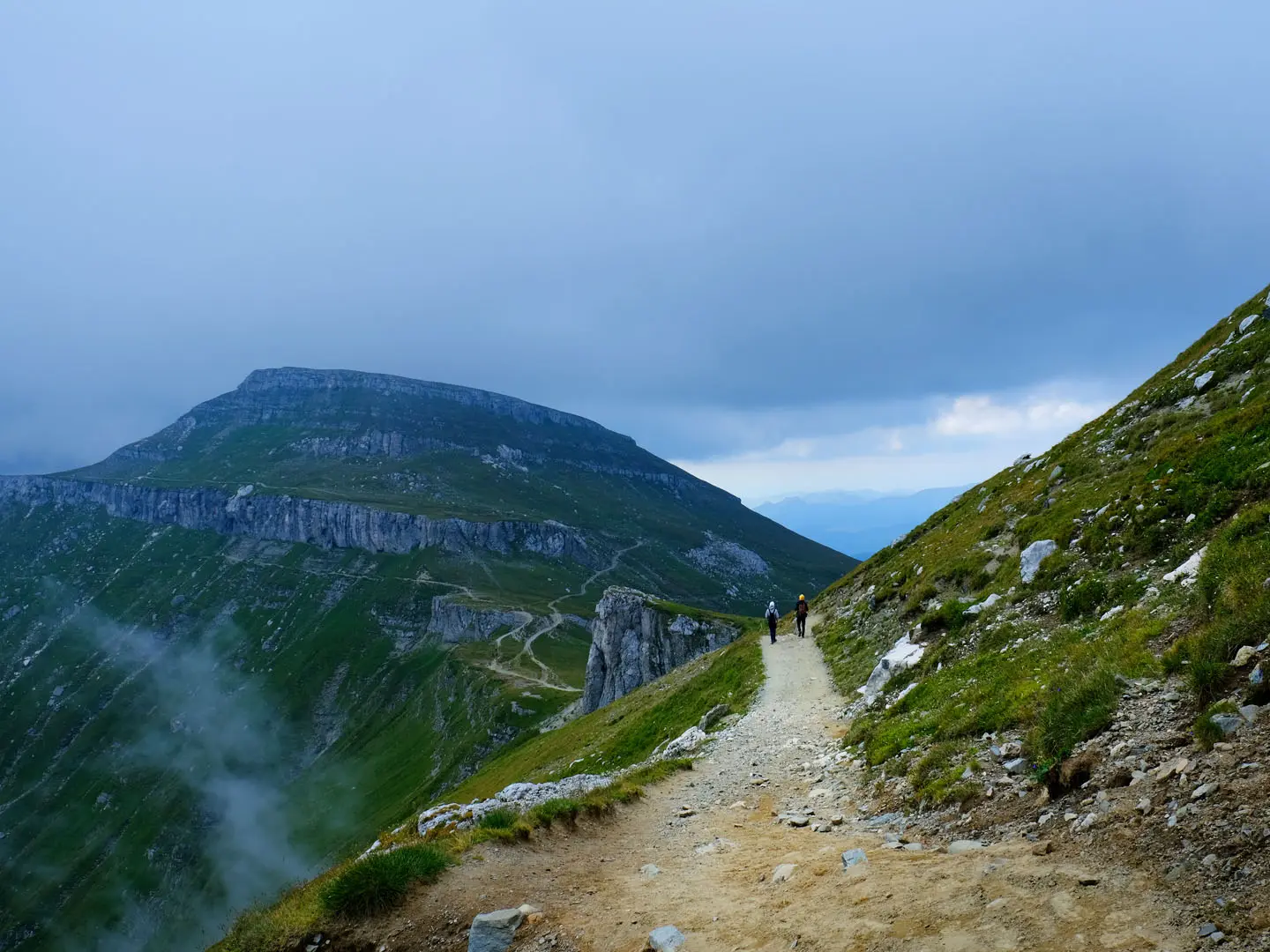
Omu Peak Summit Trail
How would you rate Omu Peak Summit Trail?
Tap a star to share your experience and help other hikers.
Omu Peak Summit Trail: Bucegi’s High Summit Hike
HikeList Score
Omu Peak Summit Trail scored 70/100 on HikeList's trail-quality metrics.
See score breakdownHide breakdown
- Ideal length 55
- Balanced challenge 74
- Scenery & wildness 78
- Varied terrain 94
- Accommodation 49
- Food & support 58
- Path quality 98
- Season flexibility 76
Computed from length, challenge, scenery & wildness, terrain variety, accommodation, food & support, path quality and season flexibility.
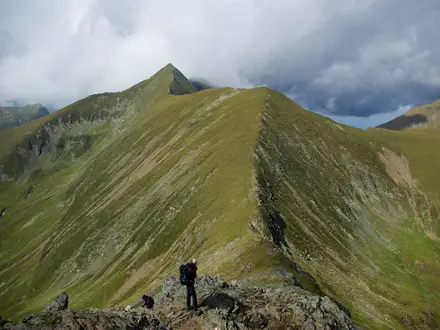
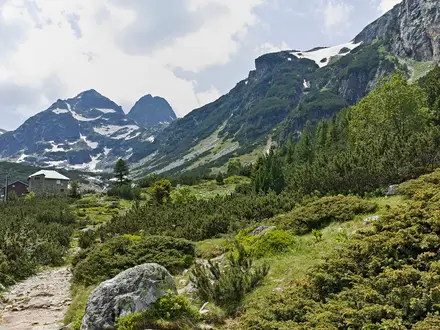
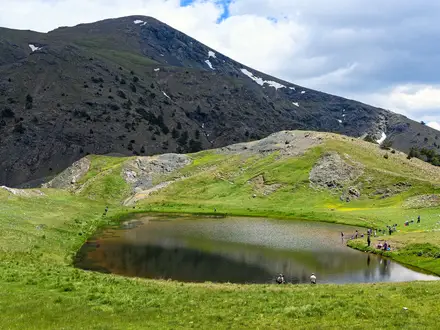
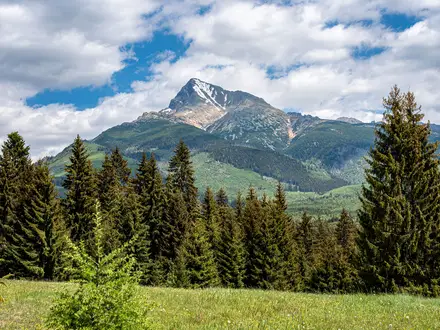
The Omu Peak Summit Trail is a hard high-mountain hike to Vârful Omu, the 2,505 m high point of the Bucegi Mountains in central Romania. Use 18 km as a representative full summit day, but distance and ascent vary sharply by trailhead. Strong walkers can do it in one long day; the steeper Bușteni valley routes are often split over two days. Expect forest, glacial valleys, alpine meadow, rocky upper ground and fast-changing Southern Carpathian weather.
Route Overview
There is no single official line to Omu. The classic and hardest approach starts at Bușteni or Cabana Gura Diham, then climbs via Valea Cerbului or Valea Mălăiești, often passing Cabana Diham, Cabana Mălăiești and the blue-stripe route to Cabana Omu. Easier starts use the Bușteni cable car to Cabana Babele on the Bucegi Plateau, near the Babele to Sphinx Rock Trail, or Cabana Peștera in the Ialomița valley. The listed trail type is out-and-back, especially from Mălăiești or Peștera, but many Bușteni hikers make a circuit across the plateau; see also the Bucegi Plateau Circuit and Caraiman Cross Trail. Bușteni has a direct train from Bucharest.
Omu Peak mountaineering history
Omu has been a Romanian mountaineering objective since the late 19th century. The first wooden shelter on the summit was built in 1888 by the Transylvanian Carpathian Society, and the site was later rebuilt into today’s Cabana Omu beside the long-running weather station. The wider Bucegi Plateau, including the Sphinx and Babele rock formations, has been a well-known Romanian tourist landscape for over a century. The massif has been protected as Bucegi Natural Park since 1990.
Notable highlights
- Vârful Omu (2,505 m): The highest summit in the Bucegi Mountains. The rocky high point gives broad Southern Carpathian views in clear weather, though quoted summit heights vary slightly by source.
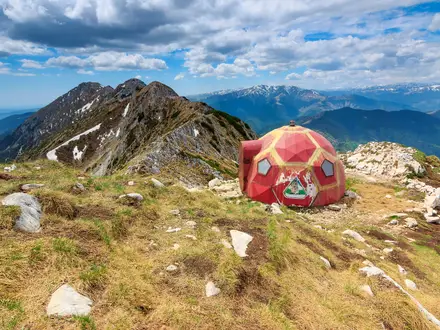
- Cabana Omu and the Omu weather station: The summit hut is the highest mountain shelter in the entire Carpathians, and the meteorological station beside it is Romania’s highest permanently inhabited point. Facilities are basic, with no electricity or running water.
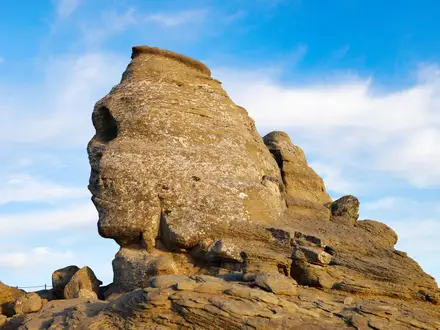
- The Sphinx and Babele: Wind- and frost-shaped rock formations on the Bucegi Plateau, passed on the plateau and cable-car approaches. The Sphinx’s human-like profile is one of Romania’s best-known natural landmarks.
- Valea Mălăiești and the glacial valleys: Steep Bușteni-side valleys give the most direct and demanding approaches to Omu. Early summer rhododendron adds colour to the alpine meadows.
- Peștera Ialomiței and the Ialomița Waterfall: A cave with a hermitage and a waterfall near the head of the Ialomița valley, adding interest to the gentler south-western approach from Cabana Peștera.
Challenges to expect
This is a hard mountain day if started from Bușteni: around 2,000 m of ascent, long valley climbs, rocky upper sections, loose scree and some exposed ground near the summit. Weather can change quickly above the forest, and waymarking may feel sparse high up, so carry offline maps. Outside late June to early October, snow and avalanche risk make the upper routes serious mountaineering terrain.
HikeList Score
Omu Peak Summit Trail scored 70/100 on HikeList's trail-quality metrics.
See score breakdownHide breakdown
- Ideal length 55
- Balanced challenge 74
- Scenery & wildness 78
- Varied terrain 94
- Accommodation 49
- Food & support 58
- Path quality 98
- Season flexibility 76
Computed from length, challenge, scenery & wildness, terrain variety, accommodation, food & support, path quality and season flexibility.
 Romania
Show more data Show less
- Mountain
- Alpine Meadow
- Forest
- Rocky
- Dirt
- Rock
- Scree
- Mountain Huts
- Pet Friendly
- Water Sources
- Shelters
Photos from hikers
Taken on the trail by people who've reviewed Omu Peak Summit Trail.
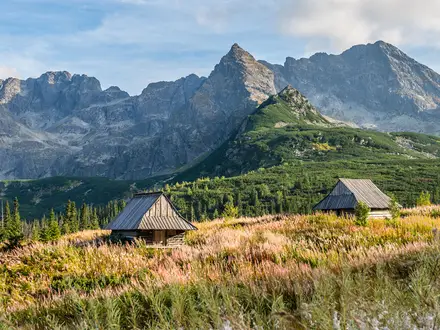
The hike begins at Babele Cabin, accessible by cable car or an initial hike from Busteni or Sinaia, and follows marked mountain trails past the striking Babele rock formations and the famed Bucegi Sphinx. Continuing across open alpine plateaus, the route gradually ascends alongside Scara Peak, offering spectacular views of the Prahova Valley. The path becomes steeper and more rugged as it approaches the final ridge leading to Cabana Omu, where hikers may take a rest. From Cabana Omu, a short but steep climb leads to Omu Peak's summit, the highest point in the Bucegi Mountains. After taking in panoramic mountain views, the return follows the same route back to Babele Cabin. Expect rocky, uneven terrain and some exposed sections near the peak. Water and shelter are only reliably available at the major huts (Babele and Omu), so plan accordingly.
Reviews
How would you rate Omu Peak Summit Trail?
Tap a star to start your review — you could be the first.