Horseid Beach Trail
How would you rate Horseid Beach Trail?
Tap a star to share your experience and help other hikers.
Horseid Beach Trail: Ferry Hike to Lofoten’s Remote Sand
HikeList Score
Horseid Beach Trail scored 79/100 on HikeList's trail-quality metrics.
See score breakdownHide breakdown
- Ideal length 55
- Balanced challenge 100
- Scenery & wildness 85
- Varied terrain 89
- Accommodation 83
- Food & support 61
- Path quality 98
- Season flexibility 63
Computed from length, challenge, scenery & wildness, terrain variety, accommodation, food & support, path quality and season flexibility.
Horseid Beach Trail is a ferry-access day hike on the northern coast of Moskenesøya in western Lofoten, Norway. It runs about 9 km out-and-back from Kjerkfjorden ferry pier to Horseidstranda inside Lofotodden National Park. The walk takes about 2 hours each way, but plan 5–10 hours with the Reine–Kjerkfjorden passenger ferry and waiting time. Difficulty is easy to moderate: no summit, around 200–240 m of ascent, but bog, mud and weather matter. It suits hikers wanting a remote beach hike rather than a hard ridge day.
Route Overview
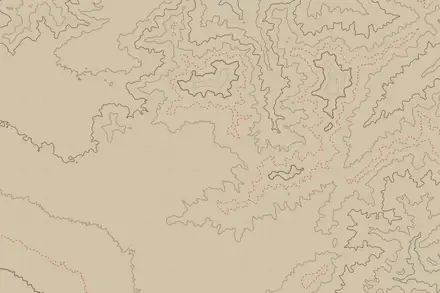
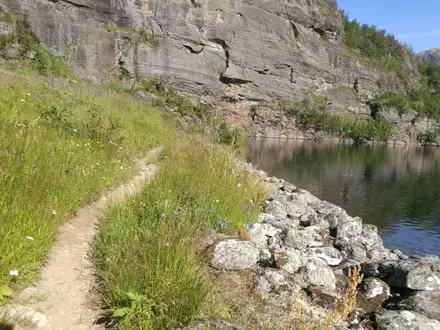
The standard route starts and finishes at Kjerkfjorden (Kirkefjord) ferry pier after the passenger ferry from Reine; tickets are sold around an hour before departure, and parking in Reine is paid. From the pier, follow a gravel road and grassy path up the valley above Kjerkfjorden to a rocky pass at about 187 m. The trail then drops more steeply over a muddy boulder slope, crosses boggy lowland near Lake Horseidvatnet and narrow streams, and reaches the grassy meadow behind Horseid beach. Return the same way to meet the ferry. The longer Selfjorden approach via Selfjordhytta and Fageråvatnet is a different, harder 15–18 km option and not this main route.
Lofotodden National Park and Stone Age Coast
Horseid beach is protected within Lofotodden National Park, gazetted on 22 June 2018 as Norway’s youngest national park to protect remote outer Moskenesøya from uncontrolled tourism. The wider coast has far older human context: sea caves around the outer edges of the park preserve Stone Age cave paintings and traces of prehistoric use. Those caves are not part of the standard Kjerkfjorden-to-Horseid path, but they explain why this stretch of Lofoten is valued for both wild landscape and archaeology.
Notable highlights
- Horseid beach (roughly 1 km): A pale arc of sand backed by dunes and hemmed in by steep grey mountain walls. It is quieter than nearby Bunes or Kvalvika because reaching it requires both a ferry and a walk.
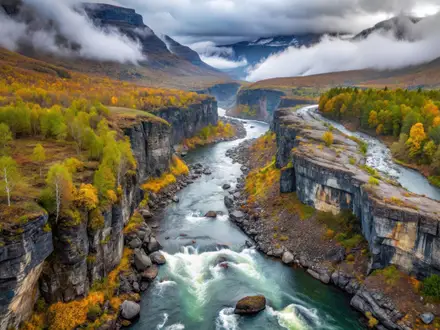
- Kjerkfjorden ferry crossing: The passenger boat from Reine threads into the emerald Kjerkfjorden below sheer peaks. The ferry is the practical access for the main route and shapes the whole day’s timing.
- Mountain pass viewpoint (about 187 m): The route’s high point is a saddle, not a summit. From here, the view switches from Kjerkfjorden behind to the green valley and Horseid beach ahead.
- Lofotodden National Park: Horseid lies inside the national park on Moskenesøya, established in 2018. The park covers about 99 km² and includes Hermannsdalstinden at 1,029 m, though this hike stays low.
- Stone Age sea caves: Coastal caves around the outer edges of the national park preserve prehistoric cave paintings and traces of Stone Age use. They are not on the beach path itself, but they add context to the protected coastline.
Challenges to expect
Do not treat Horseid like a quick roadside beach stop: the ferry controls the day, and missing the return can mean a long wait. Underfoot, expect mud, bog, wet boulders and narrow stream crossings; waterproof boots are strongly advised. Weather on western Lofoten can turn wet or windy even in summer. For different Norwegian hikes to compare, see Dronningruta (Queen’s Route) or Besseggen Ridge.
HikeList Score
Horseid Beach Trail scored 79/100 on HikeList's trail-quality metrics.
See score breakdownHide breakdown
- Ideal length 55
- Balanced challenge 100
- Scenery & wildness 85
- Varied terrain 89
- Accommodation 83
- Food & support 61
- Path quality 98
- Season flexibility 63
Computed from length, challenge, scenery & wildness, terrain variety, accommodation, food & support, path quality and season flexibility.
 Norway
Show more data Show less
- Mountainous
- Coastal
- Boggy
- Gravel
- Grass
- Rocky
- Muddy
- Boggy
- Sand
- Hotels
- Guesthouses
- Wild Camping Spots
- Pet Friendly
- Campsites
Photos from hikers
Taken on the trail by people who've reviewed Horseid Beach Trail.
Reviews
How would you rate Horseid Beach Trail?
Tap a star to start your review — you could be the first.