Trolltunga
How would you rate Trolltunga?
Tap a star to share your experience and help other hikers.
Trolltunga: Complete Hiking Guide
HikeList Score
Trolltunga scored 75/100 on HikeList's trail-quality metrics.
See score breakdownHide breakdown
- Ideal length 55
- Balanced challenge 84
- Scenery & wildness 78
- Varied terrain 100
- Accommodation 58
- Food & support 72
- Path quality 98
- Season flexibility 76
Computed from length, challenge, scenery & wildness, terrain variety, accommodation, food & support, path quality and season flexibility.
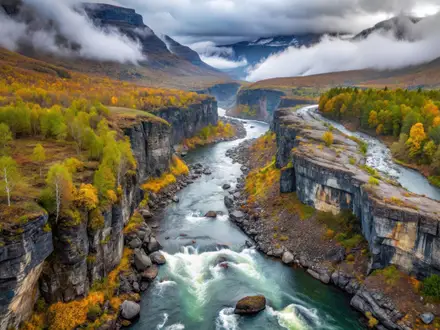
Trolltunga is a very demanding out-and-back day hike in Ullensvang Municipality, Vestland, Norway, near Odda and Tyssedal in the Hardangerfjord region. From the main P2 Skjeggedal trailhead it is 27 km return and typically takes 10–12 hours including breaks. The route suits fit, well-prepared hikers who can handle a long mountain day, steep climbing, exposed rocky plateaus, boggy ground and fast-changing alpine conditions.
Route Overview
Start and finish at Skjeggedal P2 car park. The trail climbs steeply on switchbacks near the old Mågelibanen funicular line, then crosses open high mountain plateaus and undulating ridges with repeated views over Ringedalsvatnet. Trolltunga, the horizontal cliff above the lake, is the turnaround point; you return the same way. The standard hike is 27 km from P2, while the higher P3 Mågelitopp car park shortens the route to 20 km but has limited spaces and higher parking costs. For a longer Hardangervidda-style trip, compare the Hardangervidda Traverse or the Hårteigen Peak Trail.
Trolltunga history and folklore
Trolltunga means “Troll’s Tongue”, a name tied to Norwegian folklore in which trolls turn to stone in sunlight. The rock slab was shaped during the last Ice Age as glacial ice broke away blocks of granite and gneiss along frost-split cracks. The area was once remote, with access linked to the Mågelibanen funicular built for local hydropower works. Visitor numbers rose sharply after 2010, turning Trolltunga into one of Norway’s signature hikes.
Notable highlights
- Trolltunga rock formation (about 700 m above Ringedalsvatnet): The horizontal “Troll’s Tongue” slab is the dramatic turnaround point and the main reason most hikers come.
- Ringedalsvatnet lake views: This dammed glacial lake appears from several points on the plateau and gives the route its scale.
- Skjeggedal start and switchbacks: The opening climb is steep and sustained, gaining height quickly beside the historic Mågelibanen funicular line.
- High mountain plateaus: Long rocky sections cross open alpine terrain on the fringe of Hardangervidda, with wide views towards surrounding peaks.
- Mågelibanen funicular history: The old funicular near the trailhead once served hydropower works and is part of the area’s industrial heritage.
Challenges to expect
Expect a long, strenuous mountain day: 27 km from Skjeggedal with around 800 m of net ascent and many undulating sections. The first climb is steep, then the plateau brings rock, boulders, mud, marshy ground and stream crossings. Snow can linger early or late in the season. Self-guided hiking is recommended only from 1 June to 30 September; outside that window a guide is required.
HikeList Score
Trolltunga scored 75/100 on HikeList's trail-quality metrics.
See score breakdownHide breakdown
- Ideal length 55
- Balanced challenge 84
- Scenery & wildness 78
- Varied terrain 100
- Accommodation 58
- Food & support 72
- Path quality 98
- Season flexibility 76
Computed from length, challenge, scenery & wildness, terrain variety, accommodation, food & support, path quality and season flexibility.
 Norway
Show more data Show less
- Mountainous
- Alpine
- Rocky
- Boggy
- Dirt
- Rocky
- Boulder
- Mud
- Campsites
- Wild Camping Spots
- Pet Friendly
- Restrooms
- Water Sources
- Campsites
- Shelters
Download Our Full Guide to Trolltunga FREE!
Get our comprehensive guide to this hike for free. Save it for later reading or print out at home.

Photos from hikers
Taken on the trail by people who've reviewed Trolltunga.
Trolltunga: The Complete Guide
Trolltunga is one of Norway’s great mountain day hikes: a long out-and-back from Skjeggedal above Tyssedal to the famous rock ledge suspended high over Ringedalsvatnet. It suits fit, experienced hikers who want a full, exposed day on rough Scandinavian plateau terrain rather than a quick viewpoint walk.
The route starts with a steep climb towards Mågelitopp, then crosses the western edge of Hardangervidda on rock, boulders, bog and mud. Red T-marks lead across open ground to Trolltunga itself, where the cliff edges are unfenced and the lake lies roughly 700 m below.
From Skjeggedal the return hike is about 27 km and usually takes 10–12 hours including breaks; starting higher at Mågelitopp cuts the distance to about 20 km. The effort is not technical climbing, but the length, weather exposure and repeated ups and downs make it a serious mountain day.
The safest self-guided season is 1 June to 30 September, with snow possible at either end and a guide required outside that window. Conditions, shuttle times, parking prices and road access should be checked before travelling.
This guide covers the route stages, one-day timing, accommodation bases, food and water, transport, terrain, safety planning and common mistakes.
Stage-by-Stage Guide
Trolltunga is a single-day out-and-back hike, but it is best planned as a sequence of distinct sections. The route changes character sharply after the initial climb: first a steep ascent from Skjeggedal to Mågelitopp, then a long, exposed, rolling crossing of the Hardangervidda-edge plateau before the final approach to the rock ledge.
There are no huts, cafés or staffed facilities on the walking route. Carry all food for the day, enough water for a long mountain outing, and clothing for cold, wet and windy conditions even in summer. Streams are crossed on the plateau, but any natural water should be treated and availability can vary with season and weather.
Stage 1: Skjeggedal (P2) to Mågelitopp (P3)
Approx. distance: 4 km
Character: steep initial climb from the valley trailhead to the upper start point
This is the hardest climbing section of the day if starting from Skjeggedal. The route leaves P2 at around 450–500 m and gains height quickly towards Mågelitopp at about 860 m, using the steep line beside the old Mågelibanen funicular route and the paved P3 access road area with switchbacks.
Underfoot this first section is more engineered than the plateau beyond, but it is still a serious start to a long day. Expect a sustained uphill effort rather than a gentle warm-up. In wet weather, take care on hard surfaces and steeper sections, and do not burn too much energy early: there is still a long plateau crossing ahead.
The main landmark is the line of the disused Mågelibanen funicular, built in 1911–12 to support the hydropower works and later closed in 2010. As the route rises, views begin to open back down towards the Skjeggedal valley and the fjord country around Tyssedal and Odda.
There are no food outlets or accommodation at the end of this stage. Mågelitopp is the upper trailhead and parking/shuttle point, not a mountain village. Anyone wanting to shorten the hike can start here from P3, reducing the return walk from about 27 km to about 20 km, but spaces are limited and access is via a toll road or shuttle from P2; current arrangements should be checked before travelling.
Road access is available at both ends of this stage: P2 at Skjeggedal and P3 at Mågelitopp. Beyond Mågelitopp, there is no simple road escape from the plateau. The trail is T-marked, but fog can still make orientation difficult once the open mountain terrain begins.
Stage 2: Mågelitopp (P3) to Gryteskaret / Store Floren
Approx. distance: 4 km
Character: transition from upper trailhead into open plateau terrain
From Mågelitopp the route leaves the road-access zone and enters the high mountain landscape that defines the Trolltunga hike. The walking becomes more varied: rock, dirt, boulders, boggy ground and wet patches replace the steep lower climb.
This section passes through the early plateau area towards Gryteskaret and Store Floren. The route is still physically demanding, not because of one continuous climb, but because the ground is uneven and progress is slower than the map distance may suggest. After rain, the bog and mud can be tiring and messy; early or late in the season snow patches may remain.
Views widen across the Hardangervidda-edge plateau, with glimpses back towards the Sørfjorden / Hardangerfjord arm and out towards the surrounding Vestland peaks. This is also where the route begins to feel much more remote, despite being a popular hike in season.
There are no services, shops, toilets, cafés or accommodation on this section. Carry lunch and snacks from Odda, Tyssedal or your accommodation before setting out. Natural water may be present in streams or wet ground, but it should not be relied on without treatment.
Navigation is by red T-marks and route markers. In clear weather the line is usually straightforward to follow, but in fog the open rock and bog can become confusing. Stay on the marked route and avoid wandering towards unprotected edges or steep ground for photographs.
Stage 3: Store Floren / Hesteflåene to Endanuten / Tysshøl
Approx. distance: 3 km
Character: rolling high plateau with repeated ups and downs
This middle plateau section is where the length of the hike becomes more apparent. The route continues across open mountain ground via Store Floren and Hesteflåene towards Endanuten and Tysshøl, with repeated small ascents and descents rather than a simple level traverse.
The official total ascent is about 800 m from Skjeggedal, but the plateau’s undulations add effort. Expect slow, steady progress over rock slabs, boulderier sections, bog, mud and stream crossings. Waterproof boots are strongly preferable, and trekking poles can help with balance on wet or uneven ground.
The surrounding landscape is broad and exposed, with big views over the high plateau and towards Ringedalsvatnet where the terrain allows. There is very little shelter from wind, rain or sudden temperature drops. Weather that feels manageable at the car park can be much harsher at around 900–1,180 m.
There is no food, water supply point or accommodation at Endanuten or Tysshøl. This is not a place to discover that food, fluids or warm layers are running low. Turnaround judgement matters: if progress is slower than planned, weather deteriorates or visibility drops, returning before Trolltunga is the safer decision.
There is no public transport or road access along this stage. A rescue or assisted exit from this part of the route is difficult compared with simply turning back early. Navigation remains T-marked, but mist and snow patches can obscure the line, especially outside the safest summer window.
Stage 4: Tysshøl to Trolltunga
Approx. distance: 2.5 km
Character: final plateau approach to the rock ledge and viewpoint
The final approach from Tysshøl to Trolltunga is shorter than the earlier sections but still crosses high, exposed mountain terrain. Many hikers feel the cumulative fatigue here, particularly if the outward journey has already taken longer than expected.
The route continues over rock, boulders, mud and boggy ground with open views towards Ringedalsvatnet. The famous ledge itself sits roughly 700 m above the lake and around 13.5 km from Skjeggedal. The rock formation was shaped by Ice Age glacial action, which split blocks of Precambrian granite and gneiss from the cliff.
Trolltunga is the main highlight of the hike, but it is also the point where caution is most important. The cliff edges are unfenced, and the drop is severe. Keep well back from edges, take extra care in wind, rain or poor visibility, and do not let queues for photographs create pressure to rush or take risks.
There are no facilities at Trolltunga. Some flat plateau areas near Trolltunga are used by wild campers under Norway’s right-to-roam tradition, away from the immediate edge, but this standard route is normally planned as a long day hike from Odda or Tyssedal rather than an overnight trek. There are no huts or lodges here.
This is also the turnaround point. Do not treat reaching the ledge as the end of the day: the full return to Skjeggedal is another 13.5 km, or around 10 km back to Mågelitopp if starting from P3. Before spending a long time at the viewpoint, check the time, weather, daylight and group energy levels.
Stage 5: Trolltunga to Skjeggedal (P2) — return by the same route
Approx. distance: 13.5 km
Character: full reverse crossing of the plateau, then steep descent to the trailhead
The return follows the same marked route back across the plateau via Tysshøl, Endanuten, Hesteflåene, Store Floren, Gryteskaret and Mågelitopp. This is not a loop, and there is no alternative easy exit from the high ground.
The return often feels longer than expected because the plateau is still undulating and rough underfoot. Fatigue, wet boulders, mud and repeated small climbs can slow progress significantly. Keep eating and drinking after leaving Trolltunga, and save enough concentration for the final descent.
Navigation can be more demanding on the way back if cloud lowers later in the day. Follow the red T-marks carefully and avoid taking shortcuts across bog, boulder fields or snow patches. In poor visibility, staying with the marked route is more important than trying to save distance.
At Mågelitopp, hikers who started at P3 finish if their vehicle or shuttle connection is there. Those returning to Skjeggedal still have the steep 4 km descent to P2. Descending tired legs on the switchbacks and lower route can be hard on knees and ankles, especially in rain.
There are no food or accommodation options at Skjeggedal itself beyond the trailhead parking area. Most hikers return to lodging in Odda or Tyssedal, with Tyssedal the closer base village and Odda the larger service town. If relying on a shuttle, the latest departure times should be checked before setting out; missing transport at the end of a 10–12 hour day creates a serious logistical problem.
Self-guided hiking is safest and normally advised from 1 June to 30 September. Outside that period a guide is required, and the route becomes a snowshoe or ski trip rather than a standard hike. Snow, rockfall risk or landslide risk can also affect the trail and the P3 road, so the official route status should be checked before travelling.
Recommended Itinerary
Trolltunga is normally planned as one long out-and-back day hike. The key itinerary choice is whether to start at Skjeggedal (P2), which gives the full 27 km route, or use the higher Mågelitopp (P3) start to reduce the return distance to about 20 km.
Standard itinerary — full route from Skjeggedal (P2)
This is the standard option for fit, experienced hikers who want to walk the full T-marked route and are prepared for a 10–12 hour mountain day.
| Day | From | To | Approx. distance | Why this stage makes sense | Services/accommodation notes |
|---|---|---|---|---|---|
| Night before | Odda or Tyssedal | Skjeggedal logistics ready for an early start | — | Staying below the trailhead gives the best chance of starting early and completing the route in daylight. Tyssedal is closer to Skjeggedal; Odda has the widest range of services. | No accommodation on the trail. Book Odda or Tyssedal lodging well ahead in July–August. |
| 1 | Skjeggedal (P2) | Mågelitopp (P3) | About 4 km | This is the steep opening climb, gaining height quickly beside the old Mågelibanen line and the P3 access road. Getting this section done early is sensible before the longer plateau crossing. | P2 has paid parking, around NOK 500/day. Check current parking prices before travelling. No on-trail services once walking. |
| 1 | Mågelitopp (P3) | Gryteskaret / Store Floren | About 4 km | The route leaves the lower access section and moves onto the high, open terrain on the edge of Hardangervidda. This is where pace usually becomes slower and more weather-dependent. | No food, shelter or staffed facilities. Carry waterproofs, warm layers, food and navigation. |
| 1 | Store Floren / Hesteflåene | Endanuten / Tysshøl | About 3 km | This middle section keeps the route high and undulating, with rock, bog, mud and stream crossings. It is easy to underestimate because the climbing is less continuous than the first 4 km. | No services. In fog or poor visibility, stay with the red T-marks and route markers. |
| 1 | Tysshøl | Trolltunga | About 2.5 km | This final outward section reaches the turnaround point at the rock ledge above Ringedalsvatnet. Allow time here, but do not let the stop compromise the return in daylight. | No facilities at Trolltunga. The cliff edges are unfenced; keep well back from drops, especially in wind or poor visibility. |
| 1 | Trolltunga | Skjeggedal (P2) | About 13.5 km | The return follows the same route, so the day is only half complete at the ledge. Fatigue, wet rock and the final descent back to Skjeggedal are common reasons this walk feels harder than its headline distance suggests. | No escape services on the plateau. Finish back at P2, then return to accommodation in Tyssedal or Odda. |
Slower variant — self-supported wild camp near Trolltunga
This is the only realistic slower itinerary, and it suits experienced campers who want more time around the ledge for evening or morning light. It is not an easier version for beginners: the pack is heavier, the plateau is exposed, and all food, shelter and bad-weather equipment must be carried.
| Day | From | To | Approx. distance | Why this stage makes sense | Services/accommodation notes |
|---|---|---|---|---|---|
| 1 | Skjeggedal (P2) | Plateau pitches near Trolltunga | About 13.5 km | Splitting the walk at the turnaround point avoids doing the full 27 km in a single push and gives more flexibility around conditions at the ledge. | Wild camping is possible under Norway’s allemannsretten right-to-roam, using suitable flat plateau ground away from the immediate edge. There are no huts, toilets or food supplies. |
| 2 | Plateau pitches near Trolltunga | Skjeggedal (P2) | About 13.5 km | The second day is a full return by the same T-marked route, including the long plateau crossing and descent to Skjeggedal. | Carry everything out. Weather can change overnight; check the official trail status before committing to an overnight plan. |
Faster / shorter variant — start from Mågelitopp (P3)
This is the shorter option for hikers who still want the Trolltunga day hike but prefer to avoid the steep lower approach from Skjeggedal. It suits strong day hikers with a secured P3 parking space or a shuttle plan from P2.
| Day | From | To | Approx. distance | Why this stage makes sense | Services/accommodation notes |
|---|---|---|---|---|---|
| 1 | Mågelitopp (P3) | Trolltunga and return to Mågelitopp (P3) | About 20 km return | Starting at P3 removes the lower Skjeggedal–Mågelitopp section and cuts the day from about 27 km to about 20 km. The remaining route is still a long, exposed plateau hike, not a short viewpoint walk. | P3 has limited parking, around 30 spaces, and costs around NOK 600 plus toll. A P2–P3 shuttle also runs, around NOK 150. Check current prices, road status and shuttle times before travelling. |
Planning the Route
Trolltunga is planned as one very long mountain day, not as a stage-by-stage trek. Most hikers base themselves in Odda or Tyssedal, travel up to the trailhead early, walk out to the rock ledge, then return by the same route to the same car park.
The main planning decision is where to start: Skjeggedal (P2) or the higher Mågelitopp (P3). Starting higher makes the day shorter, but it depends on P3 access, parking availability or the P2–P3 shuttle, all of which should be checked before travelling.
| Planning choice | What it means in practice |
|---|---|
| Start at Skjeggedal (P2) | The standard full hike. Expect the steep opening climb to Mågelitopp before the long plateau crossing. |
| Start at Mågelitopp (P3) | Cuts the return hike to about 20 km and removes much of the initial climb. Access is via toll road or shuttle from P2. |
| Walk self-guided | Suitable only in the summer window, generally 1 June to 30 September, for fit and well-equipped hikers. |
| Walk outside summer | A guide is required and the route becomes a snowshoe or ski trip rather than a normal hike. |
| Camp near Trolltunga | Possible on suitable plateau pitches under Norway’s right-to-roam rules, away from the immediate edge, but there are no huts or services on the route. |
How many days to allow
The walking itself is normally completed in a single day. From Skjeggedal, most hikers should allow a full 10–12 hours including breaks; from Mågelitopp, about 7–10 hours is more realistic.
It is sensible to allow at least one spare day in the area if the trip is built around Trolltunga. Weather, fog, snow patches, rockfall or landslide risk can affect the trail or the P3 road, and the official trail status should always be checked before setting off.
This is not a hike to squeeze into a tight travel day. Avoid planning a long onward journey immediately after the walk, especially if relying on shuttles, buses or a late return to Odda or Tyssedal.
Pace and timing
Trolltunga rewards a steady, conservative pace. The first section out of Skjeggedal gains height quickly, but the hardest mistake is assuming the plateau will be easy once the climb is over: the route continues over rock, boulders, bog, mud and repeated undulations.
Start early enough to be back well before dark. In some seasons an early start, such as before 8am, is required or advised; this should be checked before travelling.
The turnaround point is the rock ledge itself. Queues for photos can build in peak season, so do not let time at Trolltunga compromise the return walk, which follows the same exposed high-ground route back.
Accommodation planning
Accommodation does not dictate the route because there are no on-trail huts, lodges or villages between the trailhead and Trolltunga. Beds are arranged in the base towns below, mainly Odda and Tyssedal.
Odda is the largest local base, with the broadest range of hotels, guesthouses, hostels, camping and general services. Tyssedal is closer to Skjeggedal and is a practical base for an early start, but has fewer options.
Book well ahead for July and August. Kinsarvik and Eidfjord can also work as quieter Hardangerfjord bases, but they add more transport planning before and after the hike.
Shortening, extending and section hiking
The only practical way to shorten the hike is to start at Mågelitopp (P3) rather than Skjeggedal (P2). This cuts the return distance from about 27 km to about 20 km, but depends on the toll road, the limited P3 parking and/or the shuttle from P2.
There is no meaningful section-hiking version of Trolltunga. It is an out-and-back mountain route with no intermediate settlements or public transport points on the plateau, so once committed beyond Mågelitopp the realistic options are to continue to Trolltunga or turn back the way you came.
Extending the route is rarely useful for first-time hikers. The plateau is already a long, demanding day, and extra distance increases exposure to fast-changing mountain weather.
Food, water and supplies
There are no shops, cafés or staffed huts on the trail. Carry all food needed for a long day, including enough spare calories for delays, cold weather or a slow return.
Carry enough drinking water for the day unless fully prepared to manage natural water safely. The route crosses streams and wet ground, but availability and suitability should be checked before travelling, and conditions can vary with season, snowmelt and weather.
Stock up in Odda or another base town before travelling to the trailhead. Do not rely on buying supplies at Skjeggedal or on the plateau.
Navigation and weather
The route is T-marked with red T-marks and route markers, but that does not remove the need for navigation. Fog, rain, lingering snow patches and the open rock plateau can make route-finding much harder, especially away from the busier summer days.
Carry a proper map or reliable offline mapping, and keep enough phone battery for the whole day. The trail crosses high, exposed terrain around the edge of Hardangervidda, with the high point around 1,180 m, so weather can feel very different from Odda or Tyssedal below.
Check the official Trolltunga trail status and mountain weather before setting out. If poor visibility, strong wind, snow or severe rain is forecast, postponing the hike is usually the safest decision.
Transport and costs
Plan the trailhead transfer before booking accommodation. Most hikers reach Odda or Tyssedal first, then travel up the mountain road to Skjeggedal (P2), with the option of continuing to Mågelitopp (P3) by toll road or shuttle.
There is no trail entry fee, but access costs can be significant. P2 parking is around NOK 500 per day, P3 parking around NOK 600 plus toll, and the P2–P3 shuttle around NOK 150; current prices, road status and shuttle times should be checked before travelling.
P3 has far fewer spaces than P2, so it should not be treated as a guaranteed fallback. If using public transport to reach Odda, also check onward local connections to Tyssedal and Skjeggedal carefully, as the hike requires an early start and a late return window.
Towns, Villages and Overnight Stops
Trolltunga is planned from a base town, not as a hut-to-hut route. There is no on-trail accommodation, no staffed mountain hut and no reliable resupply once you leave the valley, so beds, food and transport all need arranging before the hiking day.
Wild camping is possible on suitable plateau ground under Norway’s allemannsretten right-to-roam rules, including areas used by hikers near Trolltunga, but this is a self-sufficient mountain camp rather than an organised overnight stop. Camp well away from cliff edges, carry all food and equipment, and be prepared for cold, wet and windy conditions even in summer.
Odda
Odda is the main base town for Trolltunga and the most practical place for most hikers to stay. It sits below the route in the Hardangerfjord region, with onward access by road or shuttle towards Tyssedal and Skjeggedal.
This is the best choice if you want the widest range of accommodation and services. Odda has hotels, guesthouses, hostels, a campsite and full town amenities, making it the easiest place to buy food, sort last-minute kit and stay before or after the hike.
Transport links are stronger here than at the trailhead. Long-distance buses serve Odda, including services from Bergen and coach connections from Stavanger and Oslo; the Bergensbanen railway reaches Voss, with onward bus travel to the area. Timetables should be checked before travelling, especially if relying on an early start or a same-day onward connection after the hike.
Book accommodation well ahead for July and August. Trolltunga is a high-demand summer hike, and the limited accommodation in the fjord towns can fill quickly in peak season.
Tyssedal
Tyssedal is the closest village base below the Skjeggedal road and is useful for hikers who want to shorten the morning transfer to the trailhead. It is a smaller former industrial village, with a hotel and the Kraftmuseet hydropower museum.
Tyssedal is a practical overnight stop if an early start is the priority, but it has fewer services than Odda. Do not assume the same range of shops, eating options or late-opening facilities; buy trail food and essentials in advance if needed.
The mountain road to Skjeggedal climbs from the Tyssedal area to the P2 trailhead. If staying without a car, check current shuttle and bus arrangements before booking, as the success of the hiking day depends on reaching the trailhead early and returning safely after a long walk.
Skjeggedal (P2 Trailhead)
Skjeggedal is the standard trailhead for the full Trolltunga hike. It sits at the head of the Skjeggedal valley above Tyssedal, at roughly 450–500 m, and is where the T-marked route begins for the 27 km return walk.
This is not a normal overnight stop. Treat Skjeggedal as a car park and trailhead rather than a village base, and arrive with food, water, waterproofs, warm layers and a clear plan for the return.
P2 Skjeggedal has around 180 parking spaces and costs about NOK 500 per day. It is also the lower point for the shuttle up to Mågelitopp (P3), which can reduce the hiking distance. Parking prices, shuttle timetables and road access should be checked before travelling.
Starting from P2 gives the full ascent and includes the steep opening climb beside the old Mågelibanen funicular line and along/near the P3 access road. This section is a major part of the day’s effort, so an overnight base in Odda or Tyssedal still requires an early departure.
Mågelitopp (P3 Upper Trailhead)
Mågelitopp is the higher alternative start, at about 860 m. It is reached from P2 by a 4.3 km toll road or by shuttle bus, and starting here reduces the return hike from about 27 km to about 20 km.
There is no accommodation or resupply at Mågelitopp. It is a trailhead access point, not a place to stay, and hikers still need to be fully equipped for a long high-mountain day.
P3 has very limited parking, with around 30 spaces, and costs about NOK 600 plus the toll. The P2–P3 shuttle is around NOK 150. These costs and the operating arrangements change, so current prices and booking requirements should be checked before travelling.
The P3 road can open late or close because of snow, rockfall or landslide risk. If the road is closed or full, the day reverts to the longer P2 start, which has important consequences for timing and fitness.
Gryteskaret and Trombeskaret
Gryteskaret and Trombeskaret are route waypoints on the high section after the initial climb, not villages or service points. They are useful for judging progress across the plateau, but they offer no accommodation, shops, cafés or transport links.
By this point the route has moved into open mountain terrain, with rock, bog, mud and changing weather. Any stop here is a short rest stop only; keep enough time and energy for the outward leg to Trolltunga and the full return by the same route.
Store Floren and Hesteflåene
Store Floren and Hesteflåene mark further plateau sections on the way towards Trolltunga. These are exposed high-ground areas rather than overnight stops, and there are no staffed facilities.
The practical value of these names is navigation and pacing. In mist or poor weather, the red T-marks and route markers become especially important, and turning back early can be the safest decision if progress is slow.
Endåno / Endanuten and Tysshøl
Endåno / Endanuten and Tysshøl lie on the later approach to Trolltunga, beyond the middle plateau sections. They are not settlements and should not be treated as places to find shelter, food or onward transport.
This part of the route is where tiredness often becomes a planning issue. Remember that Trolltunga is only the turnaround point; from here, the same distance and terrain must be walked back to Mågelitopp or Skjeggedal.
Trolltunga
Trolltunga is the turnaround point of the hike, about 13.5 km from Skjeggedal and roughly 700 m above Ringedalsvatnet. It is a rock ledge and viewpoint, not an overnight facility.
There are no huts, cafés, toilets or rescue-style services to rely on at the ledge. Expect queues for photos in peak season, keep well back from unfenced cliff edges, and protect enough daylight and energy for the return.
Some hikers camp on suitable plateau ground near Trolltunga to see the area outside the busiest hours. This is only appropriate for experienced, self-sufficient campers with mountain-ready equipment, and tents should be pitched away from the immediate edge and without damaging the ground.
For most hikers, the safest and simplest plan is to sleep in Odda or Tyssedal, start early, complete Trolltunga as a single demanding day, and return to the same valley base that evening.
Getting to the Start
The practical approach for Trolltunga is to base yourself in Odda or Tyssedal, then travel up the mountain road to Skjeggedal car park P2 on the morning of the hike. A higher start at Mågelitopp car park P3 is possible, but access is limited and more expensive; it cuts the return walk from about 27 km to about 20 km.
By train
There is no direct rail access to the Trolltunga trailhead. The most useful rail approach is the Bergensbanen railway to Voss, followed by an onward bus connection towards Odda and Tyssedal. This should be checked before travelling.
Rail-based travel works best if you arrive the day before the hike. Trolltunga is a very long day, and relying on same-morning long-distance public transport is risky unless the onward bus and trailhead transfer times line up with an early start.
By bus
Long-distance buses serve Odda, including services from Bergen and coach links from Stavanger and Oslo, including Trolltunga/Preikestolen express and Nor-Way coach services. Current routes, seasonal timetables and seat reservations should be checked before travelling.
From Odda or Tyssedal, you still need to reach Skjeggedal P2, roughly 7 km up the mountain road above Tyssedal. Shuttle services operate in the Trolltunga area, including between P2 Skjeggedal and P3 Mågelitopp, but timetables vary by season and should be checked before travelling.
If public transport does not fit your start time, arrange a taxi or private transfer locally in advance rather than assuming one will be available early in the morning. This should be checked before travelling.
By car
Driving is the most flexible way to reach the trailhead. From Odda or Tyssedal, follow the mountain road up the Skjeggedal valley to car park P2, where the T-marked trail begins at about 450–500 m above sea level.
A higher car park, P3 Mågelitopp, sits at about 860 m and is reached by a 4.3 km toll road above P2. Starting from P3 avoids the steep lower section and reduces the round trip to about 20 km, but spaces are very limited and the road can open late or close because of snow, rockfall or landslide risk.
| Parking / access point | Practical notes |
|---|---|
| P2 Skjeggedal | Main trailhead car park, about 180 spaces. Around NOK 500 per day. |
| P3 Mågelitopp | Higher trailhead, about 30 spaces. Around NOK 600 plus toll. Reduces the hike to about 20 km return. |
| P2–P3 shuttle | Shuttle between the lower and upper car parks. Around NOK 150. |
There is no trail entry fee, but parking and shuttle costs are significant. Current prices, booking rules, road status and shuttle times should be checked before travelling, especially in June, September and outside the main summer period.
From the nearest airport
Bergen is the nearest major airport for most hikers, about 3 hours by car from the Trolltunga area. Stavanger is about 3.5 hours by car, while Oslo is a much longer approach at about 5–6 hours by car.
From any airport, the usual plan is to travel first to Odda or Tyssedal, stay overnight, then continue to Skjeggedal P2 early the next morning. Long-distance bus options from Bergen, Stavanger and Oslo can work, but connections and seasonal services should be checked before travelling.
Where to stay before starting
Odda is the main base town, with the widest choice of hotels, guesthouses, hostels, a campsite and full amenities. It is the most practical option if you need food, fuel, last-minute supplies or onward bus connections.
Tyssedal is smaller but closer to the Skjeggedal trailhead, making it a useful base for an early start. Accommodation is more limited than in Odda, so booking ahead matters.
Kinsarvik and Eidfjord are quieter alternatives elsewhere along the Hardangerfjord, but they add more logistics on the morning of the hike. For a 10–12 hour mountain day from P2, staying in Odda or Tyssedal is usually the simplest arrangement.
Book well ahead for July and August. Accommodation close to the trailhead is limited, and the most practical beds can fill quickly in peak season.
Getting Home from the Finish
Trolltunga is an out-and-back hike, so the finish is back at Skjeggedal (P2) unless you started higher at Mågelitopp (P3). Getting away from the trailhead is therefore part of the same logistics as getting in: you need to descend the mountain road to Tyssedal and Odda, or collect your vehicle from the car park you used.
Do not plan a tight onward connection after this walk. From Skjeggedal, the full route commonly takes 10–12 hours including breaks, and tired hikers often finish late in the day. If using any shuttle, bus or taxi, check the final departure before starting the hike.
By train
There is no railway station at Skjeggedal, Tyssedal or Odda. The practical rail connection is via the Bergensbanen railway at Voss, with an onward bus connection between Voss and Odda.
This is a timetable-dependent option, especially after a long hiking day. If the last onward bus connection has gone by the time you reach Odda, stay locally and travel the next day. This should be checked before travelling.
By bus
Long-distance buses serve Odda, including services from Bergen and coach links such as Trolltunga/Preikestolen express and Nor-Way services from Stavanger and Oslo. From the trailhead, first get back down from Skjeggedal to Tyssedal or Odda using the local transport arrangement you planned for the outward journey.
A shuttle runs between P2 Skjeggedal and P3 Mågelitopp, useful if you started from the higher trailhead. The P2–P3 shuttle is around NOK 150, but prices and timetables change by season and should be checked before travelling.
If relying on buses after the hike, build in a large buffer. The return from Trolltunga is long, the plateau can be slow in poor weather, and missing the last connection from Odda may mean an unplanned overnight stay.
By car/taxi
Driving is the simplest way to leave the finish. If parked at P2 Skjeggedal, you finish at your car and drive back down the mountain road to Tyssedal and Odda. P2 has around 180 spaces and parking is around NOK 500 per day; confirm current prices before travelling.
If parked at P3 Mågelitopp, you finish higher up the mountain and avoid the lower section of the walk. P3 has around 30 spaces and costs around NOK 600 plus toll; access is via the 4.3 km toll road from P2. Availability, toll arrangements and road status should be checked before travelling, as the P3 road can open late or close because of snow, rockfall or landslide risk.
Do not assume a taxi will be waiting at Skjeggedal late in the evening. If a taxi is needed from Skjeggedal, Tyssedal or Odda, arrange it in advance and make sure the operator understands that finish times can slip on this route.
From the nearest airport
The nearest major airport is Bergen, about 3 hours by car from the Trolltunga area. Stavanger is about 3.5 hours by car, and Oslo is around 5–6 hours by car.
For flights after the hike, it is usually safer to stay overnight in Odda or Tyssedal and travel the next day. Same-day airport transfers after a 10–12 hour mountain hike leave little margin for weather delays, slow descent, shuttle timing or tired driving.
Where to stay at the finish
Because the route finishes where it starts, the best post-hike bases are the same local bases used before the walk. Odda is the largest nearby town, with hotels, guesthouses, hostels, a campsite and full amenities. Tyssedal is smaller but closer to Skjeggedal, with a hotel and the hydropower museum, Kraftmuseet.
Staying locally after the hike is strongly recommended if travelling without a car, finishing late, or planning onward buses via Odda or Voss. Accommodation in Odda and Tyssedal should be booked well ahead in July and August.
Which Direction Should You Walk?
The normal direction is the only practical day-hike direction
Trolltunga is an out-and-back hike, not a point-to-point trail. The standard and overwhelmingly practical direction is to start at Skjeggedal (P2), or at the higher Mågelitopp (P3) if using the toll road or shuttle, walk out to Trolltunga, then return by the same T-marked route.
A true reverse direction is not a realistic option for most hikers. Trolltunga itself is a remote rock ledge on the plateau, not a trailhead with road access, public transport or accommodation.
Transport and logistics favour starting from P2 or P3
All normal access is arranged from below: Odda or Tyssedal to Skjeggedal (P2), then optionally onward to Mågelitopp (P3). Parking, shuttles and the mountain road are built around this uphill start and downhill return.
Starting from P3 shortens the return hike from about 27 km to about 20 km and avoids the steep opening section from Skjeggedal. It is still a long, demanding mountain day, and P3 access depends on the road, parking capacity and shuttle operation. This should be checked before travelling.
The climb is hard, but best done early
From Skjeggedal, the route gains height quickly on the first section towards Mågelitopp. This is the hardest sustained climb of the day, but walking it outbound means tackling it while fresh rather than at the end of the hike.
After Mågelitopp, the route is not flat. The plateau undulates over rock, boulders, bog, mud and stream crossings, so the return still involves repeated small climbs and descents. There is no direction that makes the high-level section easy.
Scenery builds naturally towards Trolltunga
The standard direction gives the clearest sense of progression: steep valley climb, then open Hardangervidda-edge plateau, then widening views over Ringedalsvatnet before the final approach to Trolltunga. The rock ledge works best as the halfway objective rather than as a starting point.
The main psychological trap is treating Trolltunga as the finish. From Skjeggedal it is roughly 13.5 km to the ledge, which means the same distance remains after the photos and rest stop. Time, food, water and energy should be managed as if Trolltunga is the midpoint.
Weather does not give either direction an advantage
There is no useful directional advantage for wind or weather on this route. The exposed plateau can be affected by fog, rain, snow patches early or late in the season, and fast-changing alpine conditions in both directions.
Because the return follows the same open ground, poor visibility can be just as serious after leaving Trolltunga as it is on the outward walk. Route markers help, but they are not a substitute for suitable navigation, clothing and an early enough start.
Accommodation flow is simple
There is no on-trail accommodation, so direction does not affect lodging choices. Most hikers sleep in Odda or Tyssedal, travel to P2 or P3 in the morning, complete the hike, and return to the same base afterwards.
Wild camping on the plateau near Trolltunga is possible under Norway’s right-to-roam rules, away from the immediate edge, but that changes the outing into a heavier overnight mountain trip. It does not create an easier reverse route; it simply splits the same out-and-back journey.
Recommendation
Walk the standard route from Skjeggedal (P2) to Trolltunga and back, or start from Mågelitopp (P3) if the shuttle or road access is operating and a shorter day is preferred. Do not plan Trolltunga as a reverse-direction hike unless undertaking a properly equipped overnight camp on the plateau. For almost all hikers, P2 or P3 to Trolltunga and back is the safest, simplest and most logical direction.
Accommodation Along the Route
Trolltunga is a base-town hike, not an inn-to-inn route. There are no staffed huts, lodges or village overnight stops on the trail between Skjeggedal, Mågelitopp and Trolltunga, so most hikers stay in the fjord towns below and complete the walk as one long day.
For a normal self-guided hike, plan to sleep near the trailhead the night before and, ideally, the night after. The return from Skjeggedal can take 10–12 hours, and late finishes are common for slower groups, poor weather or long waits at the rock ledge.
| Place | Accommodation level | Best for | Notes |
|---|---|---|---|
| Odda | Good | Largest local base; widest choice of services | Hotels, guesthouses, hostels, a campsite and full town amenities. Best option if you want shops, food options and transport links before or after the hike. |
| Tyssedal | Limited | Closest village base below Skjeggedal | Smaller than Odda and closer to the mountain road up to the P2 trailhead. Has a hotel and is convenient for an early start. |
| Skjeggedal / P2 trailhead | None | Trail access only | This is the lower trailhead and car park, not a normal accommodation stop. Arrive ready to hike, with food, clothing and transport already arranged. |
| Mågelitopp / P3 upper trailhead | None | Shorter hiking start only | No accommodation base. P3 is a small upper car park reached by toll road or shuttle from P2; starting here cuts the walking distance but does not change the overnight plan. |
| Trolltunga plateau | None formal | Wild camping only | There are flat tent pitches used by hikers near Trolltunga under Norway’s allemannsretten right-to-roam. Camp well away from the immediate cliff edge and be prepared for exposed mountain weather. |
| Kinsarvik | Limited | Quieter Hardangerfjord alternative | A possible base further along the fjord, but less convenient for an early Trolltunga start than Odda or Tyssedal. Transport to the trailhead must be planned carefully. |
| Eidfjord | Limited | Quieter Hardangerfjord alternative | Another fjord base option, better suited to travellers combining Trolltunga with a wider Hardangerfjord trip than to those wanting the simplest trailhead logistics. |
Best bases before and after the hike
Odda is the most practical base for most independent hikers because it has the strongest spread of accommodation and services. It is also the main local town for buses, supplies and post-hike recovery.
Tyssedal is smaller but better positioned for the Skjeggedal road. It suits hikers who want to reduce morning travel time and make an early start, especially when walking the full 27 km from P2.
Kinsarvik and Eidfjord can work if accommodation in Odda and Tyssedal is full, or if the hike is part of a longer Hardangerfjord trip. They are less efficient for Trolltunga itself, so check the drive or bus arrangements before committing.
Booking pressure
Book well ahead for July and August, the peak Trolltunga season. Accommodation in Odda and Tyssedal can be under pressure because most hikers need the same thing: a bed before an early start and, often, another bed after a very long mountain day.
The self-guided season is roughly 1 June to 30 September, but early and late season conditions can still affect the trail and the P3 road. Accommodation may be available outside peak summer, but hiking without a guide is not advised outside the summer window; this should be checked before travelling.
Camping and wild camping
There is no campsite or hut on the walking route itself, but wild camping is possible on suitable plateau ground near Trolltunga under Norway’s right-to-roam rules. This is only appropriate for hikers carrying proper mountain camping gear and confident in cold, wet and windy conditions at around 1,100 m.
Camping near Trolltunga is often used by hikers aiming for sunrise or sunset light at the rock ledge. Pitches should be chosen well back from unfenced edges, and tents should not block the marked route or fragile wet ground where better durable surfaces are available.
Luggage transfer and inn-to-inn suitability
Luggage transfer is not relevant for Trolltunga. The route is a single out-and-back mountain day, not a chain of overnight stages, and there are no intermediate settlements or huts where baggage could be moved.
It also does not work as an inn-to-inn walk. The practical plan is to leave luggage at your accommodation in Odda or Tyssedal, carry only day-hiking and emergency equipment, and return to the same base after the hike.
Camping and Wild Camping
Trolltunga is normally planned as a very long day hike, not as a camping route. There are no huts, lodges or serviced campsites on the trail itself, and carrying overnight kit makes an already demanding 20–27 km mountain walk significantly harder.
Wild camping is possible on the high plateau under Norway’s allemannsretten right-to-roam, and flat pitches near Trolltunga are used by hikers aiming for sunset or sunrise at the rock. This is only sensible for experienced hikers with proper mountain camping equipment and a flexible plan for poor weather.
Campsites and base camping
For conventional camping, base yourself below the route rather than on it. Odda has a campsite as well as hotels, guesthouses, hostels and full town services; Tyssedal is closer to Skjeggedal but has more limited accommodation.
Book ahead in July and August. Opening dates, campsite availability and any local rules should be checked before travelling.
There is no serviced campsite at Trolltunga, no on-trail hut, and no midway accommodation between Skjeggedal, Mågelitopp and the rock ledge. Do not assume that car parks at P2 Skjeggedal or P3 Mågelitopp allow overnight camping; follow local signage and parking conditions.
Wild camping on the plateau
The practical wild-camping area is the open plateau near Trolltunga, where flatter ground is available away from the immediate cliff edge. Pitch well back from the rock ledge and any unfenced drops above Ringedalsvatnet; fog, darkness and fatigue make the edges especially hazardous.
The lower part of the route is not well suited to camping. The climb from Skjeggedal to Mågelitopp is steep and exposed to traffic or trail movement, while much of the plateau approach includes rock, boulders, bog and wet ground where finding a durable, level pitch can be difficult.
A wild camp near Trolltunga changes the rhythm of the hike: you still need to walk the full distance in and out, but with a heavier pack and more exposure to overnight weather at around 1,100 m. Strong wind, rain, cold temperatures, lingering snow in early season and returning snow in September are all realistic planning concerns.
Water and cooking
The plateau has boggy ground and stream crossings, but water availability should not be treated as guaranteed at a chosen pitch. Carry enough water for the approach and camp, or be prepared to filter or treat any water collected on the mountain.
Use a stove only where it is safe to do so and follow current Norwegian fire restrictions. Fire rules can change with season and conditions, so they should be checked locally before travelling.
Leave No Trace
Wild camping here depends on keeping the plateau clean and undamaged. Camp on durable ground where possible, avoid trampling fragile wet areas, and do not dig drainage channels around tents.
Pack out all rubbish, leftover food and toilet paper. Human waste should be dealt with well away from the trail, watercourses and camping areas; in heavily used spots near Trolltunga, packing out waste is the lowest-impact option.
Keep tents away from the immediate Trolltunga viewpoint and do not block the path or photo area. The ledge has unfenced cliff edges, so moving around camp in the dark should be avoided unless absolutely necessary.
Season and safety for camping
Self-guided hiking is only advised from around 1 June to 30 September; outside that period a guide is required and the route becomes a winter mountain trip involving snowshoe or ski travel. Overnight camping outside the normal summer window should be treated as a specialist winter-mountaineering undertaking, not an extension of the standard hike.
Even in summer, check the official Trolltunga status before setting off. The trail and the P3 road can open late or close because of snow, rockfall, landslide risk or other mountain conditions.
Food, Water and Resupply
Trolltunga is a long day hike with no village, hut or reliable resupply point once you leave Odda or Tyssedal. Food planning is simple: buy everything before travelling up to Skjeggedal (P2), and carry enough for the full return walk plus an emergency reserve.
Odda is the easiest base for groceries and pre-hike supplies, as it is the largest local town with full amenities. Tyssedal is closer to the trailhead but smaller, so do not leave essential shopping until the last minute, especially early in the morning, late in the evening or on Sundays. Opening hours and seasonal services should be checked before travelling.
What to carry
For the standard 27 km return from Skjeggedal, plan for a 10–12 hour mountain day. Carry a substantial packed lunch, high-energy snacks that can be eaten while walking, and some spare food in case poor weather, queues at the rock ledge or fatigue make the day longer than expected.
From Mågelitopp (P3), the walk is shorter at about 20 km return, but it is still a demanding high-plateau route with no food stop. Starting higher should reduce the amount of climbing, not the need to carry proper food and fluids.
A sensible approach is to start with enough water for several hours, usually at least 2 litres in normal conditions and more in warm weather. Carry a filter, purifier or other treatment method if planning to refill from streams, as the route crosses boggy and heavily used plateau terrain.
Water on the trail
The plateau has stream crossings and wet ground, so natural water may be available in places, particularly away from dry spells. However, availability should not be treated as guaranteed, and water from streams should be treated before drinking.
There are no staffed mountain huts or cafés on the route. Once on the trail beyond Skjeggedal or Mågelitopp, water management is part of the hike: drink early, refill only where water is flowing clearly, and avoid relying on boggy standing water.
| Section | Food availability | Water availability | Notes |
|---|---|---|---|
| Odda / Tyssedal before departure | Best place to buy packed food, snacks and drinks before the hike. Odda has the broadest range of amenities; Tyssedal is smaller. | Fill bottles before leaving your accommodation. | Check shop and café opening hours before travelling, especially for early starts and Sundays. |
| Skjeggedal (P2) to Mågelitopp (P3) | Plan as though there is no food resupply at the trailhead or on the climb. | Carry water from the start. Do not depend on finding treated water on this section. | The opening climb is steep and sustained, so have food and water accessible rather than buried in the pack. |
| Mågelitopp (P3) to Gryteskaret / Store Floren | No food resupply. | Natural water may be encountered on the plateau, but it should be treated before drinking. | This is where the route becomes more exposed and committing; keep eating before energy levels drop. |
| Store Floren / Hesteflåene to Endanuten / Tysshøl | No food resupply. | Streams and wet ground may be present, but availability varies with conditions. Treat water. | The route remains undulating, boggy and slow in poor weather, so ration food for the return as well as the outward leg. |
| Tysshøl to Trolltunga | No food resupply at the viewpoint. | Do not rely on water at the ledge itself. | Queues for photos can add time; keep a warm layer and food handy while waiting. |
| Trolltunga back to Skjeggedal or Mågelitopp | No food resupply until back down in the valley. | Refill only from suitable flowing water and treat it. | The return is long and fatigue-related mistakes are common late in the day; keep snacks and fluids for the descent, not just the summit stop. |
Terrain, Conditions and Difficulty in Practice
Trolltunga is difficult because it combines distance, height gain, rough ground and mountain exposure in one long day. It is not a technical climb and there is no scrambling required, but the 27 km return from Skjeggedal, the sustained opening ascent and the rolling plateau make it a serious undertaking for fit, experienced hikers only.
Starting from Mågelitopp (P3) reduces the return distance to about 20 km and removes the steepest lower climb from Skjeggedal. It does not turn the route into an easy hike: the high plateau still has rock, boulders, bog, mud, stream crossings, weather exposure and a long return by the same path.
How the ground changes along the route
| Section | Terrain in practice | What makes it hard |
|---|---|---|
| Skjeggedal (P2) to Mågelitopp (P3) | A steep, sustained climb of roughly 4 km beside/along the old Mågelibanen funicular line and the paved P3 access road, gaining height fast in switchbacks. | This is the most abrupt ascent of the day from the P2 start. It can feel punishing early on, and the same section is tiring on the knees during the final descent. |
| Mågelitopp (P3) to Gryteskaret / Store Floren | The route leaves the road environment and moves onto open high-mountain ground on the edge of Hardangervidda, with dirt, rock, boulders, boggy patches and stream crossings. | The walking becomes less rhythmical. Short ups and downs, wet ground and rough footing slow progress more than the map distance suggests. |
| Store Floren / Hesteflåene to Endanuten / Tysshøl | A long undulating plateau section around 900–1,180 m, with exposed open terrain and repeated rises and dips. | The cumulative effort builds here. Even though the quoted ascent is about 800 m from Skjeggedal, the plateau adds extra rolling gain and loss that can make the day feel longer. |
| Tysshøl to Trolltunga | The final approach remains on mountain terrain, with views over Ringedalsvatnet and the surrounding peaks. | Fatigue is usually a major factor by this point. The ledge and nearby cliff edges are unfenced, so concentration matters even at the photo stop and during breaks. |
| Return to Skjeggedal or Mågelitopp | The same route is walked back. | The out-and-back format means the hike is only half complete at Trolltunga. The rough plateau and the final descent to Skjeggedal can feel much harder late in the day. |
Surfaces underfoot
Expect a mix of paved mountain road, dirt track, open rock, boulder fields, mud and bog. The lower P2–P3 section is steep but comparatively simple underfoot where it follows the road and old funicular corridor; the plateau is more awkward, with uneven rock and wet ground breaking up the pace.
After rain, the marshy and muddy sections can become waterlogged. Waterproof boots or very robust trail shoes with good grip are much more suitable than light urban trainers, especially if the route is wet or there are lingering snow patches.
There are stream crossings on the plateau. These are part of the normal mountain terrain rather than major river fords, but they can still be slippery or wetter after rain and snowmelt.
Steepness, ascent and fatigue
The first climb from Skjeggedal is the main sustained ascent, rising from roughly 450–500 m to the higher Mågelitopp area at about 860 m. Many hikers underestimate this because the headline attraction is the rock ledge, not the climb out of the valley.
Beyond Mågelitopp, the route is not flat. It crosses high, rolling ground and reaches about 1,180 m above sea level before the turnaround at Trolltunga, which sits at roughly 1,100 m and about 700 m above Ringedalsvatnet. These repeated undulations matter: the day is not just one climb and one descent.
The return can be psychologically harder than the outward leg. There is no shortcut from Trolltunga back to the trailhead, so energy, food, daylight and weather margins need to be planned for the full distance, not just the walk to the viewpoint.
Exposure and navigation
The trail is T-marked with red route markings, but this is still open mountain terrain rather than a sheltered valley path. In clear weather the route is straightforward to follow for experienced hikers; in fog, low cloud or heavy rain, the plateau can become confusing and far more serious.
The cliff environment around Trolltunga is unfenced. The rock ledge is the turnaround point, but the surrounding terrain also has steep drops towards Ringedalsvatnet. Keep well back from edges in wind, poor visibility or icy conditions, and do not treat the viewpoint as the end of the day’s risk.
Seasonal conditions
The safest self-guided season is 1 June to 30 September, when experienced, properly equipped hikers may normally walk without a guide. Outside that period, a guide is required and the route becomes a snowshoe or ski trip rather than a standard summer hike.
Snow can linger into June and return in September. Early or late in the season, snow patches, cold temperatures and poor visibility can make the plateau significantly harder than the distance alone suggests. The P3 road and the trail may also open late or close because of snow, rockfall or landslide risk; the official route status should be checked before travelling.
In settled summer weather, the route is a long, strenuous mountain walk. In wet, windy or foggy conditions, the same route becomes much more demanding: mud deepens, rock becomes slippery, navigation becomes slower and the exposed plateau offers little shelter.
What this route is not
Trolltunga is not a technical climbing route, and no ropes or scrambling skills are normally required in summer conditions. It is also not a lowland ramble with short escape options, villages along the way or on-trail accommodation.
There is no hut or lodge on the route itself. Once committed to the plateau, the practical choices are to continue, turn back by the same path or, for those carrying appropriate equipment and following local rules, use suitable wild-camping ground on the plateau away from the immediate edge.
Weather and Best Time to Walk
The safest self-guided season for Trolltunga is 1 June to 30 September. Outside this window, a guide is required and the route becomes a winter mountain trip on snowshoes or skis rather than a normal day hike.
Even in the summer window, this is a high-mountain route reaching about 1,180 m on the edge of Hardangervidda. Weather can change quickly from clear conditions to rain, wind and fog, and the plateau offers little shelter once you are above Mågelitopp.
Best months
| Period | What to expect | Planning advice |
|---|---|---|
| June | Start of the self-guided season, but snow can still linger on the plateau and the P3 road may open late. Boggy sections and stream crossings can be wet. | Check the official trail and road status before travelling. Start early and be prepared for cold, wet ground. |
| July–August | The most reliable summer period, with the least seasonal snow risk, but also the busiest months. Accommodation in Odda and Tyssedal is in highest demand. | Book beds well ahead. Expect queues at the Trolltunga rock ledge in good weather. |
| September | Early autumn can be suitable, but snow can return and conditions become colder and less forgiving. Daylight is also more limited for a 10–12 hour walk from P2. | Treat it as a serious mountain day. Start early, carry warm layers, and turn back if weather deteriorates. |
| October–May | Not a standard hiking season. Snow, ice and winter navigation conditions may apply. | A guide is required. Do not plan this as an independent summer-style hike. |
Weather risks that matter on Trolltunga
Fog is one of the main hazards. The T-marked route is clear in good visibility, but the plateau is open, rocky and undulating, and navigation becomes much more serious in cloud. Fog also makes the unfenced cliff edges around Trolltunga more dangerous.
Rain quickly affects the walking. The plateau includes bog, mud, rock slabs, boulders and stream crossings, and it can become waterlogged after poor weather. Waterproof boots, waterproof clothing and spare warm layers are practical essentials, not optional extras.
Wind can be severe on the exposed sections. Strong gusts are especially serious near the rock ledge and other cliff edges above Ringedalsvatnet, where there are no barriers. If conditions are windy, do not step out onto exposed rock for photographs.
Snow is possible at the edges of the season. It can linger into June and return in September, and the trail or P3 Mågelitopp road may open late or close because of snow, rockfall or landslide risk. Always check the official Trolltunga status before setting off.
Start time and daylight
From Skjeggedal P2, most hikers need 10–12 hours including breaks; from Mågelitopp P3, the usual time is about 7–10 hours. Some seasons require an early start, such as before 8am, and this should be checked before travelling.
A late start is one of the easiest ways to turn Trolltunga into a rescue-risk hike. The return uses the same long plateau route, so bad weather, fatigue or slow progress all matter more than they would on a short viewpoint walk. In June and September especially, plan conservatively around available daylight.
Accommodation and seasonal pressure
Odda and Tyssedal are the practical bases for the hike, with Odda offering the widest range of services. July and August are peak season, so accommodation should be booked well ahead.
Shuttle timetables, parking arrangements and access to the higher P3 start can change by season. Check current operating details before travelling, particularly outside the busiest summer weeks.
Winter reality check
Trolltunga is not a realistic independent winter hike for normal walkers. From roughly 1 October to 31 May, it should be treated as a guided snowshoe or ski outing in mountain conditions.
Winter also changes the risk profile completely: snow cover, shorter days, cold, poor visibility and avalanche-style mountain judgement become relevant. If the aim is the classic self-guided hike to the rock ledge, plan for the June–September season and still be ready to cancel if the weather is poor.
Safety Notes
Trolltunga is a serious mountain day, not a casual viewpoint walk. The main risks are the length of the route, the exposed high plateau, sudden changes in weather, boggy or icy ground, and unfenced drops around the Trolltunga ledge itself.
Emergency planning
Check the correct Norwegian emergency numbers before travelling and save them in your phone. This should be checked before travelling.
Do not rely on being able to solve problems by phone alone. Mobile reception can be unreliable in mountain terrain, so carry a charged phone, power bank, offline map or GPS, and a paper/topographic back-up if possible.
Tell someone where you are going, which trailhead you are using — Skjeggedal P2 or Mågelitopp P3 — and when you expect to return. Solo hikers should be particularly conservative with start time, weather decisions and turnaround time.
Weather and exposure
The plateau sits around 900–1,180 m and is open to wind, rain, fog and sudden cold. Conditions at Odda or Tyssedal can be much milder than conditions higher up near Gryteskaret, Store Floren, Hesteflåene and Tysshøl.
Carry waterproofs, warm layers, hat and gloves even in summer. Snow can linger into June and return in September, and fog can make the T-marked route much harder to follow across rock, bog and boulder fields.
Heat can also be a problem on clear days because much of the route is exposed. Start early, carry enough water and food for a 10–12 hour day from P2, and do not underestimate the return leg after reaching Trolltunga.
Trail and terrain hazards
The first section from Skjeggedal climbs steeply towards Mågelitopp, gaining height quickly on switchbacks beside the old Mågelibanen line and along the P3 access road area. Take care around any road sections, shuttle traffic and tight bends.
Beyond Mågelitopp the route is long, rough and undulating. Expect wet bog, mud, rock slabs, boulders, stream crossings and repeated smaller climbs rather than an easy plateau traverse.
In poor visibility, stay on the red T-marked route and avoid shortcuts. Wandering off line can lead onto steeper, wetter or more exposed ground.
Trolltunga ledge and cliff edges
The Trolltunga rock ledge is unfenced and sits roughly 700 m above Ringedalsvatnet. Keep well back from edges, especially in wind, rain, fog, ice or crowded conditions.
Do not jump, run, pose close to the edge, or step backwards for photographs. The safest approach is to take photos slowly, one person at a time, with bags and loose clothing secured.
Season and guide requirements
The safest self-guided window is 1 June to 30 September for fit, experienced and properly equipped hikers. Outside that period, a guide is required and the trip becomes a snowshoe or ski outing rather than a normal summer hike.
The trail and the P3 Mågelitopp road can open late or close because of snow, rockfall or landslide risk. Always check the official Trolltunga status before setting off.
Water, bog and streams
There are streams and wet ground on the plateau, but these should be treated as terrain hazards rather than guaranteed safe water sources. Step carefully on wet rock, mud and bog edges, which can be slippery and energy-sapping.
There are no river fords or coastal hazards on this route, and Ringedalsvatnet is far below the trail rather than a water feature you normally interact with. The main water-related risk is slipping on wet ground or being slowed down by saturated terrain after rain.
Livestock and dogs
Livestock is not a major planning issue for this hike. If animals are encountered, give them space and keep dogs under close control.
Dogs should only be taken if they are fit, mountain-capable and able to handle a long day on rock, mud and boulder terrain. The route is too demanding for unconditioned dogs.
Before setting off
Check these points on the morning of the hike:
- Official Trolltunga trail status, including any snow, rockfall or closure warnings.
- Weather forecast for the high plateau, not just Odda or Tyssedal.
- Whether the date falls inside the self-guided season or requires a guide.
- P2/P3 parking status, P3 road access and shuttle times if using Mågelitopp.
- Daylight, start time and a firm turnaround time.
- Food, water, warm layers, waterproofs, navigation, first-aid kit, head torch and power bank.
If the weather is deteriorating, visibility is poor, or the pace is too slow to return safely in daylight, turn back. Trolltunga is an out-and-back route, so every kilometre walked beyond Mågelitopp must also be walked back.
Gear Recommendations
Trolltunga is a long mountain day, not a casual photo walk. Pack for 10–12 hours from Skjeggedal (P2), or 7–10 hours from Mågelitopp (P3), with enough margin for delays, queues at the rock ledge, fog, rain or a slow return across the plateau.
There is no hut, shop or staffed refuge on the route. Everything needed for the day must leave Odda, Tyssedal, Skjeggedal or Mågelitopp with you.
Footwear
Wear proper waterproof hiking boots or robust trail shoes with excellent grip. The route combines steep switchbacks, rock slabs, boulder fields, bog, mud and stream crossings, so light city trainers are not suitable.
Boots are the safer choice for most hikers, especially from Skjeggedal, where the opening climb and the long return can be punishing on tired ankles. Trail shoes can work for experienced mountain walkers in settled summer conditions, but they must cope with wet rock and mud.
Gaiters are useful after heavy rain, in boggy sections on the plateau, and early or late in the season when snow patches may remain.
Waterproofs and Warm Layers
Carry full waterproofs even if the forecast looks stable. The trail crosses open high ground around 900–1,180 m, where rain, wind and fog can arrive quickly and there is little shelter.
A sensible summer clothing system is:
| Item | Why it matters on Trolltunga |
|---|---|
| Waterproof jacket | Essential for exposed plateau weather and long delays |
| Waterproof trousers | Strongly recommended; wet legs become a problem on a 10–12 hour day |
| Warm mid-layer | Needed for stops, wind and the return leg late in the day |
| Hat and gloves | Useful even in summer on the high plateau |
| Spare dry layer | Important if rain or sweat leaves clothing damp before the return |
Cotton clothing is a poor choice for this hike. Once wet, it dries slowly and increases the risk of becoming cold during breaks or in deteriorating weather.
Navigation and Safety Kit
The route is T-marked, but this should not be treated as a substitute for navigation. Fog on the Hardangervidda-edge plateau can make the route harder to follow, especially on the return when fatigue is building.
Carry:
- A map covering the Trolltunga route, such as Norwegian Statens kartverk / UT.no mapping or a suitable Hardangervidda-area topographic map
- A compass, and the ability to use it
- An offline map on a fully charged phone
- A power bank, particularly if using the phone for photos and navigation
- A head torch, even on a planned day hike
- A small first-aid kit and blister care
- Emergency insulation, such as a survival bag or emergency blanket
Do not rely on phone battery alone. The route is long enough that heavy camera use, cold temperatures and navigation apps can drain a phone before the descent back to Skjeggedal.
Water and Food
Carry enough water to start the hike comfortably. There are streams on the plateau, but availability and quality should not be assumed without treatment.
A filter, purification tablets or another reliable treatment method is useful if topping up from natural water. In warm weather, carrying too little water is a common mistake because the return distance is the same as the outward walk.
Food should cover a full mountain day rather than a normal short hike. Pack high-energy snacks that can be eaten while moving, plus a proper lunch or more substantial food for longer breaks.
Good choices include sandwiches or wraps, nuts, chocolate, oat bars, dried fruit and salty snacks. Keep some food aside for the return from Trolltunga; the walk back across the plateau and down to P2 is still a major effort.
Trekking Poles
Trekking poles are useful on Trolltunga, especially from Skjeggedal. They help on the steep opening climb, reduce strain on the knees during the long descent, and add stability on muddy or uneven sections of the plateau.
Poles are less essential for strong hikers starting at Mågelitopp (P3), but still worthwhile if the forecast is wet or if carrying camping gear.
Sun, Insects and Exposure
In clear weather, the open rock and high plateau provide little shade. Carry sunglasses, sunscreen and a cap or brimmed hat.
Insect protection can be useful in still, damp summer conditions around boggy ground, though it is not the main gear issue on this route. Windproof clothing is usually more important than insect kit.
Take extra care at Trolltunga itself. The ledge and nearby viewpoints are unfenced, and no item of gear removes the risk of a slip near the edge.
Camping Gear
Trolltunga is normally done as a long day hike, but some hikers camp on the plateau near the rock ledge under Norway’s right-to-roam arrangements. There is no on-trail hut or serviced campsite on the route.
Campers need genuine mountain camping kit, not festival gear:
- A stable tent suitable for exposed plateau weather
- Warm sleeping bag and insulated sleeping mat
- Stove and fuel if cooking
- Waterproof stuff sacks or liners
- Extra warm clothing for evening and early morning
- Head torch and spare power
- Waste bags so all rubbish can be carried out
Camp well away from the immediate cliff edge and avoid exposed ground if wind is forecast. The extra pack weight makes the route harder, especially the climb from Skjeggedal and the boggy plateau sections.
Base-Town Day Hikers
There is no inn-to-inn version of this route. Most walkers stay in Odda or Tyssedal, travel to Skjeggedal or Mågelitopp in the morning, and return to the same base afterwards.
For a standard day hike, pack as if there will be no services after leaving the trailhead. A 25–35 litre day pack is usually appropriate for waterproofs, warm layers, food, water, navigation, safety kit and spare battery power.
Starting from P3 reduces the walking distance to about 20 km, but it does not remove the need for mountain gear. The plateau still has bog, rock, stream crossings, fog risk and exposed weather.
Fast Hikers and P3 Starters
Fast, fit hikers often underestimate Trolltunga because there is no technical climbing. The distance, rolling plateau and long return still make this a serious day.
A lighter pack is reasonable if the forecast is stable and the hiker is experienced, but waterproofs, warm layer, navigation, head torch, first-aid basics, food, water and power bank should still be carried. Do not strip the pack down to trail-running essentials unless fully prepared for a self-sufficient mountain day.
Section hiking is not really relevant here because Trolltunga is an out-and-back route with no intermediate trail villages or huts. The practical shorter option is starting from Mågelitopp (P3), using the toll road or shuttle from P2; current access and shuttle details should be checked before travelling.
Early and Late Season Extras
Snow can linger into June and return in September. Early or late in the self-guided season, expect colder conditions and consider warmer gloves, gaiters and more substantial footwear.
Outside the usual self-guided window of 1 June to 30 September, the hike requires a guide and becomes a snowshoe or ski trip. Specialist winter equipment should be arranged according to the guide’s requirements rather than treated as a normal summer hiking kit list.
The trail and the P3 road can open late or close because of snow, rockfall or landslide risk. Check the official Trolltunga status before setting off.
Budget and Costs
Trolltunga has no trail entry fee, but it is not a free day once access, parking, accommodation and food are included. The main costs are getting to Odda or Tyssedal, staying locally before and often after the hike, and reaching the Skjeggedal or Mågelitopp trailhead.
All costs are in Norwegian kroner (NOK). Parking, shuttle and transport prices change seasonally, so current prices and timetables should be checked before booking.
Main costs to plan for
| Cost item | Likely cost position | Practical notes |
|---|---|---|
| Trail access | NOK 0 | There is no hiking permit or entry fee for the Trolltunga trail. |
| P2 Skjeggedal parking | Around NOK 500/day | P2 is the standard lower trailhead car park, with about 180 spaces. Starting here makes the hike about 27 km return. |
| P3 Mågelitopp parking | Around NOK 600 plus toll | P3 is much smaller, with about 30 spaces, and starts higher at about 860 m. Starting here cuts the return hike to about 20 km. |
| P2–P3 shuttle | Around NOK 150 | Useful if starting from Mågelitopp without driving the toll road. Check current operating dates and times before relying on it. |
| Accommodation | Variable | Base yourself in Odda or Tyssedal. Odda has the widest range, including hotels, guesthouses, hostels and a campsite; Tyssedal is closer to the trailhead but has fewer options. Book early for July–August. |
| Food | Variable, but Norway is expensive | Self-catering from Odda is usually cheaper than relying on cafés, restaurants or last-minute packed lunches. Carry all food needed for the hike; there are no shops or huts on the trail. |
| Long-distance transport | Variable | Buses serve Odda from larger centres such as Bergen, Stavanger and Oslo, and the Bergensbanen railway reaches Voss with onward bus. Fares should be checked before travelling. |
| Local taxi | Variable | A taxi between Odda, Tyssedal and Skjeggedal may be useful for early starts or missed shuttles, but fares should be checked locally before relying on this as the main plan. |
| Guided hike | Variable | Guides are available for extra safety and are required outside the usual self-guided summer window. Prices should be checked directly with operators before booking. |
| Luggage transfer | Not normally relevant | Trolltunga is a one-day out-and-back hike, not a hut-to-hut route, so luggage transfer is not a standard planning requirement. |
Budget approach
The lowest-cost approach is to stay in a campsite, hostel or simple accommodation in Odda, self-cater, and start from P2 Skjeggedal rather than paying extra to access P3 Mågelitopp. This keeps the paid trailhead cost to the P2 parking fee if travelling by car, or to whatever local shuttle or taxi arrangement is used from Odda or Tyssedal.
This approach does mean doing the full 27 km return hike from Skjeggedal. Saving money by avoiding P3 should only be considered if the longer day is realistic for your fitness, weather window and start time.
Mid-range approach
A typical mid-range plan is to stay in a guesthouse or standard hotel in Odda or Tyssedal, buy food locally the day before, and use P2 parking or the P2–P3 shuttle if it fits the schedule. Tyssedal can reduce the road distance to Skjeggedal, while Odda has more services and accommodation choice.
For many hikers, paying for the P2–P3 shuttle is a worthwhile safety and time decision rather than a luxury. It reduces the walking distance by about 7 km return compared with starting at P2, but it must be matched to current shuttle times.
Comfortable approach
A more comfortable budget allows for a hotel stay before and after the hike, private car access or taxi logistics, and possibly a guided hike. This is the simplest option for early starts, poor weather decision-making and recovery after a very long mountain day.
A guide is particularly relevant outside 1 June to 30 September, when self-guided hiking is not the standard arrangement. Guided winter, spring or late-autumn trips may involve snowshoes or skis, and costs should be checked directly with the operator.
Cost-saving tips that do not compromise safety
Book accommodation early for July and August, when demand around Odda and Tyssedal is highest. Last-minute beds can be limited and more expensive in peak season.
Buy breakfast, lunch and trail snacks before heading to Skjeggedal. There are no on-trail huts, cafés or shops, and the hike is long enough to require proper food rather than just snacks.
Do not cut costs by starting too late, skipping waterproof clothing, or walking outside the safe self-guided season without a guide. Trolltunga is a very demanding mountain route, and poor preparation can turn a cheap day into an expensive rescue or forced overnight.
Luggage Transfer, Guided Tours and Support Services
Trolltunga is a single-day out-and-back hike, so support services are simpler than on a hut-to-hut or village-to-village trail. There is no practical need for luggage transfer on the route itself: leave main bags at accommodation in Odda, Tyssedal or another Hardangerfjord base, and carry only a proper mountain day pack.
Luggage transfer
Dedicated baggage-courier logistics are not a normal part of hiking Trolltunga. The walk starts and finishes at the same trailhead — Skjeggedal (P2), or Mågelitopp (P3) if using the higher start — so luggage does not need moving between stages.
Most walkers should arrange accommodation for at least the night before the hike, and often the night after, then leave non-essential luggage there. If changing base immediately after the hike, store bags with the accommodation provider or in the vehicle if driving; storage arrangements should be checked before travelling.
Guided hikes
Guided tours are the most important support service for Trolltunga. In the main summer hiking window, roughly 1 June to 30 September, fit and experienced hikers may go self-guided if conditions are suitable and the official trail status allows it. Outside that window, a guide is required, and the trip becomes a snowshoe or ski outing rather than a normal summer hike.
A guide is worth considering even in summer if you are not used to long mountain days, navigating in fog, or managing cold, wet plateau conditions. The route is waymarked with red T-marks, but the distance, boggy ground, stream crossings, snow patches early or late in the season, and fast-changing weather can still make it serious.
Guided options typically suit:
| Service | Best for | Notes |
|---|---|---|
| Summer guided day hike | Hikers who want route support, pacing and weather judgement | Useful for those unsure about a 10–12 hour mountain day from Skjeggedal |
| Off-season guided trip | Anyone hiking outside roughly 1 June–30 September | A guide is required; expect snow, skis or snowshoes depending on conditions |
| Small-group or private guiding | Less confident hikers, families with older fit teenagers, or those with tight logistics | Book well ahead in July–August and for any early/late-season date |
The official Trolltunga service is the key place to check current season rules, trail status, weather-related restrictions and whether the P3 road is open. Guide availability, start times and prices change by season, so current details should be checked before booking.
Shuttle buses, parking and trailhead transfers
Transport support matters more here than luggage support. The standard trailhead is Skjeggedal (P2), reached by the mountain road above Tyssedal. The higher Mågelitopp (P3) start cuts the return hike from about 27 km to about 20 km, but access is limited by the toll road, small parking area and shuttle arrangements.
Typical support options are:
| Option | What it does | Planning point |
|---|---|---|
| P2 Skjeggedal parking | Main trailhead parking, about 180 spaces | Around NOK 500/day; check current prices before travelling |
| P3 Mågelitopp parking | Higher start at about 860 m, about 30 spaces | Around NOK 600 plus toll; spaces are limited and the road may open late or close |
| P2–P3 shuttle | Transfers walkers up from Skjeggedal to Mågelitopp | Around NOK 150; check current timetable and operating dates |
| Local transfer/taxi | Door-to-trailhead support from Odda or Tyssedal where available | Availability and cost should be checked before travelling |
Using P3 can be a sensible paid support option for strong hikers who want to reduce the length of the day without changing the character of the route. It does not make Trolltunga easy: the plateau section remains long, exposed and weather-dependent.
Self-guided walking packages
Trolltunga does not require a self-guided walking-holiday package in the way a multi-day trail might. There are no overnight huts on the route, no stage-to-stage luggage moves, and no complex linear transport at the far end.
A package can still be useful if it bundles accommodation in Odda or Tyssedal with trailhead transport and, where needed, guiding. Before paying for a package, check exactly what is included: accommodation location, transfer times, whether the start is P2 or P3, guide provision, cancellation terms for bad weather, and what equipment is supplied for off-season snow travel.
What to book ahead
Book guiding early if hiking outside the summer self-guided window, or if travelling in peak July–August. Accommodation in Odda and Tyssedal should also be booked well ahead in summer, as the hike draws large numbers of visitors.
Parking, shuttle times and trail status should be checked close to departure. The P3 road and the trail can be affected by snow, rockfall, landslide risk and seasonal opening dates, and prices can change from year to year.
Shorter Hikes and Best Sections
Trolltunga is not a natural section-hiking route. It is a single out-and-back mountain hike, so shorter versions mean either starting higher at Mågelitopp (P3) or turning around before the rock ledge.
The important planning point is that even the “short” version to Trolltunga is still a long, demanding mountain day. If you do not reach Trolltunga, return by the same T-marked route and leave enough time to descend safely in daylight.
| Option | Start and end | Approx. distance | Best for | Transport notes |
|---|---|---|---|---|
| Shortest full Trolltunga hike | Mågelitopp (P3) to Trolltunga and back | About 20 km return | Fit hikers who want the ledge but want to avoid the steep lower approach from Skjeggedal | Reach P3 by the toll road or the P2–P3 shuttle. P3 has limited parking, so check current access, prices and shuttle times before travelling. |
| Classic full route | Skjeggedal (P2) to Trolltunga and back | 27 km return | Hikers who want the complete route, including the steep Mågelibanen / switchback approach | Drive or shuttle to P2 above Tyssedal. Parking and shuttle details change seasonally; check before travelling. |
| Best shorter plateau sampler | Mågelitopp (P3) to Gryteskaret / Store Floren and back | About 8 km return | A shorter taste of the high Hardangervidda-edge terrain without committing to the full Trolltunga day | Use P3 if open, or reach P3 from P2 by shuttle. This still enters exposed mountain terrain. |
| Longer scenic out-and-back without the ledge | Mågelitopp (P3) to Endanuten / Tysshøl and back | About 14 km return | Strong walkers wanting open plateau, rock, bog and views over Ringedalsvatnet, but not the full 20 km | Same P3 access notes apply. Turn around early if weather worsens, especially in fog or strong wind. |
| Lower historic approach | Skjeggedal (P2) to Mågelitopp (P3) | About 4 km one way; 8 km return if walking back | The steep access climb beside the old Mågelibanen line and the switchbacks above Skjeggedal | Possible to combine walking one way with the P2–P3 shuttle if it is running. This should be checked before travelling. |
Best Shorter Day Walk: Mågelitopp (P3) to Trolltunga and Back
This is the most practical shorter version if the aim is to stand at Trolltunga itself. Starting at Mågelitopp cuts out the steep lower 4 km from Skjeggedal and reduces the return hike to about 20 km.
It is still not an easy day. The route crosses undulating high plateau with rock, boulders, mud, boggy ground, stream crossings and possible snow patches early or late in the season.
Use this option only if P3 access is open and transport is secured. The P3 road can be affected by seasonal opening dates and rockfall or landslide risk, and the small car park fills quickly in busy periods.
Best Short Section for Scenery: P3 to Endanuten / Tysshøl and Back
For hikers who do not need to reach the rock ledge, the best scenic shorter section is from Mågelitopp across the plateau towards Endanuten and Tysshøl, then back the same way. At about 14 km return, it gives a substantial high-mountain day without the final push to Trolltunga.
This section gives more of the route’s real character than simply walking the lower switchbacks: open rock, bog, rolling terrain and views across Ringedalsvatnet and the surrounding Vestland mountains. It is still exposed and should only be attempted in stable weather with proper mountain clothing.
Best Half-Day Taste: P3 to Gryteskaret / Store Floren and Back
The shortest useful mountain sample is the out-and-back from Mågelitopp to the Gryteskaret / Store Floren area. At about 8 km return, it is a sensible turnaround target for hikers who want to experience the plateau without committing to a full Trolltunga attempt.
This is also a good foul-weather fallback if conditions make the full route unwise. Do not continue into cloud, heavy rain or strong wind simply because the path is marked; the plateau can become difficult to navigate and uncomfortable very quickly.
Best Section for History: Skjeggedal to Mågelitopp
The lower section from Skjeggedal (P2) to Mågelitopp (P3) follows the steep access line associated with the old Mågelibanen funicular, built in 1911–12 for hydropower workers and closed in 2010. It is a short but hard climb, gaining height quickly above the Skjeggedal valley.
This is not the best section for a relaxed walk, and it is not representative of the plateau beyond. It is most worthwhile if you are interested in the area’s hydropower history or want a shorter physical outing from P2.
Best Weekend Version
Trolltunga works best as a weekend based in Odda or Tyssedal, not as a conventional weekend section hike. Stay locally the night before, start early for either the 27 km P2 route or the 20 km P3 route, then stay again after the hike rather than planning onward travel the same evening.
Experienced campers can split the outing by carrying overnight gear and using suitable wild-camping ground on the plateau near Trolltunga, away from the immediate cliff edge. There are no huts, lodges or serviced camps on the trail, so all shelter, food and safety equipment must be carried.
Best 3–5 Day Section
There is no meaningful 3–5 day Trolltunga section. The signed Trolltunga hike is a one-day out-and-back route, and stretching it into several days would add time without adding trail distance or services.
If you want several days in the area, use Odda, Tyssedal, Kinsarvik or Eidfjord as a base and plan separate day hikes in the Hardangerfjord region. Details of those routes are outside this Trolltunga route guide and should be checked separately.
Best for Beginners
Trolltunga is not a beginner hike, even in shortened form. The safest beginner-friendly choice is not to aim for the ledge, but to make a conservative out-and-back from P3 in settled weather, turning around well before fatigue or poor visibility becomes a problem.
Beginners should avoid the full 20–27 km route unless accompanied by experienced, well-equipped hikers and walking in the main summer window. Outside the self-guided summer season, a guide is required.
Best for Public Transport
The most practical public-transport version is to stay in Odda or Tyssedal, then use local shuttle arrangements to reach Skjeggedal (P2) or continue to Mågelitopp (P3) if available. This reduces the need for a car and avoids relying on scarce upper parking.
Timetables, operating dates and prices change by season, and early starts matter on this hike. This should be checked before travelling, especially if using the P2–P3 shuttle to shorten the route.
Best for Villages and Accommodation
There are no villages or accommodation stops on the trail itself. For beds, food shops and services, base yourself in Odda; for the closest village base to the trailhead, use Tyssedal.
Book well ahead for July and August. If staying farther along the Hardangerfjord in Kinsarvik or Eidfjord, allow extra travel time to reach Tyssedal, Skjeggedal and the start of the hike.
Best for Camping
The only camping version that fits the Trolltunga route is an overnight on the plateau near Trolltunga, using Norway’s right-to-roam principles and camping well away from the immediate cliff edge. This is for experienced mountain campers only, because the plateau is exposed to sudden wind, rain, cold and poor visibility.
A camping plan does not make the route easier unless your pack weight, equipment and weather judgement are suitable. There is no on-trail accommodation, and all camping gear, food and warm layers must be carried in and out.
Highlights and Points of Interest
Trolltunga rock ledge
Trolltunga (‘Troll’s Tongue’) is the clear focal point of the hike: a horizontal slab of rock projecting from the cliff roughly 700 m above Ringedalsvatnet. It is the turnaround point of the out-and-back route, about 13.5 km from Skjeggedal, so any time spent here needs to be balanced against the long return walk.
The ledge itself is unfenced and exposed. Save photographs, food stops and viewpoint time for when visibility is good, but keep well back from edges and avoid being pressured into risky poses, especially in wind, rain or crowding.
The name comes from Norwegian folklore, in which trolls turn to stone in sunlight. Geologically, the formation was shaped around the last Ice Age, when glacial ice split blocks of Precambrian granite and gneiss from the cliff.
Ringedalsvatnet and Ringedals Dam
Ringedalsvatnet, also written Ringedalsvannet, is the long dammed glacial lake far below the plateau. The best views come after the main climb, where the route opens out and the lake begins to appear below the cliffs.
Ringedals Dam adds important context to the landscape. Built between 1909 and 1918, it was once one of Europe’s largest gravity dams and is part of the hydropower history that shaped access into this mountain area.
Skjeggedal, Mågelitopp and the old Mågelibanen line
The hike begins with a steep, sustained climb from Skjeggedal towards Mågelitopp. This is not just a fitness test: the route follows the area of the old Mågelibanen funicular line, built in 1911–12 to carry hydropower workers up towards Mågelitopp and closed in 2010.
Walkers starting from P2 experience the full transition from the Skjeggedal valley to the higher mountain terrain. Starting from P3 at Mågelitopp cuts out much of this lower climb, but also removes one of the route’s strongest links with the area’s industrial history.
The Hardangervidda-edge plateau
Beyond Mågelitopp the character changes from steep ascent to long, open high-mountain walking on the western edge of Hardangervidda. The route crosses rock slabs, boulders, bog, mud and stream crossings, with repeated rises and dips around roughly 900–1,180 m.
This plateau is one of the best reasons not to treat Trolltunga as only a photo stop. In clear weather, the openness gives wide views towards the surrounding Vestland peaks; in poor visibility, the same terrain becomes slow, wet and demanding, so extra viewpoint stops should never compromise turnaround time.
Waypoints across the plateau
The route passes named areas including Gryteskaret, Trombeskaret, Store Floren, Hesteflåene, Endanuten and Tysshøl before reaching Trolltunga. These are useful mental markers on a long out-and-back day, especially because the return follows the same line.
Do not expect villages, cafés or serviced stopping points along this section. The interest is in the changing terrain, lake views and exposure to the high plateau environment, not in built facilities.
Views towards Sørfjorden and the Hardangerfjord country
As the trail climbs away from the valley, there are views back towards the fjord landscape around Odda and Tyssedal, including Sørfjorden, an arm of the Hardangerfjord. These views help give scale to the day: the route rises from fjord-side settlements into a much harsher upland environment.
Clearer conditions early in the day often make these backward views worth brief stops on the ascent. They are also useful orientation points before the trail commits fully to the open plateau.
Odda and Tyssedal
Odda is the main base town for the hike, with the widest range of amenities below the trail. It is the practical place to stock up, stay before or after the hike, and organise onward travel.
Tyssedal is closer to the Skjeggedal trailhead and has a strong hydropower connection. The Kraftmuseet hydropower museum is the main local-interest stop for walkers who want to understand the industrial history behind Ringedals Dam, Mågelibanen and the access routes into the mountains.
Wild-camping area near Trolltunga
There are flat plateau pitches near Trolltunga used by hikers camping for sunrise or sunset light on the rock. This is wild camping rather than serviced accommodation, and there are no huts or lodges on the route.
Camping is covered by Norway’s allemannsretten right-to-roam, but tents should be placed away from the immediate cliff edge and with full respect for weather exposure, fragile ground and other hikers. Conditions at this height can change quickly, even in the main summer season.
Common Mistakes and Planning Tips
Mistake: treating Trolltunga as a photo stop rather than a mountain day
Trolltunga is famous, but the walk is a very demanding 27 km return from Skjeggedal (P2), usually taking 10–12 hours including breaks. The route has no technical climbing, but the distance, steep first climb, boggy plateau, boulders, stream crossings and changeable mountain weather make it unsuitable for beginners.
Fix: only attempt it self-guided if you are fit, experienced and properly equipped for a long mountain day. If the full P2 route is too much, starting from Mågelitopp (P3) reduces the return distance to about 20 km, but it does not turn the hike into an easy walk.
Mistake: starting too late
The hardest planning error is leaving Skjeggedal late and reaching the plateau, or the return descent, tired and short of daylight. Some seasons require an early start, and the long out-and-back format means every delay at the ledge has to be repaid on the return.
Fix: plan around a full 10–12 hour day from P2, or 7–10 hours from P3, and start early enough to finish in daylight. If an official early-start requirement is in place, follow it. This should be checked before travelling.
Mistake: ignoring the season rules
Self-guided hiking is advised only from about 1 June to 30 September. Outside that window, the hike becomes a snowshoe or ski trip and a guide is required. Snow can linger into June and return in September, so the calendar alone is not enough.
Fix: check the current Trolltunga trail status before committing to travel. The trail and the P3 Mågelitopp road can open late or close because of snow, rockfall or landslide risk.
Mistake: assuming P3 is always available
Mågelitopp (P3) is a useful higher start, but it has limited parking and is reached by a toll road or shuttle from P2. It should not be treated as a guaranteed shortcut on arrival.
Fix: decide in advance whether the hike is being planned from P2 or P3. Check current P3 access, toll road status, parking availability and shuttle times before travelling. If P3 is not available, the day becomes the full 27 km return from Skjeggedal.
Mistake: budgeting for a free hike but forgetting access costs
There is no trail entry fee, but access is not cost-free if using the car parks or shuttle. P2 Skjeggedal parking is around NOK 500 per day, P3 Mågelitopp is around NOK 600 plus toll, and the P2–P3 shuttle is around NOK 150.
Fix: allow for parking, toll and shuttle costs in Norwegian kroner. Prices and timetables change, so confirm current rates before booking or driving up to Skjeggedal.
Mistake: booking accommodation too late in July and August
There is no hut or lodge accommodation on the trail itself. Most walkers base themselves in Odda, the largest local town, or Tyssedal, the closer village below Skjeggedal. Beds can be tight in peak summer.
Fix: book accommodation well ahead for July and August, especially if needing an early start near the trailhead. Kinsarvik and Eidfjord can work as quieter alternatives, but they add more travel time to the hiking day.
Mistake: underestimating the plateau after the first climb
The opening climb from Skjeggedal to Mågelitopp is steep and obvious, but the route does not become flat afterwards. The high plateau is long and undulating, with rock, boulders, bog, mud, stream crossings and repeated small climbs.
Fix: pace the day as a full mountain route, not as one climb followed by an easy approach. Keep enough energy, food and warm clothing for the return, when the same rough plateau has to be crossed again.
Mistake: relying only on the red T-marks
The trail is T-marked, but fog, snow patches or poor visibility can make the plateau difficult to read. The terrain is open, rocky and exposed, and losing the route late in the day can quickly become serious.
Fix: carry a map, navigation app or GPS track as a backup, plus enough battery for a long day. Do not rely on phone signal as the only safety layer. In poor visibility, turn back early rather than pressing on towards the ledge.
Mistake: packing for the valley weather in Odda
Conditions at the fjord and conditions at 900–1,180 m on the Hardangervidda-edge plateau can be very different. Rain, wind, cold and sudden fog are normal mountain risks, even when the day starts well below in Odda or Tyssedal.
Fix: carry waterproofs, warm layers, gloves or a hat if conditions justify them, and footwear suitable for mud, wet rock and boulders. Lightweight trainers and minimal clothing are a poor choice for this route.
Mistake: carrying too little food and water
Trolltunga is not a route with cafés, huts or resupply points once you leave the trailhead. A long day, repeated climbs and cold weather can make poor fuelling a real problem.
Fix: start with enough food and drink for the whole hike, plus spare high-energy food in case the day takes longer than planned. Stream crossings are part of the terrain, but they should not be treated as a guaranteed, convenient water plan without the right judgement and treatment method.
Mistake: treating the rock ledge as a safe viewpoint
Trolltunga itself is unfenced and sits roughly 700 m above Ringedalsvatnet. The danger is not technical climbing; it is complacency around exposed edges, especially when tired, distracted by photos or walking in wind, rain or poor visibility.
Fix: keep well back from edges unless deliberately stepping onto safe, stable ground. Do not jump, run, queue carelessly near drops, or let photography override judgement.
Mistake: assuming wild camping means there are facilities
There are tent pitches on the plateau near Trolltunga, and wild camping is possible under Norway’s allemannsretten right-to-roam. That does not mean there are huts, beds, food, showers or staffed services on the route.
Fix: camp only if fully self-sufficient and equipped for exposed mountain conditions. Pitch away from the immediate edge and leave no trace. Walkers wanting a bed should stay in Odda, Tyssedal or another fjord-side base.
Mistake: forgetting that the return is the same length of serious terrain
The ledge is the turnaround point, not the finish. From Trolltunga it is still about 13.5 km back to Skjeggedal, including the plateau and the long descent to P2.
Fix: set a personal turnaround time before starting. If progress is slow, weather deteriorates or daylight becomes tight, turn back before reaching the rock.
Final Advice
Trolltunga is best treated as a serious mountain day, not a sightseeing walk with a famous photo at the end. It suits fit, experienced hikers who are comfortable with a 27 km out-and-back route, a steep opening climb, rough plateau terrain and a long return when tired.
The most important planning decision is timing. Go in the main self-guided season, start early, check the official trail and road status before travelling, and be prepared to turn back if fog, snow, heavy rain or strong wind makes the plateau unsafe. Outside the summer window, use a guide.
For many hikers, the reward is not only standing near Trolltunga itself, but the full high-level approach: Ringedalsvatnet far below, the open Hardangervidda-edge plateau, and the sense of height gained after the Skjeggedal climb. Allow enough time at the ledge, but do not let the photo queue or summit atmosphere disguise the fact that the return is the same long distance back.
This is not a thru-hike and does not work as a hut-to-hut route. Most walkers should base themselves in Odda or Tyssedal, book accommodation well ahead in July and August, and arrange parking or shuttle transport to Skjeggedal or Mågelitopp before the day of the hike.
The final recommendation is simple: only start if the weather, daylight, fitness and equipment all line up. Trolltunga is unforgettable in good conditions, but it is unforgiving when approached casually.
Reviews
How would you rate Trolltunga?
Tap a star to start your review — you could be the first.