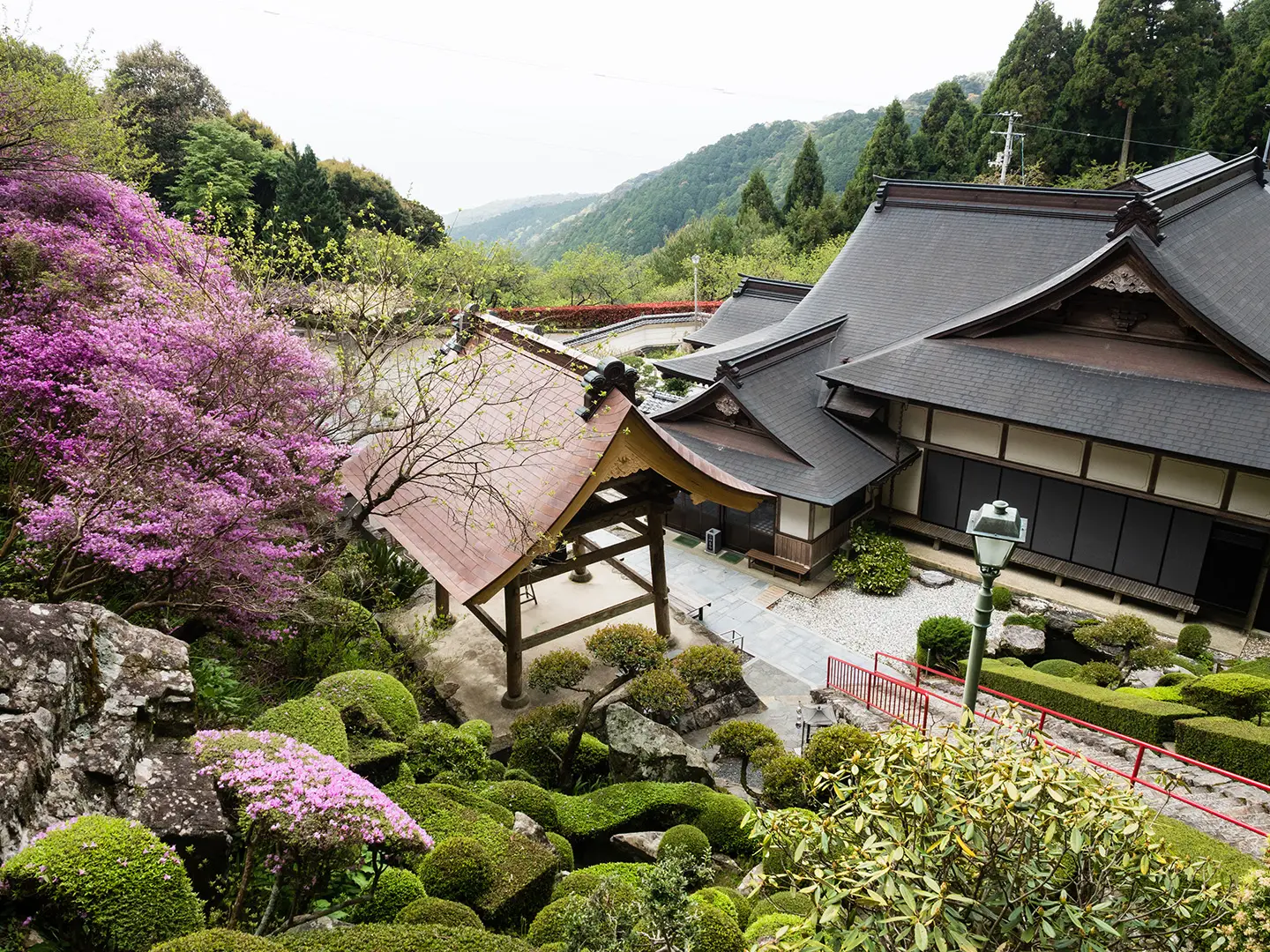
Shikoku Pilgrimage (88 Temples)
How would you rate Shikoku Pilgrimage (88 Temples)?
Tap a star to share your experience and help other hikers.
Shikoku Pilgrimage (88 Temples): Complete Hiking Guide
HikeList Score
Shikoku Pilgrimage (88 Temples) scored 77/100 on HikeList's trail-quality metrics.
See score breakdownHide breakdown
- Ideal length 52
- Balanced challenge 80
- Scenery & wildness 69
- Varied terrain 94
- Accommodation 92
- Food & support 88
- Path quality 80
- Season flexibility 76
Computed from length, challenge, scenery & wildness, terrain variety, accommodation, food & support, path quality and season flexibility.
The Shikoku Pilgrimage, or Ohenro, is a roughly 1,200 km Buddhist walking circuit around Shikoku in southern Japan, linking 88 official temples associated with Kukai, founder of Shingon Buddhism. On foot it typically takes about 40 days and is graded hard: not technical, but long, road-heavy and often hot, with repeated climbs to hillside and mountaintop temples. It suits resilient long-distance walkers who want a cultural pilgrimage rather than a wilderness thru-hike.
Route Overview
Most pilgrims walk clockwise, known as jun-uchi, beginning at Temple 1 Ryozenji in Naruto, Tokushima Prefecture, and completing the numbered temple sequence at Temple 88 Okuboji in Sanuki, Kagawa Prefecture. The route crosses all four Shikoku prefectures: Tokushima temples 1–23, Kochi 24–39, Ehime 40–65 and Kagawa 66–88. The full circuit is a loop around the island, though the official temple order has a clear start and finish. Expect a mix of urban roads, highways, coast, farmland, forest paths and steep temple staircases. For shorter Japanese pilgrimage options, compare the Kumano Kodo Pilgrimage Routes or the Kumano Kodo Nakahechi Route.
History of the Ohenro
The pilgrimage is rooted in the life of Kukai, also known as Kobo Daishi, who is believed to have trained at sites across Shikoku in the 9th century. The route has been walked for more than 1,200 years, and the temple-by-temple circuit became popular and more formalised during the Edo period, with travel permits and stamp records. Pilgrims traditionally walk with the spirit of Kobo Daishi, expressed in the phrase dogyo ninin: “two travelling together”.
Notable highlights
- Temple 1 Ryozenji: The traditional starting point in Tokushima, where many pilgrims buy their white robe, wooden staff and stamp book before setting out.
- Mikurodo cave at Cape Muroto: A sea cave on the Kochi coast below Temple 24, Hotsumisakiji, where the young Kukai is said to have meditated with only sky and sea in view.
- Temple 51 Ishiteji: A major temple near Matsuyama and Dogo Onsen, notable for its National Treasure Nio gate and several Important Cultural Properties.
- Temple 75 Zentsuji: The birthplace of Kukai and head temple of the Zentsuji branch of Shingon Buddhism, with a large temple complex of halls and a pagoda.
- Temple 66 Unpenji: The highest temple on the pilgrimage at about 911 m, reached on foot by a steep climb or by ropeway, and known for rows of carved rakan statues.
Challenges to expect
The main difficulty is cumulative: 1,200 km, repeated ascents, long paved sections and daily logistics. Around three-quarters of the route is on roads, including urban and highway walking, with some steep sections known as henro korogashi. Spring and autumn are best; summer brings heat, humidity, rainy-season conditions and typhoon risk, while winter can mean ice at higher temples.
HikeList Score
Shikoku Pilgrimage (88 Temples) scored 77/100 on HikeList's trail-quality metrics.
See score breakdownHide breakdown
- Ideal length 52
- Balanced challenge 80
- Scenery & wildness 69
- Varied terrain 94
- Accommodation 92
- Food & support 88
- Path quality 80
- Season flexibility 76
Computed from length, challenge, scenery & wildness, terrain variety, accommodation, food & support, path quality and season flexibility.
 Japan
JapanShow more data Show less
- Coastal
- Forest
- Farmland
- Urban
- Paved
- Dirt
- Stone
- Guesthouses
- Temple Lodging
- Hotels
- Pilgrim Shelters
- Family Friendly
- Pet Friendly
- Restrooms
- Water Sources
- Campsites
- Shelters
In these collections
Photos from hikers
Taken on the trail by people who've reviewed Shikoku Pilgrimage (88 Temples).
Start at the traditional beginning of the pilgrimage at Ryozenji (Temple 1) in Tokushima Prefecture. Pass through fields and quiet neighborhoods, visiting multiple temples including Gokurakuji (Temple 2), Konsenji (Temple 3), and Dainichiji (Temple 4) before reaching Anrakuji (Temple 6). The terrain is mostly flat with some gentle hills.
Leave Anrakuji behind and continue through rural landscapes, passing several smaller temples before making a significant ascent to Shosanji (Temple 12), your first major mountain climb. Expect a blend of forests and steep winding paths.
Descend from Shosanji through forest trails and farmland. This section includes peaceful valleys, small shrines, and an abundance of natural scenery as you approach Kamojinja.
The pilgrimage turns south, following rural lanes and eventually reaching coastal scenery en route to Hiwasa. Highlights include Yakuoji (Temple 23) and stretches of sandy beach.
Continue tracing the Pacific coast. Walk through fishing villages, past rocky coves, and enjoy frequent sea views as you make your way to Mugi.
Head through quieter, remote stretches of coast with rolling hills on one side and the ocean on the other. Few services exist here, making it a peaceful yet isolated section.
Arrive at Cape Muroto, the site of Hotsumisakiji (Temple 24) and stunning coastal views. Walk along dramatic cliffs and experience one of the pilgrimage's most iconic horizons.
Follow the scenic Pacific coast to Nahari, a section marked by seaside villages, expansive beaches, and easy flat roads.
Travel further along rural backroads with the sea within sight. Visit quiet local temples and pass rice paddies and bamboo groves on the way to Yasuda.
Continue through lush countryside and approach the small city of Aki, with more inland walking and local cultural sites accessible along the route.
Walk into the urban heart of Kochi, one of Shikoku's key cities. Visit notable temples such as Chikurinji (Temple 31) and take advantage of city amenities.
Move northwest, leaving Kochi and passing riverside walks and quiet tea plantations. This day is marked by transitions from urban to rural surroundings.
Hike upstream along river valleys, with forested hills and rice fields as your backdrop. Small farming villages offer occasional respite.
Walk through rural stretches characterized by bridges and lovely views. Arrive at Kubokawa, a traditional waypoint with welcoming accommodations.
Travel further into Kochi’s southwest, with mountain vistas, gentle valleys, and access to smaller temples and hamlets.
Cross into Ehime Prefecture. Experience varied landscapes of rolling hills and riverways before entering Uwajima, known for its castle and regional delicacies.
Hike through Ehime’s agricultural heartland, passing by temples and settlements famous for their citrus fruit. The route features occasional gentle hills.
Enjoy an easier day through river valleys and farmlands, ending in historic Ozu—an old town on the banks of the Hiji river with a preserved castle.
The pilgrimage heads further northeast, crossing through countryside dotted by traditional houses, with a gentle climb into Uchiko, renowned for traditional architecture.
Walk across the fertile plains and into Matsuyama, capital of Ehime and site of Ishiteji (Temple 51). Pass through orchards and lively suburban neighborhoods.
Spend a day experiencing Matsuyama’s pilgrimage circuit, visiting multiple temples and enjoying local sights including Dogo Onsen and Matsuyama Castle.
Leave the city, heading north through fields, orchard-lined lanes, and small fishing hamlets by the Seto Inland Sea until you reach Hojo.
Coastal walking dominates the day. Approach the industrial city of Imabari, best known for its historic castle and as the starting point of the Shimanami Kaido cycle route.
Follow the Seto Inland Sea’s coast, passing small villages, beaches, and visiting lesser-known temples before arriving at the city of Saijo.
Move east to Niihama, combining semi-rural, industrial, and urban landscapes while passing several temples and shrines.
The path ventures inland across farming regions, hilly forests, and through quiet hamlets. Birdsong and river views provide a tranquil ambiance.
Combine valley walks and gentle foothill ascents, with glimpses of traditional architecture as you make your way to the riverside town of Kawanoe.
Enter Kagawa Prefecture and witness a change to drier terrain. Kan-onji offers a pleasant temple town atmosphere and connection to ancient pilgrimage customs.
Walk across the flat rice country of northern Kagawa, with easy-going roads, scattered temples, and tranquil scenery before entering Mitoyo.
Arrive at Zentsuji—the birthplace of Kobo Daishi. The walk is straightforward, on quiet roads with gentle terrain and much spiritual significance.
Head east through small temple towns, modern neighborhoods, and charming city parks before resting in Marugame, famed for its castle.
Walk along the Kagawa coastline, passing local markets, shrines, and enjoying regional cuisine such as Sanuki udon on your way to Tadotsu.
Head north toward the city of Sakaide, with frequent views of the Seto Inland Sea. Temples and city parks provide rest points and cultural interest.
Make your way to Takamatsu, Kagawa's energetic capital, with pilgrimage temples and renowned sites such as Ritsurin Garden. Urban amenities abound.
Take a loop day within Takamatsu, visiting urban temples and journeying by cable car to Yakuriji (Temple 85) for scenic city views.
Follow quiet rural roads eastward, passing fertile fields and small shrines on the route to Sanuki city. Enjoy tranquil scenery and simple countryside living.
Walk south through agricultural villages to Miki. Pass rice paddies, woodlands, and small family-run farm shops along the way.
Head across rural Kagawa, stopping at tranquil temples and small villages. Higashikagawa is famous for handmade udon and serene surroundings.
The route follows the northern edge of Shikoku with flat terrain, broad plains, and glimpses of distant mountains as you near the circuit's completion.
Your final stage! Climb through wooded foothills and tranquil lanes to reach Okubo-ji (Temple 88), the completion point of the Shikoku Pilgrimage. Pause to reflect and celebrate this deep journey.
Reviews
How would you rate Shikoku Pilgrimage (88 Temples)?
Tap a star to start your review — you could be the first.