Shimanami Kaido Cycling and Walking Route
How would you rate Shimanami Kaido Cycling and Walking Route?
Tap a star to share your experience and help other hikers.
Shimanami Kaido Cycling and Walking Route: Seto Inland Sea island-hopping guide
HikeList Score
Shimanami Kaido Cycling and Walking Route scored 77/100 on HikeList's trail-quality metrics.
See score breakdownHide breakdown
- Ideal length 66
- Balanced challenge 100
- Scenery & wildness 71
- Varied terrain 69
- Accommodation 92
- Food & support 88
- Path quality 37
- Season flexibility 76
Computed from length, challenge, scenery & wildness, terrain variety, accommodation, food & support, path quality and season flexibility.
The Shimanami Kaido is a 70 km point-to-point cycling and walking route across Japan’s Seto Inland Sea, linking Onomichi in Hiroshima Prefecture with Imabari in Ehime Prefecture. It is moderate: paved, well marked and beginner-friendly by bike, but long on foot, with repeated bridge-ramp climbs and limited shade. Fit cyclists can ride it in a day; a relaxed bike trip often takes 2 days, while walkers should plan roughly 2–3 days. It suits hikers and cyclists who want islands, sea crossings and straightforward navigation.
Route Overview
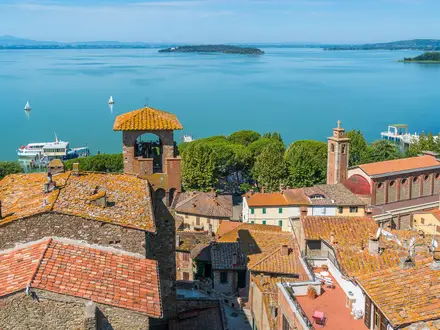
Most travellers go west to east from Onomichi on Honshu to Imabari on Shikoku. The first hop to Mukaishima is normally by the short Onomichi–Mukaishima ferry, because the Shin-Onomichi Bridge is motor-only. From there the marked blue-line route crosses Mukaishima, Innoshima, Ikuchijima, Omishima, Hakatajima and Oshima, using quiet island roads and dedicated bridge paths. The named crossings include the Innoshima Bridge, Ikuchi Bridge, Tatara Bridge, Omishima Bridge, Hakata-Oshima Bridge and Kurushima-Kaikyo Bridge. For a more traditional Japanese walking route, compare the Kumano Kodo Nakahechi Route or the coastal Kumano Kodo Iseji Route.
How the Shimanami Kaido became a long-distance route
The Nishiseto Expressway, nicknamed the Shimanami Kaido, opened on 1 May 1999 as the westernmost of the three road links between Honshu and Shikoku. Its key difference is access: it is the only one of the three Honshu–Shikoku bridge crossings open to both walkers and cyclists. The continuous cycling and pedestrian route has since made it one of Asia’s best-known long-distance cycling destinations.
Notable highlights
- Kurushima-Kaikyo Bridge (final approach to Imabari): Roughly 4 km long, this is the route’s grand finale and one of the world’s longest suspension-bridge structures. It was the first triple suspension bridge ever built.
- Tatara Bridge (Ikuchijima to Omishima): A sleek cable-stayed bridge and a memorable sea crossing. The open-air “whispering wall” beneath the towers carries sound between the pylons.
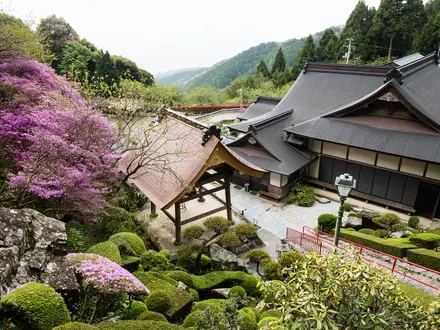
- Kosanji Temple, Setoda (Ikuchijima): A colourful temple complex whose buildings recreate famous Japanese structures. The Mt Kosanji “Garden of Hope” adds a hillside of white Italian marble sculpture.
- Oyamazumi Shrine (Omishima): One of Japan’s oldest shrines, set in an ancient camphor grove. Its collection of historic samurai armour and weapons gives the island stop real cultural depth.
- The blue line (whole route): A continuous painted blue guide line marks the recommended 70 km course. It makes navigation unusually simple and has been copied on cycling routes elsewhere in Japan.
Challenges to expect
The Shimanami Kaido is not steep, but it is exposed. Expect repeated gentle climbs and descents on the spiral or looping bridge access ramps, with bridge decks around 40–65 m above sea level. The bigger issues are distance, summer heat, strong sun and limited shade. Spring and autumn are best; typhoons can still affect the area until late October. For a longer coastal walk in Japan, see the Michinoku Coastal Trail.
HikeList Score
Shimanami Kaido Cycling and Walking Route scored 77/100 on HikeList's trail-quality metrics.
See score breakdownHide breakdown
- Ideal length 66
- Balanced challenge 100
- Scenery & wildness 71
- Varied terrain 69
- Accommodation 92
- Food & support 88
- Path quality 37
- Season flexibility 76
Computed from length, challenge, scenery & wildness, terrain variety, accommodation, food & support, path quality and season flexibility.
 Japan
JapanShow more data Show less
- Coastal
- Island Roads
- Bridges
- Paved
- Hotels
- Guesthouses
- Minshuku
- Campsites
- Family Friendly
- Pet Friendly
- Restrooms
- Water Sources
- Campsites
- Picnic Areas
Photos from hikers
Taken on the trail by people who've reviewed Shimanami Kaido Cycling and Walking Route.
Starting in Onomichi, the route begins with a short ferry ride to Mukaishima Island, where well-marked paths guide walkers along peaceful backstreets and waterfronts. After crossing the Innoshima Bridge onto Innoshima Island, the trail continues through local villages and offers occasional sea views before tackling a moderate climb to the bridge ramp. Crossing the Ikuchi Bridge, you'll reach Ikuchijima Island, a perfect place to rest. Points of interest include Setoda Town with its famous lemon groves and the impressive Kōsanji Temple. Expect shops, rest areas, and small eateries along the way.
Day 2 resumes from Ikuchijima, crossing the Tatara Bridge to Omishima Island with its lush landscapes and the historic Ōyamazumi Shrine. The route continues over the Omishima and Hakata-Oshima bridges, linking the smaller islands of Hakata-jima and Oshima. After passing through scenic and rural areas dotted with citrus groves and coastal views, you'll approach the longest segment: the Kurushima-Kaikyō Bridge, an engineering marvel leading into Imabari, your endpoint. Facilities are ample towards Imabari, and the final kilometers descend gently into the city center for convenient travel connections.
Reviews
How would you rate Shimanami Kaido Cycling and Walking Route?
Tap a star to start your review — you could be the first.